
by Esmaa Self
Insulted by misleading labeling U.S. laws that allow “free range” to mean the chickens had limited outdoor access, while “natural” meat can include a percentage of injected saline, for after all, salt is natural, and “fresh” chicken can be sold as such even if it has been kept at 30 degrees, we decided it was time to take matters related to the quality of the meat we consumed into our own hands.
Which is a wordy introduction to the following fact: this year we raised and butchered our own meat chickens.
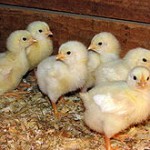
Cornish chicks. Photo courtesy Wiki Commons.
Our goal was not to simply eat cheaply. If price per serving was the only consideration, we’d shop Sam’s Club and save the trouble of raising our own food. No, as always, our goal is to grow excellent food while reducing overall costs (shipping, packaging, additives, bacterial contamination, supporting factory farming). We hoped to produce this higher caliber meat for less than we could buy a locally produced ‘natural’ chicken. And we did. In 11 weeks we raised a baker’s dozen of Cornish roasters, realized 77 pounds (about 35 kilograms) of meat at an amazingly low $1.43 cost per pound. This figure includes butcher paper and freezer bags, feed and lighting, and, of course, the animals. Excluded from the weight are necks, giblets, wing tips, etcetera, reserved for making nutrient rich stock.
Keep in mind that what we produced is not organic meat, for we used a non-medicated, locally produced non-organic feed, however neither is local favorite Red Bird brand organic, and their skinless, boneless chicken breasts sell for $2.99. What we produced is an incredibly tasty, tender and truly farm fresh chicken meat without the factory, the trucking or the non-recyclable packaging.
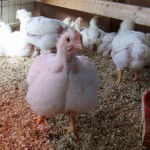
Our Cornish roasters at 4 weeks
And zero labeling lies.
|
|


