Simon Says: Daily Food Quote, July 7, 2011

Published by Thursday, July 7, 2011 Permalink 0

In the summer there is also holiday cooking. That may well mean food cooked in an unfamiliar kitchen equipped, more than likely, in an impersonal and inadequate fashion by the owners of a house, holiday villa, or caravan hired out for the summer.–Elizabeth David (Summer Cooking, London, 1965)

Elizabeth David, British food writer (1913-1992), who helped change the way Britain saw food.


Never miss a post
Name: 
Your email address:*
Please enter all required fields
Correct invalid entries

Simon Says: Daily Food Quote, July 6, 2011

Published by Wednesday, July 6, 2011 Permalink 0

Summer cooking implies a sense of immediacy, a capacity to capture the essence of the fleeting moment.–Elizabeth David

Elizabeth David, food writer (1913-1992) who helped to change the way Britain saw food. Many of her books are available in the Penguin classics series.


Never miss a post
Name: 
Your email address:*
Please enter all required fields
Correct invalid entries

Wild Woman on Feral Acres: Backyard Poultry Skills

Published by Tuesday, July 5, 2011 Permalink 0

by Esmaa Self

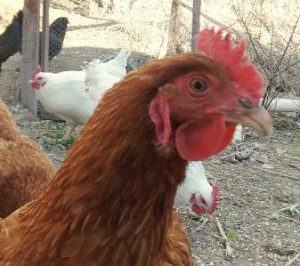
We’ve had a backyard flock seven years and have sold extra eggs for about four. I have been around and kept my own layer flocks before moving here and working to massage a thriving farm from our rocky span of hogback. And we’ve been sold out of eggs for three full years, but I wouldn’t call myself an expert on chicken behavior.

One of our 'girls'.

Continue Reading…

Never miss a post
Name: 
Your email address:*
Please enter all required fields
Correct invalid entries

Epicurean Adventure: the first of this year’s Great Barrier Feasts

Published by Tuesday, July 5, 2011 Permalink 0

by Rebecca Varidel, our Australian correspondent

Destination dining has never been more inviting. Luxury resort, qualia on Hamilton Island (in the Whitsunday Islands – off the coast of northern Queensland Australia) recently hosted the first of this year’s three Great Barrier Feasts. Gourmands travelled, from around Australia and internationally, to attend the intimate three-day soiree.

And the weekend delighted, with masterclasses by leading Chef Peter Gilmore of Quay restaurant Sydney (Quay is the only one of the Australian restaurants placed this year in the S. Pellegrino World’s 50 Best Restaurants), and culminated in a magnificent showpiece dinner. Gilmore flew a team with him from his Sydney restaurant kitchen to replicate a number of his beautiful signature dishes. Gilmore has been instrumental in Australia for changing the way we eat, and like Chef Serge Dansereau before him, raised the bar on the Aussie expectations of fresh produce. A keen home gardener and seed saver, Chef Peter Gilmore, introduces many varieties of heirloom vegetables into Australia from around the world. After testing the veggies in his home garden, he commissions small local farmers to grow the required quantities for his top restaurant.

Qualia Executive Chef Jane-Therese Mulry also delighted on the previous night, with a modern, imaginative and brave welcome dinner to start the weekend. Prior to her appointment at qualia, Mulry is perhaps best known as the first female head chef to be appointed by Chef Marco Pierre White. Chef Jane-Therese Mulry seeks out the best quality artisan and interesting local ingredients to create her own unique dishes across the resorts dining venues.

Transport between the guest pavilions, dining destinations, qualia spa and library, as well as the many other island recreational facilities is in itself entertaining, with guests driving themselves around on golf buggies.

While the feasting was just fabulous, the warm waters of private horizon plunge pools also enticed. Even in the midst of an Australian winter, swimming, sailing and other water sports were warm and tempting in the northern pristine waters of the Great Barrier Reef.


Never miss a post
Name: 
Your email address:*
Please enter all required fields
Correct invalid entries

Food Poetry: Brot, Linda Pastan

Published by Monday, July 4, 2011 Permalink 0

Click here to read in English.

Mir scheint, du
schreibst gern über
die fünf Gärphasen
der Hefe, nicht des Trauerns,”
meint mein Sohn,
womit er sagen will, dass
das Brot immer auf-
geht und in sich zusammensinkt,
gebrochen und gegessen wird
in meinen Gedichten.

Und obwohl er das nur so halb-
ernst meint, möcht ich
ihm sagen , “Brot geht in der Schüssel
auf wie Atem, der den Körper dehnt” oder
“wenn du den Teig knetest
mit vollkommener Sanftmut,
ist es wie leises Drücken der Haut
wenn du jemanden liebst.”
Baguette . . . Pitabrot . . . Pane Brot . . .
Challa . . . Naan: Brot ist
eine Universalsprache, zu übersetzen
auf der ausgehungerten Zunge.

Nun ist es Zeit, das
Päckchen Hefe aufzumachen
und mit Wasser anzurühren,
das Blasenwerfen zu betrachten,
sein wie man sagt blindes Testen
der Stärke, das Beseelen
des Lebens. Alles
ist bereit: Salz, Mehl, Öl.
Brotkrumen sind es, die
Kinder heimführen nach Haus.

(Übersetzt: Peter Beicken)

_____________________

after Levchev

First published in Ploughshares, now in Traveling Light, W.W. Norton, 2011.

This poem was contributed by our Poetry Editor, Christina Daub.

Short URL for this post: http://is.gd/q9Byhe


Never miss a post
Name: 
Your email address:*
Please enter all required fields
Correct invalid entries

Le grand art d’accommoder les restes (ce qu’on peut encore manger)

Published by Friday, July 1, 2011 Permalink 0

de Jean-Philippe de Tonnac

English adaptation in progress : The art of using up leftovers (or what can still be eaten)

La mise au point est faite par Nicolas Zamaria, directeur de laboratoire de biologie médicale, docteur ès nutrition, interrogé par Flo Makanai : « Au cours d’une vie, 30 tonnes d’aliments traversent le tube digestif d’un individu. » Imaginez vous qu’avant l’ère des pesticides de synthèse qui débute dans les années 1930 [le mot pesticide incluant insecticides, fongicides, herbicides et parasiticides], s’il fallait trouver une date Maginot désignant un « après » et donc un « avant », tout ce que cet individu ingérait, autrement dit ces 30 tonnes d’aliments, était bio. BIO ! Vous imaginez ! Tout simplement parce que l’homme cultivateur ne disposait pas encore des moyens de « rectifier » les grands équilibres homéostasiques de la nature ou, de les abîmer. Nous sommes légitimement en droit et devoir de nous interroger aujourd’hui sur la manière dont ce même tube digestif va traiter les 30 tonnes d’aliments tout à fait problématiques sur le plan nutritionnel qui lui seront proposés. Car, bien entendu, en dehors des produits étiquetés « bio » (2,5% de la surface agricole utile en France était consacrée en 2009 à l’agriculture biologique), plus rien n’est bio.

Continue Reading…

Never miss a post
Name: 
Your email address:*
Please enter all required fields
Correct invalid entries

Do you know this painting? Well, here’s the recipe

Published by Friday, July 1, 2011 Permalink 0

by Miriam Garcia

Do you know this painting?
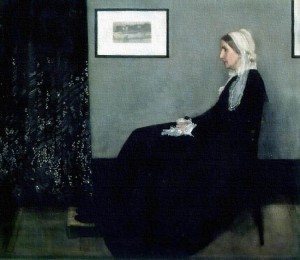
Photography by courtesy of Wikimedia Commons

Its formal name is Arrangement in Grey and Black: The Artist’s Mother, but it is commonly known as Whistler’s Mother. Its creator, American artist James McNeill Whistler, happens to be one of my (many) favorite painters. In August 1995, while on vacation in London, I stumbled upon a little book with this painting grazing its front cover. It was Whistler’s mother’s cookbook, with the recipes collected by Anna McNeill Whistler (1804-1881) through the years. The recipes are recreated and annotated for the modern cook, but included the endearing original writing of Mrs. Whistler, with all its own spelling and punctuation errors. Go figure, a book that coupled two of my most serious addictions, cooking and painting. I had to buy it.

Whistler’s mother’s recipes were among a collection of books and letters that were bequeathed by Whistler’s sister-in-law to the University of Glasgow after his death. Whistler lived in Europe most of his working life. Mrs. Whistler led quite a remarkable life herself for a 19th-century housewife; she went from the United States, via Russia and sudden widowhood at a young age, to London with her son, where she recorded in her diaries visits to the Whistler household from such artists as Algernon Swinburne and Dante Gabriel Rossetti. The book’s fascinating account of the Whistler household in America, Russia and Britain offers a unique and delightful glimpse into 19th-century family life and cooking. The recipes are simple and transmit the flavors and aromas of good home cooking.

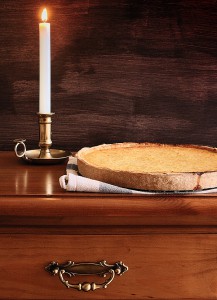
As a token of that age and to bring to the pressed 21st century some 19th century calm and simplicity, I have chosen to replicate a recipe of her apple pudding, called Marlborough pudding.

RECIPE

Apple Marlborough Pudding
Ingredients:

1 sheet of store-bought or homemade puff pastry or shortcrust
5 medium-sized cooking apples
1 lemon, juice and peel

200g (1 cup) sugar
5 medium eggs

200ml (4/5 cup) whipping cream
50ml (1/5 cup) whole milk

Click here for metric recipe converter

Method:

  1. Preheat the oven to 180°C if convection type, to 160°C if radiation.
  2. Prepare the pudding base: butter and flour a 30-cm (12inch) pie mold. Roll the crust, transfer to the mold and press to set. Trim the excess off the edges. Bake the crust blind for 10-15 minutes. Then take out of the oven and let cool a bit. Lower the oven temperature 20°C.
  3. Prepare the filling. Peel and core the apples, sprinkle them with lemon juice to prevent them from browning. Put them in a bowl, cover and microwave them 3-4 minutes, until tender.
  4. Transfer the apples to a food processor, add the rest of the ingredients: lemon juice and peel, sugar, cream, milk and eggs. Process to the desired “chunkiness”.
  5. Pour the mixture on the pie crust (this amount yields a large pie and a small cup of filling left) to the brim, then bake 1 hour. Watch it during the last stages to prevent it from excessive browning; lower the temperature if needed. After that baking time, take the pudding out and let cool completely.


I personally loved this Marlborough pudding. I love any dessert with apple though (well, except roast apples). It is lemony, creamy, light and only slightly crunchy. And as rustic and homely as I expected. Accompany it with a strong tea and open a snuff box for you to feel exactly like Whistler. And the next time you see this painting I’m sure you will remember that this lady baked delicious pies for her family.

Sources:
“Whistler’s mother and the West Coast”, BBC website
Whistler’s Mother Cook Book, Margaret McDonald

The Scottish Roots site says:

This unconventional portrait of a grey-garbed matron, commonly known as “Whistler’s Mother,” patiently sitting for her artistic son became an American icon and an emblem of motherhood. The subject of the painting, Anna Matilda McNeill Whistler, was born in North Carolina in 1804 to a middle class family of Scots descent.

Anna led a remarkable life for a 19th-century housewife; moving from the United States, via Tsarist Russia and sudden widowhood at a young age, to London with her son “Jemsie,” where she recorded in her diaries visits to the Whistler household from such literary and artistic luminaries as Algernon Swinburne and Dante Gabriel Rossetti. A traditional woman with a strong sense of morality, Anna Whistler upheld the conventional family values of the time, turning a blind eye to her artistic son’s bohemian amorous involvements in favour of encouraging his genius.

Widowed in 1849, she wore mourning for the rest of her life.

The book’s fascinating account of the Whistler household in America, Russia and Britain offers a rare and delightful glimpse into 19th-century family life and cooking. The recipes are simple and transmit the flavors and aromas of good home cooking.

Never miss a post
Name: 
Your email address:*
Please enter all required fields
Correct invalid entries