A chocolate school, and guess where? Switzerland

Published by Wednesday, August 3, 2011 Permalink 0

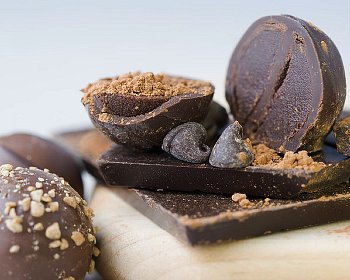
You can go to chocolate-making school at the Chocolaterie Rapp in Prangins, between Geneva and Lausanne, even if you don’t want to be a professional chocolatier.

The introductory course lasts one hour and a half and consists of:

  • visit of chocolate school
  • presentation and history of chocolate
  • introduction to chocolate making
  • chocolate tasting and drink at the chocolate school
  • issue of a tasting diploma from the Compagnie des fins becs, a Swiss gourmet tasting society

Classes are given on Monday, Tuesday and Thursday, and on reservation only.

Price: 15 CHF per person, with a minimum of 10 people per class.

The school can be visited on Saturday for 25 CHF per head.

The full course lasts 5 hours, and consists of:

  • visit of chocolate school
  • presentation and history of chocolate
  • handling of chocolate
  • chocolate moulding and tempering, depending on the season
  • chocolate desserts
  • praline and truffles
  • chocolate tasting and drink at the chocolate school
  • issue of a Chocolate Know-How diploma and notebook of recipes

Price: 160 CHF per person.

Unfortunately, all classes are fully booked until the end of August 2011. September dates will be announced soon.

If you want classes in English, please request well ahead of time.

For more information, call (41) (0)22 361 92 12 or contact the school by e-mail at  rapp-confiserie@bluewin.ch.


Never miss a post
Name: 
Your email address:*
Please enter all required fields
Correct invalid entries

The best chocolatiers in Paris: a list to keep forever

Published by Wednesday, August 3, 2011 Permalink 0

The best chocolate addresses in Paris: a list to keep forever

The top 20 chocolate makers in Paris, including addresses, websites and telephone numbers. A list to keep in your pocket as you wander around Paris.

Never miss a post
Name: 
Your email address:*
Please enter all required fields
Correct invalid entries

French Food Quote: Daily Food Quote, August 3, 2011

Published by Wednesday, August 3, 2011 Permalink 0

by Jonell Galloway

In life, gathering fruit counts for nothing.

But all fruit not gathered rots, thereby reaping a little less joy in the world.

La cueillette ne compte pas pour des prunes, dans la vie.

Car tout ce qu’on ne cueille pas pourrit, et il s’ensuit qu’un peu de joie se perd.

–Alina Reyes, Cueillettes

____________________________

Alina Reyes is best known for her literary treatment of eroticism, and her first novel, The Butcher, which was translated into many languages and adapted for the theatre.

Alina Reyes est surtout connue pour son traitement littéraire de l’érotisme, et pour son premier roman, Le Boucher, traduit dans de nombreuses langues et adapté pour le théâtre.


Never miss a post
Name: 
Your email address:*
Please enter all required fields
Correct invalid entries

Simon Says: Daily Food Quote, August 3, 2011

Published by Wednesday, August 3, 2011 Permalink 0

by Simón de Swaan

Food is not about impressing people. It’s about making them feel comfortable.–Ina Garten

Ina Garten, The Barefoot Contessa Cookbook

Popular cookbook author and TV personality.


Never miss a post
Name: 
Your email address:*
Please enter all required fields
Correct invalid entries

Food Art: Beets in a Roll, food photography by Sandeea

Published by Wednesday, August 3, 2011 Permalink 0
Never miss a post
Name: 
Your email address:*
Please enter all required fields
Correct invalid entries

Food Art: Summer Water, food photography by Sandeea

Published by Wednesday, August 3, 2011 Permalink 0

Sandeea is our latest food photography discovery. A woman of many talents, she is also author of the Food Play column. She writes in both English and Spanish.

Never miss a post
Name: 
Your email address:*
Please enter all required fields
Correct invalid entries

David Downie: Guanciale: An Obituary and a Homage to Rome’s Jowl Bacon, Part 3

Published by Tuesday, August 2, 2011 Permalink 0

by David Downie

The Carilli brothers are no longer in business; the fine art of making traditional guanciale is threatened with extinction in Rome. But the memory of the Carilli brothers’ passion, and the lingering taste of their excellent products, live on in those of us who knew them. They also live on—perhaps to a lesser degree—in the remaining guanciale-makers of the city.


These are the best of the dozen or so norcinerie, salumerie, and salsamenterie in Rome that still make their own guanciale, the following are the best—to my knowledge. Each shop also sells a wide selection of other specialties, from dried mushrooms to farro (emmer), salami, grappa, sapa (reduced grape must) and artisanallypasta made by small, traditional producers.

Antica Norcineria— Giuseppe Simoni and his son Alberto, Umbrians by birth, operate one of Rome’s longest-established oldest pork butcher shops, which happens to be in via della Scrofa, “Sow Street.” The Simonis produce guanciale faster than the Carillis did; the cure lasts ten days and the aging about 20 days. But the results are excellent.

via della Scrofa, Rome, telephone 06.68806114

Baldassari Emma— A family-run salumeria that ages its guanciale for 45 to 90 days, enough time to develop complex flavor.

Piazza Unità, 28, Rome, telephone 06.3243252

Vincenzo Cecchini & C. —Virgilio Cecchini runs this family salumeria, in operation since 1930. Virgilio’s roots are in Collazzoni di Preci, six miles outside Norcia, and his hogs are raised in the mountains of Umbria and the adjacent Marche. Mild and fresh-tasting, Cecchini guanciale gets a sprinkling of mashed fresh garlic and sea salt before spending a week in a vat at just above freezing. Coated with black pepper or chili, it hangs for just a week or two in the shop’s marble-clad back room, so it must be cooked before it is eaten.

Via Merulana, 85, Rome, telephone 06.77207535

Norcineria Umbra — At this family run norcineria, the flavorful guanciali are aged for up to three months.

Via Pomezia, 28, Rome, telephone 06.77209695

America’s only guanciale maker?

Salumeria Biellese — To my knowledge, this Manhattan shop makes the only authentic Italian-style guanciale in America. Marc Buzzio sells his guanciale whole, averaging two pounds, small by Roman standards, mostly to upscale New York restaurants. The meat is Du Breton certified-organic Canadian pork. The jowls are cured for 35 days and strung up to dry for 45 days, so they can be eaten raw or cooked. The result is more compact in texture and drier than the Roman, and the flavor is with a delicately herby  flavor. I’ve used this guanciale extensively to prepare classic Roman dishes (for example, when testing the recipes for my cookbook Cooking the Roman Way), and it compares favorably with the traditional Roman.

378 Eighth Avenue (at 29th Street), New York, New York 10001, telephone 212.736.7376, fax 212.736.1093

___________________________

David Downie is the author of Cooking the Roman Way: Authentic Recipes from the Home Cooks and Trattorias of Rome, and Food Wine Rome (a complete food- and wine-lover’s guide to the city); his latest book about Rome is Quiet Corners of Rome (over 50 silent, serene, often secret corners of the city). All three volumes are illustrated by color photographs by Alison Harris.

Never miss a post
Name: 
Your email address:*
Please enter all required fields
Correct invalid entries

Simon Says: Daily Food Quote, August 2, 2011

Published by Tuesday, August 2, 2011 Permalink 0

by Simón de Swaan

Frying gives cooks numerous ways of concealing what appeared the day before and in a pinch facilitates sudden demands, for it takes little more time to fry a four-pound carp than to boil an egg.–Jean-Anthelme Brillat-Savarin

Jean-Anthelme Brillat-Savarin (1755-1826) was a French gastronome, lawyer, magistrate and author who helped to develop the art of food writing. His most famous and influential book, The Physiology of Taste, consists of 8 volumes and was published in December of 1825, two months before his death at the age of 71. His influence is so significant that a cow’s milk cheese, a rum yeast cake, and a ring mold are all named after him. He is considered by many to have been the best food critic ever.


Plaque Brillat-Savarin, 11 rue des Filles-Sain...


Never miss a post
Name: 
Your email address:*
Please enter all required fields
Correct invalid entries

French Food Quote: August 2, 2011

Published by Tuesday, August 2, 2011 Permalink 0

by Jonell Galloway

Nothing would be more tiresome than eating and drinking if God had not made them a pleasure as well as a necessity.–Voltaire

François-Marie Arouet de Voltaire was born into a middle class family in Paris in 1694. He is perhaps the very embodiment of the Enlightenment, serving as a crusader against tyranny and bigotry on the part of the Catholic church as well as government and society, as a result of which he spent time in the Bastille prison and in exile in England, Holland and Geneva. He is best known for his book Candide, a scathing view of humanity, where he concludes the best one can do in life is, “Il faut cultiver notre jardin,” i.e. look after your own garden. He died in 1778.


Never miss a post
Name: 
Your email address:*
Please enter all required fields
Correct invalid entries

Simon Says: Daily Food Quote, August 1, 2011

Published by Monday, August 1, 2011 Permalink 0

by Simón de Swaan

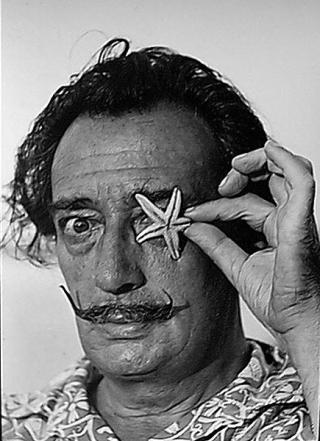
At the age of six I wanted to be a cook. At seven I wanted to be Napoleon. And my ambition has been growing steadily ever since.–Salvador Dalì

Salvador Dali (1904-1989) was a Spanish sculptor, painter and artist primarily known for being an innovator in the Surrealist movement. His theory of “critical paranoia” purported that an artist should cultivate genuine delusion, resembling that of clinical paranoia, while in reality remaining residually conscious that this release of reason was a deliberate and temporary suspension.

Never miss a post
Name: 
Your email address:*
Please enter all required fields
Correct invalid entries