See more food photo compositions at Meeta K. Wolff.
|
|

A Literary Culinary Journal
 by Simón de Swaan
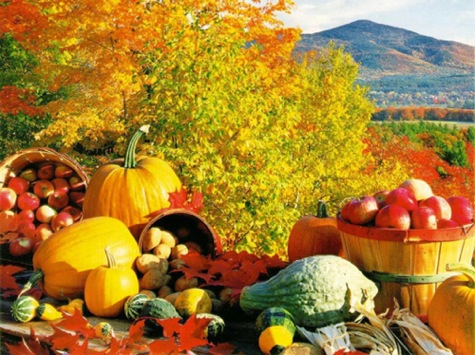
Before eating, always take time to thank the food.–Arapaho proverb
The Arapaho are a tribe of Native Americans historically living on the eastern plains of Colorado and Wyoming.
|
|
by Diana Zahuranec 
‘Nduja (n-due-yah) is a spreadable, spicy, red pork meat that can be found everywhere in Calabria. Calabria is the southern Italian region that is the “toe” of the boot, so to speak. ‘Nduja Nduja is used for sauces, bruschetta, or on anything that spreadable meat – spalmabile – would be tasty, including a spoon.
‘Nduja is produced from the throat of a pig, called the guanciale meat, and also the guanciale – stomach meat – and the back lardo, or fat. The lardo, when mixed with salt and added to the meat, takes on another name that has no exact English translation, called sugna. This meat and fat mix is ground with salt, local peperoncino (the Italian chili pepper), and absolutely nothing else. Not even nitrates, a common preservative added to most sausages and cured meats (linked to a higher risk in cancer), adulterate this all-natural ‘nduja. Salt, the extended maturation, and the fact that 30% of ‘nduja is peperoncino, which acts as a natural preservative, defy the need for synthetic additives.

|
|
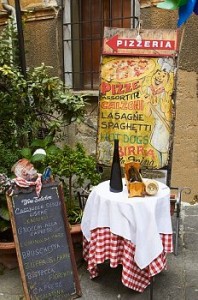
“The act of observing the tables around you at a restaurant and ordering what the other diners are eating.”—Urban Dictionary
I’m a true food stalker when I eat in a new restaurant and gawk at what each diner around me is eating before ordering myself.
|
|
 by Renu Chhabra
“Cookery is not chemistry. It is an art. It requires instinct and taste rather than exact measurements.” — Marcel Boulestin

Healthy and easy might not sound very complicated, but I’m not talking about a cup of yogurt or a bowl of fruit. I am thinking of something hearty and flavorful with a farm-fresh bite. When the vegetable drawer in the fridge is begging for a visit to the produce market, it can become challenging to bring farm-fresh bite to the plate. This was the dilemma I was facing last night.
When I opened my fridge, I found just a couple bell peppers and a bunch of parsley were keeping each other company in the vegetable drawer. While I was wondering how to make the most of what was available, I found two slender carrots and a lemon hidden in a corner of the drawer. I was hoping to come up with something that would satisfy my appetite. A look in the pantry to find some bulgur and a can of garbanzo beans completed the recipe — a well balanced meal of vegetables, whole grains, and protein. It seemed like another victory over a culinary battle!
|
|
by Diana Zahuranec
A black trash bag is tossed onto my desk. When I peer inside, four rounds of cheese stare up at me, one with a small wedge like a Pac-Man smile sliced out of it.
These raw cow’s milk cheeses are the result of the efforts of a group of students from the University of Gastronomic Sciences who, for one January day, were cheese mongers. After a year of visiting cheese producers, tasting cheese in class, and going a little crazy at the biennial Slow Food Cheese 2011 fair, the next logical step was a DIY cheese-making party (see how here). Five and half weeks later, and the two big and two small rounds are set on the picnic table outside in the approaching spring’s warmth.
The knife squeaked when I pushed it through the small cheese with both hands. It definitely had grate-able potential. Tiny flecks of dark blue mold gathered on the bottom of the rind, but it was mostly creamy white and clean-looking. I sniffed the small cheese, and it smelled like butter. Tentatively biting a small piece, I tasted the saltiness first, and then a slight acidity cut through. It was crumbly and reminded one girl of pecorino cheese, nevermind that it’s cow’s milk, not sheep’s. It had a faint animal-like taste (normal enough in a cheese), but a weird, pungent aftertaste. A little salty overall, but not bad. A few friends thought otherwise. The most exciting thing about it was that we had made it.

|
|
by The Quonstant Quonnoisseur
[This is the first in an occasional series of short items by the QQ. Preventing kitchen mishaps, and adroitly recovering from any that do occur, will figure as an important topic in these updates.]

The problem: Overheating low-fat milk
The cause: Low-fat milk products cannot be boiled, unlike cream. Low-fat milk must be kept below 82° C or 180° F to avoid curdling or “breaking.” Using overheated low-fat milk that has curdled will result in grainy ice cream, pudding or other dish.
The solution: To avoid this qualimity, invest in a clip-on thermometer and watch your low-fat milk like an anxious Dad with a pretty 19-year-old daughter.
|
|
 Meet Jonell Galloway, a freelance writer and editor specialized in French cuisine.