 Simon Says: Daily Food Quote, September 20, 2013
In a restaurant choose a table near a waiter.–Jewish proverb

Related articles
|
|

A Literary Culinary Journal

 Simon Says: Daily Food Quote, September 20, 2013
In a restaurant choose a table near a waiter.–Jewish proverb
|
|
by Rosa Mayland

In this brief history of the sandwich, you’ll learn that a sandwich is an extremely versatile and universal food item consisting of two slices of bread in the middle of which is encased a filling, or of a single slice of bread garnished with a topping (tartines/bruschetta, smørrebrød, canapés, etc.). In both cases they come in an infinite number of varieties that differ in flavour, style, texture and size.
The origin of the term dates back to 1762 and saw the light of day in East Kent, England. According to legend, John Montagu aka the Fourth Earl of Sandwich was so busy gambling that he did not want to stop his activities in order to dine, so he ordered the waiter to bring him slices of roast beef enclosed in two wedges of bread. In this way, he could continue playing while eating and would in no manner dirty his fingers. That is how this quick and improvised snack became known as “sandwich”.
Even if the Earl gave his name to this popular “speciality,” it is to be said that bread has been served with meat and/or vegetables for centuries before this “invention” and that its forefather probably already existed in Neolithic times with the advent of the domestication of wheat. The first form of sandwich is attributed to the ancient Jewish wise man Hillel the Elder (~1st century B.C.) from Babylon who apparently put meat from the lamb sacrificed for Passover and bitter herbs (horseradish, chicory, sow thistle, eryngo, and lettuce) between pieces of matzo (kosher cracker-like, unleavened bread). Another genre of sandwich was common during the Middle Ages: thick slabs of stale bread called “trenchers” were used as plates and can be regarded as the precursors to the open-faced sandwich.
At the beginning, sandwiches represented a humble and simple lower-class meal, but by the middle of the 18th century, the aristocracy started serving them as a late-night collation, and they were considered very chic. Then with the breakthrough of the Industrial Revolution in the 19th century and its hordes of restless workers slaving away in factories, sandwiches became a working-class luncheon, since they were practical, easily accessible, nourishing (calorific), inexpensive, portable and could be eaten in a rush.
After having first appeared in England as well as Spain, the sandwich rapidly spread through the rest of Europe and the United States, where it was first promoted as an elaborate main dish. The 20th century saw the rise of the sandwich in the U.S. and the Mediterranean when bread became an indispensable component of people’s diet and started being consumed in much larger quantities than in the past.
|
|
 Full-Sensory Taste and Proust
by Jonell Galloway
We think of taste as something universal that we have in common with all (or most) human beings, as a mechanical and chemical process that requires no thought. If we could measure the data that goes into our final judgment about the taste of a food, we’d likely be in for a shock. Perhaps surprisingly, our subconscious also plays a major role in what we like or dislike, and we use all our senses to determine this.

Traditionally, when we study the four elements of taste, they are presented as follows:
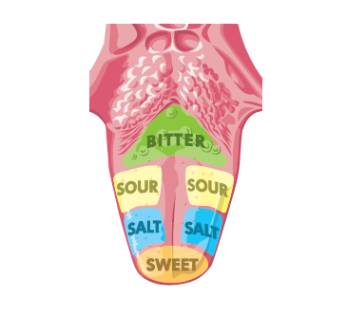
There is no need to explain these. We are all familiar with them.
Today, taste specialists have added a fifth to that list: umami. Taking its name from Japanese, umami is a pleasant savory taste occurring naturally in many foods, including meat, fish, vegetables and dairy products. It is subtle and blends well with other tastes to expand and round them out. Some researchers, such as Adam Hadhazi, think there are even more tastes to be added.
But in reality, taste or flavor involves all five senses. Yes: sight, hearing, touch, taste and smell.

Some researchers, such as Gordon M. Shepherd, would have it that what we most often refer to as “taste” is in fact flavor, and that flavor is largely made up of what he calls “retrosmell”. It is true that in the past we were taught that primates lost touch with their sense of smell when they started holding their heads upright, far from the ground, and standing on two legs instead of four, but today, that is called into question. Shepherd is the one who challenged this long-held premise back in 1974.
Retronasal smell, also known as “retrosmell” or “mouth-smell”, is an addition to the conventional teaching about taste; it is an integral part of flavor. Retrosmell takes place while you’re chewing and swallowing, as well as while you’re breathing. When you exhale, you draw “chemicals released by the food into the nasal cavity, where they are sensed and transmitted to the brain,” says Medical Discovery News. It is what defines the aftertaste that stays in your mouth after sipping a good wine, for example.
I have lived much of my life through what I like to call “full-sensory taste.” Of course, I consider sour, sweet, bitter and salty, but the other senses also come into play. When I read a good restaurant menu, I focus on individual ingredients and can quite easily conjure up the final combination of flavors, i.e. taste, a dish will have. Just as when I shop, I first see the ingredient, then I might imagine how it sounds in my mouth (yes, I really do that). This is usually a function of whether it is crunchy, in which case it makes quite a lot of noise, or whether it is creamy, and spreads over the tongue and goes down smoothly (umami comes in here). I even like to touch certain ingredients, such as tomatoes, to see whether they are firm or mushy, or cereals, to make sure they’re still crisp.

On principle, I always smell vegetables and fruit before buying. Though today’s strict standards and expectations on the part of customers are largely visual, looks do not tell the entire story. A tomato might well be perfectly red, round and standard in size, but I know from experience that real tomatoes that you pick from the garden are not perfect to look at, and it is not this so-called “perfection” that determines the taste. As my best friend’s mother used to say, “Art is never perfect, and don’t forget that.” And thus is nature.

From my grandfather’s garden I bring in another element of taste: nostalgia. I will forever associate the chlorophyll-filled smells of the fresh vegetables and fruits from his garden with a sense of well being. I remember getting on my knees to smell the tomatoes before I picked them, like an animal with my nose close to the vines. After we’d finished harvesting for the day, with sweat on our brows, I’d sit on his lap under the shade of trees and drink ice water, his blue eyes sparkling in the sun as he laughed. I’d often hear my horse neighing in the field next door, see the horse barn in the distance. The stifling heat of the Kentucky sun would from time to time be broken up by a breeze that came suddenly out of nowhere, lasting only a few seconds, just enough to help evaporate our perspiration and bring with it a waft of horse sweat. When we finally carried our harvest into the house, my grandmother would start preparing dinner, changing those fresh scents of chlorophyll into seasoned scents of the traditional Kentucky dishes she mastered. The ensemble — all the sensory input and all the partly subconscious thoughts and feelings from these days gone by — is my definition of a perfect time and place and world, as simple as that may seem. It was a full-sensory experience, existing now in the form of subconscious associations that are totally my own, associations that form my likes and dislikes.

When I walk through the farmers market, I use all my senses and some nostalgia too. First I look, filtering out what experience tells me is not fresh or of good quality. I “create” dishes in my mind, “using” the ingredients that seem freshest and imagining the flavor of those ingredients together. It is a full-sensory experience. I imagine the crunchiness, unctuousness, aroma, the acidity, saltiness, bitterness, sweetness, umami. Associations from the past often rush in without me being conscious of them. It’s like a sentence from Proust. In one very long sentence, Proust takes you through all the senses and sometimes back again, and time is suspended, letting them all blend together to make an astonishing whole that is forever your own. This passage, quoted often, is just one example:
And soon, mechanically, weary after a dull day with the prospect of a depressing morrow, I raised to my lips a spoonful of the tea in which I had soaked a morsel of the cake. No sooner had the warm liquid, and the crumbs with it, touched my palate than a shudder ran through my whole body, and I stopped, intent upon the extraordinary changes that were taking place. . . . I was conscious that it was connected with the taste of tea and cake, but that it infinitely transcended those savors, could not, indeed, be of the same nature as theirs.
Proust is, of course, referring to the conscious pleasure that comes through the senses, to which is inevitably added subconscious associations.
To sum it up, when you bite into a potato chip, you start by looking at it to see if it looks appetizing. When you put it in your mouth, you feel the crunch with your teeth (touch) and you hear it. You taste the salt; you taste and smell the flavoring, and it may well have a retrosmell, a taste/smell that lingers in the back of your mouth, even after you’ve swallowed it. All this gives you an idea, often formed from the past, of what it should be like in your mouth. If that “historical” expectation is not met, you probably won’t like the chip.

From this perspective, flavor in the traditional sense of the word takes on a whole new complexity. The traditional elements of flavor are combined with signals and messages from the other senses and with nostalgia and other subconscious associations. Our likes and dislikes become, like Proust’s description, a rich, unique blend of all these elements. There are indeed objective elements, but these cannot stand alone in producing the astonishing whole that is your own, which no one in the world has perceived exactly in the same way. Tasting becomes a moment suspended in time, a moment that is yours and yours only.
In this series of articles, we will explore these elements of full-sensory taste.
Retrosmell, by Pamela Bond
Umami
Taste: Surprising Stories and Science about Why Food Tastes Good, by Barb Stuckey
The Science of Taste and Flavor, Library of Congress
Oxford Journal: Chemical Senses, “Odour-evoked Autobiographical Memories: Psychological Investigations of Proustian Phenomena,” by Simon Chu and John J. Downes
“Yummy Umami: The 6th Basic Taste?,” by Diana Zahuranec
|
|
Shulie: I am so pleased to be featured on The Rambling Epicure, this international, thought-provoking culinary site based in Switzerland. I love the multicultural content, which explores the world of food in depth and in all its facets, and brings us together as a community so that we better understand each other. Thank you, Jonell, I am honored to be a part of this wonderful journey. This post gives you a glimpse into my very mixed background.
Jonell: It’s unusual to find someone with such a rich and varied background as Shulie, yet still so close to her roots, who creatively weaves it all together to produce her very own Jewish-Indian fusion cuisine. This article is like an introductory culinary tour of the world, with a big dose of little-known Jewish history and culture thrown in. Got your bags packed? Here we go!
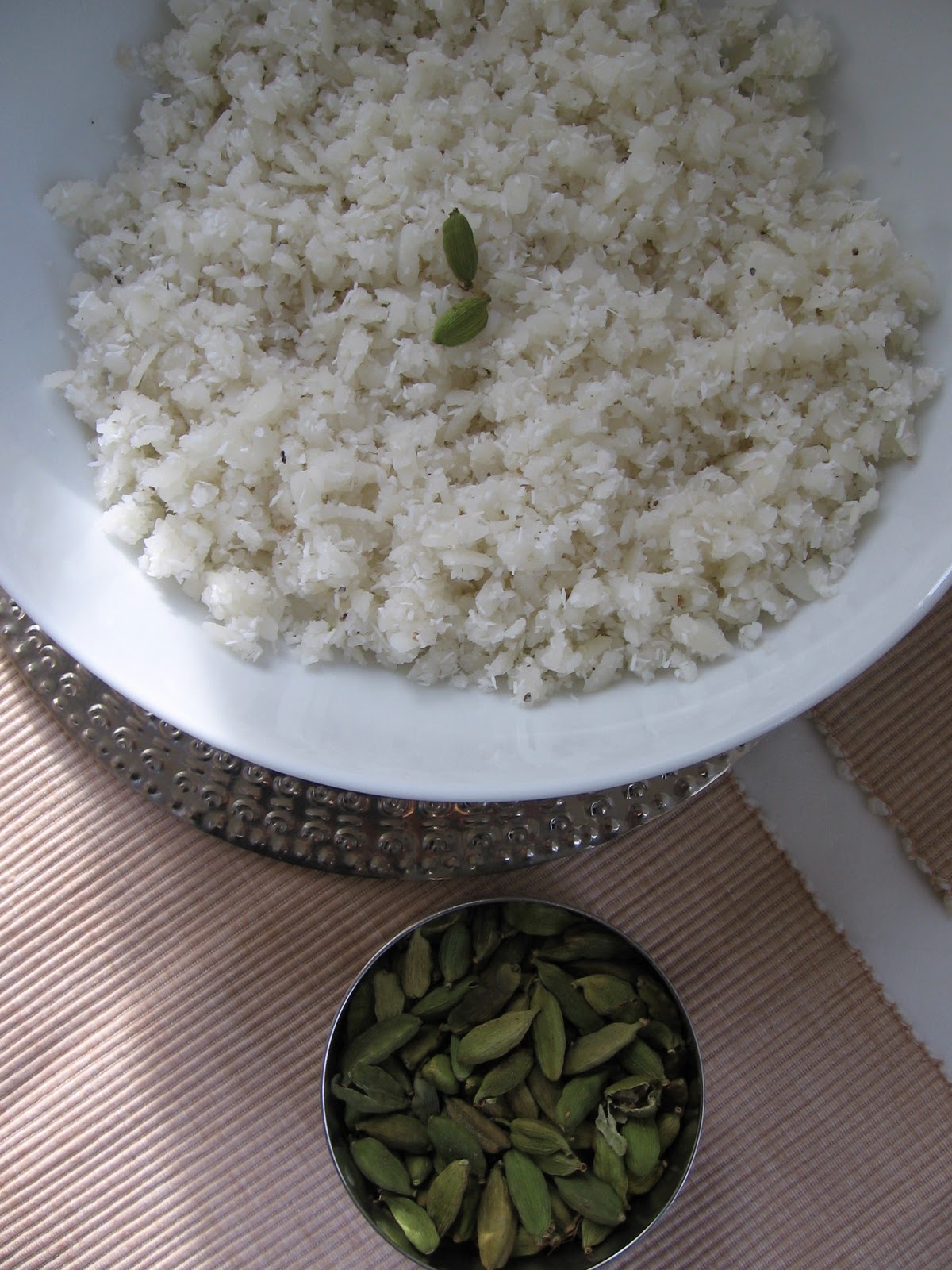
I was agonizing over what my first post should be. I could have written about how I’d won the battle of the great macaron, which was in fact a double challenge, as I had to replace the almonds with another pantry ingredient. Or about the elusive, and as I once thought glorified, meringue. The sheer challenge is fascinating, but macarons are French, or better yet Italian, and meringue is Swiss, and my ancestral roots are deep in the East. So I will start from home, so to speak.
|
|
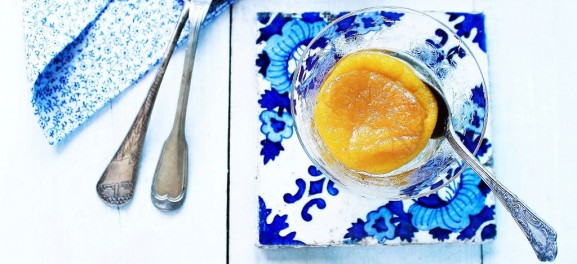
I recently discovered Mónica Pinto’s beautiful food photography when searching for World Food Blogs for my Food News Daily column. Of Portuguese origin, her recipes are often traditional Portuguese, but her photography is firmly rooted in the spirit of cutting-edge food photography. Mónica runs the blog Pratos y Travessas, writtten in both Portuguese and English.
|
|


Food Art: Herbed Lamb and Lentil Salad, food photography by Meeta Khurana Wolff
See more food photo compositions at Meeta K. Wolff or in our Food Art category. She also runs the popular blog What’s for Lunch, Honey?
Meeta, that’s my name given to me by my dad. I was born back in the summer of 1972, one beautiful day in Bombay, India. I was practically delivered in a hotel. That’s where my father has worked for most of his life and it’s what injected the hotelier’s blood into my veins. This hotel lifestyle enabled me to travel the world, get close to many cultures, learn a few languages, and experience many great adventures.
Knowing only a hotel life, I decided to follow my dad’s footsteps and studied Hotel Management, specializing in Marketing and Guest Relations. I trained in one of the finest luxury hotels of this world in Doha, Qatar. That is when a tiny spark for food was ignited in my soul.
I now have settled down in Germany, with the two men I adore, Tom, my loving partner for almost 10 years, and Soeren my adorable son of 5 6 7 years.
Hotels are not a part of my life in Germany. After graduating I came to Germany and worked in an advertising firm, an architecture and design firm and a couple of software firms. Don’t ask how that came about – it just happened. Glad it did too because along this path I bumped into and fell in love with Tom.
We are now in Weimar and you’ll laugh when I tell you this my traveling feet have begun to itch again! Let’s see where life takes us.
I love photography, always have, but it was with the start of this blog that I discovered the world of Foodography. Since then the passion for photography I developed has taken a complete new angle and opened so many exciting doors. I try to capture shots that speak a thousand words, that makes one feel as if they were a part of the scene and experience the photo with their senses. You tell me if I am succeeding!
You can see more of Meeta’s work at What’s For Lunch Honey.
|
|
In most recipes there are encouragingly few pitfalls. One mustn’t go berserk with the thought, but a quarter cup of liquid, a tablespoon more or less of butter, five minutes or so of cooking time are all variable and the sooner the beginning cook learns it the better the food will be.–Craig Claiborne
Craig Claiborne became food editor of The New York Times in 1957. Food editors didn’t really exist before him, at least in not any serious form. Thomas McNamee refers to him as The Man Who Changed the Way We Ate. Frank Bruni of The New York Times calls him “an anxious Southern man named Craig Claiborne sat on a remote island in the Pacific and plotted to turn the American culinary world on its head.” Claiborne also wrote a stream of bestselling cookbooks, including The New York Times Cookbook, The Chinese Cookbook, and Craig Claiborne’s Gourmet Diet.
|
|

Take 4 thick dry or toasted slices of hearty whole grain bread and tear it into bite-size pieces. Drizzle olive oil over it and add 2 to 4 cloves of crushed garlic, depending on how much you like garlic.
Mix and let it sit for a few minutes.
Take 8 large, extra-ripe red tomatoes. Cut into large chunks, and save all the juice. Mix into the bread and garlic.
Put into blender, with salt and pepper. Refrigerate and let it sit for a half hour or so, or several hours or overnight if possible.
Before serving, taste and then season with more salt, pepper and olive oil if necessary. Add ice cubes if you want it to be colder or thinner.
If you want to give the dish a bit of color or enhance it, add fresh coriander or basil, or a dollop of cream.
This batch will easily feed 4 or 5, and is better the second day, once it has marinated in the refrigerator.
This recipe is my version of a friend’s recipe for Seville-style gazpacho. The friend has chosen to remain incognito for reasons unknown to this writer.
This article was originally published on Geneva Lunch.
|
|
 Simon Says: Daily Food Quote, September 11, 2013
Don’t take any recipe on faith. There are some hostile recipes in this world.–Peg Bracken

One might say Ruth Eleanor “Peg” Bracken was an “anti-housewife”. She did what was necessary to take care of her family, who she loved very much, but did her chores “as seldom as possible.” Bracken wrote a series of humorous books on cooking, housekeeping, etiquette and travel, always conveying her point of view in a witty manner, which many housewives of the 60s related to. Her most well-known book out of the nine she wrote is the 1960 The I Hate to Cook Book. Bracken is quoted often.
|
|
 Meet Jonell Galloway, a freelance writer and editor specialized in French cuisine.