Saffron Culture: A Pictorial Cycle on Santorini, Part I

Published by Wednesday, September 25, 2013 Permalink 0

by Elatia Harris

OLYMPUS DIGITAL CAMERA

The Saffron Gatherer — one of many girls climbing hills to gather saffron, in Xeste 3, ca. 1750 B.C.E., a large public building in Akrotiri, on Thera (or Santorini). Restoration by painter Thomas Baker.

Part One in a series of articles on aspects of saffron. Photos under the title and below, of wall paintings from the excavated areas of Thera (also called Santorini), are taken from a magnificent site that has expired off the Internet, www.therafoundation.org.

How Far Back Does Saffron Use Go?

images

50,000 years ago in Western Asia, wild-gathered saffron was rubbed onto sacred stones on hilltop shrines. The sun picked them out, and they shone. Millennia later, saffron gave color, radiant in torchlight, to cave paintings in Iraq. Only relatively recently has the saffron crocus been cultivated, the spice valued as a flavoring for food. Before that, it was a ritual substance, a powerful medicine to relieve melancholy and other ills, and a dye for the clothing of high-born women. The association of saffron with female sexuality is long and intimate, referenced in the Song of Songs, in Homer and in Ovid.

The First Pictorial Record of Saffron and Saffron Culture

Where did the wild saffron crocus first appear? There are competing theories, but it’s down to Central Asia and Greece. Where was it first cultivated? In Greece. Saffron is the dark red thread linking many ancient peoples, and the first pictorial record of it was made in the Cyclades, on the island of Thera – more usually called Santorini – in the Late Bronze Age.

Until 1967, when the excavations of Prof. Spyridon Marinatos began bringing it to light, the clock had been stopped on the settlement of Akrotiri, on the Aegean island of Thera, for about 3,600 years. Volcanic ash from the Thera Eruption, the largest geological event of ancient times, had both destroyed and preserved the town, setting it apart from history for a very long time.

river1

A riverscape, from Akroitiri on the Island of Thera — 1800-1700 BCE

Akrotiri_minoan_town

A townscape on the harbor, Akrotiri. 1800-1700 BCE

In the centuries leading up to the eruption, dated around 1650 BCE, Thera was a dolphin-girt paradise, the southernmost island in the Cycladic arc, 70 miles north of Crete. Though Cycladic culture is not quite Minoan, material culture on Thera was rich in Minoan influence, and, through trade, in the influence of Dynastic Egypt. When the language of the Minoans, the tormenting Linear A, is at last understood, more will be revealed. For now, research must be conducted without history’s most ardent kiss — language that we can read.

A German map of the Cyclades and Crete, with Thera (here called Santorini) dead center. Wikimedia Commons

A German map of the Cyclades and Crete, with Thera (here called Santorini) dead center. Wikimedia Commons

phaistos-disc_pieces

The Phaistos Disc, key to the language used by Minoans and Therans

Thanks to the same geothermal activity that would one day disastrously increase, hot water ran in pipes through the multi-storied houses of Akrotiri, Thera’s big town. Ventilation was understood, with light wells sunk in blocks of dwellings. Then as now in the Mediterranean, staples were stored in gigantic ceramic jars – olive oil, grain, dried figs. There was intricate and characteristic jewelry and there was perfume — of coriander, almonds, bergamot and pine. Weaving was so fine that garments could be woven sheer and then embroidered. In the harbor, resinated linen covered the hulls of ships long enough for 30 oarsmen. There were blue-toned vervet monkeys from Egypt, tall stone vases for lilies, and sufficient paint for many radiantly colored and figured walls — had there not been paint, we would know very little of the rest.

And there was saffron. The wild-growing crocus species that produces saffron, C. cartwrightianus, has for purposes of cultivation mostly given over to a selection, C. sativus. Numerous crocus species, some with deep mythological associations, bloom in the late winter, the spring and the fall. C. cartwrightianus and C. sativus, with their petals of violet-blue, bloom in the late fall, a time of tremendous fecundity in both plant and animal life in the Mediterranean. It takes about 70,000 deep orange-red stigma to make a pound of dried saffron.

blue_monkey_detail_thera_4

Minoan Fresco wall painting of " Spring " from Minoan Bronze Age settlement of Akrotiri on the Greek island of Thira, Santorini, Greece. Athens Archaeological Museum.

Minoan_Miniature_Frieze_Admirals_Flotilla_Fresco_Art_Ship_Closeup_650px

In the building known as Xeste 3, larger and more decorated than any yet excavated at Akrotiri, a two-storied chamber of frescoes – true frescoes, painted on wet plaster for a time-defying bond – depicts women and girls gathering saffron crocus blooms, bringing them in baskets to a saffron-cushioned goddess seated on a three-tiered platform. It is by far the most splendid and evocative cycle of paintings from the ancient world to be discovered in our time, and a match for almost any painting from pre-classical antiquity. Xeste 3 was probably a public building – on an ashlar wall there is an altar surmounted by a painted pair of horns tipped and dripping in red and, below, a lustral basin, both too large for domestic use.

If public or semi-public rituals were performed here, then to what end? And in whose propitiation? And how was saffron involved? The cycle of frescoes in Xeste 3 poses many questions, and answers not a few of them most provocatively.

saff1

The Goddess on the Saffron Cushion… To be continued.

_______________________________________

SOURCES CONSULTED in the WRITING of THIS ARTICLE

Books

The White Goddess, by Robert Graves

The Masks of God, Vol. 3: Occidental Mythology, by Joseph Campbell

Creation of the Sacred: Tracks of Biology in Early Religion, by Walter Burkert

Art and Religion in Thera: Reconstructing a Bronze Age Society, by Nanno Marinatos

Thera: Pompeii of the Ancient Aegean, by Christos G. Doumas

Web Resources

Botanical Saffron

Excellent articles for determining this aspect of saffron — never make a botany-based mistake about saffron again!

http://gernot-katzers-spice-pages.com/engl/Croc_sat.html

http://en.wikipedia.org/wiki/Crocus_cartwrightianus

http://en.wikipedia.org/wiki/Crocus_sativus

http://www.botanicalgarden.ubc.ca/potd/2005/07/crocus_sativus.php

http://www.thealpinehouse.fsnet.co.uk/crocus%20pages/Crocus%204.htm

http://www.le.ac.uk/ebulletin-archive/ebulletin/news/press-releases/2010-2019/2010/03/nparticle.2010-03-04.html?searchterm=crocus

Wall Paintings of Thera

The best and most complete site left on the Internet — unfortunately the photos are tiny.

http://www.idryma-theras.org.gr/wall_paintings_exhibition.htm


Elatia Harris is a writer and consulting editor in Cambridge, Mass. She is most often at work on books and articles about food, wine and travel. Contact her at elatiaharrisATgmailDOTcom or via text at 617-599-7159.

Never miss a post
Name: 
Your email address:*
Please enter all required fields
Correct invalid entries

Simon Says: Daily Food Quote, September 20, 2013

Published by Wednesday, September 25, 2013 Permalink 0


Simon de Swaan, Simon Says, The Rambling EpicureSimon Says: Daily Food Quote, September 20, 2013

In a restaurant choose a table near a waiter.–Jewish proverb


Never miss a post
Name: 
Your email address:*
Please enter all required fields
Correct invalid entries

Rosa’s Musings: There is more to a sandwich than two slices of bread, a brief history of the sandwich

Published by Sunday, September 22, 2013 Permalink 0

by Rosa Mayland

A Brief History of the Sandwich


In this brief history of the sandwich, you’ll learn that a sandwich is an extremely versatile and universal food item consisting of two slices of bread in the middle of which is encased a filling, or of a single slice of bread garnished with a topping (tartines/bruschetta, smørrebrød, canapés, etc.). In both cases they come in an infinite number of varieties that differ in flavour, style, texture and size.

The origin of the term dates back to 1762 and saw the light of day in East Kent, England. According to legend, John Montagu aka the Fourth Earl of Sandwich was so busy gambling that he did not want to stop his activities in order to dine, so he ordered the waiter to bring him slices of roast beef enclosed in two wedges of bread. In this way, he could continue playing while eating and would in no manner dirty his fingers. That is how this quick and improvised snack became known as “sandwich”.

Even if the Earl gave his name to this popular “speciality,” it is to be said that bread has been served with meat and/or vegetables for centuries before this “invention” and that its forefather probably already existed in Neolithic times with the advent of the domestication of wheat. The first form of sandwich is attributed to the ancient Jewish wise man Hillel the Elder (~1st century B.C.) from Babylon who apparently put meat from the lamb sacrificed for Passover and bitter herbs (horseradish, chicory, sow thistle, eryngo, and lettuce) between pieces of matzo (kosher cracker-like, unleavened bread). Another genre of sandwich was common during the Middle Ages: thick slabs of stale bread called “trenchers” were used as plates and can be regarded as the precursors to the open-faced sandwich.

At the beginning, sandwiches represented a humble and simple lower-class meal, but by the middle of the 18th century, the aristocracy started serving them as a late-night collation, and they were considered very chic. Then with the breakthrough of the Industrial Revolution in the 19th century and its hordes of restless workers slaving away in factories, sandwiches became a working-class luncheon, since they were practical, easily accessible, nourishing (calorific), inexpensive, portable and could be eaten in a rush.

After having first appeared in England as well as Spain, the sandwich rapidly spread through the rest of Europe and the United States, where it was first promoted as an elaborate main dish. The 20th century saw the rise of the sandwich in the U.S. and the Mediterranean when bread became an indispensable component of people’s diet and started being consumed in much larger quantities than in the past.

Continue Reading…

Never miss a post
Name: 
Your email address:*
Please enter all required fields
Correct invalid entries

Published by Tuesday, September 17, 2013 Permalink 0

AllIsWell

Never miss a post
Name: 
Your email address:*
Please enter all required fields
Correct invalid entries

Israel-India: Food Wanderings: Jewish-Indian Fusion?

Published by Tuesday, September 17, 2013 Permalink 0

by Shulie Madnick

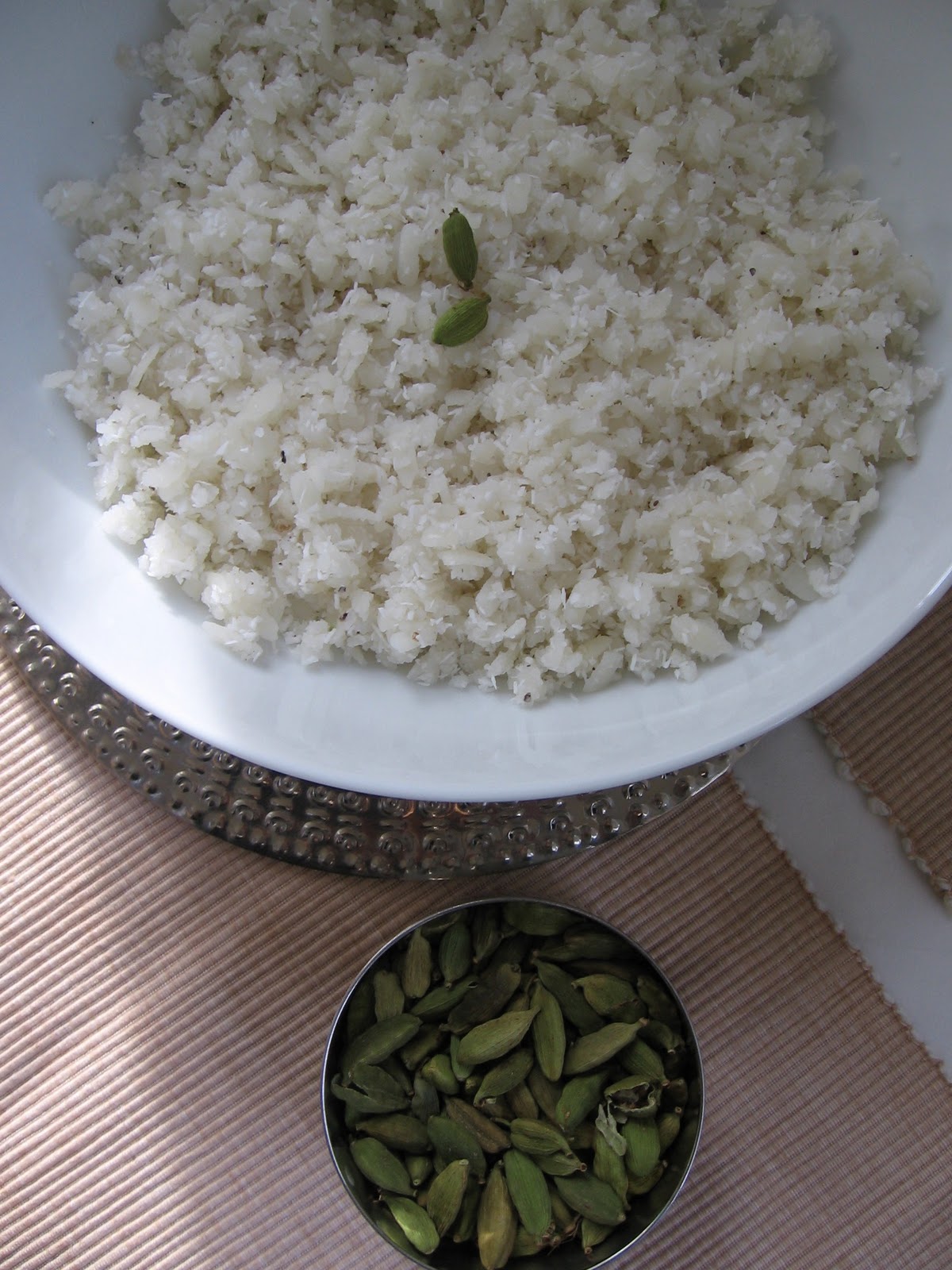
Malida, Sweetened Poha: Breakfast Cereal or Ceremonial Offering?

Introductions, please

Shulie: I am so pleased to be featured on The Rambling Epicure, this international, thought-provoking culinary site based in Switzerland. I love the multicultural content, which explores the world of food in depth and in all its facets, and brings us together as a community so that we better understand each other. Thank you, Jonell, I am honored to be a part of this wonderful journey. This post gives you a glimpse into my very mixed background.

Jonell: It’s unusual to find someone with such a rich and varied background as Shulie, yet still so close to her roots, who creatively weaves it all together to produce her very own Jewish-Indian fusion cuisine. This article is like an introductory culinary tour of the world, with a big dose of little-known Jewish history and culture thrown in. Got your bags packed? Here we go!

I was agonizing over what my first post should be. I could have written about how I’d won the battle of the great macaron, which was in fact a double challenge, as I had to replace the almonds with another pantry ingredient. Or about the elusive, and as I once thought glorified, meringue. The sheer challenge is fascinating, but macarons are French, or better yet Italian, and meringue is Swiss, and my ancestral roots are deep in the East. So I will start from home, so to speak.

Continue Reading…

Never miss a post
Name: 
Your email address:*
Please enter all required fields
Correct invalid entries

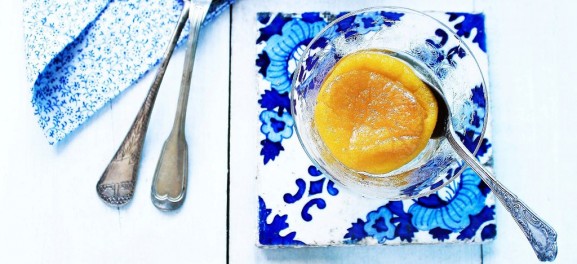
Food Art: Azulejos 2, food photography by Mónica Pinto

Published by Monday, September 16, 2013 Permalink 0

 Food Art: Azulejos 2, food photography by Mónica Pinto


I recently discovered Mónica Pinto’s beautiful food photography when searching for World Food Blogs for my Food News Daily column. Of Portuguese origin, her recipes are often traditional Portuguese, but her photography is firmly rooted in the spirit of cutting-edge food photography. Mónica runs the blog Pratos y Travessas, writtten in both Portuguese and English.

Continue Reading…

Never miss a post
Name: 
Your email address:*
Please enter all required fields
Correct invalid entries

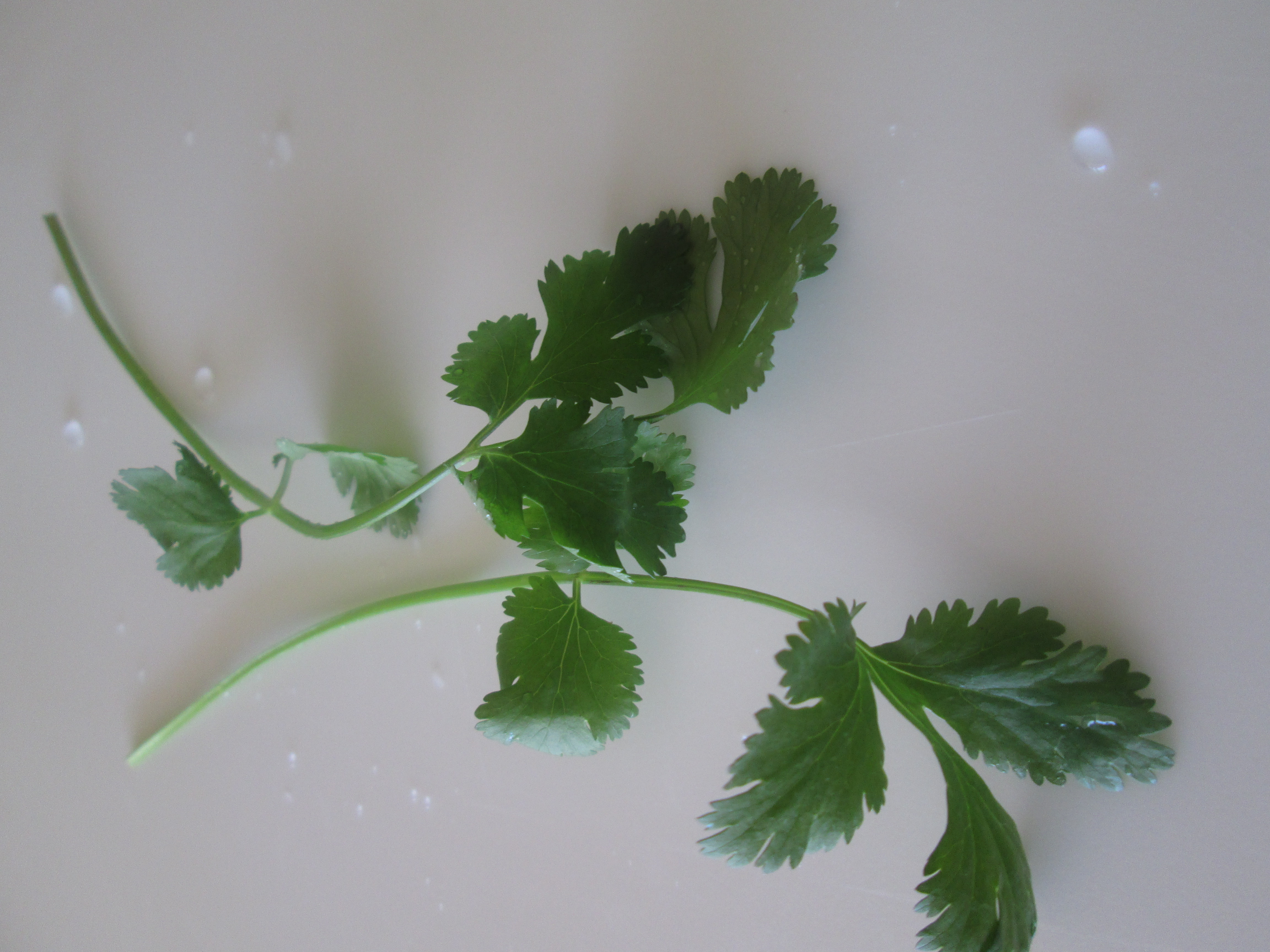
Simple Sustenance: Herb Magic — Creamy Cilantro-Lime and Cannellini Bean Spread

Published by Monday, September 16, 2013 Permalink 0

Simple Sustenance: Herb Magic — Creamy Cilantro-Lime and Cannellini Bean Spread
by Renu Chhabra

The more you eat, the less flavor; the less you eat, the more flavor.–Chinese Proverb

It is amazing how herbs can completely transform a recipe, giving it a whole new personality. Pureed with beans to make flavorful spread, processed with nuts for hearty pesto, or blended with oil or herb oil are just a few ways to taste the magic of herbs. Other blander dishes such as salads, grains, soups, stews, and breads also get fresh and delicious makeovers when they are in the company of herbs. And we can’t forget lavender cookies or basil ice cream, which add a few stars to the dessert category. It doesn’t take a lot to infuse their flavors to any recipe — sweet or savory. They always play their magic.

Continue Reading…

Never miss a post
Name: 
Your email address:*
Please enter all required fields
Correct invalid entries

Food Art: Herbed Lamb and Lentil Salad, food photography by Meeta Khurana Wolff

Published by Monday, September 16, 2013 Permalink 0
Food Art: Herbed Lamb and Lentil Salad, food photography by Meeta Khurana Wolff

Food Art: Herbed Lamb and Lentil Salad, food photography by Meeta Khurana Wolff

See more food photo compositions at Meeta K. Wolff or in our Food Art category. She also runs the popular blog What’s for Lunch, Honey?

Bio of Meeta Khurana Wolff

Meeta, that’s my name given to me by my dad. I was born back in the summer of 1972, one beautiful day in Bombay, India. I was practically delivered in a hotel. That’s where my father has worked for most of his life and it’s what injected the hotelier’s blood into my veins. This hotel lifestyle enabled me to travel the world, get close to many cultures, learn a few languages, and experience many great adventures.

Knowing only a hotel life, I decided to follow my dad’s footsteps and studied Hotel Management, specializing in Marketing and Guest Relations. I trained in one of the finest luxury hotels of this world in Doha, Qatar. That is when a tiny spark for food was ignited in my soul.

I now have settled down in Germany, with the two men I adore, Tom, my loving partner for almost 10 years, and Soeren my adorable son of 5 6 7 years.

Hotels are not a part of my life in Germany. After graduating I came to Germany and worked in an advertising firm, an architecture and design firm and a couple of software firms. Don’t ask how that came about – it just happened. Glad it did too because along this path I bumped into and fell in love with Tom.

We are now in Weimar and you’ll laugh when I tell you this my traveling feet have begun to itch again! Let’s see where life takes us.

I love photography, always have, but it was with the start of this blog that I discovered the world of Foodography. Since then the passion for photography I developed has taken a complete new angle and opened so many exciting doors. I try to capture shots that speak a thousand words, that makes one feel as if they were a part of the scene and experience the photo with their senses. You tell me if I am succeeding!

You can see more of Meeta’s work at What’s For Lunch Honey.

Never miss a post
Name: 
Your email address:*
Please enter all required fields
Correct invalid entries

Simon Says: Daily Food Quote, September 12, 2013

Published by Thursday, September 12, 2013 Permalink 0


Simon Says: Daily Food Quote, September 12, 2013

by Simon de Swaan

In most recipes there are encouragingly few pitfalls. One mustn’t go berserk with the thought, but a quarter cup of liquid, a tablespoon more or less of butter, five minutes or so of cooking time are all variable and the sooner the beginning cook learns it the better the food will be.–Craig Claiborne

Craig Claiborne became food editor of The New York Times in 1957. Food editors didn’t really exist before him, at least in not any serious form. Thomas McNamee refers to him as The Man Who Changed the Way We Ate. Frank Bruni of The New York Times calls him “an anxious Southern man named Craig Claiborne sat on a remote island in the Pacific and plotted to turn the American culinary world on its head.” Claiborne also wrote a stream of bestselling cookbooks, including The New York Times Cookbook, The Chinese Cookbook, and Craig Claiborne’s Gourmet Diet.


Never miss a post
Name: 
Your email address:*
Please enter all required fields
Correct invalid entries

Simon Says: Daily Food Quote, September 11, 2013

Published by Wednesday, September 11, 2013 Permalink 0


Simon de Swaan, Simon Says, The Rambling Epicure, SwitzerlandSimon Says: Daily Food Quote, September 11, 2013

by Simon de Swaan

Don’t take any recipe on faith.  There are some hostile recipes in this world.–Peg Bracken

One might say Ruth Eleanor “Peg” Bracken was an “anti-housewife”. She did what was necessary to take care of her family, who she loved very much, but did her chores “as seldom as possible.” Bracken wrote a series of humorous books on cooking, housekeeping, etiquette and travel, always conveying her point of view in a witty manner, which many housewives of the 60s related to. Her most well-known book out of the nine she wrote is the 1960 The I Hate to Cook Book. Bracken is quoted often.

Continue Reading…

Never miss a post
Name: 
Your email address:*
Please enter all required fields
Correct invalid entries

UA-21892701-1