The Vergers d”Aigle et d’Yvorne is tucked into the heart of the Chablais region in French-speaking Switzerland. For more than 40 years now, they have been growing a wide range of fruit, grown under strict environmentally-friendly conditions. This fruit expresses the true terroir of the Chablais region.
Their fruit, including more than 40 varieties of apples both antique and modern, are available at producer prices, much fresher than store-bought apples, with more than 20 varieties available. The website lists the expected dates for each fruit grown.
In September, they also sell the cherished Fellenberg plums.
In season, you can pick your own cherries, with a choice of over 10 varieties.
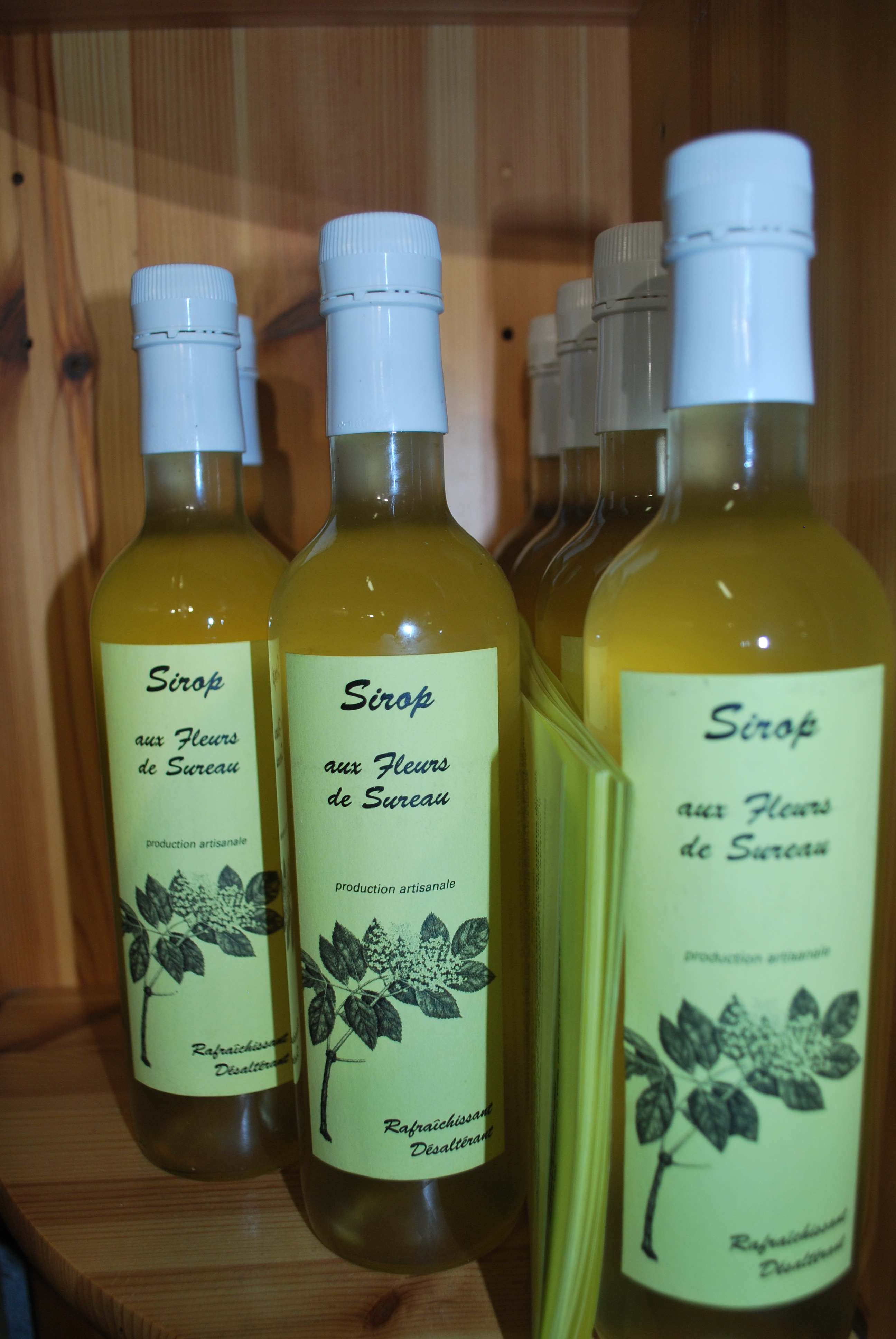
Bertrand et Martine Cheseaux also offer a wide range of local artisanal products, including oils, vinegars, apple juice, eggs (great quality!), honey and fresh vegetables.
This year, in the context of the Semaine du Goût, or “tasting week”, which runs from September 13 to 23, 2013, they will be offering guided tours of their orchard of some 10 varieties of antique apples, along with tasting. This will take place on Saturday, September 21, with visits at 10 A.M. and 2:00 P.M. It is advisable to reserve a place. To reserve, call 41 (0)79 397 59 72 send an e-mail to info@vergers.ch.
Les Vergers d’Aigle et d’Yvorne Bertrand & Martine Cheseaux Route d’Evian 32 CH – 1860 AIGLE Switzerland
Life is a combination of magic and pasta.–Federico Fellini
Federico Fellini, an Italian film director and scriptwriter, was born on January 20, 1920, in Rimini, Italy. Part of the Italian Neorealist movement, Fellini was known for a distinct style that blends fantasy and baroque images. His major works are La Dolce Vita and 8 1/2. Fellini. “At least half of all film-makers asked about the directors they most admire include Federico Fellini in their top three,” says The Guardian, and he is considered one of the most influential filmmakers of the twentieth century, winning five Academy Awards, to become the person who won the highest number of Oscars for Best Foreign Language Film in history. He died October 31, 1993.
Claudia Roden is a cookbook writer and cultural anthropologist based in the United Kingdom. She was born in 1936 in Cairo, Egypt. A Book on Middle Eastern Food is a classic in the world of cookbooks, and James Beard referred to it as “a landmark in the field of cookery.”
I am terrified of heights. Put me on the top floor of a building looking down through glass panes or, worse yet, from the edge of a balcony, and my knees buckle as I grasp for a handhold. My heart pounds at the idea of funiculars or Ferris wheels and their anticipatory crawl up into the clouds. That glance down comes with the fear of knowing that when I finally reach the summit I will be staring into emptiness, a deep void, an near-endless drop only broken by the tiny ant-like beings down on safe, sturdy ground staring up at me, ogling, daring me to make the leap so they can break my fall.
Roller Coasters slowly, painfully inching their way up until a mere thread is holding me over a dizzying descent make my head spin as my breath comes out, barely, in short, quick gasps. Airplanes, those silver boxes offering me quick passage to my loved ones, have me in a panic when I think of the nothingness holding them up. My very pragmatic, scientific husband refers to this seemingly (or so he says) irrational fear of heights as Cosmic Vertigo, these images in my overactive imagination of climbing up and standing on the edge of a precipice only to be pushed off of solid ground and plunging into emptiness, the unknown. So I never climb onto a Ferris wheel, it is impossible to convince me to climb aboard a roller coaster; as we spin our way up the glass elevator in the Mole Antonelliana in Torino or wander around the top balcony of the Eiffel Tower my eyes stay firmly squeezed shut and I can’t even look through the eyepiece of a telescope, nor am I comfortable wearing 3-D glasses or watching the world spin on Google maps. Yes, I am terrified of heights.
Cookery is naturally the most ancient of the arts, as of all arts it is the most important.–George Ellwanger, Pleasures of the Table, 1903
George Ellwanger was a prominent horticulture scientist, born in Württemberg, Germany. Ellwanger immigrated to the United States, settling in Rochester, New York, where he and Patrick Barry formed the Mount Hope Nursery (also known as the Ellwanger and Barry Nursery) in 1840. In 1843, the nursery began publishing catalogs to increase sales.
Translated from the French and adapted by Jonell Galloway. Cliquez ici pour la version française.
If you ask an artisan bread baker who is passionate about his work from where he derived his passion, he or she will almost invariably reply, with no hesitation, that it arose out of the “mystery of the fermentation.” Did you know that bread is the result of an alcoholic fermentation, and the baker therefore actually manufactures alcohol? Now how does that come about, you might ask?* (If you’re interested, read the very technical footnote below.)
It’s not really surprising that a bread baker shares the wine maker’s penchant for the processes of “alteration,” “deterioration,” and “transformation,” which make them both somewhat sorcerers, metaphorically speaking. While a baker talks about bread fermentation, the wine maker continually refers to “maceration,” and the cheese maker to “maturation.” But whether it consists of alcoholic or lactic fermentation, we are still talking about transubstantiation, a sort of “sacrament,” which creates an aura without parallel around these “artists”. They are aware of this, and they know it is at the very heart of their art. Bread baker, cheese maker, wine maker: they all fight the same battle, that of transformation of food, of true metamorphosis.
When does dough become bread?
At the same time, at what point in this long sequence of processes does the product we actually consume merit the name “bread”? This is not an easy question.
In most of our minds, bread is a loaf or a baguette; it is ciabatta in Italy and pumpernickel in Germany. In Iran, they call it sangak, in Denmark, rugbrød, in Jamaica, bammy, eaten straight out of the oven.
Can we call the fat roll of dough after kneading and shaping or left to rise “bread”? Is the dough left to ferment in the dough trough not already bread?
The large sacks of flour that the miller delivers every morning, are they not, in some ways, already bread? Is a grain that we mill, or even a seed that we plant, not bread? Is leftover bread, bread we let dry, whether on purpose or not, and that we use to make croutons for a thick winter’s soup that we lap up like a Jacques Brel song, not also bread?
This 7 Lives of Bread column will explore every facet of bread, walking you through all the phases of transformation, from seed and grain to the end product you savor.
The 7 Lives of Bread will trace the life of a loaf of bread, from its “birth” to its “death”. Bread is therefore:
The grain prepared for milling.
The flour that results from milling.
The dough that seals the coming together of flour and water, a meeting that starts the fermentation process.
The dough roll that is detached from this initial bulk of dough, and then starts down its own individual path.
The dough roll when it is baked in the oven.
The bread we choose at the bread bakery, or the bread we make ourselves.
Stale bread, that can be baked again (the term “biscuit” means literally, in French, “cooked twice”, in the spirit of Melba toast) so as to conserve it for future use.
The latter is typically the bread of sailors and nomads. The Greeks – great seafarers — are given credit for having invented the double cooking process.
The 7 paths: in the sweat of thy face shalt thou eat bread
In the 7 Lives of Bread, we will explore all seven paths of these seven “lives”. If fermentation is at the very heart of bread baking, it can also be considered that all steps – from the cultivation of wheat and milling to the actual bread making itself – are active participants in the transformation process.
This concept is aptly put in Genesis 3:19: In the sweat of thy face shalt thou eat bread, till thou return unto the ground; for out of it wast thou taken: for dust thou [art], and unto dust shalt thou return.
Bread is therefore to be taken in like mother’s milk, earned with the sweat of our brows. Symbolically, it is interesting to attempt to understand why bread has a price, the price of transformation or of conversion: the bread changes to the same degree as the man or woman who makes it.
If we look at it in this light, for ten thousand years now, it is as much bread that has shaped humankind as it is the hands of women and men who have shaped bread. The realization of this reciprocal shaping and, through it, conversion is the starting point of this column.
*The chains of starch (complex carbohydrates, which along with gluten constitute the essence of the endosperm or starchy kernel and quantitatively speaking, the essence of the wheat grain), under the action of enzymes or amylases, are broken down into simple glucose (C6 H12 O6), which is, in turn, converted by yeast or enzymes into either carbon dioxide (2CO2) and ethanol or ethyl alcohol (2C2 H5 OH) and energy.
Jean-Philippe de Tonnac is editor of the Dictionnaire Universel du Pain or Universal Dictionary of Bread, published in French by Éditions Laffont on October 16, 2010.
Les sept vies du pain / The 7 Lives of Bread Click here for English version.
Si vous demandez à un artisan boulanger passionné par son métier de vous dire où s’origine sa passion, vous verrez que la plupart du temps, la réponse qui vous est faite a trait de près ou de loin au « mystère de la fermentation ». Saviez-vous que le pain est la résultante d’une fermentation alcoolique et que le boulanger est donc une sorte de fabricant d’alcool ? Comment cela ? Voyez la note *
Pas étonnant alors qu’il partage avec le vigneron ce goût des « corruptions », « dégradations », « transformations » qui fait d’eux des apprentis sorciers. Si le boulanger parle de « fermentation panaire », le vigneron évoque, lui, la « macération », quand, de son côté, le fromager mise sur l’ « affinage ». Mais qu’il s’agisse de fermentation alcoolique ou lactique, nous sommes bien rendu au lieu d’une transsubstantiation qui confère à ces artistes une aura sans pareille. Eux le savent et c’est là que se concentre l’essentiel de leur art. Boulanger, fromager, vigneron : même combat, celui des mutations et métamorphoses alimentaires.
Il est en même temps bien difficile de déterminer, dans la longue séquence de la panification, où se trouve le pain ? Le pain est, très probablement, cette grosse miche, ou cette baguette, ou cette ciabatta (Italie), ou ce pumpernickel (Allemagne), ou ce sangak (Iran), ou ce rugbrød (Danemark), ou ce Bammy (Jamaïque) qui sortent du four. Mais n’est-il pas aussi ce pâton posé sur le tour après façonnage ou laissé en repos dans le parisien ? N’est-il pas cette pâte laissée à fermenter dans le pétrin ou en bac (pointage en masse) ? N’est-il pas dans ces sacs de farine déposés le matin même par le meunier dans le fournil ? N’est-il pas, en amont, un grain qu’on écrase, voire même un grain qu’on sème ? Et en aval, un pain qu’on a laissé, intentionnellement ou non, sécher et qui termine ses jours dans une soupe épaisse dégustée, comme dans la chanson de Jacques Brel, avec des grands « slurp » ?
Switzerland: Bénichon Mustard, A Fribourg Specialty to Welcome the Descent of the Cows
by Jonell Galloway
Bénichon mustard is quintessentially Swiss. It is a specialty of the canton of Fribourg.
It is more like a spicy jam than a mustard, in the traditional sense of the word. Its ingredients give it a sweet and sour taste.
It is traditionally eaten with another Fribourg specialty, cuchaule, a light brioche-like sweet saffron bread, during an annual village fair to celebrate and “bless” the autumn harvest and bringing down the herds of cattle from the mountains. This is now held the second week in September.
There are numerous recipes, but they traditionally include mustard flour (or powder), extra-white flour, white wine, fortified wine, rock candy and water, to which cinnamon, star anise and whole cloves are added.
It’s really quite easy to make. I’ve translated the Bénichon recipe and adapted it.
Suggestion: Do this on a day when you’ll be at home all day, or soak the mustard powder over night and finish off the recipe the next day.
One by one things fall away,
everything but the sweet earth itself.
Already this year he has watched the nest’s
careful brush of twigs lose a summer song.
He leans his bicycle against the tree.
Tuscany never changes, they say, but the mountains
seem smaller, each season, as he goes north
toward Pietrasanta. Only carciofi remain the same, clustered
to the earth. Year after year, this time, the tough fruit
is left for the last of those who want it.
My grandfather picks them here, although he
is not a farmer, he knows where on the stem
to reach. A scholar who saw the world as
a work of art, he holds them like this,
carries them back to his small apartment
past the piazza, behind the University wall.
Pisa. Can you see the dirt on his hands, as he
cups them close, their hard skins,
dusty particles beneath his nails.
What moved him to hunger, and when, that night
we can’t know, but that he ate carciofi, the diary
reveals; a plant flavored with olive oil.
Maybe after the lamp was lit, a tiny flask
of oil was brought out, pressings
from a vat near Granoia. Adding
salt from a bowl, the mineral
makes a fragrance rise, enough to move him to
open the small window and, by luck, hear a nightingale.
Later he will lean over his drawings. But right now he
puts the finished leaves in a bowl. This is the man who
imagined the gas-driven tractor which would
someday ride the fields of uneven ground.
Tonight there is only the vision of a vehicle
in his head, for he feels refreshed after dining.
How strange to rest, brushing his hand across the
linen, smudging it, without thought. ll paese della meraviglia. He will
visit the farmer again, take from his fields,
But for now the mind feasts on what the eye has
seen, villas with ochre walls, pink terra cotta roofs,
factories with old doors, the ride out of town
pedaling past olive groves, apple trees pinned against
fences, pruned grape vines ready to burst,
covers pulled taut over seeded ground, the sun
to the sea, peaceful snow on the mountains.
Everywhere he looks, the land ready for a new way to harvest.
————————————————————————–
This poem was originally published in Water on the Sun.
This poem was originally published in Ocho #8 (goss 183:: Casa Menendez) and Sounds Like Something I Would Say (Casa Menendez).
Grace Cavalieri is the author of several books, and produced plays. Grace edited, along with translator Sabine Pascarelli,The Poet’sCookbook; Recipes from Tuscany (Bordighera Press, 2009,) and The Poet’s Cookbook: Recipes from Germany (Forest Woods & Goethe Institut, 2010). Her new books are Navy WifeandSounds LikeSomething I Would Say (Goss 183::Casa Menendez, 2010.) Previously published is Anna Nicole: Poems, winner of the 2009 Paterson Award for Literary Excellence. She’ produces “The Poet and the Poem,” now beginning its 34th consecutive year on public radio. Her new play for children, ”Lena’s Quilt,” premiered in NYC libraries and museums, 2010 and is now running in the 2011 Harlem Renaissance Production in New York City.
Photo of artichokes courtesy of Xedos 4.


 Switzerland: Antique Apples at Les Vergers d’Aigle et d’Yvorne, a Photo Essay