European Food Fact: What’s a “bonbon”?

Published by Monday, November 21, 2011 Permalink 0

by Jonell Galloway

Bonbons, which we call in English sweets or candy, are a recent enough arrival on the European food scene. The Crusaders brought back sugar cane from the Orient, arriving first in Sicily, where Jewish scientists in Sicily carried out experiments on it in around 1230. Until then, Europeans made their sweets using fruit juice and honey, often flavored with cinnamon.
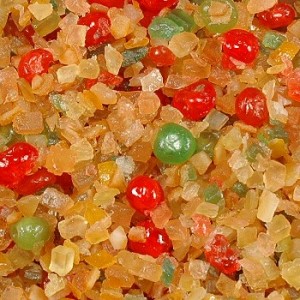
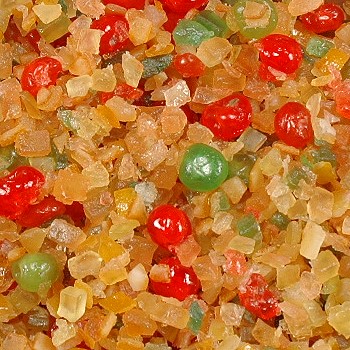
Candied fruit, fruit confit,
one of the first forms of bonbons or candy
 

Candy instantly became the rage and techniques were refined. During the Renaissance, men of means carried bonbonnières, or candy holders, in their pockets, often decorated with precious stones, and offered ladies candy from them.

Bonbonnière, traditional French
porcelain candy dish


Wikipedia notes that the  “Middle English word “candy” began to be used in the late 13th century, coming into English from the Old French çucre candi, derived in turn from Persian Qand (=قند) and Qandi (=قندی), ‘cane sugar’.”

Continue Reading…

Never miss a post
Name: 
Your email address:*
Please enter all required fields
Correct invalid entries

I’m having baked sweet potatoes for Thanksgiving!

Published by Monday, November 21, 2011 Permalink 0

by Jonell Galloway

Sweet potatoes are a traditional part of a American Thanksgiving dinner. Every family has its own favorite or traditional recipe. Here’s mine, in all its simplicity.

Annou sweet potatoes


I love sweet potatoes for their natural flavor and texture, so I simply scrub them really well and bake them, with the peeling on, at 200° C / 400° F until they’re soft enough to eat.  The time depends on the time and variety of sweet potato. I then cut them crosswise into chunks (still leaving the peel), put them into a serving dish, and slather them with butter with sea salt, which I buy from my cheesemonger.

No marshmallows, no brown sugar, no maple syrup, just au nature.

It’s interesting to watch Europeans’ reactions to them. At first they’re puzzled, but on their second bite, they usually find them interesting and like them.

Note: If you peel them, they will dry out in the oven.

Continue Reading…

Never miss a post
Name: 
Your email address:*
Please enter all required fields
Correct invalid entries

French Food Fact: What is the true meaning of the word “fondue”?

Published by Saturday, November 19, 2011 Permalink 0

by Jonell Galloway

For most of us, the word “fondue” conjures up images of poking those long skinny forks into a piece of bread and dipping it into a Swiss-style melted cheese fondue on the table in front of us, while sitting in a rustic chalet in the mountains with a beautiful view out over the mountains. Fondue certainly can mean that, but it doesn’t always.


The word literally means “melted” in French and should, if all be told, be used as an adjective. Although the name has been twisted a bit from the original meaning over the years, it still strongly retains traces of the original meaning, since it always includes the sense of something solid like cheese or chocolate melting into a sauce or pulp. The one exception to this is Burgundy fondue, which is basically like a smaller version of the medieval boiling pot of oil that was poured over the heads of invaders, and if spilled on you, it may not kill you, but it is highly possible it will leave you with lifetime scars.

The original fondue originated in Switzerland, and consists of a cheese sauce made with cheese, corn flour, kirsch, garlic and sometimes flavorings, such as wild mushrooms, tomatoes, shallots, depending on the canton.

Eighteenth-century French gastronome Brillat-Savarin also used the term in his Physiologie du goût, or Physiology of Taste, considered one of the great classics of all time on French cuisine. His fondue consisted of scrambled eggs and cheese, and the cheese was melted.

Many vegetable preparations also go by the name fondue. When vegetables are cooked slowly in fat for a very long time, they eventually start to “melt” and form a pulp. They can then be used to make sauces or as constituent elements in other dishes, for example fondue of carrots or fondue of onions.


Never miss a post
Name: 
Your email address:*
Please enter all required fields
Correct invalid entries

Food Art: Indian Food Journey, a Food Photography Exhibition by Kulsum Kunwa

Published by Thursday, November 17, 2011 Permalink 0

I’ve admired Kulsum Kunwa’s wonderful mix of cutting-edge photography and traditional Indian dishes for a long while now, so I am thrilled to have her exhibit on The Rambling Epicure.

Kulsum is an Indian expat living in Kuwait and shares her love for Indian food and photography through her beautiful blog Journey Kitchen, sharing recipes and family stories, reliving the times she lived in India. She brings a little of India everywhere she goes.

Never miss a post
Name: 
Your email address:*
Please enter all required fields
Correct invalid entries

Simple Sustenance: Cumin-Lime Pumpkin Mash

Published by Thursday, November 17, 2011 Permalink 0

by Renu Chhabra

Savoring Fall

Delicious autumn! My very soul is wedded to it, and if I were a bird I would fly about the earth seeking the successive autumns.–George Eliot

Fall is a perhaps the earthiest of seasons. Crisp air, fallen leaves, and trees changing hues make it a season to savor before winter sets in. For me, it’s a pleasant reminder of the holiday season ahead. But most of all, fall brings us an abundance of harvest.

The first thing that comes to my mind is pumpkin – the good old orange ball, greeting us at farm stands and grocery stores. Big, small, mini, round, and some not so round — they all whisper, “Take me home with you!”  How can you ignore these scrumptious beauties? Even though they are not the easiest of fruits to peel,  if you can win that battle, there are endless ways to enjoy them, sweet or savory.

Continue Reading…

Never miss a post
Name: 
Your email address:*
Please enter all required fields
Correct invalid entries

Simon Says: Daily Food Quote, November 17, 2011

Published by Thursday, November 17, 2011 Permalink 0

by Simón de Swaan

XVIII .  He who plays host without giving his personal care to the repast is unworthy of having friends to invite to it.—Jean Anthelme Brillat-Savarin

Jean Anthelme Brillat-Savarin was a French lawyer and politician, and gained fame as an epicure and gastronome. His famous work, Physiologie du goût (Physiology of Taste), was published in December 1825. The full title is Physiologie du Goût, ou Méditations de Gastronomie Transcendante; ouvrage théorique, historique et à l’ordre du jour, dédié aux Gastronomes parisiens, par un Professeur, membre de plusieurs sociétés littéraires et savantes. The book has never been out of print since it first appeared, two months before Brillat-Savarin’s death. Its most notable English translation was done by food writer and critic M.F.K. Fisher, who remarked, “I hold myself blessed among translators.” Her translation was first published in 1949.


Continue Reading…

Never miss a post
Name: 
Your email address:*
Please enter all required fields
Correct invalid entries

Food Art: Indian Medley, food photography by Prerna Singh

Published by Thursday, November 17, 2011 Permalink 0

Prerna Singh runs the award-winning food blog Indian Simmer, which was a finalist in the prestigious Saveur Best Food Blogs this year. Her photos are at the same time sophisticated and rustic, giving a natural yet polished look to the simplest of foods. She grew up in India, but now lives in the U.S. with her husband and daughter.

Prerna uses a Canon 50mm f1.4 lens and photographs in natural light, occasionally using reflectors.

Continue Reading…

Never miss a post
Name: 
Your email address:*
Please enter all required fields
Correct invalid entries

Health Challenge: Luscious Red Cranberries, good for your Health and Good for your Heart

Published by Wednesday, November 16, 2011 Permalink 0

by Tamar Chamlian

5 Easy Ways to Use Cranberries to Make Dishes Healthier and Add Pizzazz

Cranberry harvest in New Jersey.

Cranberry harvest in New Jersey in U.S.


It’s autumn, a season when the color of much of nature goes red by default — vineyards, trees, Japanese oaks, Virginia creeper. Houseware and kitchen accessories — and even Starbucks — magically sells everything in red, even the paper cups. Except for cranberries, which are naturally red, and we have plenty of good reasons to eat them in abundance during the two months they are available, not just for their color, but for their taste and health benefits.

Here are five easy ways to incorporate cranberries into pretty much any dish you’re whipping up.

Continue Reading…

Never miss a post
Name: 
Your email address:*
Please enter all required fields
Correct invalid entries

Simon Says: Daily Food Quote, November 16, 2011

Published by Wednesday, November 16, 2011 Permalink 0

by Simón de Swaan

Let the revolting distinction of rich and poor disappear once and for all, the distinction of great and small, masters and valets, of governors and governed. Since all have the same needs and the same faculties, let there be one education for all, one food for all.–François-Noël Babeuf, 1796

François-Noël Babeuf, known as Gracchus Babeuf (in tribute to the Roman tribunes of the people and reformers, the Gracchi brothers, and used alongside his self-designation “Tribune”), was a French political agitator and journalist of the revolutionary period.


Image by John Leech, from: The Comic History o...


Never miss a post
Name: 
Your email address:*
Please enter all required fields
Correct invalid entries

David Downie, the Accidental Parisian: New Interview by American Library in Paris

Published by Tuesday, November 15, 2011 Permalink 0

David Downie, our France and Italy correspondent, has just been interviewed by the American Library in Paris in one of the best interviews I’ve seen to date. “I’m an accidental Parisian: my early encounters with Paris in the 1970s left me wondering what all the commotion was about. Pompidou was playing Napoleon III—or Baron Haussmann—and the city seemed like one endless worksite, an experiment in brutalism, populated by people Sophia Loren once described as “Italians in a bad mood.” Click here to read on.

Never miss a post
Name: 
Your email address:*
Please enter all required fields
Correct invalid entries

UA-21892701-1