David Downie: Truffles in Black and White: Part Two, Truffle Hunting in Piedmont

Published by Thursday, February 23, 2012 Permalink 0

//
by David Downie

Truffles in Black and White: Part Two, Truffle Hunting in Piedmont, Italy

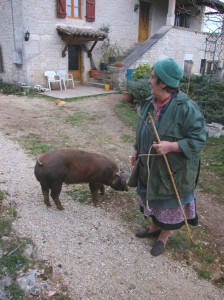
The scent of truffles is what draws trained dogs and pigs to them. Wild or cultivated, truffles grow at random around host trees and must be hunted out and carefully removed using a small pick or trowel.

Eighth-generation truffle hunter and dog trainer Renato Agnello, a wiry dynamo in his late 60s, teaches truffle hunting at Alba’s Centro Nazionale Studi Tartufi (CNST) and leads simulated hunts. In Alba’s main square, Piazza Risorgimento, Agnello opened the back hatch of a muddy FIAT Panda and introduced me to his aging truffle hound, Diana. We drove at breakneck speed into vineyards bordering the Tanaro River south of town. The smell of Diana, dirt and truffles was dizzying.

Photo courtesy of Alison HarrisIn Italy, truffle hunters must be registered, trained and licensed. Piedmont’s 10,000 are reputed to be secretive. Agnello was expansive. “I’ve been at it 61 years,” he laughed. “With people and dogs it’s genetic.”

Italian law states that truffles on public or private land belong to their finder. To keep truffle hunters out, private property must be fenced and posted “no trespassing.” Trespassing is common, however, particularly in central Italy’s commercial black truffle plantations (there are no white truffle plantations).

Continue Reading…

Never miss a post
Name: 
Your email address:*
Please enter all required fields
Correct invalid entries

Our favorite food books of 2011

Published by Friday, December 23, 2011 Permalink 0

by Jonell Galloway

Cookbooks:

Ancient Grains for Modern Meals, by Maria Speck

My favorite cookbook of the year. Maria Speck knows how to incorporate ancient whole grains from around the world into dishes that remain rustic on the edges, but healthy, original and elegant at the same time. The technical explanations about ancient grains are excellent, as well as her explanations about general cooking techniques. The food stories she incorporates here and there about growing up in Greece and Germany add a touch of charm.

A must for any health-conscious real food lover who wants to eat interesting food combinations and dishes with a touch more sophistication that can pleasantly surprise guests, but not take them totally away from their references, because the dishes are for the most part influenced by Mediterranean cuisine.

For poetry-loving foodies:

The Poet’s Cookbook: Recipes from Germany, poems by 33 American poets with German translations

The Poet’s Cookbook: Recipes from Tuscany, poems by 28 Italian and American poets

I love the original concept of these books, pairing a food poem with a recipe. A poem by our Food Poetry Editor, Christina Daub, “Wine“, appears in the Tuscany version.

Farming: A Hand Book, by Wendell Berry

As a Kentuckian, Wendell Berry has forever been my mentor. He is, in my mind, the precursor of the Slow Food philosophy in the U.S., through the philosophy he has cultivated and spread for over 50 years now, well before Petrini and company started the Slow Food movement. Whether writing prose or poetry, he is always eloquent, and the same message of integrity, respect for others and for the land is the central message. This is one more inspiring book of poetry to add to our shelves of books to keep forever, that will comfort us in times of trouble, that we will pick up time and time again when we’re losing faith in humanity, devastated by the disrespect shown to the land, losing touch with our roots. Berry always says what he thinks in all his eloquence and with true gentillesse, but more than that, he lives the life he preaches, and that is consoling.

For food lovers, wine lovers, and culinary travelers:

Food Wine Rome, by David Downie and Alison Harris, published by The Little Bookroom, part of The Terroir Guides series

Food Wine Burgundy, by David Downie and Alison Harris, published by The Little Bookroom, part of The Terroir Guides series

Paris, Paris: Journey into the City of Light, by David Downie

David Downie writes wonderful articles for The Rambling Epicure and Alison does exquisite food photo exhibits for our Food Art section. I can never get enough of their work, because the writing is exquisite and full of literary and historical references, and the photos are truly art. Downie always shows you the insider’s view of whatever he writes about, and Alison has a great eye for catching the very essence of what they’re covering, whether it be truffle hunting or discovering little out-of-the way restaurants in isolated villages. You can never go wrong with their books.

For bread lovers:

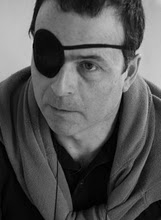
Dictionnaire Universel du Pain, by Jean-Philippe de Tonnac

Jean-Philippe de Tonnac also writes for The Rambling Epicure, and has recently become THE bread writer all bakers want to meet. This book should in my mind be translated into English immediately. It offers a wealth of information about bread from time immemorial, covering techniques and breads from around the world, as well as spirituality, sex, gluten intolerance, bakers as poets, bakers as prophets and much more. “Encyclopedia” would be a more appropriate term than “dictionary”.

Mindful eating:

The Self-Compassion Diet: Guided Practices to Lose Weight with Loving-Kindness by Jean Fain

Jean Fain has tried every diet out there, so she can speak with authority about the subject of weight loss. She is also affiliated with Harvard Medical School as a psychotherapist, so she has the credentials to talk about the subject. Her book takes a totally different approach to weight loss than any I’ve seen. She doesn’t count calories and restrict what you eat. Her approach is instead through the mind, to become mindful of what we eat, when we eat (when stressed or lonely, for example), why we eat (out of need to nourish ourselves or out of boredom or frustration); to appreciate what we eat, and above all to be conscious of our entire relationship with food.

The book teaches you how to take control of yourself and your relationship to food so that you can change the way you think about food in general, so that eating becomes a totally different experience. Jean does this through loving-kindness, self-hypnosis, meditation and numerous other weight-loss approaches, which you follow gradually, not all in one go. She also offers a CD including guided meditations to help patients after they have stopped therapy.

Her main thrust is self-love, that we must not be too hard on ourselves, or we’ll fall back in to our old and bad habits quickly. The beauty of the book and CD combination is that you can live half way around the planet and still follow her method.

For lovers of literature: food essays and prose:

Slow Food: Collected Thoughts on Taste, Tradition, and the Honest Pleasures of Food, by Carlo Petrini and Ben Watson

This book consists of an anthology of articles by the world’s top food writers, making me remember the old days when we’d visit the family in the countryside and how I thought it odd that they grew all their vegetables themselves and knew how to can them; how they drank milk straight from the cow (one of my fondest childhood memories), and how we relished in those meals, how it built bonds between us. “Drawn from five years of the quarterly journal Slow (only recently available in America), this book includes more than 100 articles covering eclectic topics from “Falafel” to “Fat City.” From the market at Ulan Bator in Mongolia to Slow Food Down Under, this book offers an armchair tour of the exotic and bizarre. You’ll pass through Vietnam’s Snake Tavern, enjoy the Post-Industrial Pint of Beer, and learn why the lascivious villain in Indian cinema always eats Tandoori Chicken.”

For pastry makers and lovers:

Mich Turner’s  Masterclass: The Ultimate Guide to Cake Decorating Perfection, by Mich Turner, published by Jacqui Small LLP, London

Mitch Turner’s cake decorating book is worthy of a fine art book in its presentation, and of an encyclopedia in terms of the detailed explanations about cake decorating. Her pastry and cakes are truly works of art. A must for all pastry makers, whether professional or amateur.

Food art:

From Plate to Pixel: Digital Food Photography, by Hélène Dujardin

This book is special for many reasons. There are lots of people out there trying to learn food photography without a clue as to even the basic techniques required and no possibility of taking a food photography workshop. This is the book for them, because all the basics plus quite a lot more are explained in a clear, direct manner. It also verges on being an art book, because it is illustrated by Dujardin’s beautiful food photography.



Never miss a post
Name: 
Your email address:*
Please enter all required fields
Correct invalid entries

David Downie: Christmas in Paris is All about Eating and Drinking, What Happened to Jesus?

Published by Monday, December 19, 2011 Permalink 0

In most Christian countries, Christmas is about celebrating the birth of Jesus, to more or lesser degrees. In consumer-driven countries, much of Jesus’ birthday is lost as people scurry around looking for the perfect Christmas gifts.

Birth of Jesus in a Kabyle Catholic book


David Downie thinks Christmas in Paris is focused mostly on food, and just a little on Jesus. The more foie gras, smoked salmon, champagne, and everything else rich under the sun you can slide down your gullet, the better. It’s about good food, but also about excess. It’s about dressing up all pretty and going from one meal or party to another. It’s about having a crise de foie or “liver attack”, as the French call it, after the holidays.

Read David Downie’s take on it.

Continue Reading…

Never miss a post
Name: 
Your email address:*
Please enter all required fields
Correct invalid entries

Food News Daily: Latest food news and trends from around the world, December 14, 2011

Published by Wednesday, December 14, 2011 Permalink 0

How Caffeine Can Galvanize Your Workout, Sweet Potato Soup With Ginger, Leek and Apple, Take a Tea Break – Whole Living Daily: Whole Living, First Write the Blog, then Write the Cookbook, Espresso Kahlúa Brownies,
Homemade Corn Tortilla and A Delightful Mixed Vegetable Cheesy Quesadilla, David Downie: Delving into the Heart of Genoa and its Food Shops and Cafés, and much more.

Click here to read more.

Salvadoran woman making tortillas with a tradi...


Continue Reading…

Never miss a post
Name: 
Your email address:*
Please enter all required fields
Correct invalid entries

David Downie: Delving into the Heart of Genoa and its Food Shops and Cafés

Published by Tuesday, December 13, 2011 Permalink 0

by David Downie

genoa, genova, shrine, madonna, old town, medieval alleys

A Favorite, Fabulous Specialty Food Shop and Historic Café in Genoa

North of Genoa’s historic harbor — the celebrated Porto Antico — spreads the recently pedestrianized Piazza Caricamento. It’s most imposing and significant building is Sottoripa cafes in Genoa, for centuries the HQ of the Banco di San Giorgio — the bank that gave “banking” its name, and helped make Genoa one of the world’s richest cities. The frescoed palace — part medieval fortress, part baroque mansion — now houses Genoa’s port authority. Few visitors think to visit the interior, which is open to the public and worth a peak. Frescoes, high ceilings, antique furniture and plenty of salty atmosphere are to be found.

Sottoripa cafes in Genoa

Armanino

The square is backed by Sottoripa and Via Turati, two shopping arcades lined by mom-and-pop stores of all kinds: fry shops, cafes and bars.

One of my favorite shops along Sottoripa is Armanino, a specialty foods boutique founded in 1905. The Armanino family still runs this narrow, deep cavern. Celebrated for its wide variety of candied fruit, handmade by a candy-maker in Savona, Armanino also offers scores of highest-quality Ligurian specialty foods. You’ll find Santa Rita brand dry pasta, unfiltered extra virgin olive oil from the Frantoio di Borgomaro and many other small producers, Savona anchovies bottled in olive oil, authentic artisan-made bottled pesto and flours derived from chickpeas or chestnuts, perfect for traditional Ligurian recipes (and naturally gluten-free to boot).

Even older than Armanino (though a relative newcomer to the city’s medieval neighborhood) is nearby Klainguti, one of my favorite cafés in Genoa. Klainguti opened for business in 1826, the brainchild of a pair of Swiss brothers — which explains the utterly un-Genoese name. The Klainguti brothers were pastry makers. They had planned to sail to America from Genoa to make their fortune. But they literally missed their boat, opened a shop here instead, and the rest is history.

Klainguti’s is a tale of sweet success, from the archetypal Swiss butter cookies and rich cakes (including the caloric but irresistible “torta Zena” made with rum-flavored zabaglione cream, sponge cake and almond paste) on up. Another centuries’ old classic is the “torta Engadina” (a variety of German dark chocolate cake, filled with heavy cream and assembled from layers of light sponge cake made from almond flour).

Just over a decade ago two new, affable owners—also brothers—named Sauro and Fabrizio Ubaldi, plus Fabrizio’s son Luca, took over Klainguti. They trimmed the proverbial sails of this flagship café and got it flying along the Mediterranean circuit again after decades of doldrums.

Klainguti

Everything at Klainguti is made in house. The gobeletti are goblet-shaped apricot-jam cookies and they are very good. But there are also chocolate-dusted meringues made to look like miniature porcini mushrooms. The Falstaff is a croissant stuffed with hazelnut paste. Local legends claim it was one of composer Giuseppe Verdi’s favorites. Verdi was a regular at Klainguti whenever he was in Genoa, which was often.

The larger-than-life Verdi was a jumbo-sized individual and reportedly had no trouble dispatching giant portions of whatever he ordered. Those who can’t even imagine gobbling an entire torta Zena can get a fair idea of its excellent flavor by ordering a patatina rosa instead. These pink, baby potato-shaped confections explode with rummy zabaglione.

Klainguti’s outdoor tables are set up in the pocket-sized Piazza di Soziglia, a charming spot in the bull’s eye of the center of Genoa’s medieval alleyways. This is the perfect place from which to watch the multi-cultural, multi-racial Mediterranean world walk by. In case you’re hungry for the savory side before hitting the desserts, Klainguti also serves light lunches and many snacks. Don’t miss the cozy, handsome little backroom decorated with antique crystal chandeliers and colorful stone floors. It’s a good place to get out of the weather, whether hot or cold.

For addresses and opening hours, and much more on Genoa, its history, culture, food, wine, hiking trails, treks, guided tours, restaurants, food shops, best coffee, best focaccia and more, keep reading WanderingLiguria and pick up our books, Food Wine Italian Riviera & Genoa and Enchanted Liguria: A Celebration of the Culture, Lifestyle and Food of the Italian Riviera.

Never miss a post
Name: 
Your email address:*
Please enter all required fields
Correct invalid entries

Oscar Wilde: Plexiglass Kisses, Tomorrow’s the Day

Published by Tuesday, November 29, 2011 Permalink 0

by Oscar Wilde, three-quarter length portrait, fa...

Oscar Wilde: Commemorating with Plexiglas

Gastronome that he was, I thought it only appropriate to share David Downie’s commemoration to Oscar Wilde.

The only thing Oscar Wilde devotees cannot resist is temptation — the temptation to kiss, embrace, draw upon, carve and otherwise show their delectably destructive love for the great, tormented genius who wrote, among many other things, The Importance of Being Earnest.

Continue Reading…

Never miss a post
Name: 
Your email address:*
Please enter all required fields
Correct invalid entries

David Downie, the Accidental Parisian: New Interview by American Library in Paris

Published by Tuesday, November 15, 2011 Permalink 0

David Downie, our France and Italy correspondent, has just been interviewed by the American Library in Paris in one of the best interviews I’ve seen to date. “I’m an accidental Parisian: my early encounters with Paris in the 1970s left me wondering what all the commotion was about. Pompidou was playing Napoleon III—or Baron Haussmann—and the city seemed like one endless worksite, an experiment in brutalism, populated by people Sophia Loren once described as “Italians in a bad mood.” Click here to read on.

Never miss a post
Name: 
Your email address:*
Please enter all required fields
Correct invalid entries

David Downie: Genoa’s Port and Medieval Backstreets

Published by Thursday, November 3, 2011 Permalink 0

by David Downie

The port city by definition, Genoa was made to be seen from the Mediterranean and entered by sea. If you arrive by plane, train, bus or car you miss the full effect. The best way to counter this is to take a ferry boat ride from the harbor, or arrive by cruise ship. The second best way is to walk from Porto Antico — the old harbor — to the end of the piers or the Lanterna, a lighthouse that’s about 800 years old.

Look back at old Genoa and be amazed.

Click here to continue reading article.

Never miss a post
Name: 
Your email address:*
Please enter all required fields
Correct invalid entries

David Downie: Portofino, the Italian Riviera’s Most Glamorous Time Warp

Published by Friday, October 28, 2011 Permalink 0

by Wandering Liguria

Nobody knows Liguria better than David Downie. In fact he knows it so well, he’s just launched a new site about it, Wandering Liguria, to add to his exquisite Food Wine Burgundy and Food Wine Rome guidebooks for the thinking man who wants to avoid places frequented by busloads of tourists.

A picture-postcard faux fishing port, Portofino is the Riviera’s most glamorous time warp: the villas of the super-rich perch on pine-studded promontories jutting into the Mediterranean. Billionaires like Silvio Berlusconi spend precious leisure hours here. “Precious” is the operative word.

Five hundred years ago one irreverent overnight traveler noted that in Portofino “you were charged not only for the room but the very air you breathed.”

Click here to read more of David’s Gadling article on Portofino.

Never miss a post
Name: 
Your email address:*
Please enter all required fields
Correct invalid entries

David Downie: Part 1 of his take on Salon du Chocolat in Paris

Published by Monday, October 24, 2011 Permalink 0
by David Downie

Choc Around the Clock in Paris at the Salon du Chocolat


The annual chocolate feast, fete and orgy known here in Paris as the Salon du Chocolat takes over the city this year from October 20 to 24. If you’re not in Paris already, get here fast. There might not be any chocolate left if you arrive on the last day.

It has been remarked (by yours truly) that if you toss out a euro these days it will probably land on a Paris chocolate shop or pâtisserie with a celebrated chef bent on titillating his customers’ taste buds while dazzling their eyes and lightening their wallets.

No other city, not even Brussels, has as much fine chocolate as Paris. Paris is the chocolate capital of the world.

While the Swiss and Belgians weren’t looking, Paris stole their milk cows and became the swaggering global capital of chic chocolate.

All challengers to this claim please take one of our chocolate tours and then decide whether to proceed with the duel.

Click here to continue reading article.
Never miss a post
Name: 
Your email address:*
Please enter all required fields
Correct invalid entries

UA-21892701-1