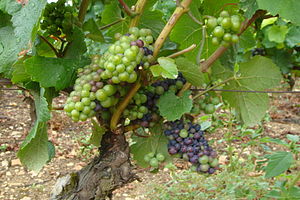
The Art of Tasting Wine with James Flewellen: Top 10 Red Wine Grapes

Published by Thursday, May 23, 2013 Permalink 0

The Art of Tasting Wine with James Flewellen: Top 10 Red Wine Grapes

by James Flewellen

My last post covered what I consider the ‘top 10’ white wine producing grapes. Finding a similar list for the top 10 red wine grapes is no less difficult — perhaps even more so with the propensity for red wines to be a blend of a number of different grapes. Again, the order is my own preference, based on commercial importance, potential quality of the grape, and whether it produces a ‘classic style’.

TOP 10 RED WINE GRAPES

10. Malbec

Malbec is one of the six permitted red wine grapes in Bordeaux, although few producers take advantage of its rich, plummy flavours. You are more likely to find Malbec predominating in blends of southern French appellations, such as Cahors, where the grape is called ‘Cot’. These wines are typically full-bodied, deep in colour, with plum flavours alongside ferric, inky notes too. Malbec has found a second home in Argentina, where it is the country’s signature red grape. In Argentina, the mineral notes subside somewhat, and a purer fruit note comes to the fore. The tannins, plentiful in Cahors, are softer in the Argentinian expression.


8. Sangiovese

This rather romantically named grape (‘Blood of Jupiter’) is the key component of wines from the Chianti region in Tuscany — arguably Italy’s most famous red wine export. The grape produces ruby-coloured wines with notes of cherries and almond. The palate can show high acid with tart cherry flavours, medium to high levels of alcohol and drying, austere tannins. The best examples develop savoury, tea-like notes with age and undeniable complexity. Brunello di Montalcino is perhaps the most interesting expression of Sangiovese, from a wine-lover’s perspective. Best served with food on account of the fierce tannins though! Sangiovese is also a component in many of the so-called ‘Super-Tuscan’ blends, along with Cabernet Sauvignon and Merlot.

Sangiovese ready to harvest


7. Tempranillo

As Sangiovese is to Tuscany, Tempranillo is to the Rioja region — and indeed to many parts of Spain. Rioja is now perhaps Spain’s most famous wine export after Cava and within this region the Tempranillo grape has found a plethora of styles. The traditional style of Rioja saw ageing in mostly American oak barrels, complementing the strawberry notes from the grape with a sweet vanilla and coconut aroma from the oak. The balance between oak and fruit notes depends on the length of time the wine is aged in the barrels. With age, these wines develop pleasant grassy and ‘farmyardy’ aromas. A ‘new’ style of Rioja has emerged in recent years, favouring French oak and pushing fruit notes to the fore. Tempranillo is also a key component in many other regions of Spain, such as Ribera del Duero, and in Portugal too, where it is known as Tinto Roriz.


6. Cabernet Franc

The second Bordeaux grape on the list, although in Bordeaux, Cabernet Franc usually plays second or third fiddle to Cabernet Sauvignon and/or Merlot. This by no means diminishes its importance for the region, however. For a classic expression of a varietal wine we head north to the Loire valley — to classic regions such as Saumur, Chinon and Bourgueil. Here, the grapes produce a medium-bodied purple wine with high acidity and fine, powdery tannins. Due to the cooler climate in the Loire, these wines have leafy, herbaceous notes to go with blackcurrant, blackberry and a distinctive mineral note many describe as ‘pencil shavings’!


5. Grenache

Grenache is the stalwart of the Southern Rhône, where it makes up the dominant component of blended wines along with Syrah, Mourvèdre and many others. This grape is a the heart of famous appellations such as Châteauneuf-du-Pape, Gigondas and Vaqueyras. Unusual among grape vines, it can tolerate heat and drought remarkably well with its ability to close its stomata to minimise water loss through evaporation. This feature also explains its success in South Australia — another hot, dry part of the world. The Aussies have followed the Southern Rhône model and produce similar blended wines — typically called ‘GSM’ after the three major grape components. Grenache is also to be found in Priorato and other parts of Spain, where it is known as ‘Garnacha’ and typically blended with Cariñena (a.k.a. Carignan). Grenache produces wines with high alcohol, low acidity and fine, dry tannins. The flavour profile is usually of strawberry with a characteristic white pepper spiciness.

Photo courtesy of WineFolly.com


4. Merlot

Merlot was much maligned by Paul Giamatti’s character in the film Sideways – although in an ironic twist, his prized bottle of 1961 Cheval Blanc contains a major component of Merlot. Perhaps Merlot’s unfairly poor image comes from the many mass-produced French and New World wines where the grape is used to make soft, undemanding, plummy, easy drinking wines. However, at its best, Merlot produces elegant wines with savoury flavours combining with juicy plum and fruitcake spice notes. While the grape does not lend to the most structured wines, there can still be relatively firm, drying tannins, allowing the best examples of Merlot to age very well. The most famous examples of Merlot come from the Right Bank of Bordeaux in appellations such as St Emilion and Pomerol. Here, Merlot is typically blended with Cabernet Franc to produce some of the finest wines in the world. Merlot is, of course, a component of the Left Bank Bordeaux wines, although here it comes in second to Cabernet Sauvignon. Merlot can also be found in Bordeaux-imitation blends around the world and as a varietal wine in parts of the New World – especially California, New Zealand and Chile.


3. Syrah/Shiraz

Whereas the Southern Rhône follows the model of blending many grapes to create Grenache-dominated wines, the Northern Rhône sticks to a single grape: Syrah. Historically, Syrah has produced the most revered wines in France — emanating from Hermitage, Côte-Rotie, St Joseph and Cornas — and it has only been relatively recently that the focus has shifted to Bordeaux and to Burgundy. The best examples are very long-lived and offer very good value to the fine wine connoisseur. Syrah from the Rhône is medium- to full-bodied, with firm, slightly coarse tannins, crisp acidity and complex notes of plum, blackcurrant, black pepper, roasted meat, liquorice, treacle, herbs, among others. Syrah is, of course, equally famous in Australia, where it is known as ‘Shiraz‘ and found throughout the entire country. In fact, Australia has the oldest Shiraz grape vines in the world, with a number of regions unaffected by the phylloxera blight that destroyed European vineyards in the late 1800s. The classic style is that of the Barossa Valley or McLaren Vale — jammy black fruits, often with notes of spicy salami, black pepper, and eucalyptus. Australian Shiraz is usually more full-bodied with lower acidity than that of the Rhône, although wine from the slightly cooler region of the Hunter Valley can approach a Rhône-like style.
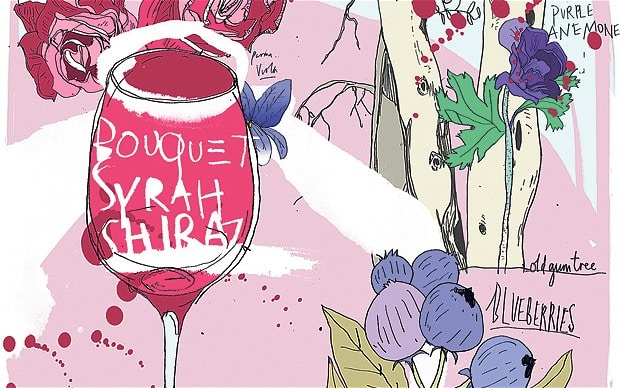
http://www.telegraph.co.uk/foodanddrink/wine/8706849/Syrah-from-Chile-and-New-Zealand.html

Photo link to the Telegraph


2. Cabernet Sauvignon

The predominant grape in some of the world’s most revered and expensive wines: those of the Left Bank of Bordeaux. In the right climate and on the right soils, Cabernet Sauvignon offers elegance, power, structure and harmony that few other grapes can match. However, in search of the perfect structure the grape can produce austere flavours in the wine, which is why this grape is best suited to blending with others. This is the origin of the ‘Bordeaux blend’, which sees Cabernet Sauvignon melded with Merlot, Cabernet Franc, Malbec and Petit Verdot. Cabernet Sauvignon brings classic notes of blackcurrant, cedar, and bell peppers alongside vanilla and nuts from maturation in new French oak, which is typical in Bordeaux. On the palate, the grape brings crisp acidity and firm, structured tannins, and both of these can ensure a long ageing potential. The Bordeaux style has found favour in many other parts of the world, from the ‘Super-Tuscans’ of Italy to equivalents in Spain, California, Australia and South America. The best examples of these are among these nations’ finest wines also.


1. Pinot Noir

As Chardonnay is the Burgundian king of white wines for me, so Pinot Noir is the queen of reds. Fickle, hypersensitive,  ill-tempered, yet oh-so-magical when it all pays off, tasting a great Pinot Noir is an unforgettable experience. At its best the grape offers up swirling, subtle aromas of raspberry, strawberry, cherry and blackberry, a refreshing minerality and an earthy, leafy quality that is quite indescribable, yet summed up beautifully in the French term sous-bois – or ‘forest floor’. Burgundy still holds the crown for the most desirable Pinots – indeed wines – on the planet, due in no small part to its 1,000-year history in growing the grape. The grape is notoriously difficult to work with and susceptible to very minor changes in climate. Various places around the world have taken on the challenge of making great Pinot – New Zealand, Oregon and Tasmania are considered the best pretenders to the crown and can produce some very good (and much better value-for-money) wines. But these are all new kids on the block, and have a few centuries ahead of them to really get to know the grape, and for the grape to get to know their new homes.

__________________

James Flewellen is The Rambling Epicure wine columnist. James is a biophysicist at the University of Oxford. Originally from New Zealand, the huge range of wine James discovered in Europe spurred his interest in all things vinous. He became involved in the University’s Blind Wine Tasting Society and has recently completed a two-year term as its President. During this time he represented the University in a number of domestic and international wine tasting competitions, winning several awards. He is currently completing the WSET Diploma in Wine and Spirits. James has a passion for wine communication and education and runs the Oxford Wine Blog and wine tasting courses through the Oxford Wine Academy.

Never miss a post
Name: 
Your email address:*
Please enter all required fields
Correct invalid entries

Ethical Coffee: How far can one go to suit customers and remain ethical?

Published by Tuesday, May 14, 2013 Permalink 0

When Ethics and Business Meet

When you choose a coffee shop, do you think about ethics? How far are you willing to go to remain ethical and natural? Should it be natural pure cane sugar, recyclable cups and napkins, and ethical coffee beans, or can you throw in a little artificial sugar and refined sugar so that everybody is happy? What are your thoughts?

These are just some of the questions raised by Chris MacDonald on Canadian Business.


Roasted coffee beans Español: Granos de café tostado (natural). Bahasa Indonesia: Biji kopi alami yang telah disangrai. (Photo credit: Wikipedia) Roasted coffee beans Español: Granos de café t...


Never miss a post
Name: 
Your email address:*
Please enter all required fields
Correct invalid entries

The Big Apple on a Budget: Tocqueville, a New York Restaurant Review

Published by Thursday, April 18, 2013 Permalink 0

The Big Apple on a Budget: Tocqueville, a New York Restaurant Review

by Leonor White

I discovered Tocqueville last New Year’s Eve, and it’s been my go-to place ever since when special people come to town. My latest visit to this understated yet elegant Union Square New American-French restaurant with a French flare and amiable, well-trained servers brought rave “reviews” from the entire table.

Seven days a week, the restaurant offers an excellent value prix fixe menu ($29). The menu consists of three courses — appetizer, main course and dessert — as well as an amuse-bouche and interesting housemade bread à go-go. In the evening, Tocqueville offers a pre-theatre menu at $44, as well as a full à la carte menu. We went for Saturday lunch, when the restaurant was unusually uncrowded, so we sat on the ground floor from where we could enjoy a view of the restaurant’s refined décor. The dining room was pleasantly quiet with tables set widely apart and well-designed acoustics, allowing us to concentrate on the marvelous food and have good conversation too.

As mentioned, the prix fixe offers three courses, with two choices per course. From the appetizers, everyone tried both offerings, the “creamless sunchoke soup” and the “salad with mushroom terrine”; both dishes were flawless, the flavors bold but balanced. Prior to our appetizer arriving, we were served an excellent “roasted asparagus and beetsamuse-bouche, a great start to our culinary adventure. Throughout the lunch we were also able to enjoy an assortment of homemade bread, namely, brioche, focaccia filled with olive chunks, and crusty, white sourdough with homemade butter (you heard me right, homemade).

Continue Reading…

Never miss a post
Name: 
Your email address:*
Please enter all required fields
Correct invalid entries

The Art of Tasting Wine with James Flewellen: Spotlight on Pinot Noir

Published by Monday, April 15, 2013 Permalink 0

The Art of Tasting Wine with James Flewellen: Spotlight on Pinot Noir

by James Flewellen

Pinot Noir is a light-skinned red grape originating from Burgundy in its modern form. Although, the Burgundians have been working with Pinot for around a thousand years, so the term ‘modern’ should be taken with a grain of salt!


The grape typically produces light-bodied wines with aromas ranging from fresh red fruit (raspberry, strawberry, cherry) to black (blackberry, mulberry) depending on the local climate of the vineyard. Warmer sites tend to produce wines with ‘blacker’ and riper fruit flavours. Alongside the fruit, good Pinot exhibits a fresh minerally, or even pleasantly ‘grassy’ character – complemented by the grape’s naturally high acidity on the palate. With bottle maturation, the wine develops notes of mushroom and decaying autumnal leaves — expressed evocatively by the French term sous-bois — which translates as ‘forest floor’. The thin skins of the grapes mean that the wines are generally low in tannin, though tannins are usually very fine-grained and punctuate the wine sufficiently so it can be enjoyed with food.

Pinot Noir is a notoriously fickle grape and is very difficult to handle. Burgundy’s millennium of association with Pinot Noir means that it produces the best in the world — and that the Burgundian clones of the grape are ideally suited to Burgundy’s continental climate. Explaining Burgundy’s appellation system would take an entire post of its own, but there are two main subregions for Pinot Noir there: Côte de Beaune and Côte de Nuits. These are further divided into villages, which may be further identified by vineyard — and these can be classified as either Premier Cru or Grand Cru indicating the quality level of the grapes.

Pinot grapes in Burgundy going through the pro...

Continue Reading…

Never miss a post
Name: 
Your email address:*
Please enter all required fields
Correct invalid entries

What we’re reading: best cities for street food, India’s women farmers, baker from Kabul, Southern cuisine food trend, etc.

Published by Friday, October 19, 2012 Permalink 0

by Jonell Galloway

Click here to keep up with the latest in world food and wine news.


Never miss a post
Name: 
Your email address:*
Please enter all required fields
Correct invalid entries

On the Chocolate Trail: The Elizabeth Taylor Special, the Chocolatini

Published by Tuesday, February 14, 2012 Permalink 1

by Christina Daub

Who invented the chocolatini?

With all we remember about chocolatini, her legendary eyes and films and husbands and tireless efforts on the behalf of AIDS victims, the Hollywood queen was also, by the way, an icon of the chocolate world.

In 1953, her face sold Whitman’s chocolates ads for Valentine’s that year. In 1955, she and Rock Hudson invented the Senator John Warner, a concoction of vodka, Kahlua and Hershey’s syrup after working long hours on the set of Giant in Marfa, TX. Taylor proclaimed it “the best drink I ever tasted.”

But my favorite Taylor contribution to the chocolate world was one you could order just five blocks from the White House. During her marriage to National Velvet, she frequented the show restaurant in Washington DC, Dominique’s. It may not have had the best food in town, but its patrons attracted attention like no one else and people went to see and be seen. Autographed photographs of Ted Kennedy and Tony Bennett, Robert Redford and others glammed the walls while exotic mounted animals, an alligator, a lion and several other large creatures loomed near diners craning their necks between bites.

I don’t remember what I ate for dinner at Dominique’s since already in those days, my sole focus was on dessert. And the Elizabeth Taylor Special was as extravagant as she was. I ordered it every time.

It looked heavenly, a large cloud of whipped cream, but inside this cumulus pouf hovering on the signature Dominique plate, were the real jewels: five chocolate truffles, brown diamonds every one.

Dominique’s no longer exists having been sold by its original owner in 1987, but that dessert will float on in my memory more than Cleopatra, poet or any other work Liz Taylor graced with her fierce talent and jaw-dropping beauty.

—————

On The Chocolate Trail: Christina Daub is an American The Poet’s Cookbook who has spent her life traveling around the world in search of great chocolate. She is also the editor of the Food Poetry section. Published in The Poet’s Cookbook series, she has work in the first volume, which included poems and recipes from Tuscany (in English and Italian), and the second (in German and English), published by the Goethe Institute. She teaches creative writing at George Washington University in Washington, D.C.


Never miss a post
Name: 
Your email address:*
Please enter all required fields
Correct invalid entries

A Taste of Switzerland: Absinthe Anyone?

Published by Friday, September 9, 2011 Permalink 0

A Taste of Switzerland: Absinthe Anyone?

by Sonja Holverson

Our thoughts immediately go back to Bohemian culture, to writers and artists of 19th-century France: absinthe, also known as La Fée Verte (literally, “the green fairy”), was created in the canton of Neuchâtel, Switzerland, notably in the Jura Mountains bordering France. Most of the production has traditionally been in small quantities. But absinthe is back after being outlawed for nearly a century.

Absinthe glass and customary spoon

The liquor, high in alcohol content and with a full anise flavor, is made from plants such as anise, fennel, flowers, and leaves of the medicinal plant called Artemisia Absinthium, which we know as wormwood, and which is found in abundance in Switzerland. Other herbs such as lemon balm angelica, dittany, coriander, juniper and nutmeg are sometimes added. The nickname “green fairy” comes from its color, a pale green.

Chemist and absinthe expert T.A. Breaux describes it as “a push-me, pull-you effect of the various herbs; some have a heightening effect while others have a lowering effect.” It as a double impact: a sensation of inebriation along with a heightened state of clarity.

Romanticized by many famous people in the 19th and early 20th centuries, including Henri de Toulouse-Lautrec, Edgar Degas, Vincent van Gogh, Édouard Manet,  Pablo Picasso, Oscar Wilde, Charles Baudelaire, Paul Verlaine, Ernest Hemingway and the list goes on, absinthe is ever-present in both the stories and works of these creative people.

“L’Absinthe” by Edgar Degas 1876

Practical uses were also found during this period of history and absinthe was given to French troops to prevent fever. Naturally, they acquired a taste for the “green fairy” and when they returned home, they popularized the drink in bars, bistros and cabarets. Absinthe was initially expensive, but when prices declined, the French began drinking it to excess and experienced addictive psychoactive reactions. As a result, opposition movements started scare campaigns that resulted in the ban of absinthe in 1914 in France.

Ironically, Switzerland had already banned it in 1907, although the production went underground and home distillers produced the much sought-after liquor clandestinely in small quantities. In the U.S., it was banned in 1912. By 1915, most European countries followed suit, except Britain, where it was not popular, and both the production and consumption of absinthe were made illegal.

In the mid-1990s, legal practices regarding absinthe were highly ambiguous. Drinking it was legal, but producing it was illegal. Former French President Jacques Chirac drew criticism from his own citizens because he drank absinthe during a state visit to Switzerland in the late 1990s. President Chirac and I had something in common but no one really cared if I drank it… Anyway, it was difficult to come by and you had to have friends who lived in the canton of Neuchâtel to get your hands on it.

With renewal of interest on the part of both producers and consumers, the Swiss Parliament lifted the 97-year ban on the production, sales and consumption of absinthe in 2004. A French absinthe producer, Lucid, was the first absinthe producer to receive certification in France in 2007.

Other European countries followed, and by 2008, there were nearly 200 brands of absinthe available in a dozen countries such as Switzerland, France, Spain and the Czech Republic.

In the U.S., the first legal brand of absinthe was approved in 2007: St. George Absinthe Verte, made in Northern California.

Kubler Swiss Absinthe

While visiting Switzerland, some of you may want to taste this once forbidden elixir. Kubler Absinthe was the first Swiss absinthe to become commercially available and has an excellent reputation for being the highest quality of all international absinthe brands. They use only natural plants in accordance with local traditions, rather than extracts or oils that are used by some other European producers.

Another excellent Swiss brand is Absinthe Studer, made of distilled wormwood, a blend of 8 different secretly selected herbs, pure alcohol and fresh water from their own spring. The original recipe has been preserved and passed down from generation to generation despite the 97 years of legal issues.

But the Studer family is open to innovation and have collaborated with the famous haute couturier chocolatiers, the Beschle family in Basel, producing Studer’s absinthe-filled milk chocolate pralines in the shape of the most famous Swiss Alp, the Matterhorn.

Beschle’s Studer Absinthe, Swiss Collection

The country fair stand “Absintissimo” serving absinthe from the local producers of the region is always a highlight at the Fall Automanales Fair held in Geneva every November.

Absintissimo: Swiss-made “green fairy

So fascinating is the story of absinthe that this elixir is being used as the backdrop for a film currently being produced called “Les Absintheurs” (The Absinthe Drinkers), due out in 2012. The plot is not so much about the drink as about the people in the era when the green fairy was a part of daily life in Paris. The film recounts the life of a talented young woman painter in an art scene dominated by men in 1889 (one year before van Gogh died). It takes places during the Impressionist period in the then-decadent Montmartre neighborhood of Paris.

Enjoy your taste of the once forbidden green fairy while in Switzerland, but if you are obliged go pass through the United States Customs, keep in mind that despite the allowance of local production of absinthe in the U.S., it is prohibited to bring it into the country.

Related articles


A version of this article was originally published in Nile Guide.

Never miss a post
Name: 
Your email address:*
Please enter all required fields
Correct invalid entries

Warren Bobrow: Candy-Colored Clown, Perfect Mardi Gras Cocktail

Published by Monday, March 7, 2011 Permalink 0

Cocktail Times: Candy-Colored Clown, Perfect Mardi Gras Cocktail

by David Lynch


Candy-colored clown: a strange name for a fun little “punch” of a cocktail.

It involves the unlikely combination of French Violette Liquor with the bite of citrus fruit, simple syrup, light rum and very special Bitter Truth Bitters from Germany.

I think the Candy-Colored Clown is what greets you in the morning and tucks you into bed at night. The name comes from a scene in David Lynch‘s movie Blue Velvet, and came to me in of a dream a couple of weeks ago.

No one would understand. Maybe Crème de Violette, but it’s too late for him.

Continue Reading…

Never miss a post
Name: 
Your email address:*
Please enter all required fields
Correct invalid entries

Warren Bobrow: Red Velvet Lounge Chair

Published by Wednesday, March 2, 2011 Permalink 0

// Warren Bobrow: Red Velvet Lounge Chair

by Warren Bobrow

The Red Velvet Lounge Chair is a little firecracker of a cocktail, and has all the excitement of a Tiki Bar concoction. It goes down easy, as easy as falling into a lounge chair after drinking a few too many of these.

Continue Reading…

Never miss a post
Name: 
Your email address:*
Please enter all required fields
Correct invalid entries

Warren Bobrow: The Gold Standard

Published by Thursday, February 10, 2011 Permalink 0

Warren Bobrow: The Gold Standard

by Warren Bobrow

Ingredients

Stoli Black Label, 1 shot
Goldschlagger Liqueur (gold leaf in sugar syrup), ½ shot
Cristal Champagne, 1/3 glass
Soda water
Orange zest, flamed

Photo courtesy of John Richardson.

Continue Reading…

Never miss a post
Name: 
Your email address:*
Please enter all required fields
Correct invalid entries

UA-21892701-1