Simon Says: Daily Food Quote, August 1, 2012

Published by Wednesday, August 1, 2012 Permalink 0

by Simón de Swaan

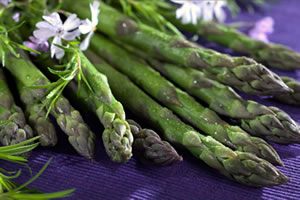
The air pulses with the warm smell of lilac, but as we pass each door, the lilac dominance is subdued by heady wafts of asparagus cooking.–Jane Grigson


Elizabeth David was an English food writer. Grigson’s growing interest in food and cooking led to the writing of her first book, The Observery (1967), which was translated into French, unusual for an English food writer. Elizabeth David read the book and was impressed by it, and recommended Grigson as a food columnist for The Observer, for which she wrote a column from 1968 until her death in 1990.

Never miss a post
Name: 
Your email address:*
Please enter all required fields
Correct invalid entries

Simon Says: Daily Food Quote, July 31, 2012

Published by Tuesday, July 31, 2012 Permalink 0

by Simón de Swaan

The artichoke above all is a vegetable expression of civilized living, of the long view, of increasing delight by anticipation and crescendo. No wonder it was once regarded as an aphrodisiac. It had no place in the troll’s world of instant gratification. It makes no appeal to the meat-and-two veg. mentality.–Jane Grigson


Jane Grigson was an English food writer. Grigson’s growing interest in food and cooking led to the writing of her first book, Charcuterie and French Pork Cookery (1967), which was translated into French, unusual for an English food writer. Elizabeth David read the book and was impressed by it, and recommended Grigson as a food columnist for The Observer, for which she wrote a column from 1968 until her death in 1990.

Never miss a post
Name: 
Your email address:*
Please enter all required fields
Correct invalid entries

Sauce for Thought: A Non-Newtonian Suspension in the Kitchen

Published by Thursday, April 19, 2012 Permalink 0

The Rambling Epicure, Switzerland. Editor, Jonell Galloway.by Alice DeLuca

Would you like to buy a few metric tons of tomato paste? For only $786 per metric ton you may purchase a minimum of 20 metric tons in 238 kilogram drums. That’s one of the interesting business opportunities that are dropped in the email box of a food blogger these days.

Food bloggers also receive lots of offers for coupons. The scheme goes like this: if the blogger will just agree to write nice things about Company X, the company will provide coupons to offer to blog readers as enticements for them to visit, thereby driving up the blog’s popularity as measured by page visits.

Instead of money and real compensation, manufacturers and marketers offer the food writing community coupons in exchange for the virtual currency of “visits”. Using coupons of very little value, and shamelessly taking advantage of blogger vanity, the company receives “exposure” without having to spend a single honest dollar for advertising. The problem is that this currency of “visits” and coupons is coinage that the blogger cannot spend or barter for things of real value.

Also common is the “free sample” offered so the hapless food blogger will “tweet’ about the product or perhaps “like” the product on Facebook, thereby starting a viral marketing event that companies dream about. I have found entire Styrofoam containers of frozen food products shipped to my doorstep, sent by a startup company hoping I will write favorably about their product and start a stampede of customers. Few of these products have been even as tasty as hospital food.  In addition, since 2009, if a blogger receives a product in exchange for a review, the Federal Trade Commission requires the blogger to disclose the gift.[i]

Continue Reading…

Never miss a post
Name: 
Your email address:*
Please enter all required fields
Correct invalid entries

Simon Says: Daily Food Quote, July 18, 2011

Published by Monday, July 18, 2011 Permalink 0

by Simon de Swaan

I don’t altogether agree that a plain green salad ever becomes a bore — not, that is, if it’s made with fresh, well-drained crisp greenstuff and a properly seasoned dressing of good-quality olive oil and a sound wine vinegar. But I do agree that all this talk about ‘tossed salads’ is a bore; it seems to me that a salad and its dressing are things we should take more or less for granted at a meal, like bread and salt; and not carry on about them.–Elizabeth David, in The Spectator, 1961

Elizabeth David, food writer (1913-1992) who with wit, wisdom, and various cookery ingredients the British were obviously suspicious of, she introduced the English to fresh, flavorful fare and a sensual approach to the art of eating.

Many of her books are available in the Penguin classics series.


Never miss a post
Name: 
Your email address:*
Please enter all required fields
Correct invalid entries

Simon Says: Daily Food Quote, July 12, 2011

Published by Tuesday, July 12, 2011 Permalink 0

A number of rare or newly experienced foods have been claimed to be aphrodisiacs. At one time this quality was even ascribed to the tomato. Reflect on that when you are next preparing the family salad.–Jane Grigson

Jane Grigson, English food writer championed by Elizabeth David as a result of her first book Charcuterie and French Pork Cookery published in 1967 to high acclaim.


Never miss a post
Name: 
Your email address:*
Please enter all required fields
Correct invalid entries

Simon Says: Daily Food Quote, July 10, 2011

Published by Monday, July 11, 2011 Permalink 0

by Simón de Swaan

When devising a mixed salad be careful not to overdo the number of ingredients, or chop everything into small pieces, or mash them all up together into one indistinguishable morass;…–Elizabeth David, Summer Cooking


Never miss a post
Name: 
Your email address:*
Please enter all required fields
Correct invalid entries

Simon Says: Daily Food Quote, July 7, 2011

Published by Thursday, July 7, 2011 Permalink 0

In the summer there is also holiday cooking. That may well mean food cooked in an unfamiliar kitchen equipped, more than likely, in an impersonal and inadequate fashion by the owners of a house, holiday villa, or caravan hired out for the summer.–Elizabeth David (Summer Cooking, London, 1965)

Elizabeth David, British food writer (1913-1992), who helped change the way Britain saw food.


Never miss a post
Name: 
Your email address:*
Please enter all required fields
Correct invalid entries

Simon Says: Daily Food Quote, July 6, 2011

Published by Wednesday, July 6, 2011 Permalink 0

Summer cooking implies a sense of immediacy, a capacity to capture the essence of the fleeting moment.–Elizabeth David

Elizabeth David, food writer (1913-1992) who helped to change the way Britain saw food. Many of her books are available in the Penguin classics series.


Never miss a post
Name: 
Your email address:*
Please enter all required fields
Correct invalid entries

Simon Says: Daily Food Quote, June 14, 2011

Published by Tuesday, June 14, 2011 Permalink 0

by Simón de Swaan

How much cheese is a handful? How much more or less is a cupful? What is the capacity of a glass, a tumbler, or a soup ladle? What is the difference between a suspicion and a pinch? How much more is a good pinch? How much wine is a little, how many olives a few? When a book says a tin of chopped almonds or pomegranate juice what are you supposed to understand by that?–Elizabeth David (1913-1992), English food writer


Elizabeth David made significant contributiosn to the food world. Her book Spices, Salt & Aromatics in the English Kitchen is a classic.

Never miss a post
Name: 
Your email address:*
Please enter all required fields
Correct invalid entries

Simon Says: Daily Food Quote, May 4, 2011

Published by Wednesday, May 4, 2011 Permalink 0

by Simón de Swaan

It isn’t only fictional heroes to whom toast means home and comfort. It is related of the Duke of Wellington – I believe by Lord Ellesmere – that when he landed at Dover in 1814, after six years’ absence from England, the first order he gave at the Ship Inn was for an unlimited supply of buttered toast.–Elizabeth David, English Bread and Yeast Cookery (1977)

Elizabeth David was British food writer and author of eight cookbooks published during her lifetime, and five more published posthumously. She won the prestigious Glenfiddich award for her book English Bread and Yeast Cookery.  In the 1960s she was hailed as the person who transformed the eating habits of middle- class England.

Click here to listen to interview with Jill Norman, her publisher.

Click here to watch a scene from a documentary about her life.

Never miss a post
Name: 
Your email address:*
Please enter all required fields
Correct invalid entries

UA-21892701-1