WHAT TO EAT IN FRANCE: STRAWBERRY-FINANCIER CHARLOTTE

Published by Wednesday, June 3, 2015 Permalink 0

French Recipe: Strawberry, Rum, Almond and Cream Trifle

by Jonell Galloway

A charlotte is traditionally fruit sautéed in butter which is then placed in a mold lined with bread. In our day, the bread is usually ladyfingers, but I’ve used financier, a dense almond flour cake made with beurre noisette, giving it a distinctive flavor.

Insteading of sautéing the strawberries, I’ve marinated them in rum and used the marinade to “wet” the cake, similar to the way the British make trifle.


600 g strawberries
2 T. brown sugar
1 tsp. cinnamon

4 T. rum
3/4 c. water
4 financier cakes, individual size (or other type of soft, but dense, almond cakes)
200 g thick cream
1/2 vanilla bean
2 T. brown sugar

4 parfait dishes

  1. Top strawberries and cut in half. Place in mixing bowl.
  2. Mix in 2 T. brown sugar and cinnamon.
  3. Add rum and water. Mix gently.
  4. Leave for 30 minutes, mixing gently from time to time. A natural sauce should form. If it doesn’t, add a little more water and rum.
  5. Meanwhile, mix cream with vanilla from vanilla bean and brown sugar.
  6. Break up 1/3 of each financier into each parfait cup. Spoon in 1/9th of strawberries into each cup, pouring some juice onto the cake to moisten it.
  7. Cover with 1/9 of cream.
  8. Add two more layers of financier, strawberries and cream, in the same proportions, ending with cream.
  9. Decorate top with bits of strawberry, mint, or dark chocolate.
  10. Refrigerate for 2 hours before serving.


Never miss a post
Name: 
Your email address:*
Please enter all required fields
Correct invalid entries

FRENCH RECIPES: POT-AU-FEU OR PETITE MARMITE

Published by Saturday, May 23, 2015 Permalink 1

Emmanuel Ménétrier / Foter / CC BY-NC-SA

ESCOFFIER’S RECIPE FOR POT-AU-FEU OR PETITE MARMITE

Pot-au-feu and petite marmite in today’s vocabulary are the same thing. Until the nineteenth century, the term pot-au-feu simply referred to a family soup to which was added different ingredients every day, usually with beef and chicken added on Sunday. The regional variations were endless, depending on availability and season and depending on the cook.

In 1829, the French etymology dictionary defined  pot-pourri  as “the name our fathers gave to the pot-au-feu.” In the nineteenth century, the recipe started to take on its modern ingredients of beef, root vegetables and a veal bone, but it still included chicken, which many people, including my French butcher’s wife, leave out these days.

Escoffier, who codified French cuisine in the late nineteenth century and early twentieth century, set down the recipe in Le Guide Culinaire in 1902, still calling it petite marmite. The regional variations started to disappear, and the recipe has now been simplified by most home cooks to contain only beef, no chicken. Escoffier insisted on the importance of the chicken, but today, one rarely finds a pot-au-feu with mutton, veal, pork, chicken, duck or turkey. The other name, petite marmite, has pretty much gone out of usage.

Continue Reading…

Never miss a post
Name: 
Your email address:*
Please enter all required fields
Correct invalid entries

WHAT TO EAT IN FRANCE: POT-AU-FEU

Published by Monday, May 18, 2015 Permalink 0

WHAT TO EAT IN FRANCE: POT-AU-FEU

by Jonell Galloway

The French might claim pot-au-feu as their invention, but my guess is wherever there has been a pan or a pot, humans have made variations of it. Classical pot-au-feu, also known as petite marmite, is nothing more than beef and/or chicken and vegetables cooked in consommé with a marrow bone, with the chicken giblets thrown in at the end. There are regional variations, of course, some with veal or pork, and occasionally even mutton. Traditionally, carrots, turnips, leeks, pearl onions, celery and cabbage are used. These are added to the consommé along with the marrow bone and brought to a boil, then simmered gently for four hours.

The soup, vegetables and meat are then served in a bowl with toasted bread, the meat sometimes eaten on the side and sometimes in the bowl. Traditional garnishes include mustard, pickles and coarse salt. It is normally paired with red wine.

See also FRENCH RECIPES: POT-AU-FEU OR PETITE MARMITE for Escoffier’s recipe.

Continue Reading…

Never miss a post
Name: 
Your email address:*
Please enter all required fields
Correct invalid entries

Spices, Corruption and Taxes

Published by Friday, March 13, 2015 Permalink 1

Spices and Corruption: Spices were so expensive that they could be given as gifts. Custom was to give them to judges during trials as thanks…or to corrupt them. In the 14th century, the term “spices” designated a mandatory tax which was added to the subtotal of a bill.–Le Viandier, credited to Guillaume Tirel, alias Taillevent


Never miss a post
Name: 
Your email address:*
Please enter all required fields
Correct invalid entries

What to do with the last apricots of the season: jam, coulis, baked, purée

Published by Friday, August 9, 2013 Permalink 0

Jonell Galloway, Spontaneous Cuisine, Mindful Eating, Slow Food, Editor of The Rambling EpicureWhat to do with the last apricots of the season: jam, coulis, baked, purée

by Jonell Galloway

From the archives

How to Choose Apricots

apricots_valais_tree_switzerland_suisse_geneva

Photo courtesy of Ellen Wallace.


The first and most important thing is to buy tree-ripened apricots. By definition, this means local ones, since ripe apricots are soft to the touch and do not travel well.

If you plan to eat them fresh, they should be soft, but not blemished or bruised. The riper they are, the more flavorful they are.

If you are using them for cooking, the riper the better, and you can even get by with blemishes as long as they are not rotten-looking. As a general rule, the softer the sweeter.

You will often see crates of extra-ripe apricots discounted in farmers markets. Look them over, and if there are not too many black or rotting ones, they are actually the best for cooking purposes, especially for jams, cakes and sauces.

Recipe Ideas for Apricots

Note: With all apricot recipes, the amount of sugar used depends on the acidity of the apricots. The acidity depends on the ripeness, origin and variety. With so many factors coming into play, taste tests are indispensable and the quantity of sugar should be determined by taste, using the quantities given here as a guideline.

Apricot Jam Recipe

The basic formula is 900 grams/2 lbs of sugar for every 2 kilograms/4 1/2 lbs of fruit used. This holds true for apricots, apples, cherries, nectarines and plums. If you like your jam really sweet, you can put equal weights of fruit and sugar.

Use cane sugar for more taste. I often halve the quantity of sugar in dessert recipes, but with jams this can be tricky, since sugar is what makes the jam set. It also serves as a preservative. If your fruit is extra-sweet, you might try cutting the quantity of sugar a tad.

apricot_raspberry_jam_valais-switzerland_suisse_recipe_geneva
Photo courtesy of Ellen Wallace.


Wash and rub apricots until perfectly clean. Remove any rotten spots with a paring knife. Dry well. Cut in half and remove stones. Save about half of the stones for later use.

Place apricots in a copper confiturier or a large stock pot. Add sugar. Let it sit overnight.

If the apricots are not ripe enough, they will not render any natural juices. If there are no juices, add 500 ml/1 pint of water to the pan.

Slowly bring to a boil on low heat, stirring constantly with a wooden spoon. This can take anywhere from 1 hour to 2 1/2 hours, depending on the water content of the apricots and the type of pan and stove or cooker you are using. Scrape the sides of the pan from time to time so that the mixture doesn’t crystallize.

The jam is set when you can dip a wooden spoon in it and it completely coats the spoon. Let jam settle for about 15 minutes before putting it into jars.

Pour jam into sterilized glass jars. Leave to cool. If you see the jam hasn’t set properly, you can put it back into the pan and boil it again, adding a little lemon juice.

Add two stones to each jar. Cool. Seal jars.

Apricot Purée or Coulis

Once again, the amount of sugar you use depends on whether you want it to have a tart flavor or a sweet flavor. If you’re going to pour it onto a very sweet cake or pie, opt for a more acidic taste. If you’re eating with something that is itself a little acidic, you might want to make your sauce sweeter. And once again, the sweetness will always depend on the ripeness of your apricots, so you’ll have to do a taste test in any case.

Wash apricots. Remove stones.

Put 300 grams/10 ounces of cane sugar (labeled sucre de canne roux or cassonade in Swiss and French supermarkets) and a vanilla bean (cut open in the lengthwise direction) into a saucepan. Slowly bring to a boil over medium heat until it begins to thicken and sugar has completely dissolved, i.e. until it forms a syrup.

Put 500 grams/18 ounces of apricots into a food processor, or run them through a food mill or chinois. Add apricots to the liquid sugar mixture and mix with a wooden spoon. Heat mixture until it is thick enough to completely coat a wooden spoon.

This apricot sauce can be eaten warm or cold, depending on what you are using it with. It keeps for several days in the refrigerator.

Apricot coulis is a perfect accompaniment to a dark chocolate cake, but can be used to make ice cream sundaes or parfaits just as easily.

It can also be used in savory dishes, for example with cold chicken breasts or cold pork roast. In this case, you would of course considerably reduce the amount of sugar.

Roasted Apricots

Preheat oven to 250° C or French mark 8. Wash apricots. Cut in half. Remove stone.

Lay apricot halves out on a roasting tin or broiler pan, or in a large casserole dish. Sprinkle lightly with brown cane sugar and just a tad of butter, distributed evenly in small bits, so that it will form a natural sauce.  (This can also be done on a barbecue grill, but you’d lose the juices.) Put in oven, and immediately turn temperature down to 220° C or French mark 7. Turn when top side is browned. If butter starts to burn, add a few drops of water.

When soft and slightly browned and caramelized, remove from oven or grill.

Distribute on individual plates. Serve with a scoop of salt caramel, coffee or walnut ice cream. Lightly sprinkle with vanilla powder (labeled poudre vanille or vanille en poudre in supermarket; easy to find in France, but difficult to find in Switzerland), cinnamon and a high-quality chocolate or cocoa powder. Drizzle a little maple syrup over it. It is now ready to serve.

Sugar-free Apricot Purée or Coulis

The great French chef Michel Guérard, who started the Cuisine Minceur movement in 1974, has a recipe for a sugar-free version of a coulis. This is adapted from the 1976 edition of Michel Guérard’s Cuisine Minceur, now out of print:

Wash, halve and pit 12 ripe fresh apricots. In a saucepan, add apricots, 1/2 cup of water, 1 vanilla bean (cut open in the lengthwise direction, down the middle) and artificial sweetener to taste, the equivalent of about 3 tablespoons of granulated sugar. Simmer for 10 or 15 minutes, until mixture is reduced by about one third.

Remove vanilla bean. Put mixture in a food processor to make a purée.

This sugar-free sauce can be served in the same manner as the traditional apricot purée or coulis recipe above.

 

Related articles

This article was originally published on GenevaLunch.

Never miss a post
Name: 
Your email address:*
Please enter all required fields
Correct invalid entries

Simon Says: Daily Food Quote, June 18, 2013

Published by Tuesday, June 18, 2013 Permalink 0

Simon Says: Daily Food Quote, June 18, 2013

by Simón de Swaan

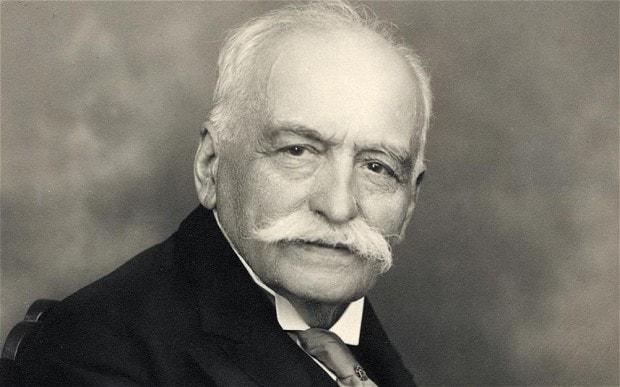
The greatest dishes are very simple dishes.–Auguste Escoffier


French chef, restaurateur and culinary writer August Escoffier (1846 – 1935) popularized and updated traditional French cooking methods. He is a legendary figure among chefs and gourmands, and was one of the most important leaders in the development of modern French cuisine.

Three of Escoffier’s most noted career achievements are revolutionizing and modernizing the menu, the art of cooking, and the organization of the professional kitchen. Escoffier simplified the menu as it had been, writing the dishes down in the order in which they would be served (service à la Russe), referred to Russian style service. He also developed the first à la carte menu. His books are still used by culinary students and chefs alike.


_atrk_opts = { atrk_acct:”vvoMh1aIE7000g”, domain:”theramblingepicure.com”,dynamic: true};
(function() { var as = document.createElement(‘script’); as.type = ‘text/javascript’; as.async = true; as.src = “https://d31qbv1cthcecs.cloudfront.net/atrk.js”; var s = document.getElementsByTagName(‘script’)[0];s.parentNode.insertBefore(as, s); })();


Never miss a post
Name: 
Your email address:*
Please enter all required fields
Correct invalid entries

Switzerland: Best Meat Restaurants and Steakhouses in Geneva

Published by Tuesday, June 11, 2013 Permalink 0

Switzerland: Best Meat Restaurants and Steakhouses in Geneva


Au Carnivore, French cuisine, 30 place du Bourg-de-Four, 1204 Geneva. Tel. (+41) 022 311 87 58, open 7 days a week.

L’Auberge au Renfort de Sézegnin, French cuisine, 19, route du Creux-du-Loup, 1285 Sézegnin (Athenaz). Tel. (+41) 022 756 12 36.

Bistrot du Boucher, French cuisine, 15, avenue Pictet-de-Rochement, 1207 Geneva. Tel. (+41) 022 736 56 36. Closed Wednesday lunch, Saturday lunch and Sunday.

La Broche, French cuisine, 36, rue du Stand, 1204 Geneva. Tel. (+41) 022 321 22 60. Closed Saturday lunch and Sunday dinner.

Restaurant Café de Paris, French cuisine, 26 rue du Mont-Blanc, 1201 Geneva. Tel. (+41) 022 732 84 50. Open 7 days a week, non-stop from 11 a.m. to 11 p.m.

Restaurant/Café de l’Ecu, French cuisine, 65, route de Rougemont, 1286 Soral. Tel. (+41) 022 756 33 50. Open 7 days a week, non-stop from  8 a.m. to 12 a.m.

L’Entrecôte Couronnée, 5, rue des Pâquis, 1201 Geneva. Tel. (+41) 022 732 84 45.

L’Entrecôte Saint-Jean, French cuisine, 79 boulevard Carl-Vogt, 1205 Geneva. Tel. (+41) 022 321 99 41, Closed Saturday lunch,, Sunday, and Monday.


Never miss a post
Name: 
Your email address:*
Please enter all required fields
Correct invalid entries

Simon Says: Daily Food Quote, May 7, 2013

Published by Tuesday, May 7, 2013 Permalink 0

Simon Says: Daily Food Quote, May 7, 2013

by Simón de Swaan

Almost every person has something secret he likes to eat.— M.F.K. Fisher


Mary Frances Kennedy Fisher was a preeminent American food writer. She was also a founder of the Napa Valley Wine Library. She wrote some 27 books, including a translation of The Physiology of Taste by Jean-Anthelme Brillat-Savarin, an authoritative classic about eating as a sensory experience. Two volumes of her journals and correspondence came out shortly before her death in 1992, Stay Me, Oh Comfort Me: Journals and Stories, 1933-1941.


Never miss a post
Name: 
Your email address:*
Please enter all required fields
Correct invalid entries

Simon de Swaan of Simon Says is Back! Daily Food Quote, May 6, 2013

Published by Monday, May 6, 2013 Permalink 0

Simon de Swaan of Simon Says is Back! Daily Food Quote, May 6, 2013

by Simón de Swaan

Bad French cuisine is perhaps the most unfortunate on earth.–Craig Claiborne


Craig Claiborne was an American restaurant critic, food journalist and book author. A long-time food editor and restaurant critic for The New York Times, he was also the author of numerous cookbooks, including New York Times Cookbook, a great American classic.  Click here to listen to an audio interview with him.


Related articles

Never miss a post
Name: 
Your email address:*
Please enter all required fields
Correct invalid entries

What we’re reading at The Rambling Epicure

Published by Sunday, April 28, 2013 Permalink 0

Broccoli Spray, by Ilian Iliev ALL RIGHTS RESERVED (C)


Click here to catch up on your food-related reading for this week:

  • food art exhibit in Valencia, Spain
  • 3 books more filling than food
  • is French cuisine a victim of its own success?
  • Monsanto doesn’t want you to know what you’re eating
  • can eating healthy actually save you money

and much more.


Never miss a post
Name: 
Your email address:*
Please enter all required fields
Correct invalid entries

UA-21892701-1