America is the only country to provide food aid in the form of food, says The New York Times

Published by Sunday, April 28, 2013 Permalink 0

by Jonell Galloway

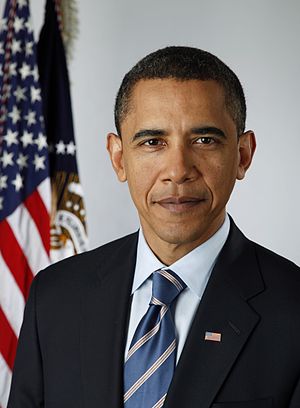
Common sense might well tell you that it is more likely that the food really gets to the country in need of aid if you send it in the form of food and not dollars. According to more than 30 studies, the custom of “shipping food overseas in American-flagged vessels is inefficient, costly” and even harmful to the very communities the U.S. is trying to help. This information is supported by experts, who say this manner of distribution drives down the price of local produce by as much as fifty percent. The U.S. is the only country to give food aid in this manner, and Obama is proposing change that could matter.

Click here to read The New York Times editorial.

Official photographic portrait of US President...

Official photographic portrait of U.S. President Barack


Never miss a post
Name: 
Your email address:*
Please enter all required fields
Correct invalid entries

New on The Rambling Epicure: List Your Real Food or Photo Blog

Published by Friday, April 26, 2013 Permalink 0

by Jonell Galloway

We’ve just created a widget in the right-hand sidebar that allows all real food sites, blogs and readers to enter their URL on our list of visitors, whether it be a recipe, photo, news, farming, or other real-food related site. All you need to do is enter your RSS feed URL. Sign up soon so we can form a community of like-minded people!

From artsy

Photo courtesy of Ilian


to philosophical and literary

The Unsettling of America: Culture & Agriculture

The Unsettling of America: Culture & Agriculture (Photo credit: elycefeliz)


Continue Reading…

Never miss a post
Name: 
Your email address:*
Please enter all required fields
Correct invalid entries

The Rambling Epicure Made Loads of New Friends at the Wendell Berry Conference 2013

Published by Tuesday, April 23, 2013 Permalink 0

by Jonell Galloway

“A Rambling Epicure”: a short article about my work

One great thing about spending 3 days with a group of like-minded people, who have come from all over the country (and Switzerland) to pay homage to their “spiritual guide”, Wendell Berry, is that the audience is already filtered, and you can be sure to meet people you can relate to and that you will stay in contact with.

Wendell Berry speaking in Frankfort, Indiana

Wendell Berry speaking in Frankfort, Indiana


Such is the case with Elias Crim, a native Texan who spent “several good years studying classics and medieval Italian at U.C. Berkeley before wasting several more years in financial journalism around Chicago.” Crim has also written for The American Scholar, The American Conservative, the Washington Times and The Chicago Observer.

This is the only photo ID I could muster up and I think it rather amusing.


He also runs a website, Solidarity Hall, which he describes as “as a hospitable old hostelry, a mental oasis in the deserted landscapes that surround us. We no longer have the coffeehouses of eighteenth-century London, where Samuel Johnson and his friends said more of substance in an hour than our blogs today could manage in a week. Nor do we have a local culture of pubs such as Chesterton’s Old Cheshire Cheese, where friendship could flourish easily, even amidst clashing opinions.” I thoroughly recommend that you take a look and start a conversation of your own.

Elias was so kind to publish this article, “A Rambling Epicure,” about my work after the Wendell Berry conference. I invite you to take a look.

Start here and then continue on Solidarity Hall:

Jonell Galloway is surely the only person from Hardinsburg, Kentucky, to ever study Sanskrit. But that’s secondary. More important is the way this spiritual daughter of Wendell Berry has developed the Rambling Epicure, an encyclopedic and literate website which describes itself thusly: “A gastronome’s guide to mindful eating. A serious approach to real-food shopping, cooking, and dining.”

Click here to continue.


Never miss a post
Name: 
Your email address:*
Please enter all required fields
Correct invalid entries

Interview with Najat Kaanache, The Pilgrim Chef from El Bulli

Published by Wednesday, April 3, 2013 Permalink 0

Interview with Najat Kaanache, The Pilgrim Chef from El Bulli

One Woman’s Tireless Pursuit of the Whimsical Spirit of Food: An Interview with Najat Kaanache


IMG1895.jpg


1. Do you remember the moment when you became interested in food?

I was just five years old and my grandma finally trusted me to help make the bread. Each grain was so precious and I was as focused in the kitchen then as I am now!

I remember making bread with my mother and the respect she taught me for the whole process of growing and cooking nutritious food for the family. Simple, natural food was the standard at home. We were so poor that a small piece of hard, crusty bread with a bowl of lentil soup was a luxury. We grew almost all of our food on our property and only went into town to buy flour.

2. Who influenced you most and did they teach you about cooking and food?

Ferran Adria taught me to give my brain and my hands the freedom to create magical dishes. At el Bulli, we practiced the “art of doing” and everything Ferran has achieved came from hard work; none of his innovations was accomplished by accident.

3. Do you think with your taste buds?

I feel with them…my hands, eyes, heart and soul all have taste buds!

4. Where did you start your culinary studies (a little history)?

My first technical training was at Culinary School in Rotterdam, but I’d been butchering, foraging, harvesting, processing and cooking daily since early childhood. Food has always been my way of life.

5. At what point did you become interested in molecular cuisine?

I was working in Rotterdam when I started reading about Grant Achatz and Ferran Adria. I set my intention to do my next training with them, and although I knew it would be next to impossible, I worked every day to make it happen. I dreamed of making crazy sexy food and these two chefs introduced me to a new paradigm of creativity, using science and technology in the kitchen.

6. There are those who say molecular cuisine is unhealthy. What are your thoughts on this?

Food can be prepared in so many ways.  For me, it’s unhealthy to eat packaged and processed foods without regard for where they originate or what additives they contain. Molecular gastronomy is an experimental way of cooking, but master chefs use only the highest quality organic ingredients and utilize technology just to present the best of each product to the guest. This modern style of cooking really boils down to a measure of creativity, not health. The so-called “chemicals” used are very common, benign food-safe chemicals and only trace amounts are used.  What worries me are all the “natural” blueberry products that contain absolutely no blueberries, just Modified Corn Starch, High Fructose Corn Syrup, Partially Hydrogenated Soybean Oil, Red #40, Blue #1 and Blue #2!

7. You often talk about your dreams and how you are in the process of making them into reality. You seem to have already realized many of your dreams. Which ones do you still have left to fulfill?

I haven’t even started, but I have just a few humble dreams. I would love to be able to offer a perfectly ripe heirloom tomato to every child in the world who’s never had the chance to taste something so vital and naturally delicious.  I would also love to stop big multinational companies from mass-producing horrible GMO foods.

I dream of making “clean” food available for everyone, but for that to happen people have to take an active interest and demand to know how their food is made.  People will pay so much for a pair of shoes, a car or a handbag, and then they give so little thought and attention to the most important thing in their life, which actually becomes a part of their body, FOOD !!

8. You once told me you’d always been a nomad, even with your parents. Can you talk to us a little about that?

My soul was born free and I remain a free spirit, home for me is everywhere. I live simply and make my home anywhere I am. I learn from people and I always need new people around me. I need to see, feel and experience in order to understand the world in which I live. I’m from the Atlas in Morocco and I grew up between there and San Sebastian. I feel so fortunate for the unique mix of cultures I was exposed to throughout my life; it was just amazing.

9. You’ve done internships with many famous chefs I believe? Can you tell us about your adventures?

Each of them gave me all I needed to become the best chef I could be. Grant Achatz made me believe that I was not crazy with my focus and intensity in the kitchen.  Rene Redzepi made me believe that yes, I can create elegant, interesting dishes with just the products I had around in nature. I already knew that deep inside, but it was great to see it in the context of a three-star Michelin setting. Thomas Keller taught me that I was correct in having an insane sense of urgency, and being determined to execute perfection for each guest. And Ferran Adria gave me the chance to free my mind. I don’t have rules and regulations in my brain, only freedom. Everything I can visualize in my brain I can bring to life with my food. Once I’ve seen it in my brain, I just need to find the way to make it happen! That is the magic of creativity, freedom and hard work.

Another thing I achieved with Ferran Adria was to completely kill my ego. That’s perhaps the most special lesson he imparts on his chefs (we call them Los Chicos del Bulli – The Boys of el Bulli, most of whom started very young and spent over 20 years working side-by-side with him). These boys, now men, create magic with food and carry the “World’s Best” title, but they have absolutely no ego and nothing to prove; they simply are who they are…chefs.

Najat Kaanache
http://www.najatkaanache.com
The Pilgrim Chef  at http://elbulli-arco.blogspot.com
Facebook: http://www.facebook.com/NajatKaanache%20″
Twitter: @ThePilgrimChef http://twitter.com/#%21/ThePilgrimChef



Never miss a post
Name: 
Your email address:*
Please enter all required fields
Correct invalid entries

Jonell Galloway: Mindful Eating: Farmers, the Land, and Local Economy

Published by Monday, April 1, 2013 Permalink 0

Mindful Eating: Farmers, the Land, and Local Economy

by Jonell Galloway

Many times, after I have finished a lecture on the decline of American farming and rural life, someone in the audience has asked, “What can city people do?” “Eat responsibly,” I have usually answered. Of course, I have tried to explain what I mean by that, but afterwards I have invariably felt there was more to be said than I had been able to say. Now I would like to attempt a better explanation.

 I begin with the proposition that eating is an agricultural act. Eating ends the annual drama of the food economy that begins with planting and birth. Most eaters, however, are no longer aware that this is true. They think of food as an agricultural product, perhaps, but they do not think of themselves as participants in agriculture. They think of themselves as “consumers.”

—Wendell Berry, The Pleasures of Eating, Center for Ecoliteracy

The Times They are a-Changin’: Move Towards a Local Economy

After a few very difficult years, we are now only starting  to talk about the importance, and even necessity, of maintaining and supporting a local economy. This is important not only to our health and taste buds, but also to our vital economic self-sufficiency. It is perfectly in line with the concept of Mindful Eating, and, by definition, involves local farmers as well as others who contribute to eating and drinking.

Continue Reading…

Never miss a post
Name: 
Your email address:*
Please enter all required fields
Correct invalid entries

Daily Food Quotes: Farm Philosophy from Wendell Berry

Published by Sunday, March 24, 2013 Permalink 0

by Jonell Galloway

For 50 or 60 years, we have let ourselves believe that as long as we have money we will have food. This is a mistake. If we continue our offenses against the land and the labor by which we are fed, the food supply will decline, and we will have a problem far more complex than the failure of our paper economy. The government will bring forth no food by providing hundreds of billions of dollars to the agribusiness corporations.

Wendell Berry, “in the op-ed piece he published with his old friend and collaborator Wes Jackson, shortly after the economy crashed in the fall of 2008.” (Michael Pollan, in introduction to Wendell Berry’s Bringing it to the Table: On Farming and Food).


Wendell Berry speaking in Frankfort, Indiana

Wendell Berry speaking in Frankfort, Indiana

Never miss a post
Name:

Your email address:*

Please enter all required fields
Correct invalid entries

Related articles

Never miss a post
Name: 
Your email address:*
Please enter all required fields
Correct invalid entries

The Big Apple on a Budget: Mas (la grillade), a Restaurant Review

Published by Monday, March 18, 2013 Permalink 0

by Leonor White

I recently discovered a farm-to-table restaurant in the West Village. I was looking for an upscale lunch at an affordable price to dine with my family. Mas (la grillade) is the sister restaurant to Mas (farmhouse), but, as the name indicates, focuses on grilled meats.
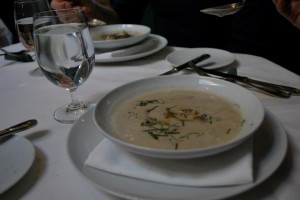
During lunch hours, a seasonal menu of locally grown foods cooked solely over wood fires of oak, apple and other hardwoods is served. This menu is comprised of three courses: appetizer, main course and desert, and it all comes at a very reasonable price, $27.  Lunch à la carte is also available, but I would recommend opting for the menu, as you get a chance to experience Chef Galen Zamarra’s seasonal favorites. The restaurant is also open for dinner, and just as for lunch, there is a prix fixe menu (but for a higher price, $68), as well as an à la carte dining.

We went for lunch on a Saturday, and it did not disappoint. The restaurant is simply but tastefully decorated, making a bold statement with regards to its farm-to-table concept. As the menus arrived, we all had our eyes fixed on the first item in the menu: “Grilled Pear and Sunchoke Soup with Mint, Black Truffle and Hen of the Woods Mushrooms.” Despite the fact that there were other appetizers to choose from, such as the “Grilled Trumpet Royale Mushrooms with a Salad of Mizuna, Grilled Onion Vinaigrette, and Croutons,” we all thought that the soup sounded divine, and it was indeed. The grilled pear and sunchoke flavors made for a distinctive taste; the soup was sprinkled with mint and black truffles and topped with mushroom croutons.

Continue Reading…

Never miss a post
Name: 
Your email address:*
Please enter all required fields
Correct invalid entries

Wendell Berry Interview, by Mark Bittman

Published by Friday, March 15, 2013 Permalink 0

by Jonell Galloway

There’s probably no better short overview of Wendell Berry‘s views on agriculture and sustainability than Mark Bittman‘s interview of Berry in The New York Times in 2012.

Wendell Berry speaking in Frankfort, Indiana

Wendell Berry speaking in Frankfort, Indiana


Here are a few excerpts about agriculture and sustainability:

“That’s one of Wendell’s recurring themes: Listen to the land.”

“If you imitate nature, you’ll use the land wisely.”

“The two great aims of industrialism — replacement of people by technology and concentration of wealth into the hands of a small plutocracy — seem close to fulfillment.”

Mark Bittman

Mark Bittman (Photo credit: rebuildingdemocracy)


“You can describe the predicament that we’re in as an emergency, and your trial is to learn to be patient in an emergency.”

“[N]o great feat is going to happen to change all this; you’re going to have to humble yourself to be willing to do it one little bit at a time. You can’t make people do this. What you have to do is notice that they’re already doing it.”

“I’ve been thinking about that question about what city people can do. The main thing is to realize that country people can’t invent a better agriculture by ourselves. Industrial agriculture wasn’t invented by us, and we can’t uninvent it. We’ll need some help with that.”

Read The New York Times entire article here.


Never miss a post
Name: 
Your email address:*
Please enter all required fields
Correct invalid entries

Local vs. Non-local Food: The Arguments

Published by Saturday, January 12, 2013 Permalink 0

by Jonell Galloway

I think we got spoiled by eating cheap food from all over the world. That put us out of sync with nature and skewed the price of local produce and products vs. produce and products from distant places, leading us to waste what we once had held precious because it was seasonal and local and therefore rare. Slow Food USA and Josh Viertel were right in fighting for fair wages for our own farmers and trying to lead us back to a way of eating that is in line with nature, which of course means paying a little more, but improving our health and local economy.


There are many more arguments to be put forth. Let’s talk about it: the pros and cons, your experiences, your convictions, etc. We’d love to get a big discussion going here.

Click here to watch Building a Slow Food Nation, outlining the history of Slow Food in the U.S., and including Josh Viertel’s view.


Never miss a post
Name: 
Your email address:*
Please enter all required fields
Correct invalid entries

What we’re reading: bread pots, bad cooking myths, how the French Revolution changed food history, gourmet vegetarian

Published by Thursday, December 20, 2012 Permalink 0

by Jonell Galloway

Click here to find the best in current food news and trends in the world of real food, Slow Food and mindful eating.


Never miss a post
Name: 
Your email address:*
Please enter all required fields
Correct invalid entries

UA-21892701-1