Is Focaccia Pizza’s Rival?

Published by Thursday, February 16, 2012 Permalink 0

by Diana Zahuranic

“It’s the most dangerous competitor of pizza,” said the president of Recco’s Consorzio near Genova. What could possibly pose a risk to the hallowed Italian dish? The risk lies in a similar bread known as focaccia, an olive-oily, salt-crunchy, inch-thick fluffy white dough often cut into squares in the piazza’s panetteria, or bakery. Tomato sauce and ciliegini cherry tomatoes, may be dropped on top, as well as anchovies, thin potato slices with rosemary sprigs, zucchini, eggplant, olives and tomato – basically any ingredient that goes on a pizza sits comfortably on its fluffy focaccia pillow, too. And like pizza, mozzarella cheese is basically a given.


If focaccia is pizza’s most serious contender, then Focaccia di Recco is the Achilles of this battle – but Recco’s focaccia has no weak spot.

I went with my class from the University of Gastronomic Sciences, a Slow Food-founded school based in Piemonte, Italy, to the 150-year old Ristorante Vitturin. The owner applied for the IGP label for his focaccia, and is now waiting for it to pass. If the bread earns this Indicazione di Geografica Protetta, or Protected Geographic Indication, that will make it the first restaurant product with that label. Naples’ pizza likely regrets not applying for one every time a new “Napoletano style” pizzeria erects its greasy walls in small suburbs and big cities. If it gains the IGP label, then that’s Point One for Focaccia di Recco.

We walked down a flight of steps into a moodier section of the restaurant and the kitchen, open with a line of windows framing the working chefs who flip paper-thin focaccia dough in the air and mix potions of ingredients to create pestos and sauces. The bustle of a restaurant kitchen was unapparent, non-existent, at 2:30 in the afternoon. The chef had time to show us how to make Focaccia di Recco.

Three long tables were set up in a U at the end of the room, set with dough, flour and long, thin rolling pins that were more like sticks. The chef was cheerful and energetic and even a bit cheeky to the very sincere Consorzio leader/ restaurant owner, who explained to us why the Focaccia di Recco deserved the IGP label.

“We use a farina di forza,” he explained. This “flour of strength” is 100% Manitoba flour, its forza derived from the high gluten content. The chef let us feel the fine, fine flour. He began to roll out soft, warm piles of dough very quickly into a thin layer on the table.

“The cheese must be this kind,” he said, showing us the Formaggio fresco latte ligurie tracciato. It was a big, white, squishy brick. The chef laid out the first layer over the tray, and then pinched off chunks with his hands of this fresh goat’s cheese from Liguria and plopped them evenly onto the pie.

“We’ve used the same recipe since 1800,” said the owner. The recipe is also written on the brochure of the restaurant (although the cheese is described as crescenza, an Italian-style Philadelphia cream cheese, because few people will ever get their hands on the crucial ligurie tracciato cheese). We were pinching off moist bits of this rich, creamy cheese and popping them into our mouths as we watched the chef toss his next piece of dough high into the air until it was so thin it was transparent.

Formaggio fresco di latte ligurie tracciato

The chef gently laid the fragile dough over the cheesy bottom layer. Some cheese chunks broke through, which would burst through in an exquisite, oily sizzle when in the oven. He drizzled it with extra virgin olive oil, cut off the excess dough in one deft motion using the rolling pin, and smashed the leftovers into another dough ball. “We don’t waste anything,” he said. In fact, we ate hand-rolled corkscrew-shaped pasta later, called trofie or trofiette, made out of that very dough ball.

The focaccia was carefully cooked on hot coals, the traditional method, especially for us. When it was ready, it was sent up to the ground level by a veritable focaccia carousel – a large wheel with level platforms where focaccia was placed, sent up, up, up and lifted off by the waiter to be served, pizza-style, at the table. The place is known as the “restaurant of the wheel.”

The cheesy Focaccia di Recco was crunchy in all the right places, soft and gooey where you wanted it, and underlined by the wholesome nuttiness and vegetal taste of the extra virgin olive oil. My preference was the Focaccia di Recco covered in zesty, herby, house-made pesto. Interestingly, they proudly deemed this una ricetta nuova, a new recipe. Tradition runs strong in Italy, where changes are tested slowly and considered seriously.
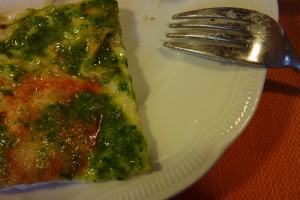
The pesto version of focaccia

Perhaps this answers the questionable “difference” between a focaccia and pizza. Focaccia is often thicker, and it is sometimes sold as “pizza a taglio,” “pizza by the slice,” even though everyone knows it is focaccia. In Italy, pizza is never one slice – it is a pie per person. And in Recco, the focaccia is thin and served on a round dish, one per person. These qualifications bring it dangerously close to pizza. When I asked the question, I was told that the ingredients in the dough are different than that of pizza dough.

And so it seems that pizza will remain pizza, focaccia will remain focaccia, and they will continue to be sold alongside one another for a long, long time as they always have. Don’t worry, pizza. Focaccia isn’t out to get you. Just don’t set up shop in Recco.

Related articles
Never miss a post
Name: 
Your email address:*
Please enter all required fields
Correct invalid entries

Food News Daily: Latest food news and trends from around the world, December 14, 2011

Published by Wednesday, December 14, 2011 Permalink 0

How Caffeine Can Galvanize Your Workout, Sweet Potato Soup With Ginger, Leek and Apple, Take a Tea Break – Whole Living Daily: Whole Living, First Write the Blog, then Write the Cookbook, Espresso Kahlúa Brownies,
Homemade Corn Tortilla and A Delightful Mixed Vegetable Cheesy Quesadilla, David Downie: Delving into the Heart of Genoa and its Food Shops and Cafés, and much more.

Click here to read more.

Salvadoran woman making tortillas with a tradi...


Continue Reading…

Never miss a post
Name: 
Your email address:*
Please enter all required fields
Correct invalid entries

David Downie: Delving into the Heart of Genoa and its Food Shops and Cafés

Published by Tuesday, December 13, 2011 Permalink 0

by David Downie

genoa, genova, shrine, madonna, old town, medieval alleys

A Favorite, Fabulous Specialty Food Shop and Historic Café in Genoa

North of Genoa’s historic harbor — the celebrated Porto Antico — spreads the recently pedestrianized Piazza Caricamento. It’s most imposing and significant building is Sottoripa cafes in Genoa, for centuries the HQ of the Banco di San Giorgio — the bank that gave “banking” its name, and helped make Genoa one of the world’s richest cities. The frescoed palace — part medieval fortress, part baroque mansion — now houses Genoa’s port authority. Few visitors think to visit the interior, which is open to the public and worth a peak. Frescoes, high ceilings, antique furniture and plenty of salty atmosphere are to be found.

Sottoripa cafes in Genoa

Armanino

The square is backed by Sottoripa and Via Turati, two shopping arcades lined by mom-and-pop stores of all kinds: fry shops, cafes and bars.

One of my favorite shops along Sottoripa is Armanino, a specialty foods boutique founded in 1905. The Armanino family still runs this narrow, deep cavern. Celebrated for its wide variety of candied fruit, handmade by a candy-maker in Savona, Armanino also offers scores of highest-quality Ligurian specialty foods. You’ll find Santa Rita brand dry pasta, unfiltered extra virgin olive oil from the Frantoio di Borgomaro and many other small producers, Savona anchovies bottled in olive oil, authentic artisan-made bottled pesto and flours derived from chickpeas or chestnuts, perfect for traditional Ligurian recipes (and naturally gluten-free to boot).

Even older than Armanino (though a relative newcomer to the city’s medieval neighborhood) is nearby Klainguti, one of my favorite cafés in Genoa. Klainguti opened for business in 1826, the brainchild of a pair of Swiss brothers — which explains the utterly un-Genoese name. The Klainguti brothers were pastry makers. They had planned to sail to America from Genoa to make their fortune. But they literally missed their boat, opened a shop here instead, and the rest is history.

Klainguti’s is a tale of sweet success, from the archetypal Swiss butter cookies and rich cakes (including the caloric but irresistible “torta Zena” made with rum-flavored zabaglione cream, sponge cake and almond paste) on up. Another centuries’ old classic is the “torta Engadina” (a variety of German dark chocolate cake, filled with heavy cream and assembled from layers of light sponge cake made from almond flour).

Just over a decade ago two new, affable owners—also brothers—named Sauro and Fabrizio Ubaldi, plus Fabrizio’s son Luca, took over Klainguti. They trimmed the proverbial sails of this flagship café and got it flying along the Mediterranean circuit again after decades of doldrums.

Klainguti

Everything at Klainguti is made in house. The gobeletti are goblet-shaped apricot-jam cookies and they are very good. But there are also chocolate-dusted meringues made to look like miniature porcini mushrooms. The Falstaff is a croissant stuffed with hazelnut paste. Local legends claim it was one of composer Giuseppe Verdi’s favorites. Verdi was a regular at Klainguti whenever he was in Genoa, which was often.

The larger-than-life Verdi was a jumbo-sized individual and reportedly had no trouble dispatching giant portions of whatever he ordered. Those who can’t even imagine gobbling an entire torta Zena can get a fair idea of its excellent flavor by ordering a patatina rosa instead. These pink, baby potato-shaped confections explode with rummy zabaglione.

Klainguti’s outdoor tables are set up in the pocket-sized Piazza di Soziglia, a charming spot in the bull’s eye of the center of Genoa’s medieval alleyways. This is the perfect place from which to watch the multi-cultural, multi-racial Mediterranean world walk by. In case you’re hungry for the savory side before hitting the desserts, Klainguti also serves light lunches and many snacks. Don’t miss the cozy, handsome little backroom decorated with antique crystal chandeliers and colorful stone floors. It’s a good place to get out of the weather, whether hot or cold.

For addresses and opening hours, and much more on Genoa, its history, culture, food, wine, hiking trails, treks, guided tours, restaurants, food shops, best coffee, best focaccia and more, keep reading WanderingLiguria and pick up our books, Food Wine Italian Riviera & Genoa and Enchanted Liguria: A Celebration of the Culture, Lifestyle and Food of the Italian Riviera.

Never miss a post
Name: 
Your email address:*
Please enter all required fields
Correct invalid entries

David Downie: Genoa’s Port and Medieval Backstreets

Published by Thursday, November 3, 2011 Permalink 0

by David Downie

The port city by definition, Genoa was made to be seen from the Mediterranean and entered by sea. If you arrive by plane, train, bus or car you miss the full effect. The best way to counter this is to take a ferry boat ride from the harbor, or arrive by cruise ship. The second best way is to walk from Porto Antico — the old harbor — to the end of the piers or the Lanterna, a lighthouse that’s about 800 years old.

Look back at old Genoa and be amazed.

Click here to continue reading article.

Never miss a post
Name: 
Your email address:*
Please enter all required fields
Correct invalid entries

David Downie: Portofino, the Italian Riviera’s Most Glamorous Time Warp

Published by Friday, October 28, 2011 Permalink 0

by Wandering Liguria

Nobody knows Liguria better than David Downie. In fact he knows it so well, he’s just launched a new site about it, Wandering Liguria, to add to his exquisite Food Wine Burgundy and Food Wine Rome guidebooks for the thinking man who wants to avoid places frequented by busloads of tourists.

A picture-postcard faux fishing port, Portofino is the Riviera’s most glamorous time warp: the villas of the super-rich perch on pine-studded promontories jutting into the Mediterranean. Billionaires like Silvio Berlusconi spend precious leisure hours here. “Precious” is the operative word.

Five hundred years ago one irreverent overnight traveler noted that in Portofino “you were charged not only for the room but the very air you breathed.”

Click here to read more of David’s Gadling article on Portofino.

Never miss a post
Name: 
Your email address:*
Please enter all required fields
Correct invalid entries

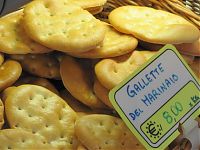
David Downie: Gallette, Italian Riviera Sea Biscuits

Published by Tuesday, September 27, 2011 Permalink 0

by David Downie

gallette del marinaio, sea biscuits, panificio maccarini

Everyone knows about the focaccia of Genoa and the Italian Riviera. But who remembers the region’s hardtack?

Sea biscuits: those hard, dry crackers that sailors would take with them on long journeys, because normal bread got moldy within days?
In Italian, sea biscuits are called “gallette.” The same word is used for the surf-worn, flattened stones you find on beaches. That’s because sea biscuits look very much like those stones, with pock marks.

There used to be hundreds of bakeries up and down the coast of Italy, and in America too, that baked sea biscuits. Now only a handful continue the tradition, most of them in Liguria, and only one makes gallette in the old-fashioned way, meaning the way they were made in the nineteenth and early twentieth centuries.

Continue Reading…

Never miss a post
Name: 
Your email address:*
Please enter all required fields
Correct invalid entries

UA-21892701-1