A Look at Slow Food’s Salone del Gusto, October 2012, in Turin, Italy

Published by Saturday, November 3, 2012 Permalink 0

by Diana Zahuranec

Salone del Gusto ended on Monday 29, but I can’t stop thinking about it.

Salone del Gusto, held in Turin, Italy, is a Slow Food biannual food fair and conference. To sum it up in these few words undermines everything else it is, too, and its importance as an event that brings together producers from all over the world. These are producers that grow ancient varieties of grain to save genetic biodiversity, that make Slow Food Presidia cheeses or salumi, that pipe their cannoli full of the freshest organic ricotta you’ve ever tasted, and whose principles and values align with your own and, it goes without saying, Slow Food’s – good, clean, and fair food for all.

The Slow Food mascot

For all things Slow Food, here are some links courtesy of Scoop.it and Slow Food. To understand a few of those words in the paragraph above, just look at the end of the article.

This year, Salone del Gusto was a marriage of the original Salone del Gusto, first held in 2006, and Terra Madre, first held in 2004. While both events had food artisans and producers from all over the world, different activities were held at each and were not all accessible to the public. Salone del Gusto focused more on the exposition and sale of high quality foods and products, while Terra Madre was a gathering of a network of food producers from around the world. Having never been to either of these before, I can’t offer judgment on the differences of before and after. What I would love to do is share my first-time impressions of this year’s.

To say Salone is a food fair means that, like your down-home county fair, the place is jumping with activity – with a few notable differences. The funnel cakes are replaced with French butter cookies in 20 different flavors, the groundhog whacking game is replaced with the foodie’s (divisive word, I know) form of fun, that is vertical Barolo wine tastings, and that feeling of riding the Zipper right after you eat your funnel cake is replaced by the feeling of pressing up against crowds right after you drink your Barolo wines.

Continue Reading…

Never miss a post
Name: 
Your email address:*
Please enter all required fields
Correct invalid entries

Slow Food’s Salone del Gusto 2012, Turin, Italy, photo essay 1

Published by Saturday, November 3, 2012 Permalink 0

by Jonell Galloway

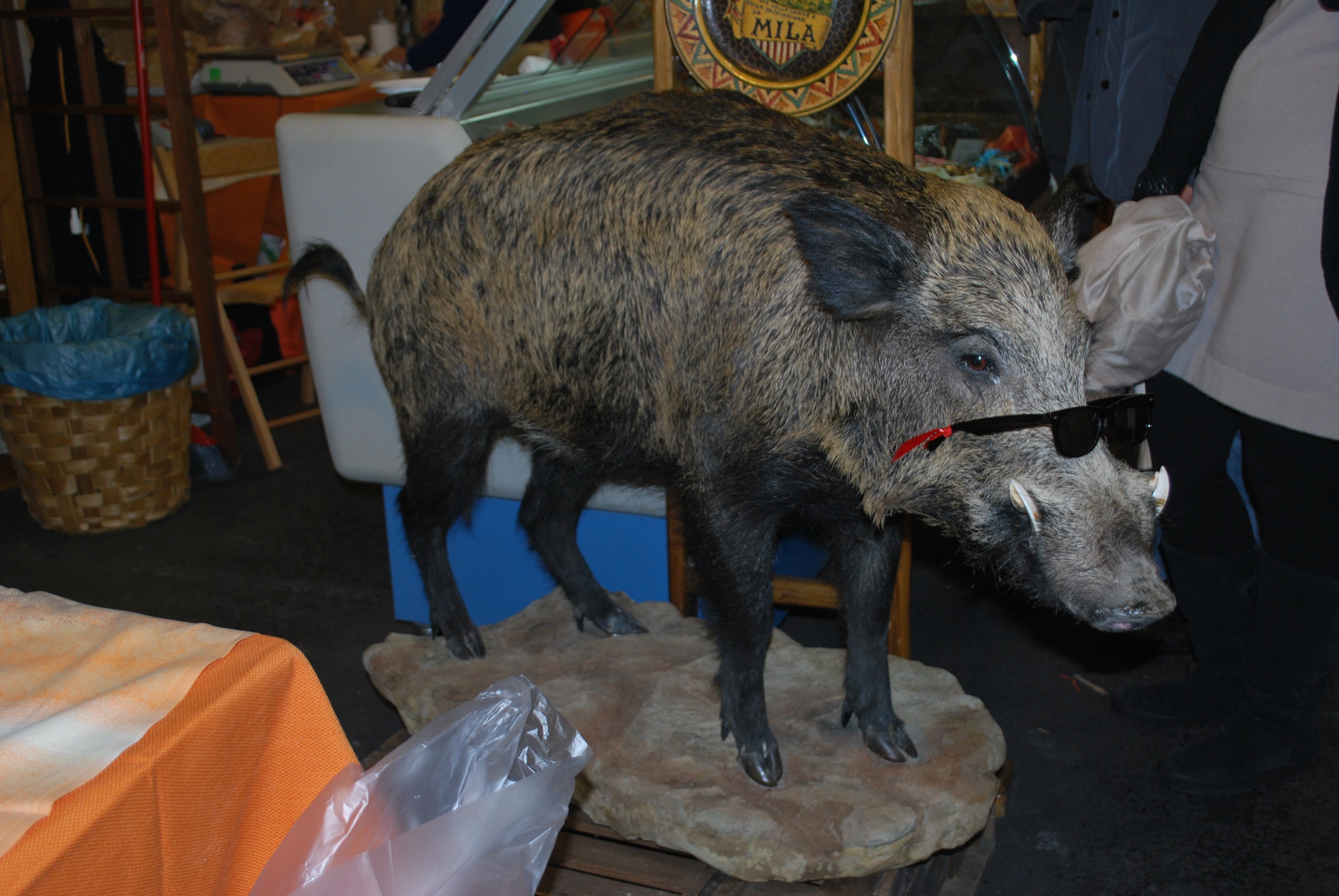
I went camera-crazy at the Slow Food Salone del Gusto 2012 in Turin, Italy. Here are my unedited photos, part 1, documenting the incredible products available. The signs tell you where the product came from and give a full description in English and Italian. Watch the slideshow!

Wild boar with sunglasses, Piemonte,Slow Food Salone del Gusto 2012, Turin, Italy

Image 1 of 28

Never miss a post
Name: 
Your email address:*
Please enter all required fields
Correct invalid entries

Beef Production in Feedlots – How we do it in Australia

Published by Friday, November 2, 2012 Permalink 0

by Amanda McInerney

I have no illusions. The majority of people do not think too hard about where their food comes from. There are lots of reasons for that – life can be a pretty distracting business for many and they just don’t need another thing on their plate (pardon my pun) to cause anxiety and emotional or financial stress. What concerns me, though, is that those who find their way to my site and others like it and actively choose to consider their food options do so from a well-informed foundation. To that end I always endeavor to make sure I am as well informed as possible about a subject before I start “blowing off “about it.


I’m a carnivore and a (very) small-scale Angus beef producer, so have a direct interest in how beef is produced in this country. My cattle live a very pleasant life indeed and their end is relatively quick and clean, but for some time now I’ve been curious about what happens to other cattle. While it would be nice if all livestock could avoid the industrial food system, this is unlikely to happen any time soon and I wanted to try to understand how the general beef production model works. These days we hear much that is negative in relation to U.S. feedlots, so I’ve been interested in learning about the conditions on Australian feedlots and comparing our system with the the US model. Recently, I have had several requests for information regarding the perceived difficulties of sourcing grass-fed beef and a query regarding the Australian commitment to corn crops and government subsidies of them, so clearly I’m not the only one who needs to become a little more well-informed on this subject.

There are quite a lot of clean, comfortable and slightly detached ways to go about researching a topic these days, but never let it be said that your trusty correspondent was reluctant to face up to the cold hard facts of life – which is how I found myself at one of Australia’s largest feedlots and processing plants just outside of Toowoomba in Queensland last week. I was pleased to be able to accept an offer from Meat & Livestock Australia to see, absolutely first-hand, exactly how feedlotting is operated here and, while it is a little tricky to use the word “enjoy” in this context, I certainly found the experience enlightening and even bracing.

Housing cattle in feedlots is an intensive animal feeding technique designed to fatten livestock and encourage the deposit of more fat in the beast’s muscles – known as marbling. There are approximately 600 accredited beef cattle feedlots in Australia, with over 95% family-owned and -operated. In the U.S. the feedlots are much, much bigger than any here in Australia, often holding 150,000 to 200,000 head of cattle. Beef City, the lot I visited, has a 25,000-head capacity and we have only one other which is larger than that in this country.

The fact is most Australian beef is grass-fed and even feedlot cattle spend 80-90% of their lives on grass, only being sent to feedlots for “finishing”.  Cattle are generally sent to feedlots when poor pasture quality during poor seasons or during the dryer winter months, and in southern Australia during the dryer summer months, can result in low weight gain and the need for feedlot finishing.  In comparison, U.S. beef cattle are introduced to a grain diet very early – indeed, some are weaned on to it – and generally spend a much larger percentage of their life confined in small feedlot yards.

As I’m sure many are aware, U.S. grain-feeding is heavily dependent upon a ration of GM corn by-products (obtained from ethanol production), with the addition of antibiotics to prevent the infections that will arise as a result of the stress placed on the beasts. Once again, this is not at all the case here.  Australian feedlots use a much more varied combination of wheat, barley and sorghum – all grains which cattle prefer to grass – and follow strict transitional protocols over a period of weeks to ensure that the beasts have no rumen problems from a sudden change in diet. Antibiotics are NOT used as preventatives here in Australia and are only ever introduced on direct evidence of infection.

Australian feedlots are regulated through the industry’s quality assurance program, the National Feedlot Accreditation Scheme which, in 1995, was the first agricultural quality assurance scheme introduced in Australia and means that every lot in the country is individually audited every year. Environmental aspects are of significant importance here in Australia, too, and all feedlots have to provide monitoring data on soil quality and water tables annually.

My own impressions of Beef City in no way contradicted any of these facts. I was one of a group who were visiting the lot as part of their training and we were taken through every single part of the operation. Nothing was hidden from us, no question went unanswered, and the only thing we were requested not to photograph was the actual kill in the abattoir – not an unreasonable request, I thought.

The cattle in the yards (which were ALL shaded) were content, relaxed, but alert and very curious about the visitors – just as my own cattle in the paddocks are. They are very inquisitive beasts and like to know what is going on. Another thing which is worth knowing about cattle is that they are highly “vocal” and leave you in no doubt if they are unhappy or distressed about something. There was not a murmur out of this lot – apart from the odd contented conversational lowing – and certainly not the calling I hear from mine if one or two of them become separated, or the anxious bellowing of the cows when the calves are separated from the herd.  If they were uncomfortable or distressed, they sure weren’t talking about it.

I’m not aiming to convert anyone with the above thoughts, nor am I posing as any sort of a mouthpiece for industrial agriculture – this is simply an issue which is of personal interest to me. As it turns out,  the facts are a good deal less confronting than I expected and I’m nowhere near as horrified as I thought I’d be.   Large-scale meat production not going to go away and, if we are going to eat it, there is no point in being squeamish about how it gets on our plates. As meat-eaters we have a responsibility to the beast that dies for our dinner and that responsibility includes treating it respectfully while it is alive. Of course, that will not happen in every case, but the standards which are in place are helping us get there. I believe that, as far as Australian beef production is concerned, we are on the right track.


 

Never miss a post
Name: 
Your email address:*
Please enter all required fields
Correct invalid entries

What we’re reading: food sculptures, hugging carrots, revolting cakes, Salone del Gusto 2012, 100 best American cakes

Published by Thursday, November 1, 2012 Permalink 0

by Jonell Galloway

Click here to keep up with the latest in world food and wine news.


Never miss a post
Name: 
Your email address:*
Please enter all required fields
Correct invalid entries

The Art of Tasting Wine with James Flewellen: Quality

Published by Tuesday, October 30, 2012 Permalink 0

by James Flewellen

One of the common themes running through my wine education courses and writings is that you, the taster, are the final authority on whether you like a wine or not. While I can tell you whether a wine is well made, and give my perception of the aromas, flavours and structure of a wine, I can’t get inside your head to assess your perception of a wine or whether you like it or not.

There are, however, some objective guidelines on assessing a wine for its quality. These are espoused by the WSET and various other wine educators and can be remembered easily by the acronym ‘BLIC‘.

B is for balance. A well-balanced wine will have a consistency between the aromas you smell and flavours you taste. The acidity will match the body of the wine and any sweetness. It won’t be sharp and unpleasant; nor will it be flabby and soft. The alcohol will suit the body of the wine and not be too harsh nor weak. If a wine has been aged in oak, then the level of oak will support the natural fruit flavours rather than overwhelm them. One factor that should be taken into consideration is the age of a wine and when it is expected to be drunk. A barrel sample of a very fine wine will not necessarily be in balance, yet it should be by the time the wine is ready to be drunk a decade later. One of the hardest jobs I’ve seen in the wine business is that of winemakers assess their newly-fermented wine and to make decisions on how to mature it based on their projections of how the wine will develop.

The length of the wine is straightforward. Simply: the longer the better. After swallowing, the finest wines will linger over your senses for many tens of seconds, even minutes in some cases! The one caveat is that the remaining flavours should be enjoyable. I’ve had at least one occasion of a wine with a very bitter flavour and an unpleasantly long finish.

Intensity is the next criterion. It’s a bit of a double-edged sword in that an overly intense wine can be overwhelming in some cases. If a particular aroma or flavour dominates at the expense of the balance or complexity of the wine, then too much intensity is a bad thing. However, with this in mind, the best wines will have an intensity and concentration of flavour that is precise yet generous.

Finally, we have complexity. This is perhaps the most difficult criterion for a wine to achieve. Complexity in a wine begins with high quality grapes. The vineyard must be well tended and the grapes healthy before a winemaker can make great wine. The winemaker’s skill is in preserving the complex biochemicals that occur naturally in the grape, enhancing and concentrating them, while still maintaining balance. Further complexity in a wine is achieved through judicious use of oak for maturation. Finally, the time spent in bottle results in further subtle and complex chemical reactions that develop ever new flavours in a wine. The end result of a fine wine that is opened at its optimal age for drinking is a plethora of aromas and flavours that change and evolve in the glass. The exact aromas and sensations can be hard to describe, yet the finish always leaves you wanting more!

__________________

James Flewellen is The Rambling Epicure wine columnist. James is a biophysicist at the University of Oxford. Originally from New Zealand, the huge range of wine James discovered in Europe spurred his interest in all things vinous. He became involved in the University’s Blind Wine Tasting Society and has recently completed a two-year term as its President. During this time he represented the University in a number of domestic and international wine tasting competitions, winning several awards. He is currently completing the WSET Diploma in Wine and Spirits. James has a passion for wine communication and education and runs the Oxford Wine Blog and the Oxford Wine Academy.

Never miss a post
Name: 
Your email address:*
Please enter all required fields
Correct invalid entries

Recipe: Kids in the Kitchen: Making Homemade Halloween Treats with your Children

Published by Sunday, October 28, 2012 Permalink 0

by Jonell Galloway

American Jack-o’-lanterns. Photo courtesy of Nosajanimus.

Have you ever thought of making homemade Halloween treats, and getting your kids into the kitchen to help out?

Sharon Bowers’ book Ghoulish Goodies: Creature Feature Cupcakes, Monster Eyeballs, Bat Wings, Funny Bones, Witches’ Knuckles, and Much More! (Frightful Cookbook) arose out of her lifelong love affair with Halloween. Epicurious has featured some of her recipes and ideas in its weekly newsletter.

Continue Reading…

Never miss a post
Name: 
Your email address:*
Please enter all required fields
Correct invalid entries

Slow Food’s Salone Internazionale de Gusto Food Fair

Published by Thursday, October 25, 2012 Permalink 0

The 2012 Salone Internazionale de Gusto food fair started in Torino, Italy, today October 25, 2012, and will continue until Monday, October 29, 2012. Hope to see you there!


Never miss a post
Name: 
Your email address:*
Please enter all required fields
Correct invalid entries

Simple Sustenance: Pumpkins, When the Beauty is in the Imperfections, a photo essay by Renu Chhabra

Published by Wednesday, October 24, 2012 Permalink 0

by Renu Chhabra

The harvest moon hangs round and high
It dodges clouds high in the sky,
The stars wink down their love and mirth
The Autumn season is giving birth.
Oh, it must be October
The leaves of red bright gold and brown,
To Mother Earth come tumbling down,
The breezy nights the ghostly sights,
The eerie spooky far off sounds
Are signs that it’s October.
The pumpkins yellow, big and round
Are carried by costumed clumsy clowns
It’s Halloween – let’s celebrate.
–   
Pearl N. Sorrels, It Must be October

Color and rusticity are the characters of autumn

Warm tones and ­­rustic gifts from nature fill our hearts with a sense of wholeness. It’­­­­s a feeling that reminds us of our connection with the earth and our humble existence.­­

Orange, yellow, red, and amber are the colors of fall, visible in landscapes and farms alike. Pumpkins, gourds, and squashes add soul to this season. Greeting us on the front porch or displayed inside the house, they adorn our spaces with fall bounty; they are festive and inviting. They bring with them a certain positive energy.

And what’s fall without pumpkin pie, pumpkin bread, and  pumpkin soup? It’s the pumpkin heaven that embraces us, at home or anywhere else. We all want to savor the season’s bounty to its fullest.

I am intrigued as much by the great pumpkin’s beauty as by its imperfections. Some of the very deformed ones are the most intriguing of all. But who said nature is perfect? Nature is beautiful, yet free-spirited when we see it in its natural and organic form. And we see its beauty in these colorful gourds that exude their individual characteristics in their own special ways.

They have different colors, shapes, sizes, and personalities. Yet they are beautiful and unique, despite their imperfections. They all bring something special to our tables in terms of taste, texture, and quality.

Just like us, human beings.

What do you think?

Celebrate the season!
Never miss a post
Name: 
Your email address:*
Please enter all required fields
Correct invalid entries

What we’re reading: Prerna Singh food photography, best new hotels 2012, lemon garlic ginger carrots, etc.

Published by Wednesday, October 24, 2012 Permalink 0

by Jonell Galloway

Click here to keep up with the latest in world food and wine news.


Never miss a post
Name: 
Your email address:*
Please enter all required fields
Correct invalid entries

The Art of Tasting Wine with James Flewellen: Structure in Wine

Published by Tuesday, October 23, 2012 Permalink 0

by James Flewellen

When we taste a wine to assess it, we are looking for up to eight different components. Firstly, the flavours. In general terms, flavours will be similar to the aromas we can smell. Indeed, what we think of ‘taste’ is more influenced by smell sensors in the back of our nasal cavities than by our tastebuds! Things to consider about the flavours in wine include: Do they match with what we were expecting based on the aromas we can smell?  Is the balance between aroma and flavour harmonious, contrasting or conflicting? What sort of food would this wine go best with?

Peel me a grape


We now look out for the structure of the wine. This is a term used to describe components of the wine that carry the flavours and ‘support’ the wine. Alcohol is perhaps the most obvious aspect of structure in wine. Ethanol has the ability to hold more aroma and flavour compounds in solution than water, one reason alcoholic beverages are generally more complex than non-alcoholic ones. It is important that the alcohol is in balance with the rest of the wine and does not produce an unpleasant burn at the back of the throat (too much alcohol) nor results in a ‘thin’ or ‘weak’ wine (too little). Alcohol is a major component of what we call the body of the wine, which is how dense or viscous the liquid feels in the mouth. A robust, deep-coloured red wine is likely to be ‘full-bodied’, whereas a lower-alcohol cool-climate white wine will be ‘light-bodied’. There’s no right or wrong level of body, simply that the body of the wine is in harmony with other structural elements.

All wines have what we call residual sugar. This sugar remaining from the fermentation process, which converts the natural sugars in grape juice to ethanol. In most cases the level of residual sugar is so low that we cannot taste it. These wines are what we would call ‘dry’. In some cases the fermentation is deliberately stopped to leave a higher level of sugar in the final wine. These wines will be ‘off-dry’ or perhaps ‘medium-sweet’. Dessert wines can be incredibly sweet, and they are made from grapes with very high concentrations of sugar. Yeasts can only convert so much sugar into alcohol in fermentation (typically 13.5-14.5% abv); any sugar above this level remains unfermented resulting in a sweet wine. Sweet white wines are far more common than reds.

Acidity is a very important structural component in all wine. The natural fruit acids in the grapes are preserved through the fermentation process and provide the ‘backbone’ to wine. Acidity helps to carry to flavour of wine down the tongue and spread the sensation of the wine around the mouth. It has an important role in wine and food pairing as acid cuts through the fats and oils found in food, cleansing and refreshing the palate. This is why highly acidic wines go very well with creamy sauces and certain cheeses. Acidity is registered on the sides of the tongue; you can also assess it by noting your saliva response after swallowing.

An aspect of the winemaking process (a story for another time!) means that the quality of acidity in red wines is softer than that for whites. But red wines have another structural aspect: tannins. Tannins are chemicals found in the skin, stalks and pips of grapes. They interact with the inside skin surfaces of your mouth — gums, cheeks, tongue — to create a furry, puckering sensation. The same chemicals are found in tea. Unlike white wines, red wines are made in a way to preserve tannins. When you drink red wine with food, the tannin interacts with protein, neutralising it, and cleansing the palate in much the same way acidity does for white wines. This explains why red wine and red meat are such a popular pairing, and also why many red wines are not particularly pleasant on their own, yet amazing with food.

fruits sous la mer
It’s important to consider the effect of the wine’s structure on the food you might have with it.


One aspect of tasting wine that crosses over flavours and structures is the use of oak to mature the wine. Oak barrels lend a wine some of the oak flavours — nuts, butter, biscuit, spice, vanilla, coconut — which suit very well certain styles of wine. Ageing in oak barrels also allows a very slow air exchange to occur with the wine. This interaction changes the flavour and structure of the wine in other, more subtle, ways. The acidity becomes more mellow and the fruit character recedes slightly, allowing more complex flavours to develop.

Our final aspect of structure in a wine is the finish. This describes the effect of the wine after we swallow. The finish can be long, short, abrupt, disappointing, smooth, bitter, fruity, savoury, enjoyable, harmonious, complex, you name it. It is our final judgement on whether we like this wine and whether we’d buy another bottle.

Ultimately, the final arbiter of taste is you. No-one can tell you what you can taste and whether you like a wine or not. While there are accepted methods for assess the various structural elements I’ve described above, perception is a very personal thing. The trick to appreciating wine is to know why you like (or don’t like) a wine, not just that you do!


__________________

James Flewellen is The Rambling Epicure wine columnist. James is a biophysicist at the University of Oxford. Originally from New Zealand, the huge range of wine James discovered in Europe spurred his interest in all things vinous. He became involved in the University’s Blind Wine Tasting Society and has recently completed a two-year term as its President. During this time he represented the University in a number of domestic and international wine tasting competitions, winning several awards. He is currently completing the WSET Diploma in Wine and Spirits. James has a passion for wine communication and education and runs the Oxford Wine Blog and the Oxford Wine Academy.

Never miss a post
Name: 
Your email address:*
Please enter all required fields
Correct invalid entries

UA-21892701-1