In this brief history of the sandwich, you’ll learn that a sandwich is an extremely versatile and universal food item consisting of two slices of bread in the middle of which is encased a filling, or of a single slice of bread garnished with a topping (tartines/bruschetta, smørrebrød, canapés, etc.). In both cases they come in an infinite number of varieties that differ in flavour, style, texture and size.
The origin of the term dates back to 1762 and saw the light of day in East Kent, England. According to legend, John Montagu aka the Fourth Earl of Sandwich was so busy gambling that he did not want to stop his activities in order to dine, so he ordered the waiter to bring him slices of roast beef enclosed in two wedges of bread. In this way, he could continue playing while eating and would in no manner dirty his fingers. That is how this quick and improvised snack became known as “sandwich”.
Even if the Earl gave his name to this popular “speciality,” it is to be said that bread has been served with meat and/or vegetables for centuries before this “invention” and that its forefather probably already existed in Neolithic times with the advent of the domestication of wheat. The first form of sandwich is attributed to the ancient Jewish wise man Hillel the Elder (~1st century B.C.) from Babylon who apparently put meat from the lamb sacrificed for Passover and bitter herbs (horseradish, chicory, sow thistle, eryngo, and lettuce) between pieces of matzo (kosher cracker-like, unleavened bread). Another genre of sandwich was common during the Middle Ages: thick slabs of stale bread called “trenchers” were used as plates and can be regarded as the precursors to the open-faced sandwich.
At the beginning, sandwiches represented a humble and simple lower-class meal, but by the middle of the 18th century, the aristocracy started serving them as a late-night collation, and they were considered very chic. Then with the breakthrough of the Industrial Revolution in the 19th century and its hordes of restless workers slaving away in factories, sandwiches became a working-class luncheon, since they were practical, easily accessible, nourishing (calorific), inexpensive, portable and could be eaten in a rush.
After having first appeared in England as well as Spain, the sandwich rapidly spread through the rest of Europe and the United States, where it was first promoted as an elaborate main dish. The 20th century saw the rise of the sandwich in the U.S. and the Mediterranean when bread became an indispensable component of people’s diet and started being consumed in much larger quantities than in the past.
We think of taste as something universal that we have in common with all (or most) human beings, as a mechanical and chemical process that requires no thought. If we could measure the data that goes into our final judgment about the taste of a food, we’d likely be in for a shock. Perhaps surprisingly, our subconscious also plays a major role in what we like or dislike, and we use all our senses to determine this.
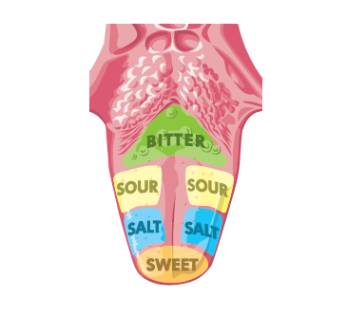
Traditionally, when we study the four elements of taste, they are presented as follows:
There is no need to explain these. We are all familiar with them.
Today, taste specialists have added a fifth to that list: umami. Taking its name from Japanese, umami is a pleasant savory taste occurring naturally in many foods, including meat, fish, vegetables and dairy products. It is subtle and blends well with other tastes to expand and round them out. Some researchers, such as Adam Hadhazi, think there are even more tastes to be added.
But in reality, taste or flavor involves all five senses. Yes: sight, hearing, touch, taste and smell.
Some researchers, such as Gordon M. Shepherd, would have it that what we most often refer to as “taste” is in fact flavor, and that flavor is largely made up of what he calls “retrosmell”. It is true that in the past we were taught that primates lost touch with their sense of smell when they started holding their heads upright, far from the ground, and standing on two legs instead of four, but today, that is called into question. Shepherd is the one who challenged this long-held premise back in 1974.
Retronasal smell, also known as “retrosmell” or “mouth-smell”, is an addition to the conventional teaching about taste; it is an integral part of flavor. Retrosmell takes place while you’re chewing and swallowing, as well as while you’re breathing. When you exhale, you draw “chemicals released by the food into the nasal cavity, where they are sensed and transmitted to the brain,” says Medical Discovery News. It is what defines the aftertaste that stays in your mouth after sipping a good wine, for example.
I have lived much of my life through what I like to call “full-sensory taste.” Of course, I consider sour, sweet, bitter and salty, but the other senses also come into play. When I read a good restaurant menu, I focus on individual ingredients and can quite easily conjure up the final combination of flavors, i.e. taste, a dish will have. Just as when I shop, I first see the ingredient, then I might imagine how it sounds in my mouth (yes, I really do that). This is usually a function of whether it is crunchy, in which case it makes quite a lot of noise, or whether it is creamy, and spreads over the tongue and goes down smoothly (umami comes in here). I even like to touch certain ingredients, such as tomatoes, to see whether they are firm or mushy, or cereals, to make sure they’re still crisp.
On principle, I always smell vegetables and fruit before buying. Though today’s strict standards and expectations on the part of customers are largely visual, looks do not tell the entire story. A tomato might well be perfectly red, round and standard in size, but I know from experience that real tomatoes that you pick from the garden are not perfect to look at, and it is not this so-called “perfection” that determines the taste. As my best friend’s mother used to say, “Art is never perfect, and don’t forget that.” And thus is nature.
From my grandfather’s garden I bring in another element of taste: nostalgia. I will forever associate the chlorophyll-filled smells of the fresh vegetables and fruits from his garden with a sense of well being. I remember getting on my knees to smell the tomatoes before I picked them, like an animal with my nose close to the vines. After we’d finished harvesting for the day, with sweat on our brows, I’d sit on his lap under the shade of trees and drink ice water, his blue eyes sparkling in the sun as he laughed. I’d often hear my horse neighing in the field next door, see the horse barn in the distance. The stifling heat of the Kentucky sun would from time to time be broken up by a breeze that came suddenly out of nowhere, lasting only a few seconds, just enough to help evaporate our perspiration and bring with it a waft of horse sweat. When we finally carried our harvest into the house, my grandmother would start preparing dinner, changing those fresh scents of chlorophyll into seasoned scents of the traditional Kentucky dishes she mastered. The ensemble — all the sensory input and all the partly subconscious thoughts and feelings from these days gone by — is my definition of a perfect time and place and world, as simple as that may seem. It was a full-sensory experience, existing now in the form of subconscious associations that are totally my own, associations that form my likes and dislikes.
When I walk through the farmers market, I use all my senses and some nostalgia too. First I look, filtering out what experience tells me is not fresh or of good quality. I “create” dishes in my mind, “using” the ingredients that seem freshest and imagining the flavor of those ingredients together. It is a full-sensory experience. I imagine the crunchiness, unctuousness, aroma, the acidity, saltiness, bitterness, sweetness, umami. Associations from the past often rush in without me being conscious of them. It’s like a sentence from Proust. In one very long sentence, Proust takes you through all the senses and sometimes back again, and time is suspended, letting them all blend together to make an astonishing whole that is forever your own. This passage, quoted often, is just one example:
And soon, mechanically, weary after a dull day with the prospect of a depressing morrow, I raised to my lips a spoonful of the tea in which I had soaked a morsel of the cake. No sooner had the warm liquid, and the crumbs with it, touched my palate than a shudder ran through my whole body, and I stopped, intent upon the extraordinary changes that were taking place. . . . I was conscious that it was connected with the taste of tea and cake, but that it infinitely transcended those savors, could not, indeed, be of the same nature as theirs.
Proust is, of course, referring to the conscious pleasure that comes through the senses, to which is inevitably added subconscious associations.
To sum it up, when you bite into a potato chip, you start by looking at it to see if it looks appetizing. When you put it in your mouth, you feel the crunch with your teeth (touch) and you hear it. You taste the salt; you taste and smell the flavoring, and it may well have a retrosmell, a taste/smell that lingers in the back of your mouth, even after you’ve swallowed it. All this gives you an idea, often formed from the past, of what it should be like in your mouth. If that “historical” expectation is not met, you probably won’t like the chip.
From this perspective, flavor in the traditional sense of the word takes on a whole new complexity. The traditional elements of flavor are combined with signals and messages from the other senses and with nostalgia and other subconscious associations. Our likes and dislikes become, like Proust’s description, a rich, unique blend of all these elements. There are indeed objective elements, but these cannot stand alone in producing the astonishing whole that is your own, which no one in the world has perceived exactly in the same way. Tasting becomes a moment suspended in time, a moment that is yours and yours only.
In this series of articles, we will explore these elements of full-sensory taste.
The more you eat, the less flavor; the less you eat, the more flavor.–Chinese Proverb
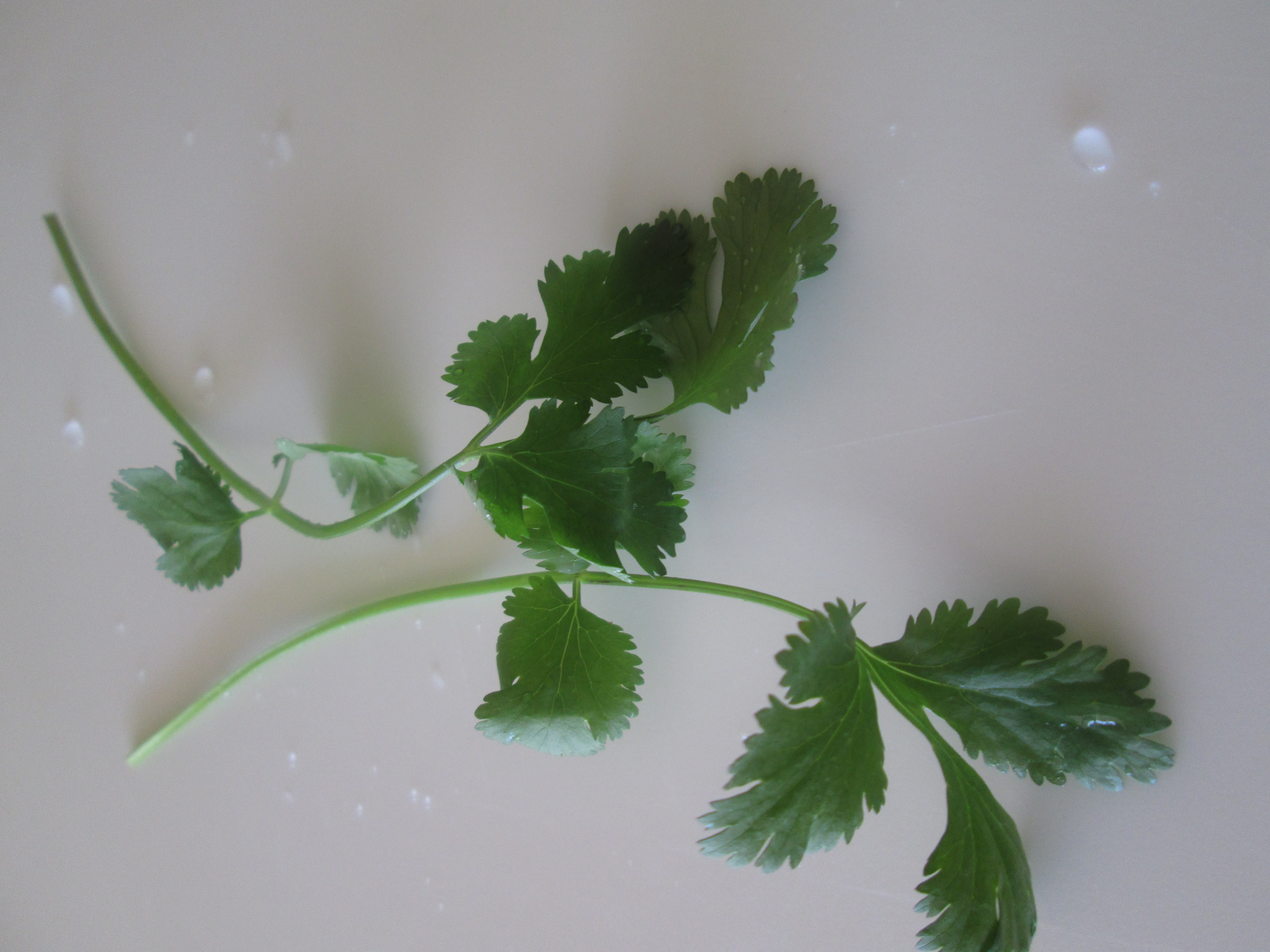
It is amazing how herbs can completely transform a recipe, giving it a whole new personality. Pureed with beans to make flavorful spread, processed with nuts for hearty pesto, or blended with oil or herb oil are just a few ways to taste the magic of herbs. Other blander dishes such as salads, grains, soups, stews, and breads also get fresh and delicious makeovers when they are in the company of herbs. And we can’t forget lavender cookies or basil ice cream, which add a few stars to the dessert category. It doesn’t take a lot to infuse their flavors to any recipe — sweet or savory. They always play their magic.
The Vergers d”Aigle et d’Yvorne is tucked into the heart of the Chablais region in French-speaking Switzerland. For more than 40 years now, they have been growing a wide range of fruit, grown under strict environmentally-friendly conditions. This fruit expresses the true terroir of the Chablais region.
Their fruit, including more than 40 varieties of apples both antique and modern, are available at producer prices, much fresher than store-bought apples, with more than 20 varieties available. The website lists the expected dates for each fruit grown.
In September, they also sell the cherished Fellenberg plums.
In season, you can pick your own cherries, with a choice of over 10 varieties.
Bertrand et Martine Cheseaux also offer a wide range of local artisanal products, including oils, vinegars, apple juice, eggs (great quality!), honey and fresh vegetables.
This year, in the context of the Semaine du Goût, or “tasting week”, which runs from September 13 to 23, 2013, they will be offering guided tours of their orchard of some 10 varieties of antique apples, along with tasting. This will take place on Saturday, September 21, with visits at 10 A.M. and 2:00 P.M. It is advisable to reserve a place. To reserve, call 41 (0)79 397 59 72 send an e-mail to info@vergers.ch.
Les Vergers d’Aigle et d’Yvorne Bertrand & Martine Cheseaux Route d’Evian 32 CH – 1860 AIGLE Switzerland
Life is a combination of magic and pasta.–Federico Fellini
Federico Fellini, an Italian film director and scriptwriter, was born on January 20, 1920, in Rimini, Italy. Part of the Italian Neorealist movement, Fellini was known for a distinct style that blends fantasy and baroque images. His major works are La Dolce Vita and 8 1/2. Fellini. “At least half of all film-makers asked about the directors they most admire include Federico Fellini in their top three,” says The Guardian, and he is considered one of the most influential filmmakers of the twentieth century, winning five Academy Awards, to become the person who won the highest number of Oscars for Best Foreign Language Film in history. He died October 31, 1993.
Translated from the French and adapted by Jonell Galloway. Cliquez ici pour la version française.
If you ask an artisan bread baker who is passionate about his work from where he derived his passion, he or she will almost invariably reply, with no hesitation, that it arose out of the “mystery of the fermentation.” Did you know that bread is the result of an alcoholic fermentation, and the baker therefore actually manufactures alcohol? Now how does that come about, you might ask?* (If you’re interested, read the very technical footnote below.)
It’s not really surprising that a bread baker shares the wine maker’s penchant for the processes of “alteration,” “deterioration,” and “transformation,” which make them both somewhat sorcerers, metaphorically speaking. While a baker talks about bread fermentation, the wine maker continually refers to “maceration,” and the cheese maker to “maturation.” But whether it consists of alcoholic or lactic fermentation, we are still talking about transubstantiation, a sort of “sacrament,” which creates an aura without parallel around these “artists”. They are aware of this, and they know it is at the very heart of their art. Bread baker, cheese maker, wine maker: they all fight the same battle, that of transformation of food, of true metamorphosis.
When does dough become bread?
At the same time, at what point in this long sequence of processes does the product we actually consume merit the name “bread”? This is not an easy question.
In most of our minds, bread is a loaf or a baguette; it is ciabatta in Italy and pumpernickel in Germany. In Iran, they call it sangak, in Denmark, rugbrød, in Jamaica, bammy, eaten straight out of the oven.
Can we call the fat roll of dough after kneading and shaping or left to rise “bread”? Is the dough left to ferment in the dough trough not already bread?
The large sacks of flour that the miller delivers every morning, are they not, in some ways, already bread? Is a grain that we mill, or even a seed that we plant, not bread? Is leftover bread, bread we let dry, whether on purpose or not, and that we use to make croutons for a thick winter’s soup that we lap up like a Jacques Brel song, not also bread?
This 7 Lives of Bread column will explore every facet of bread, walking you through all the phases of transformation, from seed and grain to the end product you savor.
The 7 Lives of Bread will trace the life of a loaf of bread, from its “birth” to its “death”. Bread is therefore:
The grain prepared for milling.
The flour that results from milling.
The dough that seals the coming together of flour and water, a meeting that starts the fermentation process.
The dough roll that is detached from this initial bulk of dough, and then starts down its own individual path.
The dough roll when it is baked in the oven.
The bread we choose at the bread bakery, or the bread we make ourselves.
Stale bread, that can be baked again (the term “biscuit” means literally, in French, “cooked twice”, in the spirit of Melba toast) so as to conserve it for future use.
The latter is typically the bread of sailors and nomads. The Greeks – great seafarers — are given credit for having invented the double cooking process.
The 7 paths: in the sweat of thy face shalt thou eat bread
In the 7 Lives of Bread, we will explore all seven paths of these seven “lives”. If fermentation is at the very heart of bread baking, it can also be considered that all steps – from the cultivation of wheat and milling to the actual bread making itself – are active participants in the transformation process.
This concept is aptly put in Genesis 3:19: In the sweat of thy face shalt thou eat bread, till thou return unto the ground; for out of it wast thou taken: for dust thou [art], and unto dust shalt thou return.
Bread is therefore to be taken in like mother’s milk, earned with the sweat of our brows. Symbolically, it is interesting to attempt to understand why bread has a price, the price of transformation or of conversion: the bread changes to the same degree as the man or woman who makes it.
If we look at it in this light, for ten thousand years now, it is as much bread that has shaped humankind as it is the hands of women and men who have shaped bread. The realization of this reciprocal shaping and, through it, conversion is the starting point of this column.
*The chains of starch (complex carbohydrates, which along with gluten constitute the essence of the endosperm or starchy kernel and quantitatively speaking, the essence of the wheat grain), under the action of enzymes or amylases, are broken down into simple glucose (C6 H12 O6), which is, in turn, converted by yeast or enzymes into either carbon dioxide (2CO2) and ethanol or ethyl alcohol (2C2 H5 OH) and energy.
Jean-Philippe de Tonnac is editor of the Dictionnaire Universel du Pain or Universal Dictionary of Bread, published in French by Éditions Laffont on October 16, 2010.
Switzerland: Bénichon Mustard, A Fribourg Specialty to Welcome the Descent of the Cows
by Jonell Galloway
Bénichon mustard is quintessentially Swiss. It is a specialty of the canton of Fribourg.
It is more like a spicy jam than a mustard, in the traditional sense of the word. Its ingredients give it a sweet and sour taste.
It is traditionally eaten with another Fribourg specialty, cuchaule, a light brioche-like sweet saffron bread, during an annual village fair to celebrate and “bless” the autumn harvest and bringing down the herds of cattle from the mountains. This is now held the second week in September.
There are numerous recipes, but they traditionally include mustard flour (or powder), extra-white flour, white wine, fortified wine, rock candy and water, to which cinnamon, star anise and whole cloves are added.
It’s really quite easy to make. I’ve translated the Bénichon recipe and adapted it.
Suggestion: Do this on a day when you’ll be at home all day, or soak the mustard powder over night and finish off the recipe the next day.
The Fundamental Interconnectedness of Wine, Food and Art and Just About Everything Else That’s Good
by Jonell Galloway
From the archives
As Shelly Butcher so aptly said in her article “Welcome to the Borscht Belt, exploring the ‘fundamental interconnectedness’ of all things food,” there is a fundamental interconnectedness in food and it can extend beyond the bounds of food, to things related to art de vivre, wine, aesthetics and the whole ambiance, as the French might say. I think most of us would agree that the French and Italians do it best in the Western world, and we all busy ourselves trying to imitate them. Once the bond is made through food and wine, it often remains and blooms into something bigger and more far-reaching.
My very special story is about how my husband Peter White and I met David Downie and Alison Harris.
My husband is a master at planning trips. He always chooses the perfect B&B, which often happens to be a castle or palazzo or some kind of wonder, with an idyllic view, and of course a long list of perfect restaurants to go along with it.
This summer we took the children to Burgundy for a week, and while in Beaune, where we were staying at one of his perfect B&Bs, Les Jardins de Loïs, a little paradise right in the heart of the city, I picked up a book called Wine Food Burgundy in the study. It’s a guidebook, but quite frankly, if you love good writing like we do, you can read it for the pure joy of style. Over the next few days, every time my husband put it down, I picked it up, and vice versa. I won’t say we fought over it, but we both kept our eye on it at all times, as if it were a precious gem we had to keep watch over.
When we returned home to Geneva, I promptly looked up the book and the author, David Downie, and wrote a comment on his site.
The next day, two amazing things happened. First, I realized that I had stupidly left my jewelry box at Aux Terrasses in Tournus. Secondly, the owner of Loïs telephoned my husband to say that the writer of Wine Food Burgundy wanted to contact us. He and his wife were spending the summer in their country house near Cluny (and near Tournus). And the most amazing part of it all is that since we had to drive back to Tournus to get my jewelry, we decided it was in the stars. Somebody somewhere meant for us to meet.
So Peter and I drove to Tournus, had a lovely lunch with David and Alison at Aux Terrasses, and we’ve been in contact ever since.
I’ve been talking a lot about Mindful Eating lately. It’s a term that came to me out of the blue, and only weeks later did I realize that I picked up the word “mindful” in my many years of studying Buddhism and Hinduism. I studied these for so long that the vocabulary has become somewhat incorporated into my way of expressing myself and my subconscious. I am mindful; I live mindfully.
As a result, before publishing my own Mindful Eating Manifesto – a practical approach to my favorite subject of food – I only thought it fair to publish the somewhat more philosophical article by Buddhist thinker and teacher Thich Nhat Hanh.
Traditional Buddhist and Hindu teachings urge us to be mindful about every act, at every moment, every day of our lives. The word “mindful” is not a trademark. It is a way of being. Mindfulness gives meaning to every action, and creates a sharper awareness and a greater understanding of the interconnectedness of all living things.
What does mindfulness have to do with the way I eat?
This may not seem to have anything to do with how you eat, but indeed it does. It’s the current food trend in the developed world, and I feel confident that it will spread at a rapid pace. Eating is not just about filling your belly.







 Simple Sustenance: Herb Magic — Creamy Cilantro-Lime and Cannellini Bean Spread