The Many Colors of Corn: A Photo Essay

Published by Friday, July 5, 2013 Permalink 0


//

English: Black corn Español: Maíz morado

English: Black corn Español: Maíz morado (Photo credit: Wikipedia)

English: Cobs of corn

English: Cobs of corn (Photo credit: Wikipedia)

English: Green Oaxaca corn Français : Maïs ver...

English: Green Oaxaca corn Français : Maïs vert d’Oaxaca (Photo credit: Wikipedia)

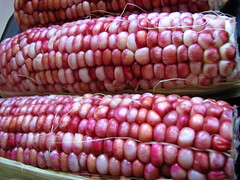
red corn on the cob

red corn on the cob (Photo credit: MelanieAnneMarie)

Red corn, blue corn and cucumber seeds for sal...

Red corn, blue corn and cucumber seeds for sale in Fresno, California… (Photo credit: Nate Gray: A Culinary (Photo) Journal)

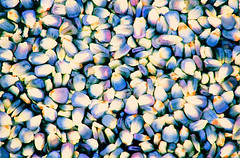
Blue Corn

Blue Corn (Photo credit: Big Grey Mare)

English: From left to right, haba beans, haba ...

English: From left to right, haba beans, haba beans, blue corn and white corn for sale at a tianguis market in Metepec, Mexico State. (Photo credit: Wikipedia)

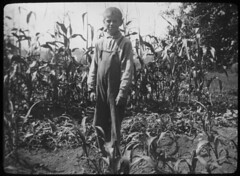
Boy in corn field, Woodbine, New Jersey

Boy in corn field, Woodbine, New Jersey (Photo credit: Center for Jewish History, NYC)

Public relations of high-fructose corn syrup

Public relations of high-fructose corn syrup (Photo credit: Wikipedia)

English: A display of six ears of field corn w...

English: A display of six ears of field corn with dented yellow kernels (Zea mays var. indentata) which won ribbons for “best of show” at the Steele County Fair in Owatonna, Minnesota (Photo credit: Wikipedia)


Never miss a post
Name: 
Your email address:*
Please enter all required fields
Correct invalid entries

Mindful Eating: Getting your Kids into the Kitchen: Fresh Fruit Smoothies

Published by Sunday, June 30, 2013 Permalink 0


//

Jonell Galloway, Editor, The Rambling EpicureMindful Eating: Getting your Kids into the Kitchen: Fresh Fruit Smoothies

Getting your Children Interested in Food

From the archives

For younger children, one of the easiest ways of introducing them to the kitchen is to tempt them with a sweet, fruit smoothie.

Smoothies are easy and can be made all year, changing
the flavor according to what fruits are in season.

So as to avoid adding sugar, it’s best to choose a fruit that is very ripe and sweet, and, of course, one that your child likes. Letting your child choose the fruit is also a way of teaching him or her how to shop for fresh fruit, and explain why you don’t buy strawberries from Chile at Christmas. Local fruit is not only fresher and therefore has more vitamins, but it is also nicer on the purse.

Bananas are good all year, and can be mixed with different fruits in the summer. There are endless combinations that change with the seasons.

At the moment, strawberries, melons, peaches, and raspberries are already available in the Geneva region or from nearby France or Italy. Indian mangoes make a divine smoothie, similar to an Indian lassi, and always a favorite for children. The buttery, honey-flavored yellow kiwis from New Zealand have a very short season, but are not as acidic as the green ones, and have just come on the market.

Take a look at what’s in season before you go to the market.

Continue Reading…

Never miss a post
Name: 
Your email address:*
Please enter all required fields
Correct invalid entries

Kids in the Kitchen: Teach Your Kids How to Shop for Food

Published by Monday, June 17, 2013 Permalink 0


//

The Rambling Epicure, Editor, Jonell Galloway, food writer.Kids in the Kitchen: Teach Your Kids How to Shop for Food

by Jonell Galloway

Summertime is the perfect time to start!

Farmers Market

Going to the farmers market can be made into an exciting, weekly event. Summer offers lots of fresh fruit that they can choose to make their smoothies, to put on their breakfast cereal, or to make fruit salads. Vegetables are tastier in summer than in winter, and there is a larger selection, so it is also an occasion to encourage them to try more vegetables. If they choose fruit and vegetables themselves, they will feel more part of the process, and are more likely to eat them.

Making the Shopping List

Start by discussing the fruits and vegetables that are in season with your child before you go to the market. For the Lake Geneva region, you can look at our MarketDay photo albums, published regularly, to get an idea of what you can expect to find. If you are planning on making a meal together, choose the dishes and ingredients together when making your shopping list. If it’s fruit for snacks or smoothies, let them decide which ones they prefer.

It is a good idea to put up a food pyramid and a seasonal products chart somewhere in the kitchen, so you can refer to it when planning meals with the children, and also to explain why they must eat food such as green vegetables or fruit, for example. More suggestions are available in our 9 May 2009 post A fun, interactive guide for teaching your children good eating habits.

Explain the importance of buying local when possible. It is not only cheaper, but fresher, and therefore has more vitamins.

At the Market

Once you’re at the market, let them start looking for the items on the list. When they’ve spotted them, explain how to choose, by color, smell, touch, ripeness, etc., but make sure to ask the vendor if it’s all right to touch first.

This is also a time to let them look for products that have a local origin written on the tags, and to explain that if the products are local, they are also more ecological, because the cost of transport is less, and that in turn makes them more economical. It takes a lot of fuel to bring tomatoes from Holland in July and August when we have them right here in the region. Reduced transport also cuts pollution.

Buying from local producers allows children to have direct contact with the farmers, and to ask questions if they like. Farmers love to talk about what they have lovingly produced, and this in turn encourages children to appreciate farmers’ hard work and the satisfaction that it brings them. There is a reciprocity: the farmer gives you something he or she has produced with care, and you in turn get to satisfy your tastebuds.

Make kids part of the entire process by letting them help prepare the meal or dish afterwards. Once again, they are more likely to eat it if they help prepare it.


//

Never miss a post
Name: 
Your email address:*
Please enter all required fields
Correct invalid entries

Foraging and Post-Neolithic Cooking: Antonio’s Wild Spinach Salad Recipe, by Jane Le Besque

Published by Sunday, June 16, 2013 Permalink 0

Foraging and Post-Neolithic Cooking: Antonio’s Wild Spinach Salad Recipe, by Jane Le Besque

Antonio’s Wild Spinach Salad Recipe

Jane and Antonio’s recipe is based on foraging and what they imagine post-neolithic cooking to be, foraging and all, but with a modern twist, i.e. the olive oil.


Continue Reading…

Never miss a post
Name: 
Your email address:*
Please enter all required fields
Correct invalid entries

Geneva and Lausanne: Sustainable Living Resources in Switzerland

Published by Tuesday, May 21, 2013 Permalink 0

Geneva and Lausanne: Sustainable Living Resources in Switzerland

This is a new list for sustainable living in Geneva and Lausanne and we’ll be adding to it and updating it on a regular basis. We will extend it to other French-speaking cities as we add to the list.

Free WiFi in Geneva and Lausanne


GENEVA

The city of Geneva is in the process of setting up free WiFi hotspots in and around Geneva, referred to as “GeSpots”. The project is a long-term project, but terminals are already available at the locations marked in green. Click here to see the map.

LAUSANNE

Free WiFi hotspots are available in the following locations in Lausanne: Saint-François, Riponne, Flon, Palud, Montbenon, Navigation, Port d’Ouchy and at the Service des Automobiles automobile registration and inspection office and the Blécherette aerodrome.

Farmers and Open-air Markets

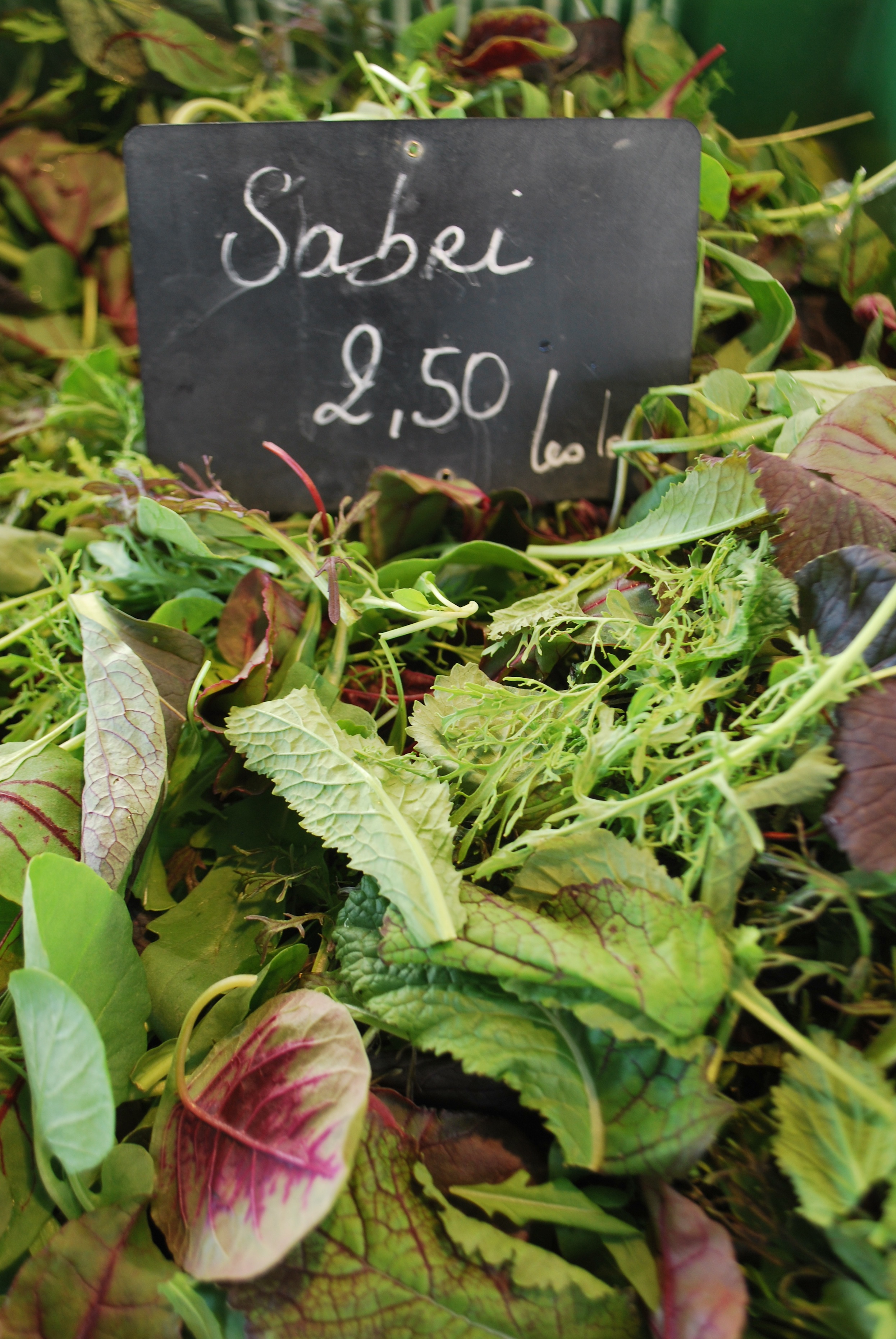
Sandrine Chapuis’ own mesclun, mixed greens from hills of Geneva


GENEVA

This site lists all the markets by day. A handy map is included with each listing so you can see where it is located in Geneva.

LAUSANNE

The Marchés Lausannois site lists the weekly markets:

Downtown/Center of Town Markets

Wednesday and Saturday, 8 a.m. to 2:30 a.m.
In downtown pedestrian streets: agricultural produce and products
On Place de la Riponne: bakery, butcher, fowl, mushrooms and non-food products

Nettles


Marché de Chauderon / Chauderon Market

Thursday, 9 a.m. to 7 p.m.
Flea market

Marché du boulevard de Grancy / Boulevard de Grancy Market

Monday and Thursday, 8 a.m. to 1 p.m.

Marché des Chômeurs

Thursday, 8 a.m. to 7 p.m.
Place de la Riponne: flea market and miscellaneous other goods


Never miss a post
Name: 
Your email address:*
Please enter all required fields
Correct invalid entries

The Rambling Epicure Made Loads of New Friends at the Wendell Berry Conference 2013

Published by Tuesday, April 23, 2013 Permalink 0

by Jonell Galloway

“A Rambling Epicure”: a short article about my work

One great thing about spending 3 days with a group of like-minded people, who have come from all over the country (and Switzerland) to pay homage to their “spiritual guide”, Wendell Berry, is that the audience is already filtered, and you can be sure to meet people you can relate to and that you will stay in contact with.

Wendell Berry speaking in Frankfort, Indiana

Wendell Berry speaking in Frankfort, Indiana


Such is the case with Elias Crim, a native Texan who spent “several good years studying classics and medieval Italian at U.C. Berkeley before wasting several more years in financial journalism around Chicago.” Crim has also written for The American Scholar, The American Conservative, the Washington Times and The Chicago Observer.

This is the only photo ID I could muster up and I think it rather amusing.


He also runs a website, Solidarity Hall, which he describes as “as a hospitable old hostelry, a mental oasis in the deserted landscapes that surround us. We no longer have the coffeehouses of eighteenth-century London, where Samuel Johnson and his friends said more of substance in an hour than our blogs today could manage in a week. Nor do we have a local culture of pubs such as Chesterton’s Old Cheshire Cheese, where friendship could flourish easily, even amidst clashing opinions.” I thoroughly recommend that you take a look and start a conversation of your own.

Elias was so kind to publish this article, “A Rambling Epicure,” about my work after the Wendell Berry conference. I invite you to take a look.

Start here and then continue on Solidarity Hall:

Jonell Galloway is surely the only person from Hardinsburg, Kentucky, to ever study Sanskrit. But that’s secondary. More important is the way this spiritual daughter of Wendell Berry has developed the Rambling Epicure, an encyclopedic and literate website which describes itself thusly: “A gastronome’s guide to mindful eating. A serious approach to real-food shopping, cooking, and dining.”

Click here to continue.


Never miss a post
Name: 
Your email address:*
Please enter all required fields
Correct invalid entries

Jonell Galloway: Mindful Eating: Farmers, the Land, and Local Economy

Published by Monday, April 1, 2013 Permalink 0

Mindful Eating: Farmers, the Land, and Local Economy

by Jonell Galloway

Many times, after I have finished a lecture on the decline of American farming and rural life, someone in the audience has asked, “What can city people do?” “Eat responsibly,” I have usually answered. Of course, I have tried to explain what I mean by that, but afterwards I have invariably felt there was more to be said than I had been able to say. Now I would like to attempt a better explanation.

 I begin with the proposition that eating is an agricultural act. Eating ends the annual drama of the food economy that begins with planting and birth. Most eaters, however, are no longer aware that this is true. They think of food as an agricultural product, perhaps, but they do not think of themselves as participants in agriculture. They think of themselves as “consumers.”

—Wendell Berry, The Pleasures of Eating, Center for Ecoliteracy

The Times They are a-Changin’: Move Towards a Local Economy

After a few very difficult years, we are now only starting  to talk about the importance, and even necessity, of maintaining and supporting a local economy. This is important not only to our health and taste buds, but also to our vital economic self-sufficiency. It is perfectly in line with the concept of Mindful Eating, and, by definition, involves local farmers as well as others who contribute to eating and drinking.

Continue Reading…

Never miss a post
Name: 
Your email address:*
Please enter all required fields
Correct invalid entries

Daily Food Quotes: Farm Philosophy from Wendell Berry

Published by Sunday, March 24, 2013 Permalink 0

by Jonell Galloway

For 50 or 60 years, we have let ourselves believe that as long as we have money we will have food. This is a mistake. If we continue our offenses against the land and the labor by which we are fed, the food supply will decline, and we will have a problem far more complex than the failure of our paper economy. The government will bring forth no food by providing hundreds of billions of dollars to the agribusiness corporations.

Wendell Berry, “in the op-ed piece he published with his old friend and collaborator Wes Jackson, shortly after the economy crashed in the fall of 2008.” (Michael Pollan, in introduction to Wendell Berry’s Bringing it to the Table: On Farming and Food).


Wendell Berry speaking in Frankfort, Indiana

Wendell Berry speaking in Frankfort, Indiana

Never miss a post
Name:

Your email address:*

Please enter all required fields
Correct invalid entries

Related articles

Never miss a post
Name: 
Your email address:*
Please enter all required fields
Correct invalid entries

The Big Apple on a Budget: Mas (la grillade), a Restaurant Review

Published by Monday, March 18, 2013 Permalink 0

by Leonor White

I recently discovered a farm-to-table restaurant in the West Village. I was looking for an upscale lunch at an affordable price to dine with my family. Mas (la grillade) is the sister restaurant to Mas (farmhouse), but, as the name indicates, focuses on grilled meats.
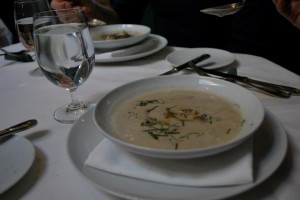
During lunch hours, a seasonal menu of locally grown foods cooked solely over wood fires of oak, apple and other hardwoods is served. This menu is comprised of three courses: appetizer, main course and desert, and it all comes at a very reasonable price, $27.  Lunch à la carte is also available, but I would recommend opting for the menu, as you get a chance to experience Chef Galen Zamarra’s seasonal favorites. The restaurant is also open for dinner, and just as for lunch, there is a prix fixe menu (but for a higher price, $68), as well as an à la carte dining.

We went for lunch on a Saturday, and it did not disappoint. The restaurant is simply but tastefully decorated, making a bold statement with regards to its farm-to-table concept. As the menus arrived, we all had our eyes fixed on the first item in the menu: “Grilled Pear and Sunchoke Soup with Mint, Black Truffle and Hen of the Woods Mushrooms.” Despite the fact that there were other appetizers to choose from, such as the “Grilled Trumpet Royale Mushrooms with a Salad of Mizuna, Grilled Onion Vinaigrette, and Croutons,” we all thought that the soup sounded divine, and it was indeed. The grilled pear and sunchoke flavors made for a distinctive taste; the soup was sprinkled with mint and black truffles and topped with mushroom croutons.

Continue Reading…

Never miss a post
Name: 
Your email address:*
Please enter all required fields
Correct invalid entries

Local vs. Non-local Food: The Arguments

Published by Saturday, January 12, 2013 Permalink 0

by Jonell Galloway

I think we got spoiled by eating cheap food from all over the world. That put us out of sync with nature and skewed the price of local produce and products vs. produce and products from distant places, leading us to waste what we once had held precious because it was seasonal and local and therefore rare. Slow Food USA and Josh Viertel were right in fighting for fair wages for our own farmers and trying to lead us back to a way of eating that is in line with nature, which of course means paying a little more, but improving our health and local economy.


There are many more arguments to be put forth. Let’s talk about it: the pros and cons, your experiences, your convictions, etc. We’d love to get a big discussion going here.

Click here to watch Building a Slow Food Nation, outlining the history of Slow Food in the U.S., and including Josh Viertel’s view.


Never miss a post
Name: 
Your email address:*
Please enter all required fields
Correct invalid entries

UA-21892701-1