To be interested in food but not in food production is clearly absurd.

Never miss a post
Name: 
Your email address:*
Please enter all required fields
Correct invalid entries
— Wendell Berry

Elatia Harris’s Top 10 Food Books 2013

Published by Wednesday, January 15, 2014 Permalink 0

Elatia Harris’s Top 10 Books 2013, on Cooking, Food History & Food Politics

by Elatia Harris

For this list to be coherent, I have to have actually read and truly admired the books on it. Check! If they are cookbooks, I have to have cooked from them with great results. Check! I want to hear what your entries would be – it was a great year for books about food and cooking, and I’ve had to leave many good ones out.

ElatiaBooks ElatiaBooks

1. Cuisine and Empire, by Rachel Laudan

20,000 years of the great movements of history, written with the kitchen at the center. If you want to take a very long view, and think hard about power – getting it, keeping it, getting it back – then the intimate and often surprising relationship between food and power, in Laudan’s telling, will astonish you. The historical counterpart to Harold McGee’s On Food and Cooking, this is a supremely important book that is a great pleasure to read. Don’t be afraid of its bigness, for it’s a truly manageable length. Read it fast, think about it forever.

2. Three Squares, by Abigail Carroll

How did the American Diet evolve? We’re not eating like they did at Plimouth Plantation, or like Thomas Jefferson ate – what ARE we eating like? For a fresh view of what’s uniquely American about our foodways, this book is a treasure.

3. Foodopoly, by Wenonah Hauter

The activist Wenonah Hauter has written Foodopoly to take on, and urge readers to take on, the dark side of our food systems, and it’s a very dark side indeed. Can there be reclamation? Can the trend towards domination by fewer and bigger companies ever be reversed? “Yes, but…” Hauter tells us, and then she tells us what that would take.

4. Behind the Kitchen Door, by Saru Jayaraman

The author is a labor organizer who believes that the maltreatment of food service workers need not be the ugly secret of the US restaurant industry. But right now, it is. What would have to happen, for food service workers to be paid a living wage and given paid sick days? One in every twelve people in the USA works in food service – how should they be treated? In its way, this is a companion volume to Foodopoly, asking all the right questions, answering not a few.

5. Raising Dough, by Elizabeth U

A guide to using other people’s money to finance your socially responsible food business, this is a hard-headed book for mostly young idealists. Brilliantly thorough, if you are on a mission but lack for practical knowledge of the business world. Especially valuable are the ideas for working around a financier’s natural unwillingness to lend money to anyone hoping to do good.

6. Arribes: Everything Else is Noise, by Zev Robinson

Film maker and painter Zev Robinson could turn Arribes, a DVD, into a commanding book, so I’m counting it in. Arribes is a rural area in northwestern Spain where people are 80% self-sufficient. One of those places where life is both simple and difficult – and movingly sustainable. Robinson’s eye for Spanish classical painting serves beautifully here. If by magic Zurbaran and Murillo could see Arribes, they would recognize their own lineages instantly and with pleasure.

7. Mushroom, by Cynthia D. Bertelsen

Confused about the world history of mushrooms? Wondering about foraging for them or choosing them or storing them? And what about a few recipes? Culinary historian Cynthia D. Bertelsen has solved all your problems in this tiny, indispensible book, a delight from beginning to end. You will read it in a snowy evening, you will consult it forever after. And if you’re still not satisfied with the mushrooms in your life, you’ll have instructions for growing your own.

8. Celebraciones Mexicanas, by Andrea Lawson Gray and Adriana Almazan Lahl

Andrea Gray and Adriana Lahl have a winner in this charmingly beautiful cookbook that focuses on the food of Mexico’s festivals. As well as recipes, there is abundant material about history and folklore, much of it highly visual and appealing to children – it’s a perfect family gift. Professional cooks as well as writers, Gray and Lahl know their way around the Mexican kitchen. It’s a labor-intensive cuisine, and the streamlining here is as intelligent as any I have ever seen – no false notes, some truly helpful simplifications. If you want the best ever recipe for Nogada Sauce, one of the signature paradisal items in Like Water for Chocolate, buy the book and turn to page 257.

9. Spice and Kosher, by Dr. Essie Sassoon, Bala Menon, and Kenny Salem

The Jewish community in Cochin, in the South Indian state of Kerala, was intensely lively for 2000 years. It has dwindled now to a few souls, but its culinary traditions belong to the world, many having partaken of, and been absorbed into, mainstream Indian cooking. Knowing that, soon, the cuisine will have outlived its people, the three authors, all originally Jews of Cochin, wrote this excellent cookbook — full of fascinating history, good recipes and directions for good practice — as a testament.

10. Paris to the Pyrenees, by David Downie, with photos by Alison Harris

Travel and food writer nonpareil, David Downie, mounts an interior and a physical struggle against middle age and fading health by walking 750 miles across France – the famous Way of St. James. Well, it’s no saunter. Even the companionship of his wife, the wonderful photographer Alison Harris, whose photos here are a revelation, cannot inure him to the hardships of the pilgrimage route. Readers will ponder how much in this volume is deeply spiritual – to my reading, seeking something you cannot define, yet seeking it body and soul, is a spiritual journey. One that is intermitted, David Downie being David Downie, by some of the most gorgeous repasts I’ve heard tell of.


Never miss a post
Name: 
Your email address:*
Please enter all required fields
Correct invalid entries

Introducing our new “TRE Quality Label”

Published by Thursday, July 25, 2013 Permalink 0


//

Introducing our new “TRE Quality Label”: Healthy, Homemade Meals Delivered to Your Door, Geneva

The TRE Quality Label

The TRE Quality Label

Introducing our new “TRE Quality Label”

In this complex world of industrial food, where even organic food is sold by agro food conglomerates, it is important to know the quality and origin of what we eat. Thus the importance of a quality label that has been tested by people like us who are experienced in the real-food business. When we give the TRE Quality Label, we know where the ingredients came from, we know how the food was processed and treated — and most of it is entirely local,  allowing you too to eat locally. We also know how it tastes, because we’ve tasted it all.

All the important criteria make up part of the TRE Quality Label: quality, origin, and taste. You can be sure of what you’re buying if it has a TRE Quality Label.

Today, we’d like to introduce the first product to which we’re giving our label: panbeh, a Geneva grassroots operation that makes every attempt to meet all these criteria, and to put something healthy, natural and tasty on your plate.

panbeh‘s meals are delivered straight to your door in Geneva. Most of the ingredients are from Geneva or nearby in the countryside.

It is the perfect solution for those who are home bound and for the elderly, as well as for those who simply don’t have the time to do the shopping required to cook a healthy, well-balanced meal. It’s great for those weeks when your work schedule is heavy, and ensures that you’ll get a home-cooked, healthy meal every day, delivered straight to your door.

Geneva: Healthy, Homemade Meals Delivered to Your Door by panbeh

panbeh describes itself:

panbeh means “pure cotton” in Farsi: the purity of a healthy, home-cooked meal

Panbeh's very own cotton plant in Geneva, Switzerland

Panbeh’s very own cotton plant in Geneva, Switzerland

As we all know, what we eat is important for our daily activity and well-being, so we are introducing our new concept: the pleasure of eating healthy, natural, homemade food while fully enjoying the taste of what you eat, delivered right to your door.

No additives and no pesticides, no hormones and no chemicals — only the real, natural flavor of top quality, artisanal ingredients, the origin of which we systematically list. And you benefit from the real taste of the whole, untreated, unprocessed food, prepared fresh every day in a high-fiber, low-fat manner.

Whenever possible, we use only organic ingredients.

We propose a daily lunch menu and will deliver it to you at your home or your office, free of charge. Please find below are our daily menus for the month of July.

Delivery to your home or office
Order the night before (before 6 pm) for next day’s lunch, or order for the whole week
Orders are delivered between 12 and 1 pm

Order by email:
panbeh@servge.ch
or by phone:
076 630 79 56

 
Free delivery for Petit-Saconnex, Grand-Saconnex, Grand-Pré and Nations.
 

It is our right to know where our food comes from:

Bread: Eric Emery bakery, Geneva.
Vegetables, fruits and mountain herbs (organic): Marché à la Ferme de Budé, Geneva.
Cheese (organic) : Casa Mozzarella, Geneva.
Salmon: Wild from Alaska or Scotland, sold by Francesco Drago, Halle de Rive covered market, Geneva.
Tomato sauce (organic): Marché a la Ferme de Budé, Geneva.
Spaghetti (organic): Marché à la Ferme de Budé, Geneva.
Rice & Quinoa (organic): Marché de Vie, Geneva
Olive oil: Greece, sold by Marché à la Ferme de Budé, Geneva
Eggs (organic): Marché à la Ferme de Budé, Geneva.
Chicken (organic) : Swiss origin
Wheat (organic) : Swiss origin


Bon appétit!


MENU for July 2013 (24.00 CHF)

Monday
Mixed salad
Quinoa balls, oven-baked Homemade
panbeh cake

Tuesday
Shirazi salad (tomato, cucumbers, onion, fresh mint)
Indian Tilda rice with safran, berberis (barberries) and chicken, or wild rice with chicken and vegetables
Fresh fruit salad

Wednesday
Potato salad, onion, eggs
Eggplant and tomato sandwich
panbeh homemade crème caramel

Thursday
Tomato & mozzarella & fresh basil
Spaghetti, tomato sauce & mushrooms
Watermelon or melon

Friday
Salad (ricotta & tomato covered with aromatic herbs)
Wild smoked salmon sandwich
Homemade panbeh cake

Large portion of mixed salad: 12.00 CHF

Drinks: kefir, mineral water, or fruit juice.


Order by email:
panbeh@servge.ch
or by phone:
076 630 79 56


Never miss a post
Name: 
Your email address:*
Please enter all required fields
Correct invalid entries

Ethical Coffee: How far can one go to suit customers and remain ethical?

Published by Tuesday, May 14, 2013 Permalink 0

When Ethics and Business Meet

When you choose a coffee shop, do you think about ethics? How far are you willing to go to remain ethical and natural? Should it be natural pure cane sugar, recyclable cups and napkins, and ethical coffee beans, or can you throw in a little artificial sugar and refined sugar so that everybody is happy? What are your thoughts?

These are just some of the questions raised by Chris MacDonald on Canadian Business.


Roasted coffee beans Español: Granos de café tostado (natural). Bahasa Indonesia: Biji kopi alami yang telah disangrai. (Photo credit: Wikipedia) Roasted coffee beans Español: Granos de café t...


Never miss a post
Name: 
Your email address:*
Please enter all required fields
Correct invalid entries

From GOOD: Procter & Gamble’s Aim is to Send Zero Manufacturing Waste to Landfills

Published by Friday, May 3, 2013 Permalink 0

 Good Things in P&G Corporate Efforts towards Sustainability


GOOD reports that the corporate giant Procter & Gamble’s aim is to send zero manufacturing waste to landfills. Already in 2007, Procter & Gamble launched a team in charge of turning manufacturing waste into worth.

Click here to read the GOOD article.


  • P&G achieves zero waste to landfill in 45 manufacturing sites
  • How Procter & Gamble achieved zero waste to landfill in 45 factories
  • Should it brie in the bin?
  • Gaga with garbage
  • How Procter & Gamble Created Billion in Value With Waste
Never miss a post
Name: 
Your email address:*
Please enter all required fields
Correct invalid entries

Jonell Galloway: Mindful Eating: Farmers, the Land, and Local Economy

Published by Monday, April 1, 2013 Permalink 0

Mindful Eating: Farmers, the Land, and Local Economy

by Jonell Galloway

Many times, after I have finished a lecture on the decline of American farming and rural life, someone in the audience has asked, “What can city people do?” “Eat responsibly,” I have usually answered. Of course, I have tried to explain what I mean by that, but afterwards I have invariably felt there was more to be said than I had been able to say. Now I would like to attempt a better explanation.

 I begin with the proposition that eating is an agricultural act. Eating ends the annual drama of the food economy that begins with planting and birth. Most eaters, however, are no longer aware that this is true. They think of food as an agricultural product, perhaps, but they do not think of themselves as participants in agriculture. They think of themselves as “consumers.”

—Wendell Berry, The Pleasures of Eating, Center for Ecoliteracy

The Times They are a-Changin’: Move Towards a Local Economy

After a few very difficult years, we are now only starting  to talk about the importance, and even necessity, of maintaining and supporting a local economy. This is important not only to our health and taste buds, but also to our vital economic self-sufficiency. It is perfectly in line with the concept of Mindful Eating, and, by definition, involves local farmers as well as others who contribute to eating and drinking.

Continue Reading…

Never miss a post
Name: 
Your email address:*
Please enter all required fields
Correct invalid entries

Wendell Berry Interview, by Mark Bittman

Published by Friday, March 15, 2013 Permalink 0

by Jonell Galloway

There’s probably no better short overview of Wendell Berry‘s views on agriculture and sustainability than Mark Bittman‘s interview of Berry in The New York Times in 2012.

Wendell Berry speaking in Frankfort, Indiana

Wendell Berry speaking in Frankfort, Indiana


Here are a few excerpts about agriculture and sustainability:

“That’s one of Wendell’s recurring themes: Listen to the land.”

“If you imitate nature, you’ll use the land wisely.”

“The two great aims of industrialism — replacement of people by technology and concentration of wealth into the hands of a small plutocracy — seem close to fulfillment.”

Mark Bittman

Mark Bittman (Photo credit: rebuildingdemocracy)


“You can describe the predicament that we’re in as an emergency, and your trial is to learn to be patient in an emergency.”

“[N]o great feat is going to happen to change all this; you’re going to have to humble yourself to be willing to do it one little bit at a time. You can’t make people do this. What you have to do is notice that they’re already doing it.”

“I’ve been thinking about that question about what city people can do. The main thing is to realize that country people can’t invent a better agriculture by ourselves. Industrial agriculture wasn’t invented by us, and we can’t uninvent it. We’ll need some help with that.”

Read The New York Times entire article here.


Never miss a post
Name: 
Your email address:*
Please enter all required fields
Correct invalid entries

Salone del Gusto versus Good, Clean, and Fair: Part 1

Published by Wednesday, December 12, 2012 Permalink 0


Salone del Gusto versus Good, Clean, and Fair: Part 1

by Diana Zahuranec

Salone del Gusto, an event held biannually in Turin, Italy by the organization Slow Food, gathers artisanal producers from around the world in five days of selling organic or biodynamic, high quality, artisanal, innovative and traditional products; tasting workshops; and conferences about the state of the world’s food system and what can be done to promote sustainable growth. It’s an amalgamation of the green movement and everything it could possibly stand for before such a thing as “green washing” existed.

So what were the Italian supermarket COOP, the internationally famous Italian espresso company Lavazza, and the ubiquitous road-side Italian convenience store Autogrill doing at the Salone?

A supermarket is the antithesis of Slow Food’s “good, clean, and fair” motto. Products are available at any quality, starting at “low” and often not reaching above “decent;” produce and packaged goods come from all over the world, with little thought as to what other countries deem as “safe” pesticides, and with less thought about the energy used to transport everything; and finally, it’s anyone’s guess as to how many products lining the shelves were made under unpleasant or dangerous working conditions with low wages as poor compensation.

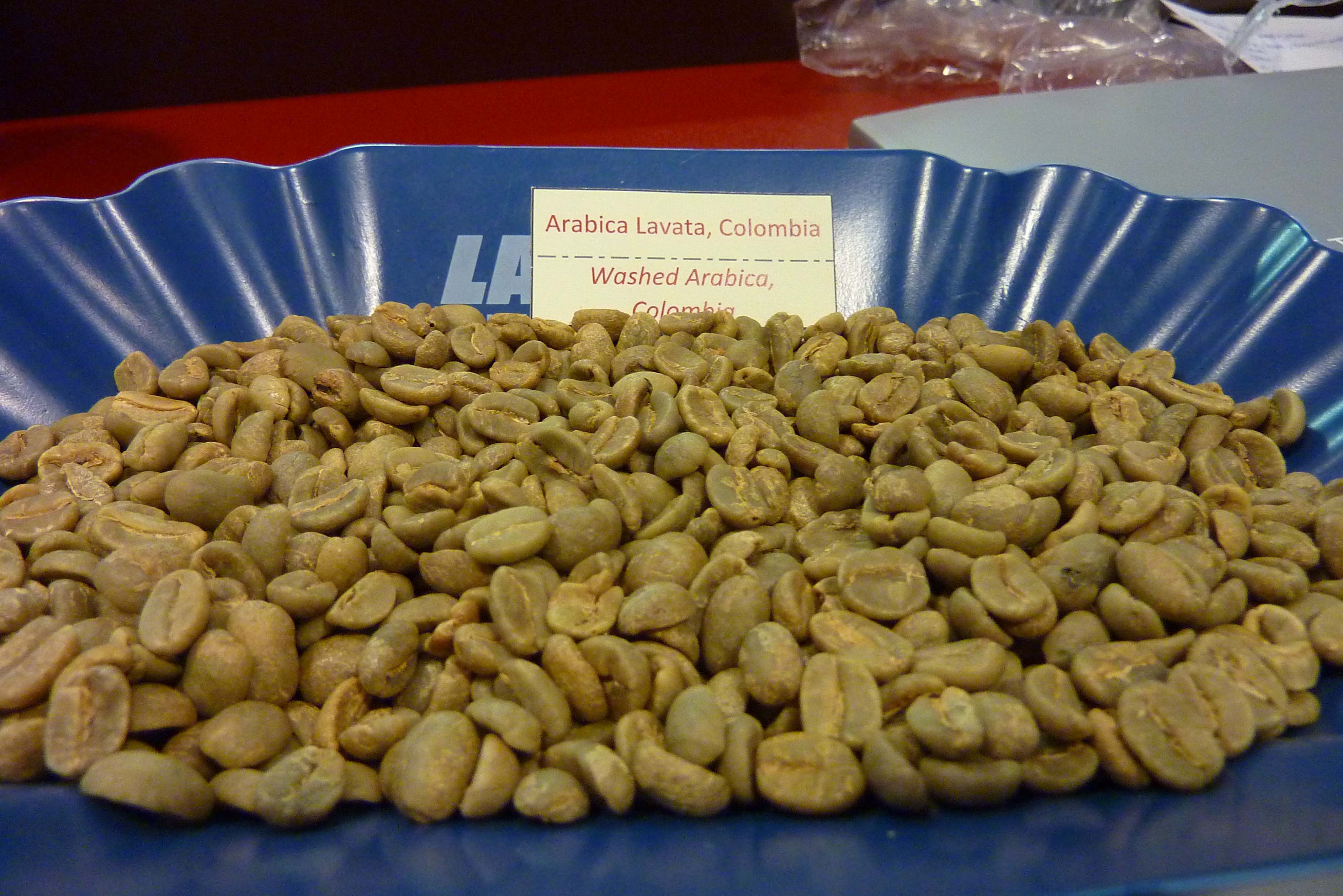
Coffee beans are notorious for their high demand pitted against their low cost, possible only through unfair working conditions and wages. Coffee plants are harvested using mono-cropping methods, which is environmentally friendly only in the interests of that particular crop.


Continue Reading…

Never miss a post
Name: 
Your email address:*
Please enter all required fields
Correct invalid entries

What we’re reading: Persian chicken stew, Yam’Tcha Chinese fusion in Paris, anti-inflammatory recipes, Slow Down Diet

Published by Tuesday, November 27, 2012 Permalink 0

by Jonell Galloway

Click here to keep up with the latest in world food and wine news.


Never miss a post
Name: 
Your email address:*
Please enter all required fields
Correct invalid entries

A Look at Slow Food’s Salone del Gusto, October 2012, in Turin, Italy

Published by Saturday, November 3, 2012 Permalink 0

by Diana Zahuranec

Salone del Gusto ended on Monday 29, but I can’t stop thinking about it.

Salone del Gusto, held in Turin, Italy, is a Slow Food biannual food fair and conference. To sum it up in these few words undermines everything else it is, too, and its importance as an event that brings together producers from all over the world. These are producers that grow ancient varieties of grain to save genetic biodiversity, that make Slow Food Presidia cheeses or salumi, that pipe their cannoli full of the freshest organic ricotta you’ve ever tasted, and whose principles and values align with your own and, it goes without saying, Slow Food’s – good, clean, and fair food for all.

The Slow Food mascot

For all things Slow Food, here are some links courtesy of Scoop.it and Slow Food. To understand a few of those words in the paragraph above, just look at the end of the article.

This year, Salone del Gusto was a marriage of the original Salone del Gusto, first held in 2006, and Terra Madre, first held in 2004. While both events had food artisans and producers from all over the world, different activities were held at each and were not all accessible to the public. Salone del Gusto focused more on the exposition and sale of high quality foods and products, while Terra Madre was a gathering of a network of food producers from around the world. Having never been to either of these before, I can’t offer judgment on the differences of before and after. What I would love to do is share my first-time impressions of this year’s.

To say Salone is a food fair means that, like your down-home county fair, the place is jumping with activity – with a few notable differences. The funnel cakes are replaced with French butter cookies in 20 different flavors, the groundhog whacking game is replaced with the foodie’s (divisive word, I know) form of fun, that is vertical Barolo wine tastings, and that feeling of riding the Zipper right after you eat your funnel cake is replaced by the feeling of pressing up against crowds right after you drink your Barolo wines.

Continue Reading…

Never miss a post
Name: 
Your email address:*
Please enter all required fields
Correct invalid entries

UA-21892701-1