The Art of Tasting Wine with James Flewellen: The Birth of a Wine Glossary
We are proud to announce that James Flewellen has started a wine glossary. It’s just the beginning, but we will be building on it soon.
Click here to see it.
|
|

A Literary Culinary Journal
We are proud to announce that James Flewellen has started a wine glossary. It’s just the beginning, but we will be building on it soon.
Click here to see it.
|
|

There are a number of legitimate reasons for sending a wine back at a restaurant: the wine could be oxidised, be contaminated by ‘cork taint’, suffer from excess volatile acidity, or have unpleasant Brettanomyces aromas. One common cause for complaint, however, is the presence of tartrate crystals or ‘wine diamonds’. Wine diamonds in white wine are a natural occurrence.
These are clear crystalline deposits found usually in certain white wines, especially Riesling. They are either potassium bitartrate (a.k.a. cream of tartar) or calcium tartrate — both found naturally in grapes, and which follow through to the final bottle in the winemaking process. They are certainly not tartaric acid, sugar, or bits of glass! These wine diamonds are perfectly natural and completely harmless. In the glass, they sink to the bottom and will barely impose on your enjoyment of the wine. Or, the wine can simply be decanted, with the crystals remaining in the bottle.

Wine diamonds in white wine left over from a glass of excellent Austrian Gruner Veltliner.
These crystals can be removed before bottling, however it is an involved process involving chilling the wine and passing it through filters. This is energetically expensive and the filtration process can remove flavour compounds that give the wine its complexity and character. Producers of fine wines prefer to mess with the wine as minimally as possible to deliver the best possible quality to the consumer.
So if you do see some wine diamonds in your wine, this is not a cause for complaint. Rather, be assured that the winemaker cares about his wine so much that he has chosen not to remove them to deliver the best possible wine to you!
__________________
James Flewellen is The Rambling Epicure wine columnist. James is a biophysicist at the University of Oxford. Originally from New Zealand, the huge range of wine James discovered in Europe spurred his interest in all things vinous. He became involved in the University’s Blind Wine Tasting Society and has recently completed a two-year term as its President. During this time he represented the University in a number of domestic and international wine tasting competitions, winning several awards. He is currently completing the WSET Diploma in Wine and Spirits. James has a passion for wine communication and education and runs the Oxford Wine Blog and wine tasting courses through the Oxford Wine Academy.
|
|
My last post covered what I consider the ‘top 10’ white wine producing grapes. Finding a similar list for the top 10 red wine grapes is no less difficult — perhaps even more so with the propensity for red wines to be a blend of a number of different grapes. Again, the order is my own preference, based on commercial importance, potential quality of the grape, and whether it produces a ‘classic style’.
Malbec is one of the six permitted red wine grapes in Bordeaux, although few producers take advantage of its rich, plummy flavours. You are more likely to find Malbec predominating in blends of southern French appellations, such as Cahors, where the grape is called ‘Cot’. These wines are typically full-bodied, deep in colour, with plum flavours alongside ferric, inky notes too. Malbec has found a second home in Argentina, where it is the country’s signature red grape. In Argentina, the mineral notes subside somewhat, and a purer fruit note comes to the fore. The tannins, plentiful in Cahors, are softer in the Argentinian expression.

This rather romantically named grape (‘Blood of Jupiter’) is the key component of wines from the Chianti region in Tuscany — arguably Italy’s most famous red wine export. The grape produces ruby-coloured wines with notes of cherries and almond. The palate can show high acid with tart cherry flavours, medium to high levels of alcohol and drying, austere tannins. The best examples develop savoury, tea-like notes with age and undeniable complexity. Brunello di Montalcino is perhaps the most interesting expression of Sangiovese, from a wine-lover’s perspective. Best served with food on account of the fierce tannins though! Sangiovese is also a component in many of the so-called ‘Super-Tuscan’ blends, along with Cabernet Sauvignon and Merlot.

Sangiovese ready to harvest
As Sangiovese is to Tuscany, Tempranillo is to the Rioja region — and indeed to many parts of Spain. Rioja is now perhaps Spain’s most famous wine export after Cava and within this region the Tempranillo grape has found a plethora of styles. The traditional style of Rioja saw ageing in mostly American oak barrels, complementing the strawberry notes from the grape with a sweet vanilla and coconut aroma from the oak. The balance between oak and fruit notes depends on the length of time the wine is aged in the barrels. With age, these wines develop pleasant grassy and ‘farmyardy’ aromas. A ‘new’ style of Rioja has emerged in recent years, favouring French oak and pushing fruit notes to the fore. Tempranillo is also a key component in many other regions of Spain, such as Ribera del Duero, and in Portugal too, where it is known as Tinto Roriz.

The second Bordeaux grape on the list, although in Bordeaux, Cabernet Franc usually plays second or third fiddle to Cabernet Sauvignon and/or Merlot. This by no means diminishes its importance for the region, however. For a classic expression of a varietal wine we head north to the Loire valley — to classic regions such as Saumur, Chinon and Bourgueil. Here, the grapes produce a medium-bodied purple wine with high acidity and fine, powdery tannins. Due to the cooler climate in the Loire, these wines have leafy, herbaceous notes to go with blackcurrant, blackberry and a distinctive mineral note many describe as ‘pencil shavings’!

Grenache is the stalwart of the Southern Rhône, where it makes up the dominant component of blended wines along with Syrah, Mourvèdre and many others. This grape is a the heart of famous appellations such as Châteauneuf-du-Pape, Gigondas and Vaqueyras. Unusual among grape vines, it can tolerate heat and drought remarkably well with its ability to close its stomata to minimise water loss through evaporation. This feature also explains its success in South Australia — another hot, dry part of the world. The Aussies have followed the Southern Rhône model and produce similar blended wines — typically called ‘GSM’ after the three major grape components. Grenache is also to be found in Priorato and other parts of Spain, where it is known as ‘Garnacha’ and typically blended with Cariñena (a.k.a. Carignan). Grenache produces wines with high alcohol, low acidity and fine, dry tannins. The flavour profile is usually of strawberry with a characteristic white pepper spiciness.

Photo courtesy of WineFolly.com
Merlot was much maligned by Paul Giamatti’s character in the film Sideways – although in an ironic twist, his prized bottle of 1961 Cheval Blanc contains a major component of Merlot. Perhaps Merlot’s unfairly poor image comes from the many mass-produced French and New World wines where the grape is used to make soft, undemanding, plummy, easy drinking wines. However, at its best, Merlot produces elegant wines with savoury flavours combining with juicy plum and fruitcake spice notes. While the grape does not lend to the most structured wines, there can still be relatively firm, drying tannins, allowing the best examples of Merlot to age very well. The most famous examples of Merlot come from the Right Bank of Bordeaux in appellations such as St Emilion and Pomerol. Here, Merlot is typically blended with Cabernet Franc to produce some of the finest wines in the world. Merlot is, of course, a component of the Left Bank Bordeaux wines, although here it comes in second to Cabernet Sauvignon. Merlot can also be found in Bordeaux-imitation blends around the world and as a varietal wine in parts of the New World – especially California, New Zealand and Chile.
Whereas the Southern Rhône follows the model of blending many grapes to create Grenache-dominated wines, the Northern Rhône sticks to a single grape: Syrah. Historically, Syrah has produced the most revered wines in France — emanating from Hermitage, Côte-Rotie, St Joseph and Cornas — and it has only been relatively recently that the focus has shifted to Bordeaux and to Burgundy. The best examples are very long-lived and offer very good value to the fine wine connoisseur. Syrah from the Rhône is medium- to full-bodied, with firm, slightly coarse tannins, crisp acidity and complex notes of plum, blackcurrant, black pepper, roasted meat, liquorice, treacle, herbs, among others. Syrah is, of course, equally famous in Australia, where it is known as ‘Shiraz‘ and found throughout the entire country. In fact, Australia has the oldest Shiraz grape vines in the world, with a number of regions unaffected by the phylloxera blight that destroyed European vineyards in the late 1800s. The classic style is that of the Barossa Valley or McLaren Vale — jammy black fruits, often with notes of spicy salami, black pepper, and eucalyptus. Australian Shiraz is usually more full-bodied with lower acidity than that of the Rhône, although wine from the slightly cooler region of the Hunter Valley can approach a Rhône-like style.
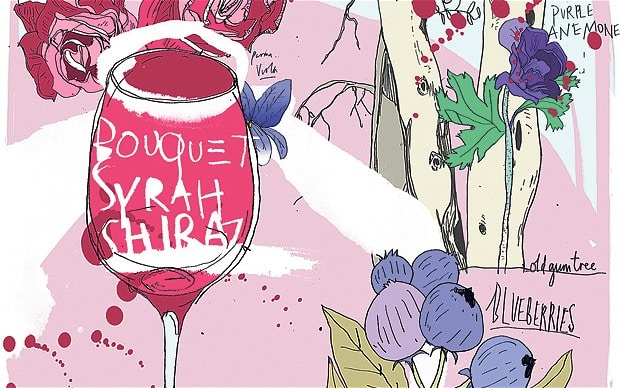
Photo link to the Telegraph
The predominant grape in some of the world’s most revered and expensive wines: those of the Left Bank of Bordeaux. In the right climate and on the right soils, Cabernet Sauvignon offers elegance, power, structure and harmony that few other grapes can match. However, in search of the perfect structure the grape can produce austere flavours in the wine, which is why this grape is best suited to blending with others. This is the origin of the ‘Bordeaux blend’, which sees Cabernet Sauvignon melded with Merlot, Cabernet Franc, Malbec and Petit Verdot. Cabernet Sauvignon brings classic notes of blackcurrant, cedar, and bell peppers alongside vanilla and nuts from maturation in new French oak, which is typical in Bordeaux. On the palate, the grape brings crisp acidity and firm, structured tannins, and both of these can ensure a long ageing potential. The Bordeaux style has found favour in many other parts of the world, from the ‘Super-Tuscans’ of Italy to equivalents in Spain, California, Australia and South America. The best examples of these are among these nations’ finest wines also.

As Chardonnay is the Burgundian king of white wines for me, so Pinot Noir is the queen of reds. Fickle, hypersensitive, ill-tempered, yet oh-so-magical when it all pays off, tasting a great Pinot Noir is an unforgettable experience. At its best the grape offers up swirling, subtle aromas of raspberry, strawberry, cherry and blackberry, a refreshing minerality and an earthy, leafy quality that is quite indescribable, yet summed up beautifully in the French term sous-bois – or ‘forest floor’. Burgundy still holds the crown for the most desirable Pinots – indeed wines – on the planet, due in no small part to its 1,000-year history in growing the grape. The grape is notoriously difficult to work with and susceptible to very minor changes in climate. Various places around the world have taken on the challenge of making great Pinot – New Zealand, Oregon and Tasmania are considered the best pretenders to the crown and can produce some very good (and much better value-for-money) wines. But these are all new kids on the block, and have a few centuries ahead of them to really get to know the grape, and for the grape to get to know their new homes.
__________________
James Flewellen is The Rambling Epicure wine columnist. James is a biophysicist at the University of Oxford. Originally from New Zealand, the huge range of wine James discovered in Europe spurred his interest in all things vinous. He became involved in the University’s Blind Wine Tasting Society and has recently completed a two-year term as its President. During this time he represented the University in a number of domestic and international wine tasting competitions, winning several awards. He is currently completing the WSET Diploma in Wine and Spirits. James has a passion for wine communication and education and runs the Oxford Wine Blog and wine tasting courses through the Oxford Wine Academy.
|
|

Broccoli Spray, by Ilian Iliev ALL RIGHTS RESERVED (C)
Click here to catch up on your food-related reading for this week:
and much more.
|
|

by Leonor White
I discovered Tocqueville last New Year’s Eve, and it’s been my go-to place ever since when special people come to town. My latest visit to this understated yet elegant Union Square New American-French restaurant with a French flare and amiable, well-trained servers brought rave “reviews” from the entire table.

Seven days a week, the restaurant offers an excellent value prix fixe menu ($29). The menu consists of three courses — appetizer, main course and dessert — as well as an amuse-bouche and interesting housemade bread à go-go. In the evening, Tocqueville offers a pre-theatre menu at $44, as well as a full à la carte menu. We went for Saturday lunch, when the restaurant was unusually uncrowded, so we sat on the ground floor from where we could enjoy a view of the restaurant’s refined décor. The dining room was pleasantly quiet with tables set widely apart and well-designed acoustics, allowing us to concentrate on the marvelous food and have good conversation too.
As mentioned, the prix fixe offers three courses, with two choices per course. From the appetizers, everyone tried both offerings, the “creamless sunchoke soup” and the “salad with mushroom terrine”; both dishes were flawless, the flavors bold but balanced. Prior to our appetizer arriving, we were served an excellent “roasted asparagus and beets” amuse-bouche, a great start to our culinary adventure. Throughout the lunch we were also able to enjoy an assortment of homemade bread, namely, brioche, focaccia filled with olive chunks, and crusty, white sourdough with homemade butter (you heard me right, homemade).
|
|
Pinot Noir is a light-skinned red grape originating from Burgundy in its modern form. Although, the Burgundians have been working with Pinot for around a thousand years, so the term ‘modern’ should be taken with a grain of salt!
The grape typically produces light-bodied wines with aromas ranging from fresh red fruit (raspberry, strawberry, cherry) to black (blackberry, mulberry) depending on the local climate of the vineyard. Warmer sites tend to produce wines with ‘blacker’ and riper fruit flavours. Alongside the fruit, good Pinot exhibits a fresh minerally, or even pleasantly ‘grassy’ character – complemented by the grape’s naturally high acidity on the palate. With bottle maturation, the wine develops notes of mushroom and decaying autumnal leaves — expressed evocatively by the French term sous-bois — which translates as ‘forest floor’. The thin skins of the grapes mean that the wines are generally low in tannin, though tannins are usually very fine-grained and punctuate the wine sufficiently so it can be enjoyed with food.
Pinot Noir is a notoriously fickle grape and is very difficult to handle. Burgundy’s millennium of association with Pinot Noir means that it produces the best in the world — and that the Burgundian clones of the grape are ideally suited to Burgundy’s continental climate. Explaining Burgundy’s appellation system would take an entire post of its own, but there are two main subregions for Pinot Noir there: Côte de Beaune and Côte de Nuits. These are further divided into villages, which may be further identified by vineyard — and these can be classified as either Premier Cru or Grand Cru indicating the quality level of the grapes.
|
|
The Art of Tasting Wine with James Flewellen: The Waipara Wine Region
About 45 minutes drive north of my hometown of Christchurch, NZ, lies the North Canterbury wine region of the Waipara Valley. The valley is nestled between the Teviotdale Hills, which shelter the region from the cool Pacific, and the foothills of the Southern Alps. The everchanging interplay of light and shadow on these surrounding hills and the immense Cantabrian skies make this one of my favourite places to visit.

Hills in the Waipara wine region
New Zealand’s wine industry is still very young (about 30 years) by global standards, yet the Waipara region has been recognised for less than half of that. While there are some well-established names in the area (Pegasus Bay, for instance), many of the wineries have only been around a decade or so, and a whole host have sprung up in the last two or three years. I’ve long been impressed with the quality of wine issuing from Waipara’s small-scale, boutique wineries. A recent visit over the New Year reconfirmed for me why this spectacular region is receiving a surge of interest and that the future looks stellar for quality wine production.
Inasmuch as such a young region can be ‘known’ for a particular style of wine, Waipara is fast becoming a home to Riesling in New Zealand, an alternative base for Pinot Noir, and a lighter, less pungent style of Sauvignon Blanc. Chardonnay is also planted and there are small plantings of other reds including Syrah, Cabernet Sauvignon and Malbec.
Unfortunately, my visit coincided with a public holiday, so I was unable to see many of the region’s top wineries on this trip; however, we had a lovely tasting and lunch at well-established winery Waipara Springs, newcomer Black Estate wines opened their doors up especially for us, and a trip to a family friend’s farm at Limestone Hills resulted in a tasting of their very small-scale (and delicious) Syrah and seeing a champion truffle-sniffing dog in action!
Waipara Springs is one of the more established wineries in the region. They have a well-equipped tasting room and a charming garden restaurant serving delicious food designed to match with their own wines. Waipara Springs produces a wide variety of styles. I was most impressed with their 2012 Sauvignon Blanc, which was very smartly-made, melding fresh gooseberry and passion fruit flavours with a high-acid, dry palate and a long, lemony finish.
Their ‘Premo’ series wines all showed great character and were a significant step up in quality from the house wines. The Premo Riesling, 2008, showed toffee notes of bottle age, zesty lime fruit, and was medium-sweet. Quite a full, luscious body for a lowish alcohol wine and a refreshing tartness to the finish. The Premo Chardonnay, 2011, I found to be a rather light, elegant wine. Perhaps not one for those who like their Chardonnays to be bold and assertive, but a very pleasing wine nonetheless. The Premo Pinot Noir, 2010, seemed to me to have a bit much oak on the nose; the wine is aged in French oak for about 15 months, 20% of the barrels are new wood. But this is something that will resolve with time. Otherwise, the wine showed lovely concentration of dark plum fruit on the nose, an appealing sour cherry palate with green, herbal notes, crisp acidity and finely-etched tannins.
You can find a list of their overseas distributors here.

A delicious light lunch at Waipara Springs
While the Black Estate winery and cellar door is reasonably new, the site was planted back in 1993 with Chardonnay and Pinot Noir. The purchase by the Naish family in 2007 has seen the estate extend its plantings, with a constant eye on terroir and what the soil and mesoclimate bring to the wine. Their first Riesling release was in 2008, and I tried their 2011 incarnation. A beautiful nose with lime blossom, cream, mint leaf and sage was followed up by a rather intense lime sorbet palate. Crisp acidity was balanced nicely by the off-dry sweetness; medium alcohol (11%) and a medium length, but very pleasant finish.
Interestingly, the winery releases two different Chardonnays and Pinot Noirs: Black Estate and Omihi Series. Each comes from separate plantings with artisanal winemaking techniques (such as foot treading, and avoiding pumping) designed to bring out the terroir character in each wine. I enjoyed all of the wines and it was fascinating to see the difference the vineyards made. The Omihi Series Chardonnay, 2011, was a lean, delicate and very well-balanced wine. I discerned lighter, floral notes, with apple, cream and some truffle hints on the nose. By contrast, the Black Estate Chardonnay, 2011, had more apricot and peach notes on the nose and a heavier, more rounded body.
The Omihi Series Pinot Noir, 2010, was very aromatic, with a bright slightly estery, raspberry note along with hints of mushroom. The palate began with this bright fruit character and evolved savoury, stemmy notes all the way through to a crunchy, firm yet quite finely-etched tannic finish. Delicious, though my one criticism was the finish came through a bit hot. The Black Estate Pinot Noir, 2010, had more boysenberry on the nose, was less estery, with appealingly Burgundian ‘cooked carrot’ and white pepper hints. The palate showed a riper entry than the Omihi, with less of a progression to savoury (at least at this stage in its evolution); however, a slightly fuller, ‘gutsier’ body I felt balanced the alcohol on the finish more.
Black Estate wines are imported to the UK by Lea & Sandeman.
 Limestone Hills
A highlight of the day was seeing Rosie the truffle-snuffler unearth an enormous truffle at the Limestone Hills farm. Well, I thought it was enormous, though Gareth Renowden, our host, assured me it was probably only a about 200 grams and therefore just a ‘medium sized one’! Gareth also grows Pinot Noir and Syrah grapes for his own wine made in vanishingly small quantities. I tasted the 2011 Limestone Hills Syrah and found a very interesting complex nose: black plum and berry fruit with medicinal, peppery hints alongside lavender and manuka honey. The palate showed only a medium body – a far cry from the full-bodied Shiraz of much of Australia, and even lighter than many Northern Rhone examples. Green, herbal flavours came through on the palate with a rich concentration of spicy strawberry and peppery plum. The wine had moderate acid, well-integrated alcohol and the classic, ‘ragged’-textured tannin profile I associate with Syrah. Overall a fascinating and very palatable wine.

Rosie the champion truffle-snuffler unearths some black gold at Limestone Hills farm
Waipara certainly is a region to watch in the very near future. One of the risks with hyped-up new regions is that many people can flock to invest there, resulting in huge increases in quantity and a dramatic decrease in average quality. However, as Bob Campbell MW suggests in this article, the difficulty of securing reliable yields in Waipara means that viticulturists and winemakers really do need to focus on quality to bring about a return. Long may this continue!
|
|
A recent post by my friend Tom Parker on his top wines of the last year inspired me to go through my notes to consider the same question. Wine tasting being the highly subjective and opinionated business that it is, it is nigh on impossible to narrow down a list of the best wines one has tasted in a year. Thus, I’ll go for the most enjoyable wines I can recall from the past 12 months to create my list of the top 10 wines of 2012.
Enjoyment of wine is predicated on many things other than the quality of the wine itself – the situation, the company, your frame of mind, for instance. And I’ve found that tasting great wines in a sterile, academic or commercial setting doesn’t really do justice to the mystic and sublime essence of a magical beverage. I’ve tried to take these factors into account in my list, as well as reflecting a range of styles and the locations I’ve visited throughout the year.
So, in no particular order:

1. Pewsey Vale ‘The Contours’ Riesling 2006. Eden Valley, South Australia.
A beautiful wine from a beautiful place. ‘The Contours’ is made from the best fruit in one tiny sub-plot from the Pewsey Vale vineyard high above the Eden Valley floor. 2006 was the most recent release at the time. Lively lime, blossom and tertiary notes developing. Refreshing and elegant.
2. Bollinger Grande Année 2002. Champagne, France.
I love rich champagne styles and Bollinger is always a sure performer for me in this regard. The superb 2002 vintage brings even more leanness and length to this wine. Still a baby in drinking terms but very hard to resist!
3. Brokenwood ‘The Graveyard’ Shiraz 2001. Hunter Valley, NSW, Australia.
Hunter Valley Shiraz is so unlike the jammy Barossan ‘fruit bombs’ that most outside of Sydney associate with Aussie Shiraz. It can be wonderfully complex, earthy and Hermitage-esque. ‘The Graveyard’ is one of the best, and it was a rare privilege to taste such a great wine at an age it deserved to be drunk.
4. Langmeil ‘The Freedom 1843’ Shiraz 2009. Barossa, South Australia.
Tiny amounts of this wine are made from one of the oldest plots of vines remaining in the world. 1843 refers to the year of planting. This wine is nothing like any Barossa Shiraz I’ve ever tasted. Incredibly concentrated and animally. Far too young at three years old, but an amazing wine to experience nonetheless.

5. Cornas, Les Grandes Terrasses, Paul Jaboulet Aîné, 2001, Northern Rhône, France.
Rounding out a trio of Shiraz/Syrah: I showed this wine at a recent tasting in Oxford and was mightily impressed by its length, complexity and great value for money. Drinking very well now.
6. Moss Wood Cabernet Sauvignon Reserve 2010 (barrel sample). Margaret River, Western Australia.
The most enjoyable barrel sample I’ve ever tasted. The wine had been blended from the individually-aged parcels and was into its second round of oaking. Incredibly taut, balanced and complex. Brimming with potential.
7. Phélan Ségur 1996. St Estèphe, Bordeaux, France.
During a trip to Bordeaux over the summer, Phélan stood out for their hospitality, their obvious attention to detail in the winery, and their delicious wines. We were so impressed that a friend hosted a mini-vertical of Phélan later in the year. The ’96 was the most mature, complex and enjoyable of these, although many of the other vintages will get there in time.

8. Hugel Pinot Gris Sélection de Grains Nobles 1976. Alsace, France.
One of the most astonishing dessert wines I’ve ever had. Pulled completely out of the bag during a visit to the charming Hugel property in Riquewihr. Endless length and complexity and a beautiful balance between sweetness, acidity and the perceived dryness all great dessert wines get with age.
9. Pirinoa Road Reserve Pinot Noir 2008. Martinborough, New Zealand.
A brilliant pretender to the Burgundian crown of Pinot supremacy. Great balance between lively red fruit, floral overtones and meaty depths. Still young but starting to develop delicious tertiary character.
10. Marie-Thèrese Chappaz Grain d’Or 2010. Valais, Switzerland.
A fascinating and unusual wine. Marie-Thèrese Chappaz makes extraordinary wines from her vantage point in some of the world’s steepest vineyards overlooking the Rhône River in Switzerland. This wine is mostly Marsanne, from gnarly 90-year-old vines (with a good claim to being the oldest in Switzerland), and spends 18 months in barrel. Still too young, but it’s so hard to get your hands on a mature example of these wines — they are all sold in person every year in May at the winery!

Commended
Jansz Traditional Method Sparkling. Tasmania, Australia. When my budget won’t extend to champagne or English Sparkling, Jansz is my delicious, great value fallback option.
Three Choirs Midsummer Hill, 2011. Gloucestershire, England. Brilliant value, light, fruity English offering.
Macrocarpa Pinot Gris, 2011. Marlborough, New Zealand. Lovely single vineyard expression of Pinot Gris firmly in the Alsatian mould.
The Lane Chardonnay 2009. Adelaide Hills, South Australia. Delicious Chardonnay with judicious and balanced use of oak. Went with a delicious lunch at the winery.
McGuigan Semillon Bin 9000 1997. Hunter Valley, NSW, Australia. Hunter Valley Semillon is certainly one of Australia’s great gifts to the world of wine. Lovely to taste one with significant bottle age to bring out the subtle tarragon and nutty notes.
Duas Pedras 2009. Alentejo, Portugal. Touriga Nacional blended with Syrah, this is a powerful, rewarding wine that needs decanting in advance and has become one of my staple reds.
I hope you all have a wonderful Christmas and holiday season with plenty of good cheer and fine bottles. I’m not yet sure what I’ll be drinking on Christmas Day, but I have a feeling I’ll stick to my favourites: something French, something Kiwi, something sparkling, something Pinot…
__________________
James Flewellen is The Rambling Epicure wine columnist. James is a biophysicist at the University of Oxford. Originally from New Zealand, the huge range of wine James discovered in Europe spurred his interest in all things vinous. He became involved in the University’s Blind Wine Tasting Society and has recently completed a two-year term as its President. During this time he represented the University in a number of domestic and international wine tasting competitions, winning several awards. He is currently completing the WSET Diploma in Wine and Spirits. James has a passion for wine communication and education and runs the Oxford Wine Blog and the Oxford Wine Academy.
|
|
Over the last few posts I’ve covered various aspects of wine tasting in some detail. We’ve looked at the appearance of wine, the aromas we find in white and red wines, the structure of the wine on the palate and how to begin to assess the quality of the wine. This post summarises these ideas in a concise ‘checklist’, which I hope you find a useful prompt as you explore new tastes and new wines.
What is the colour of the wine? Can you see through it? Tilt the glass and examine the wine against a white background. Is there a change in colour, or ‘gradient’ along the wine?

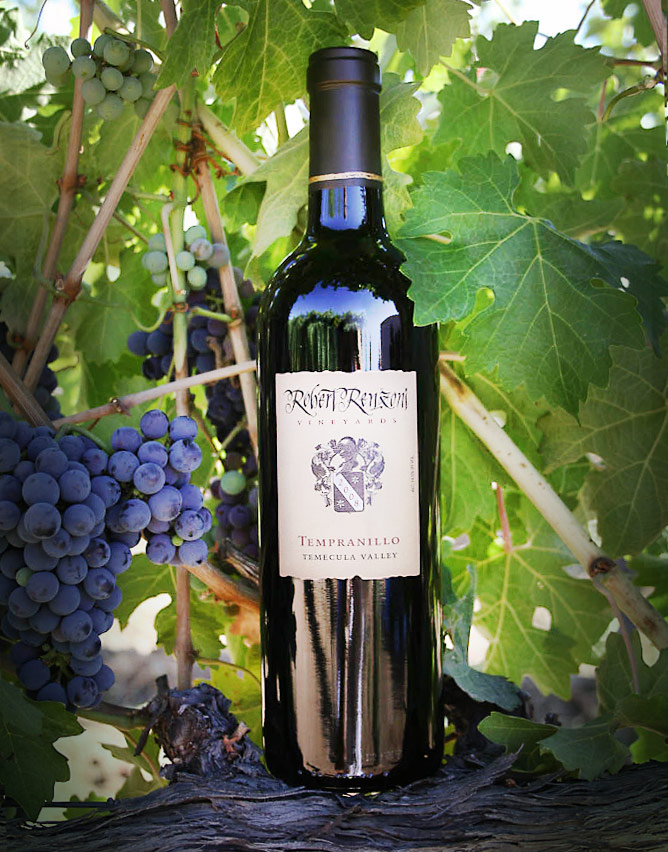
Tempranillo varietal wine bottle and glass, showing colour
The nose is the aroma of the wine. Is it powerful or subtle? Complex or easy to describe? Does the aroma change after swirling the wine? Does it evolve over time as the wine aerates or warms up? What can you smell? Is the wine primarily a fruity wine? What sort of fruits, and are they fresh, cooked or dried? Perhaps there are also other aromas: spices, grassy notes, herbs, wood, nuts, savoury/meaty aromas? Do any of these aromas remind you of other wines you’ve had before, or maybe indicate some age on the wine?
We look for up to eight components of a wine when we taste. Firstly, the flavours: are these the same as the aromas you can smell? All wines have perceptible acidity and alcohol, which give structure to the wine. Alcohol is a major component of the body of a wine, which is how heavy or viscous the wine feels in the mouth. Red wines also have tannins, which provide additional structure. Some wines have perceptible residual sugar. The evidence of maturation in oak may also be present in many white and red styles. Finally, the finish is how long the flavours and sensations of the wine linger in your mouth after swallowing.

Wine tasting is a very personal thing. No-one else can tell you whether you like or dislike a particular wine, or why you do. That said, there are certain features a professional wine taster looks for in assessing the quality of a wine (whether it suits their personal tastes or not). These include:
Other things to think about are: When would you drink this wine – by itself or would it be better with food? What sort of food? Is it good value for money? Is it ready to drink now? Or perhaps it will be better in a few years. It might seem like a lot to take in but ultimately enjoying wine comes down to two things: Do you like this wine? and more importantly: Why is that?
__________________
James Flewellen is The Rambling Epicure wine columnist. James is a biophysicist at the University of Oxford. Originally from New Zealand, the huge range of wine James discovered in Europe spurred his interest in all things vinous. He became involved in the University’s Blind Wine Tasting Society and has recently completed a two-year term as its President. During this time he represented the University in a number of domestic and international wine tasting competitions, winning several awards. He is currently completing the WSET Diploma in Wine and Spirits. James has a passion for wine communication and education and runs the Oxford Wine Blog and the Oxford Wine Academy.
|
|

One of the common themes running through my wine education courses and writings is that you, the taster, are the final authority on whether you like a wine or not. While I can tell you whether a wine is well made, and give my perception of the aromas, flavours and structure of a wine, I can’t get inside your head to assess your perception of a wine or whether you like it or not.
There are, however, some objective guidelines on assessing a wine for its quality. These are espoused by the WSET and various other wine educators and can be remembered easily by the acronym ‘BLIC‘.
B is for balance. A well-balanced wine will have a consistency between the aromas you smell and flavours you taste. The acidity will match the body of the wine and any sweetness. It won’t be sharp and unpleasant; nor will it be flabby and soft. The alcohol will suit the body of the wine and not be too harsh nor weak. If a wine has been aged in oak, then the level of oak will support the natural fruit flavours rather than overwhelm them. One factor that should be taken into consideration is the age of a wine and when it is expected to be drunk. A barrel sample of a very fine wine will not necessarily be in balance, yet it should be by the time the wine is ready to be drunk a decade later. One of the hardest jobs I’ve seen in the wine business is that of winemakers assess their newly-fermented wine and to make decisions on how to mature it based on their projections of how the wine will develop.
The length of the wine is straightforward. Simply: the longer the better. After swallowing, the finest wines will linger over your senses for many tens of seconds, even minutes in some cases! The one caveat is that the remaining flavours should be enjoyable. I’ve had at least one occasion of a wine with a very bitter flavour and an unpleasantly long finish.
Intensity is the next criterion. It’s a bit of a double-edged sword in that an overly intense wine can be overwhelming in some cases. If a particular aroma or flavour dominates at the expense of the balance or complexity of the wine, then too much intensity is a bad thing. However, with this in mind, the best wines will have an intensity and concentration of flavour that is precise yet generous.
Finally, we have complexity. This is perhaps the most difficult criterion for a wine to achieve. Complexity in a wine begins with high quality grapes. The vineyard must be well tended and the grapes healthy before a winemaker can make great wine. The winemaker’s skill is in preserving the complex biochemicals that occur naturally in the grape, enhancing and concentrating them, while still maintaining balance. Further complexity in a wine is achieved through judicious use of oak for maturation. Finally, the time spent in bottle results in further subtle and complex chemical reactions that develop ever new flavours in a wine. The end result of a fine wine that is opened at its optimal age for drinking is a plethora of aromas and flavours that change and evolve in the glass. The exact aromas and sensations can be hard to describe, yet the finish always leaves you wanting more!
__________________
James Flewellen is The Rambling Epicure wine columnist. James is a biophysicist at the University of Oxford. Originally from New Zealand, the huge range of wine James discovered in Europe spurred his interest in all things vinous. He became involved in the University’s Blind Wine Tasting Society and has recently completed a two-year term as its President. During this time he represented the University in a number of domestic and international wine tasting competitions, winning several awards. He is currently completing the WSET Diploma in Wine and Spirits. James has a passion for wine communication and education and runs the Oxford Wine Blog and the Oxford Wine Academy.
|
|
 Meet Jonell Galloway, a freelance writer and editor specialized in French cuisine.


