
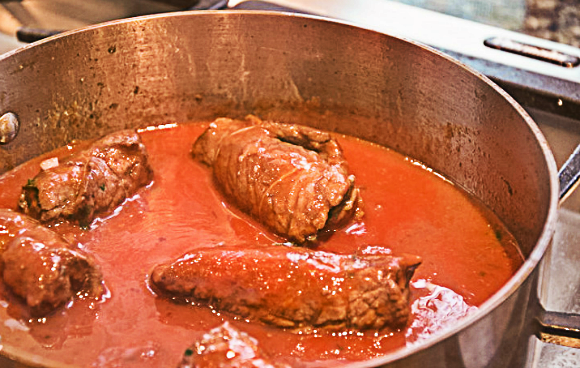
Ragù (or Sugo) di Carne
by Marlena Spieler
Whether it’s Ragù Napolitano “Classico” or “Leggere,” this richly flavored sauce is a perfect example of traditional, long, slow-cooked (slow, very slow) food, the sort of memory-filled dish that makes all Neapolitans, rich or poor, remember their childhood and nonnas or grandmothers with even just one bite; or even with just one sniff of the bubbling sauce.
Because it needs to be looked after, slowly cooked and attention paid that it doesn’t burn or scorch, it was given the name sugo della guardaporta, the doorkeeper’s sauce, as it needed someone to watch over it as it slowly, slowly, slowly bubbled its way to perfection.
Though now it has come to symbolize family food, it was no doubt created in the 19th-century kitchens by the chefs of aristocratic Naples — its abundance of meat and attention-demanding cooking method would have been beyond the means of the city’s poorer inhabitants, which meant most of the population. Its name came from the French ragout, or saucey stew. The Neapolitan ragù is exactly that: a large piece of meat simmered in either tomatoey or oniony (La Genovese) sauce unlike the ragù of other
regions, which include small pieces of chopped meats and vegetables.

San Marzano tomatoes.
|
|


