Salone del Gusto versus Good, Clean, and Fair: Part 1

Published by Wednesday, December 12, 2012 Permalink 0


Salone del Gusto versus Good, Clean, and Fair: Part 1

by Diana Zahuranec

Salone del Gusto, an event held biannually in Turin, Italy by the organization Slow Food, gathers artisanal producers from around the world in five days of selling organic or biodynamic, high quality, artisanal, innovative and traditional products; tasting workshops; and conferences about the state of the world’s food system and what can be done to promote sustainable growth. It’s an amalgamation of the green movement and everything it could possibly stand for before such a thing as “green washing” existed.

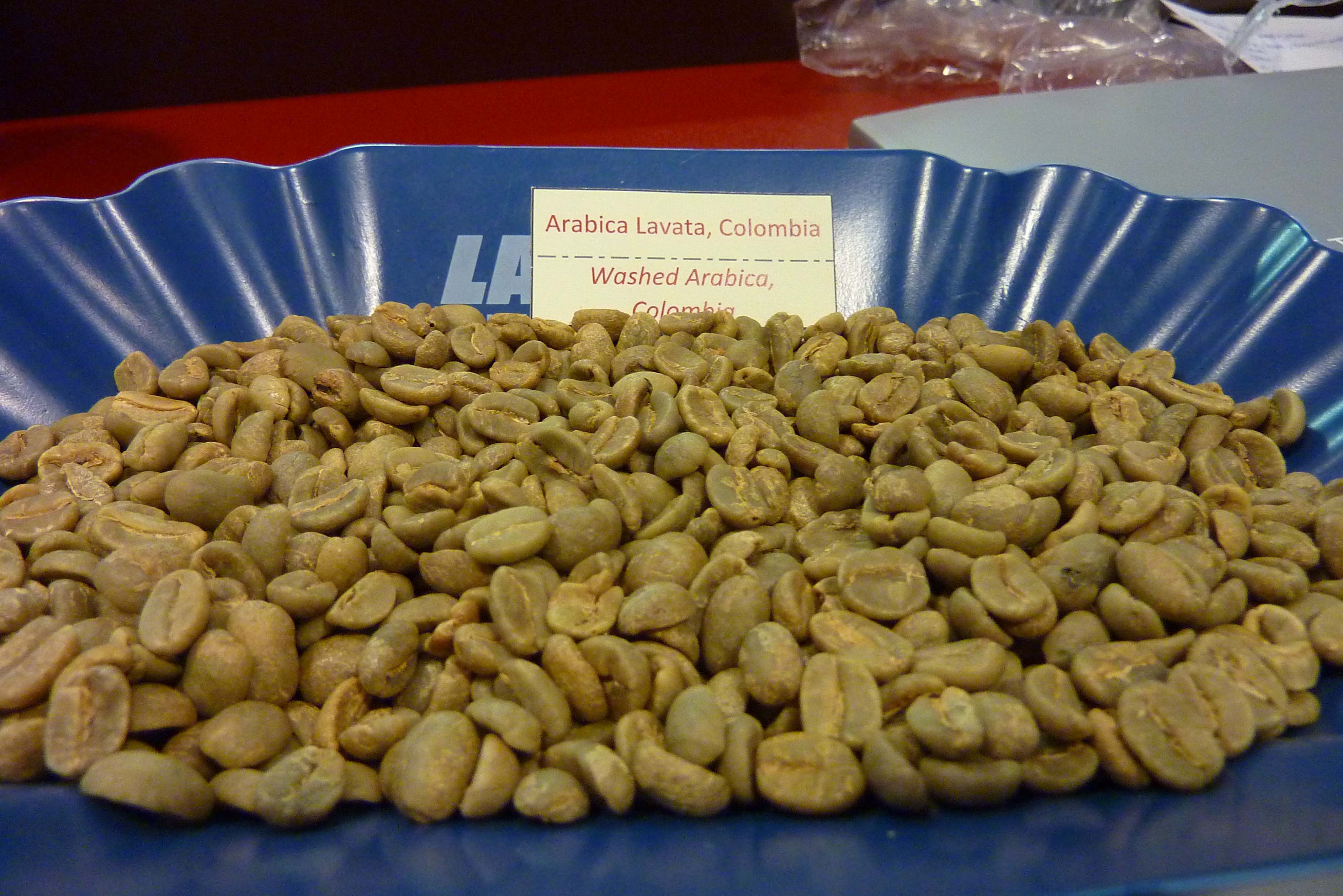
So what were the Italian supermarket COOP, the internationally famous Italian espresso company Lavazza, and the ubiquitous road-side Italian convenience store Autogrill doing at the Salone?

A supermarket is the antithesis of Slow Food’s “good, clean, and fair” motto. Products are available at any quality, starting at “low” and often not reaching above “decent;” produce and packaged goods come from all over the world, with little thought as to what other countries deem as “safe” pesticides, and with less thought about the energy used to transport everything; and finally, it’s anyone’s guess as to how many products lining the shelves were made under unpleasant or dangerous working conditions with low wages as poor compensation.

Coffee beans are notorious for their high demand pitted against their low cost, possible only through unfair working conditions and wages. Coffee plants are harvested using mono-cropping methods, which is environmentally friendly only in the interests of that particular crop.


Continue Reading…

Never miss a post
Name: 
Your email address:*
Please enter all required fields
Correct invalid entries

What we’re reading: how food replaced art, history of coffee, heirloom apples and pie, 5 misconceptions about Port wine

Published by Friday, November 16, 2012 Permalink 0

by Jonell Galloway

Click here to keep up with the latest in world food and wine news.

Photo by Jonell Galloway ALL RIGHTS RESERVED (C)


Never miss a post
Name: 
Your email address:*
Please enter all required fields
Correct invalid entries

A Look at Slow Food’s Salone del Gusto, October 2012, in Turin, Italy

Published by Saturday, November 3, 2012 Permalink 0

by Diana Zahuranec

Salone del Gusto ended on Monday 29, but I can’t stop thinking about it.

Salone del Gusto, held in Turin, Italy, is a Slow Food biannual food fair and conference. To sum it up in these few words undermines everything else it is, too, and its importance as an event that brings together producers from all over the world. These are producers that grow ancient varieties of grain to save genetic biodiversity, that make Slow Food Presidia cheeses or salumi, that pipe their cannoli full of the freshest organic ricotta you’ve ever tasted, and whose principles and values align with your own and, it goes without saying, Slow Food’s – good, clean, and fair food for all.

The Slow Food mascot

For all things Slow Food, here are some links courtesy of Scoop.it and Slow Food. To understand a few of those words in the paragraph above, just look at the end of the article.

This year, Salone del Gusto was a marriage of the original Salone del Gusto, first held in 2006, and Terra Madre, first held in 2004. While both events had food artisans and producers from all over the world, different activities were held at each and were not all accessible to the public. Salone del Gusto focused more on the exposition and sale of high quality foods and products, while Terra Madre was a gathering of a network of food producers from around the world. Having never been to either of these before, I can’t offer judgment on the differences of before and after. What I would love to do is share my first-time impressions of this year’s.

To say Salone is a food fair means that, like your down-home county fair, the place is jumping with activity – with a few notable differences. The funnel cakes are replaced with French butter cookies in 20 different flavors, the groundhog whacking game is replaced with the foodie’s (divisive word, I know) form of fun, that is vertical Barolo wine tastings, and that feeling of riding the Zipper right after you eat your funnel cake is replaced by the feeling of pressing up against crowds right after you drink your Barolo wines.

Continue Reading…

Never miss a post
Name: 
Your email address:*
Please enter all required fields
Correct invalid entries

Carrot Crazy: A Recipe for Pickled Carrots

Published by Thursday, October 18, 2012 Permalink 0

by Diana Zahuranec

Why did I eat half a pound of carrots before tearing myself away from the refrigerator? It is not a Vitamin A deficiency. Nor was I hungry. It was this magic “pickled” carrot recipe with drugs in the ingredients – just kidding, of course, about that last part. I am not kidding about the magic part.

These carrots aren’t exactly pickled. I suppose they could be if the water-to-vinegar ratio was double-checked for optimum bacteria inhibition, and of course if all canning and preserving steps were followed. But there’s no point in actually canning these if they’re eaten in under a week (ahem, sometimes under 4 days). Anyway, they should keep for 4 weeks refrigerated – provided they last that long.


I first tasted these crunchy, addicting snackies during a University of Gastronomic Sciences potluck dinner. A jar of carrot sticks amidst homemade quince tart, cinnamon sticky bread, cheesy focaccia, and endive leaves filled with oniony salsa – who had time for carrot sticks? But all it took was two or three unsuspecting students to reach into the jar, get hooked, and munch through 2/3 of the supplies before they kindly, reluctantly, let me in on the secret. I tried two, glanced the other way, and the carrots were gone. My friend told me they were simple to make: “Just blanch the carrots and soak them in boiled water with vinegar for a while. And I add some sugar and spices.” How long do you soak them? What spices? How much sugar? I wanted to know. My friend shrugged.

Four months later, I googled “pickled carrots” and then created my own recipe based on a mix of the ones I saw. My friend’s casually imprecise directions are pretty much the whole idea behind making these, because if you’re not pickling them, just loosely follow these instructions with your ingredients at hand or of choice. There’s little reason to actually be precise. Here it is.

Continue Reading…

Never miss a post
Name: 
Your email address:*
Please enter all required fields
Correct invalid entries

Coconut Pound Cake and Ratio Cooking

Published by Monday, October 15, 2012 Permalink 0

by Diana Zahuranec

It was soft and yellow-white with a thin, dark crust. The crust was not hard or chewy, but broke away perfectly from the rest of this pillow-y treat. It wasn’t a piece of bread, though it looked like one. Was it cake? It was on the end of a long table under a blue tent shading us from the summer sun. A gold cardboard plate presented perfect slices of this marvelous discovery.

I held the slice in my little sweaty hands, taking small bites that burst with butter, vanilla, and sugar. Its texture was half of the pleasure: smooth, moist, fine-grained, and soluble, I already wanted more. But the table was on the other side of the lawn now, and there were so many long tables laden with food with big people figures milling about, from one end to another. I never found it again.

Continue Reading…

Never miss a post
Name: 
Your email address:*
Please enter all required fields
Correct invalid entries

How Smart is a Sheep? The Churra da Terra Quente

Published by Friday, August 3, 2012 Permalink 0

by Diana Zahuranec

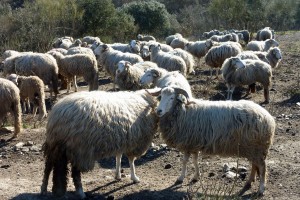
As I stood in the crisp air and bright sun of a Portuguese farm with the other Slow Food University of Gastronomic Sciences students, a single question popped into my mind. We were learning about the Churra da Terra Quente sheep breed, an indigenous and endangered animal with tangled wool and long, dirty tails. They were a rough-looking lot, but watched us curiously and weren’t as shy as other sheep I’ve unwittingly terrified just by standing by them. Some scratched their dirty wool on dry tree trunks, and others flopped down onto the dry soil that was bereft of rain for 4 ½ months, unconsciously dirtying themselves even more. They had curly horns like trofiette pasta. I got the impression that they were happy, or content, to be out in the sun watching us watching them.

Churra da Terra Quente sheep in the dry Douro


In an indigenous flock – or group, or pack, or what-have-you – the purity of the breed is kept by inbreeding. In dogs, I know this leads to some odd character traits: Dalmations, for example, can be suddenly temperamental; my family’s Vizsla at times suffered anxiety and, strangely for a dog, psychological problems – and was also, of course, the most intelligent dog on earth.

Continue Reading…

Never miss a post
Name: 
Your email address:*
Please enter all required fields
Correct invalid entries

Yummy Umami: The 6th Basic Taste?

Published by Thursday, April 26, 2012 Permalink 0

Yummy Umami: The 6th Basic Taste?

by Diana Zahuranec

Quick, name the 5 basic tastes: sweet, sour, bitter, salty…and the fifth one is umami. Umami is the word that describes the savory taste of food, or perhaps “meatiness” of a food. It is the taste of the amino acid L-glutamate. The Japanese singled out this flavor in the early 1900s thanks to a chemistry professor from the Imperial University of Tokyo, Kikunae Ikeda, who isolated the glutamic acid compound C5H9NO4. Glutamic acid is found in both free and bound forms. The free form, which is formed when the protein molecule breaks down and releases glutamic acid, is the one we taste. “Umami” means in Japanese, literally, deliciousness.

Kikunae Ikeda, the Chemist who singled out MSG

A few years ago, I remember there was some hype that spread virally through America’s highly-informed (and often misinformed) consumer culture about MSG.

What is this lethal-sounding additive in the foods we eat, so cleverly covered up by only using three letters to trick us when we know better? It was soon known that MSG, or monosodium glutamate, is an ingredient added to most processed foods in order to enhance their flavors. In the media, MSG was linked to many ills, including migraines, nausea, and cancer, among others.

Wariness and fear of MSG actually began in the 1970s, after Dr. Ho Man Kwok wrote in the New England Journal of Medicine that he was experiencing all sorts of uncomfortable after-effects from a Chinese dinner, including numbness, weakness, and palpitations. He did not specifically link his symptoms to MSG, but a year later a study was done on baby mice by injecting high dosages of MSG (up to 4 grams per kilogram of body weight) and observing the brain lesions the mice suffered afterwards. Thus was born Chinese Restaurant Syndrome (CRS). Studies, anecdotes, and reports were quick to follow suit afterwards, claiming that MSG was linked to all sorts of ills. Some prominent nutritionists today are convinced that added MSG is harmful, especially for children.

Continue Reading…

Never miss a post
Name: 
Your email address:*
Please enter all required fields
Correct invalid entries

Food News: Target 100, A Sustainable Australian Meat Production Industry by 2020

Published by Tuesday, April 17, 2012 Permalink 0

by Amanda  McInerney

An admirable new initiative by Meat & Livestock Australia, Target 100, aims to deliver sustainable cattle and sheep farming in Australia by 2020.

Sustainability is no recent thing for the Australian meat industry, which has been investing in environmental research and development for many years. By implementing a selection of 100 individual research, development, and extension initiatives which will be funded through the various meat industry organisations. The industry intends to focus this and reduce the resources it uses, thus reducing its footprint, improving its efficiency, and providing a focal point for environmental, social and ethical farming action in order to to ensure a sustainable food source.

Professor Tim Flannery - Target 100 launch


Continue Reading…

Never miss a post
Name: 
Your email address:*
Please enter all required fields
Correct invalid entries

‘Nduja: The Spicy and Spreadable Calabrian Treat

Published by Tuesday, March 13, 2012 Permalink 0

by Diana Zahuranec

‘Nduja (n-due-yah) is a spreadable, spicy, red pork meat that can be found everywhere in Calabria. Calabria is the southern Italian region that is the “toe” of the boot, so to speak. Nduja Nduja is used for sauces, bruschetta, or on anything that spreadable meat – spalmabile – would be tasty, including a spoon.

‘Nduja is produced from the throat of a pig, called the guanciale meat, and also the guanciale – stomach meat – and the back lardo, or fat. The lardo, when mixed with salt and added to the meat, takes on another name that has no exact English translation, called sugna. This meat and fat mix is ground with salt, local peperoncino (the Italian chili pepper), and absolutely nothing else. Not even nitrates, a common preservative added to most sausages and cured meats (linked to a higher risk in cancer), adulterate this all-natural ‘nduja. Salt, the extended maturation, and the fact that 30% of ‘nduja is peperoncino, which acts as a natural preservative, defy the need for synthetic additives.


Luigi Caccamo, left

Continue Reading…

Never miss a post
Name: 
Your email address:*
Please enter all required fields
Correct invalid entries

After the Cheese Making comes the Cheese Tasting

Published by Thursday, March 8, 2012 Permalink 0

by Diana Zahuranec

A black trash bag is tossed onto my desk. When I peer inside, four rounds of cheese stare up at me, one with a small wedge like a Pac-Man smile sliced out of it.

These raw cow’s milk cheeses are the result of the efforts of a group of students from the University of Gastronomic Sciences who, for one January day, were cheese mongers. After a year of visiting cheese producers, tasting cheese in class, and going  a little crazy at the biennial Slow Food Cheese 2011 fair, the next logical step was a DIY cheese-making party (see how here). Five and half weeks later, and the two big and two small rounds are set on the picnic table outside in the approaching spring’s warmth.

The knife squeaked when I pushed it through the small cheese with both hands. It definitely had grate-able potential. Tiny flecks of dark blue mold gathered on the bottom of the rind, but it was mostly creamy white and clean-looking. I sniffed the small cheese, and it smelled like butter. Tentatively biting a small piece, I tasted the saltiness first, and then a slight acidity cut through. It was crumbly and reminded one girl of pecorino cheese, nevermind that it’s cow’s milk, not sheep’s. It had a faint animal-like taste (normal enough in a cheese), but a weird, pungent aftertaste. A little salty overall, but not bad. A few friends thought otherwise. The most exciting thing about it was that we had made it.


Continue Reading…

Never miss a post
Name: 
Your email address:*
Please enter all required fields
Correct invalid entries

UA-21892701-1