Simple Sustenance: Herbal Warmth — Rosemary Potato Soup with Paprika Oil Recipe

Published by Wednesday, December 5, 2012 Permalink 0

Simple Sustenance: Herbal Warmth — Rosemary Potato Soup with Paprika Oil Recipe

by Renu Chhabra

Herbal Warmth — Rosemary Potato Soup with Paprika Oil

As for rosemary, I let it run all over my garden walls, not only because my bees love it but because it is the herb sacred to remembrance and to friendship, whence a sprig of it hath a dumb language.” — Sir Thomas More

Rosemary potatoes are my favorite all year long.

I always find myself circling around the oven when potatoes are roasting. Is it the intoxicating aroma of rosemary, or the anticipation of a warm bite of the potatoes?

I think it is both.

Hot from the oven on cool nights or at room temperature on warm days, they are always delicious. A cold nibble from the fridge does not disappoint me either. It is a classic combination that is very satisfying.

And who needs chips or french fries when oven-roasted spuds can treat our taste buds guilt free?

But today it’s about soup. My first pot of warm soup this season. And it’s rosemary potato soup.

A pot of familiar flavors simmered on stove top.

This soup has the same foundation of flavors. Fragrant rosemary perfumes the soup and garlic gives it pungency. In addition, I added  sauteéed onions and fresh scallions to it. Sautèed onions also used as garnish in this recipe, give a deep flavorful bite. A drizzle of paprika oil adds color and warmth to this soup.

This recipe is vegan, but you can add a little milk for creaminess. Also garnish with your favorite cheese, if you wish.

The basic soup can be dressed several ways with your choice of garnish. I have enjoyed a few combinations.

  • Kalamata olives, sun dried tomatoes, Pecorino cheese, and a drizzle of rosemary oil or plain extra virgin olive oil
  • Sauted or oven-roasted mushrooms with paprika oil
  • Basil pesto and bits of sun dried tomatoes
  • Caramelized onions, Parmesan cheese, and roasted hazelnuts.

Be creative and let your palate guide you. A basic soup with so many options to dress it with, See what you have in your pantry and fridge to brighten it to your liking.

I would love to hear your ideas.

Recipe

Paprika Oil

¼ cup olive oil
½ teaspoon paprika

  1. Warm olive oil in a small pot. Remove from heat. Stir in paprika. Whisk lightly to dissolve well. Set aside.
  2. If you like spicy, make chili oil instead.

Soup

3 tablespoons olive oil
2 cups onion, diced small
6 cups potatoes (3 large), diced small
5-6 large cloves of garlic, minced
1 teaspoon dried or 2 teaspoon fresh rosemary (or to taste)
Sea salt to taste
Pepper to taste
4-5 green scallions, chopped plus for garnish, chopped fine
3 cups water or vegetable stock

  1. Heat oil in a heavy-bottom pot and add onions. Sauté on medium-high heat for 8-10 minutes or until golden. You want some color, but be careful not to burn the onions.
  2. Set aside a tablespoon or so for garnish.
  3. Stir in garlic, potatoes, rosemary, salt, and pepper.
  4. Cook for a minute and add scallions and water or vegetable stock.
  5. Bring it to boil and cover the pot with a lid. Simmer for 25-30 minutes or until potatoes are cooked.
  6. Let it cool a little.
  7. Puree with immersion blender or in a blender to desired consistency according to your taste — smooth and creamy or rustic and chunky.
  8. Add a little water or stock if it is too thick. Adjust seasonings. Set aside.


To serve, heat the soup and ladle into bowls. Garnish with browned onions. scallions, and a drizzle of paprika oil. Serve hot.

Note: I used water but if you wish, you can use vegetable stock. Potatoes absorb a lot of flavors, so adjust flavors to your taste. Add as much or as little garlic, salt, pepper. Rosemary can be overpowering, if used in excess. Garnish to your taste. If you like spicy food, make chili oil instead of paprika oil.

Never miss a post
Name: 
Your email address:*
Please enter all required fields
Correct invalid entries

Sicilian Orange and Fennel Salad

Published by Thursday, November 15, 2012 Permalink 0


//

Sicilian Orange and Fennel Salad Recipe

by Diana Zahuranec

As fall slips into winter, the open air markets in Turin, Italy push nature’s seasonal fruits and vegetables to make early appearances in the crates and boxes stacked inside each bancarella, or stand. Oranges, grapefruits, and clementines from Calabria and Sicily showed their waxy globes in the middle of October; bitter turnip tops called cime di rapa were available by the end of September; spiky artichokes, still not technically in season, have been around for weeks.

The sweet, crispy finocchio, or fennel, one of my newly-discovered favorites, entered the scene two weeks ago at the beginning of November. Last year’s discovery that I’ve waited impatiently for since the end of September is the sweet, soft kaki vaniglia, the persimmon, which has a designated corner in my refrigerator. These bombs of juicy, fruity sugar are an after dinner treat that could almost replace autumn pies. Almost.

According to the illustrated and finely detailed wheel of seasonal fruits and vegetables that I bought at Eataly, citrus fruits have just begun their yearly cycle in November. I pat myself on the back, since I resisted buying these until a few days ago. There was one mysterious exception in the form of yellow-green skinned citrus fruits, easy to peel and sour-sweet inside. They came from Calabria, and the hulking, big man that sold them ensured me they were sweet and ripe, never mind their greenness. The man who sold them seemed to have been plucked from another time and place, where people can and still do pick oranges in the fields all day for decent wages, the weakening winter sun warm on their backs. His nails were dirty and his accent thick (presumably Calabrian).

Once at a food photographer’s studio in Emilia-Romagna, the chefs and food stylists there prepared a tangy, salty, sweet salad from the South. It had been inspired by the chef’s Sicilian roots. It’s now one of my favorite meals, and I have to wait for these seasonal fruits and vegetables before I can enjoy it. It evokes flavors from a land where the sun shines across fields with rows and rows of citrus trees, bright orbs decorating the branches in a warm Christmastime.

The traditional olives to pair with this are black ones, but I had green, which I might actually prefer. Being the salt queen that I am, a shot of capers hits the spot, but I don’t know how “traditional” that is. Also, blood oranges knock the pretty factor up a notch for this already aesthetically-pleasing plate.

Recipe

Sicilian Orange and Fennel Salad

For 2-4 people (depending on if using as a light lunch or as a side dish)


Ingredients

1 large fennel
1 medium orange
¼ red onion, sliced finely (or less)
¼ cup black or green olives, pitted and sliced thinly
Salt and pepper to taste
Extra virgin olive oil
Optional: 1-2 Tbsp capers, hot pepper
  1. Slice the fennel in half, and then core each half by cutting out the tough triangular sections at the bottom.
  2. Trim the ends, reserving green fennel leaves for garnish. Trim any bruised parts. Slice finely and set aside. Note: I also slice the very end green stems, because they’re strong in flavor and very crunchy. They may be too astringent for some tastes.
  3. Peel the orange. Setting it on its side, slice it very thinly so that each piece is divided into segments. Keep them as full round slices, or break them into halves or double segments.
  4. Layer the fennel, orange, and onion, then scatter the sliced olives over the top. Sprinkle with salt and pepper, drizzle with olive oil, and garnish with the fennel leaves. Add a dash of hot pepper and a sprinkling of capers if you so choose.
Never miss a post
Name: 
Your email address:*
Please enter all required fields
Correct invalid entries

Carrot Crazy: A Recipe for Pickled Carrots

Published by Thursday, October 18, 2012 Permalink 0

by Diana Zahuranec

Why did I eat half a pound of carrots before tearing myself away from the refrigerator? It is not a Vitamin A deficiency. Nor was I hungry. It was this magic “pickled” carrot recipe with drugs in the ingredients – just kidding, of course, about that last part. I am not kidding about the magic part.

These carrots aren’t exactly pickled. I suppose they could be if the water-to-vinegar ratio was double-checked for optimum bacteria inhibition, and of course if all canning and preserving steps were followed. But there’s no point in actually canning these if they’re eaten in under a week (ahem, sometimes under 4 days). Anyway, they should keep for 4 weeks refrigerated – provided they last that long.


I first tasted these crunchy, addicting snackies during a University of Gastronomic Sciences potluck dinner. A jar of carrot sticks amidst homemade quince tart, cinnamon sticky bread, cheesy focaccia, and endive leaves filled with oniony salsa – who had time for carrot sticks? But all it took was two or three unsuspecting students to reach into the jar, get hooked, and munch through 2/3 of the supplies before they kindly, reluctantly, let me in on the secret. I tried two, glanced the other way, and the carrots were gone. My friend told me they were simple to make: “Just blanch the carrots and soak them in boiled water with vinegar for a while. And I add some sugar and spices.” How long do you soak them? What spices? How much sugar? I wanted to know. My friend shrugged.

Four months later, I googled “pickled carrots” and then created my own recipe based on a mix of the ones I saw. My friend’s casually imprecise directions are pretty much the whole idea behind making these, because if you’re not pickling them, just loosely follow these instructions with your ingredients at hand or of choice. There’s little reason to actually be precise. Here it is.

Continue Reading…

Never miss a post
Name: 
Your email address:*
Please enter all required fields
Correct invalid entries

Simple Sustenance: Fall Greetings — Pumpkin Sage and Sunflower Seed Spread

Published by Tuesday, October 16, 2012 Permalink 0

by Renu Chhabra

Crunchy leaves; a coolness in the air; 
Rich deep colors and branches so bare.
Clear starry skies; a harvest moon bright; 
Pumpkins, haystacks and scarecrow’s delight! — Teri Anderson

The calendar says fall has arrived.

Pumpkins greeting you at every store front. I can almost hear them sing  joyous notes of fall’s arrival, but the weather here in California is in a different mood.

It is reluctant to let summer go. It is still holding on to its one wing.

Continue Reading…

Never miss a post
Name: 
Your email address:*
Please enter all required fields
Correct invalid entries

Simple Sustenance: Roasted Red Onion, Fennel and White Bean Soup

Published by Thursday, October 4, 2012 Permalink 0

by Renu Chhabra

The essence of pleasure is spontaneity.–Germaine Greer


Spontaneity in the kitchen can be fun sometimes and a challenge at other times. But it does get our creative juices rolling, and pushes us to bring out our best. Often times, with no set plans, and working with what we’ve got produces great results. New recipes are born, and new talents are discovered. That’s the beauty of spontaneity. Who wouldn’t like that?

Continue Reading…

Never miss a post
Name: 
Your email address:*
Please enter all required fields
Correct invalid entries

Simple Sustenance: Spud Love — Spiced Potatoes and Dill

Published by Wednesday, September 19, 2012 Permalink 0

by Renu Chhabra

If people take the trouble to cook, you should take the trouble to eat.–Robert Morley

It is hard to find someone who does not like potato.

From french fries, latkes, croquettes, gratins, fritters, hash browns, salads, to soups and stews — the list is endless. Most of us have our favorite potato dish or two.

This starchy tuber may seem like a very humble commodity, but is definitely celebrated in kitchens around the globe. Americans, Italians, Indians, French, or Irish — they all have their potato specialties making it difficult to ignore its place in the gastronomic arena.

My recent visit to India confirmed its importance even more.

Continue Reading…

Never miss a post
Name: 
Your email address:*
Please enter all required fields
Correct invalid entries

Simple Sustenance: MarketDay in a mid-September California farmers market with Renu Chhabra

Published by Wednesday, September 12, 2012 Permalink 0

by Renu Chhabra


Let us not forget that the cultivation of the earth is the most important labor of man. When tillage begins, other arts will follow. The farmers, therefore, are the founders of civilization.–Daniel Webster

These are the colors of California farms — rich and vibrant!

Summer vegetables are brimming with freshness, and the abundance!  Everywhere I set my eyes, there is something that draws me to it. I can’t control myself; I want to shoot every colorful heap I see. I guess it’s the temptation to enjoy them, visually, later? After all, it is a feast for the eyes.

Continue Reading…

Never miss a post
Name: 
Your email address:*
Please enter all required fields
Correct invalid entries

Simple Sustenance: In Season and Healthy — Peach and Spinach Salad

Published by Tuesday, September 4, 2012 Permalink 0

by Renu Chhabra

One should eat to live, not live to eat” –Benjamin Franklin

Peaches are synonymous with summer.

California being the largest peach-producing state, we are blessed with an abundance of them. Farmers markets are flooded with these fuzzy yellow beauties. So many of them. Different varieties with vibrant colors. Juicy, sweet, and simply delicious.

Farm-fresh peaches have flavor that can’t be found in supermarket ones. I have tasted a few California varieties that need no explanation. Instead, just close my eyes and bless the soil and the farmers who nurtured them. It’s nature’s bounty at its best.

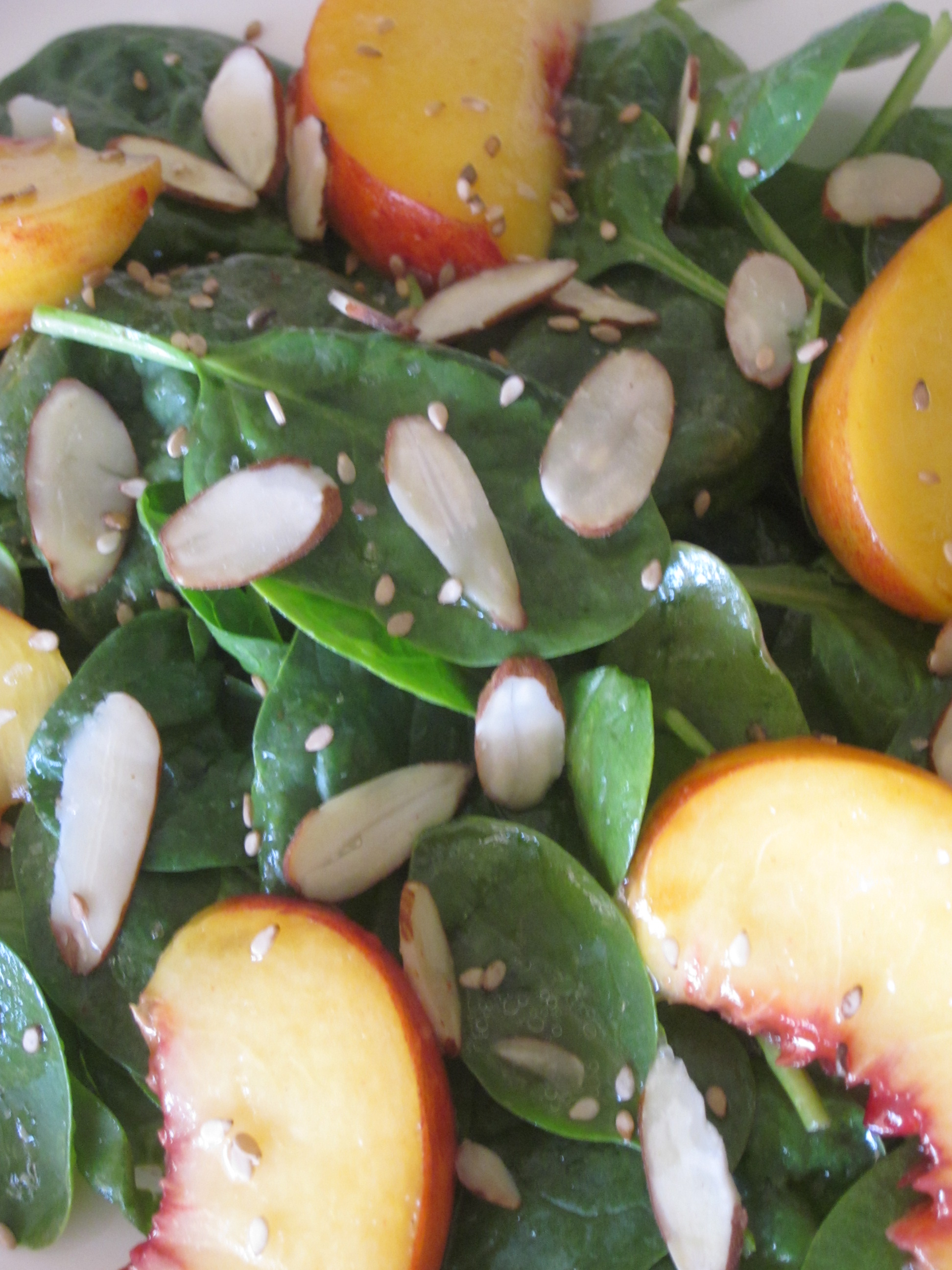
These peaches are in season from May through September. Baking, grilling, roasting, and poaching are definitely a few ways to enjoy them. But nothing beats the joy of savoring them in their natural form. So, I made a salad with this seasonal fruit and paired it with baby spinach.

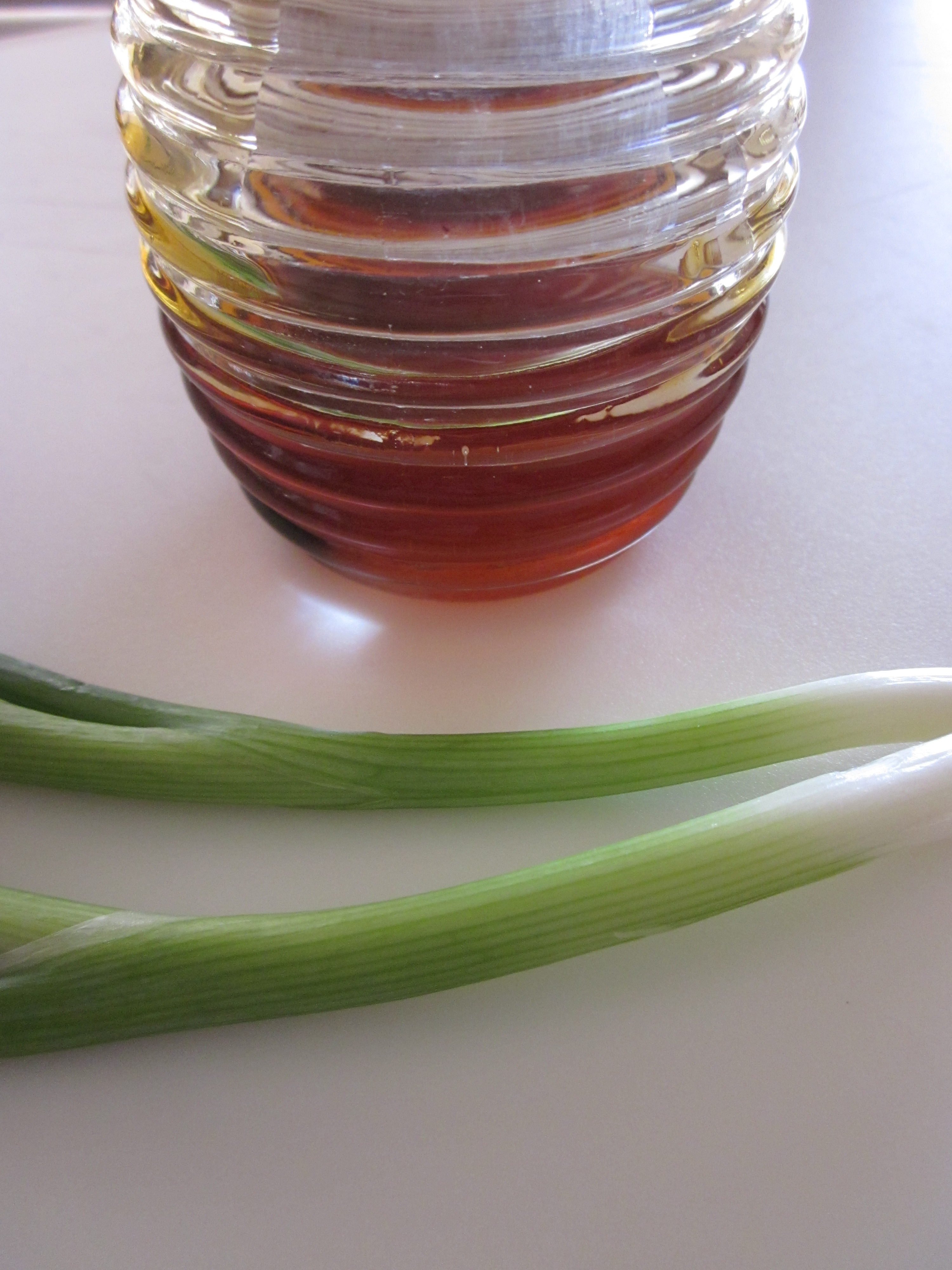
Another ingredient that gives this salad a little zing is the peach balsamic vinegar. My culinary find that is absolutely delicious. Drizzle a little on salads, grilled vegetables, toasted baguette, or ciabatta, with or without olive oil. It stands out on its own. Its peachy flavor is the star that shines through.

A few other ingredients that complete this salad are ginger, honey, almonds, raw sesame seeds, and roasted sunflower seeds. Ginger and honey, a classic combination goes well with peaches. Raw sesame seeds and roasted sunflower seeds add earthiness and texture. Finishing with a grind of good sea salt (I used pink salt) and pinch of red pepper flakes complements the sweet peaches and honey. All together it makes it a sweet, salty, and spicy experience.

Recipe

Dressing
 
2 tablespoons peach balsamic or white balsamic
2 tablespoons olive oil
1 teaspoon juice of ginger
1 teaspoon honey or agave
Sea salt to taste
Red pepper flakes to taste (optional)
Salad
2 medium yellow peaches, sliced or diced, your choice
2 handfuls of baby spinach

Garnish

Sliced raw almonds
Raw sesame seeds
Roasted sunflower seeds

  1. Mix all the ingredients for the dressing in a mason jar. Set aside.
  2. In a bowl, gently toss spinach with light dressing.
  3. Place spinach on a serving dish.
  4. Drizzle some dressing on peaches and mix. Serve spinach carefully.
  5. To finish the salad, drizzle a little more dressing and sprinkle sea salt and pepper flakes on top, if needed. Garnish with almonds, sesame seeds, and sunflower seeds.
  6. Serve immediately.

Note: Use dressing to your taste, but be careful not to drench the spinach with too much of it.

    1. Mix all the ingredients for the dressing in a mason jar. Set aside.
    2. In a bowl, gently toss spinach with light dressing.
    3. Place spinach on a serving dish.
    4. Drizzle some dressing on peaches and mix. Serve spinach carefully.
    5. To finish the salad, drizzle a little more dressing and sprinkle sea salt and pepper flakes on top, if needed. Garnish with almonds, sesame seeds, and sunflower seeds.
    6. Serve immediately.

    Note: Use dressing to your taste, but be careful not to drench the spinach with too much of it.

    • Simple Sustenance: Summer in a Bowl – Honey-Ginger Papaya Salad

      1. Mix all the ingredients for the dressing in a mason jar. Set aside.
      2. In a bowl, gently toss spinach with light dressing.
      3. Place spinach on a serving dish.
      4. Drizzle some dressing on peaches and mix. Serve spinach carefully.
      5. To finish the salad, drizzle a little more dressing and sprinkle sea salt and pepper flakes on top, if needed. Garnish with almonds, sesame seeds, and sunflower seeds.
      6. Serve immediately.

      Note: Use dressing to your taste, but be careful not to drench the spinach with too much of it.

      Never miss a post
      Name: 
      Your email address:*
      Please enter all required fields
      Correct invalid entries

Part 6 on Fermentation: Sauerkraut Success

Published by Friday, August 31, 2012 Permalink 0

Part 6 on Fermentation: Sauerkraut Success

by Diana Zahuranec

I filled two scalloped blue bowls with homemade sauerkraut and kimchi, sat down, and taste-tested.

I was hesitant, but I was encouraged by the lack of mold.

Kimchi wanna-be and sauerkraut

After two weeks of pushing down the bottles that weighed on my sauerkraut and “kimchi” (which was not actually kimchi, but will be referred to as such because that’s what I wanted it to be), I balanced the heavy, full bowls of vegetables on a flimsy, plastic tray and carried them to the kitchen counter.

I removed the bottles filled with water, the plates, and then the bags (why all this? Here’s why in Step-by-step Fermentation). I began to pour the mix into large containers of what once held 1 kg of yogurt, but I stopped when I lost too much liquid.

I assumed that the liquid of fermented vegetables contains all the healthy nutrients  that can be found in the vegetables themselves. I didn’t want to lose that, although I remain baffled as to what I could do with it, and haven’t found great sources backing up my Water-From-Fermented-Vegetables-Is-Healthy Theory (yet).

So I stuck my hand in and scooped it all out, pouring the liquid over top at the end. The liquids also help to preserve the vegetables when you store them in the refrigerator, and many say that the flavor improves as the fermentation slowly continues. And another reason to save the water: use a bit mixed in with the brine the next time you ferment vegetables, helping to jump-start the fermentation process.

According to Nourishing Days, ferments with 1-2% salt content will store for 4 to 9 months.

I filled two of those yogurt containers and some glass jars, or about roughly 13 cups of sauerkraut and kimchi from almost the same amount of vegetables. I had read that the vegetables will shrink as they lose their water, but the before:after ratio was nearly the same.

Success! They were both delicious. There was not a hint of rot. In fact, although many sources claim that it’s highly probable that you’ll lose some of your batch – especially a small one, like mine – due to air or uneven fermentation, I lost no more than a few shreds of cabbage.

Both were crunchy and flavorful. The pure cabbage had a more delicate flavor, and a bit of lactic acid tang. When I made the brine, I also added a teaspoon or two of yogurt whey to help . Sauerkraut naturally has a  lactic acid flavor, so I’m curious to see if fermented vegetables without added whey would give off that taste as strongly. Fermentation Project Number 2?

The kimchi was spicy from the chili pepper flakes and chopped hot peppers I added, and the mix of vegetable textures was delightful. The tastes all ran together – a carrot didn’t taste much different from a chard stem. And the chard stems were tougher than I wanted; but on second thought, it’s great that everything retained its crunchy structure. Mushy vegetables can be the result of not adding enough salt; I also read on Nourishing Days that tannins keep the structure of the vegetables intact, so you may be able to add grape leaves, for example, to retain crunch.

And now I’ll admit that I tentatively drank the fermented water, out of curiosity and refusal to waste something healthy. Its flavor wasn’t offensive, just mostly salty. I decided it might be healthier to forgo the salt than to absorb the other nutrients in there. And drinking fermented water just doesn’t sound very appetizing.

Never miss a post
Name: 
Your email address:*
Please enter all required fields
Correct invalid entries

Simple Sustenance: Kale Power — Kale and Sunflower Seed Pesto

Published by Tuesday, August 7, 2012 Permalink 0

by Renu Chhabra


“Eat food. Not too much. Mostly plants.” Michael Pollan

This one is for kale lovers. I know. I am one of them. Until not too long ago, I did not have the slightest idea of its existence; or let’s just say, it did not visit my produce bag. But once I tasted it, I was hooked on the amazing wonders of kale like most health enthusiasts.

Kale is known by several flattering names — Queen of Greens, Powerhouse of Nutrients, King of Greens. These days kale is one of the most talked about super foods. From soups and stews to salads and stir fries, it has found its way in every possible form of cooking. Kale juice anyone? How about kale chips for a healthy snack? And if that’s not enough, just puree these hearty leaves to transform them into pesto. Now that opens up several more ways to enjoy its versatility.  Stir it in pasta, spread it on breads and crackers, or thin it a little to make dressings. If none of those options are appealing to you, a few spoonfuls as is works for me.

Speaking of pesto, I made this recipe with sunflower seeds instead of nuts. Sunflower seeds provide fair share of good fats, and they also give it a rustic texture. I left cheese out making thus making it an option for vegans. But if you prefer a cheesy flavor, add some pecorino or parmigiano. Good olive oil, lemon, and garlic with a few grinds of sea salt make it absolutely delicious. Store in refrigerator and enjoy.

Recipe

1 medium bunch kale, stems removed
1 large clove of garlic
½ cup unsalted roasted sunflower seeds
Juice of one large lemon
Sea salt to taste
Freshly ground pepper (optional)
½ cup olive oil

Instructions

Put kale leaves in boiling water for 30 seconds. Drain in a colander, and run cold water over to stop the cooking process. Squeeze kale to remove water completely.

In a food processor, pulse garlic a couple times. Add sunflower seeds and pulse again 2-3 times. Add kale, lemon juice, salt, pepper and puree.  Drizzle oil while the machine is running. Puree it to desired consistency.

Adjust lemon and salt to taste. If the pesto is too thick for your taste, add a little water.


  • In a food processor, pulse garlic a couple times. Add sunflower seeds and pulse again 2-3 times. Add kale, lemon juice, salt, pepper and puree.  Drizzle oil while the machine is running. Puree it to desired consistency.

    Adjust lemon and salt to taste. If the pesto is too thick for your taste, add a little water.


    Never miss a post
    Name: 
    Your email address:*
    Please enter all required fields
    Correct invalid entries

UA-21892701-1