Wine & Food Pairing with Classic French Dishes

Published by Monday, August 19, 2013 Permalink 0

James Flewellen photo, wine tasting expert, The Art of Tasting Wine: James FlewellenJames Flewellen: Wine & Food Pairing with Classic French Dishes

by James Flewellen


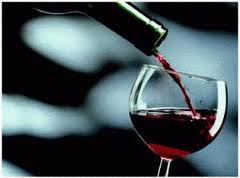
Strawberries with red wine
Strawberries with red wine3liz4 / Foter / CC BY-NC-ND


 Cassoulet This depends on the choice of meat in the dish. Try a Chianti or another Tuscan wine, with more savoury notes for deeper-flavoured meats. Or a Barbera, or even a youthful claret if there’s more pork than game in the dish.

 Choucroute garnie If you stick to local Alsatian wines for this dish you really can’t go wrong. Use the same wine you’ve used in cooking if possible (typically Riesling), or go for a Pinot Gris.

Confit de canard (duck confit)
(from Southwest, cooked over
a fire in its own fat)
For this rich dish we have two options. One is to stay local and go for a spicy red wine from the south-west of France – a Tannat from Madiran or a Malbec from Cahors. Alternatively a full-bodied, oaked Chardonnay would also work. The acidity of the white wine will cut through the duck fat nicely. Choose a robust wine with enough body to stand up to the rich flavours though – Meursault from Burgundy, or a Californian pretender.

Coq au vin While red Burgundy is the classic pairing for this dish, a claret will also go very well. Choose one with a few years’ bottle age so the savoury developed notes complement the complex herbs in the sauce.

Andouillettes (sausage
made with chitterlings)
A tough dish to pair with on account of its strong flavours and somewhat acquired taste! Both reds and whites could work here. Light reds such as Beaujolais or Chinon will do well to complement the dish without dominating it with too much tannin. On the white side, a light, fresh style is best: perhaps Chablis, or the mountain-air notes of an Arbois from the Jura.

Escargots de Bourgogne (snails
baked in their shells with
parsley butter)
My favourite pairing for escargots in butter is champagne. The acidity helps out with the fat in the butter but the wine does not overpower the delicate flavours of the snail. A Chablis or other unoaked Chardonnay would also work.

Quenelle (flour; butter; eggs;
milk; and fish, traditionally pike,
mixed and poached)
The wine pairing depends on the fish used in the quenelle, typically pike. A fish quenelle would go very nicely with a Picpoul de Pinet. The lively, clean flavours of this wine complement fish nicely, and there is great acidity to cut through the butter and eggs.

Brandade de morue (puréed
salt cod)
Strongly flavoured fish dishes can be hard to find wine companions for. I’d suggest a very dry Alsatian or German Riesling. Being a bit more adventurous, you could also try a white wine from the Rhône – something based on Marsanne or Rousanne.

Bouillabaisse (a stew of
mixed Mediterranean
fish, tomatoes, and herbs)
For Bouillabaisse you want a wine that keeps pace with the rich flavours of the dish, but doesn’t detract from them. Keeping local, I would go for a Provençal rosé, or possibly a quality white wine from the south of France. If you’re in the mood for reds – try a light-bodied, acidic wine such as a Cabernet Franc from Chinon or a German Spätburgunder (Pinot Noir).

Ratatouille (a vegetable stew
with olive oil, aubergine, courgette,
bell pepper, tomato, onion
and garlic) with white fish
I go Italian when matching wine to tomato-based dishes. Try a juicy Dolcetto, Barbera or Primitivo. You could also go for Primitivo’s Californian cousin: Zinfandel.

Duck à l’orange Pinot Noir is the classic pairing for duck, however I find the orange in this dish doesn’t quite gel with the flavours in Pinot. Try a Grenache-based wine from the Southern Rhône, such as Châteauneuf-du-Pape. The extra spice in the wine complements the orange.

Pot au Feu A hearty red wine is just the ticket for this meal. I’d go for a Merlot-based Claret from Pomerol in Bordeaux, but wines based on Cabernet Sauvignon, Syrah, Malbec, or Grenache will also do beautifully. Just avoid something that is too jammy in fruit profile.

Blanquette de veau I can’t go past an Alsatian Riesling for this dish. Dry, austere, acidic – the perfect foil for the cream – and the fruit profile won’t obscure the meat.

 Sole meunière This dish cries out for a fruity, crisp, light white wine. My pick would be an Albariño from Galicia in Spain.

 Tournedos Rossini My classic pairing for this would be a juicy Left Bank claret. To take a step away from the norm, try a Tempranillo-based wine from Ribera del Duero. Unlike its cousins in Rioja, Ribera wines are more robust and full-bodied – ideal for the steak – and usually avoid the sweet-scented American oak.

Foie gras (terrine), served with
figs or onion jam
I’ve tried many things with foie gras and really don’t think you can go past the classic Bordelais pairing of Sauternes. The sweetness in the wine works beautifully with the salt in the terrine and the fruit profile goes well with the figs and onion jam.

 Steack-frites with Béarnaise sauce Let’s face it steak and red wine go together like a hand in a glove. If you want to emphasise the pepper in the Béarnaise then go for a peppery Syrah from the Northern Rhône or Shiraz from the Barossa.


Sign up for Jonell Galloway and James Flewellen’s  “Celebrate the Chartres Festival of Lights & Autumnal Equinox with a Food & Wine Tasting Masterclass” in France from September 19 to 22, 2013.


_____________________

Dr James Flewellen is The Rambling Epicure wine columnist. James is a biophysicist at the University of Oxford. Originally from New Zealand, James learned his trade in taste through the Oxford Blind Wine Tasting Society, of which he was the President from 2010-2012. During his term, he represented Oxford at many international blind tasting competitions – twice winning the prestigious ‘Top Taster’ Award in the annual Varsity blind tasting match against Cambridge University and captaining winning teams in competitions throughout Europe.

James runs wine education courses in Oxford through the Oxford Wine Academy and is completing the WSET Professional Diploma in Wine and Spirits. He is the founder of  The Oxford Wine Blog and co-author of the forthcoming book: The Concise Guide to Wine and Blind Tasting.


Never miss a post
Name: 
Your email address:*
Please enter all required fields
Correct invalid entries

Elements of Wine 5: Tannin

Published by Monday, August 12, 2013 Permalink 0


//

James Flewellen photo, wine tasting expert, The Art of Tasting Wine: James FlewellenElements of Wine 5: Tannin

by James Flewellen

Tannins are compounds found in the grape skin, pips and stem. They are released into wine during the winemaking process that sees the grape juice fermenting in contact with the crushed skins. Skin contact is rare in making white wine, as the aim is to avoid too much leaching of tannin and colour compounds from the skin. Thus, we usually associate tannins with red wines.


English: Tannin Deutsch: Tannin

Tannin powder


Tannins act as preservatives in red wines and facilitate the slow bottle ageing process. This sees both flavour and tannin compounds (collectively called phenolic compounds) come together in slow chemical reactions. Flavours and aromas change from primary fruit notes to tertiary savoury ones and tannins clump together to form the sediment you find in aged red wines, simultaneously softening the effect of the tannin on the palate.

When we taste a tannic red wine, we notice a furry, drying, puckering sensation. This is the effect of tannins interacting with the inner surfaces of our cheeks and gums. This has an important role in matching wine with food as tannin compounds bind to proteins in food to form precipitates. Thus goes the conventional wisdom of red meat (high in protein) with red wine (high in tannin).

Phenolic acid in wine


The presence of tannins on the palate is notoriously difficult to describe qualitatively. There’s no standardised vocabulary for exactly how these chemicals interact with our mouths. As a guide, focus on both the quantity and the quality of tannins. They can be plentiful or few, fine or coarse, smooth or rough; grippy, chewy, astringent, supple or even ‘green’ (an expression for tannins originating from unripe grapes). The effect of tannins reminds some people of particular textures – either real or imagined – such as sand or crushed shells. I personally visualise tiny grains interacting with my inner cheeks. These ‘grains’ vary in quantity, size (how penetrating the tannins are) and shape (how rough or smooth they come across).

Sign up for Jonell Galloway and James Flewellen’s  “Celebrate the Chartres Festival of Lights & Autumnal Equinox with a Food & Wine Tasting Masterclass” in France from September 19 to 22, 2013.

Chartres Cathedral Lighted, creative common license, photographer unknown


About James Flewellen

Dr James Flewellen is a biophysicist at the University of Oxford. James learned his trade in taste through the Oxford Blind Wine Tasting Society, of which he was the President from 2010-2012. During his term, he represented Oxford at many international blind tasting competitions – twice winning the prestigious ‘Top Taster’ Award in the annual Varsity blind tasting match against Cambridge University and captaining winning teams in competitions throughout Europe.

One of James’s goals is to clarify the complex and hard-to-navigate world of wine for both novice and experienced tasters. He applies his scientific training to wine education, illuminating concepts of taste, tannin and terroir in an approachable, entertaining manner. James runs wine education courses in Oxford through the Oxford Wine Academy and is completing the WSET Professional Diploma in Wine and Spirits. He is the regular wine writer for The Rambling Epicure and is the founder of  The Oxford Wine Blog. He is also currently co-authoring The Concise Guide to Wine and Blind Tasting – a book surveying the wine regions of the world and how to blind taste.


Never miss a post
Name: 
Your email address:*
Please enter all required fields
Correct invalid entries

Chartres Festival of Lights 2013 & Autumnal Equinox for a Food and Wine Tasting Masterclass

Published by Tuesday, August 6, 2013 Permalink 0

Join us at the Chartres Festival of Lights 2013 & Autumnal Equinox for a
Food and Wine Tasting Masterclass, given by Jonell Galloway, master food taster, and James Flewellen, master wine taster

The Beauce and the Loire Valley: Taste Unlocked

19 to 22 September 2013


A romantic getaway, a tasting Masterclass, and a big dose of
Druidic and Christian history, all in one long weekend at the autumnal equinox


Chartres Cathedral Lighted, creative common license, photographer unknown


Package:A 4-day Food and Wine Tasting Masterclass in the romantic, historical setting of Chartres. Classes are held in a 1,000-year-old chapel converted into Jonell’s home, just 2 minutes’ walk from the world-renowned Chartres Cathedral and 10 minutes from the train station. The Masterclass is held during the spectacular Chartres Festival of Lights, celebrated every year since 2003 on the weekend of the autumnal equinox.

Date: 19 to 22 September 2013

Click here for more detailed information and to reserve.

 12 – 14 hours of instruction and workshop tasting, including discussion periods and Q&A

Lodging is in B&Bs and hotels within walking distance of the event, but lodging is not included in our price. Click here to find accommodations in all categories.

All meals and wine are included, except breakfast.

Price per person: 750 Euros

Limited to 12 participants. Early booking strongly advised.

Down payment: 250 Euros on reservation, remainder 30 days before event.

Possibility of purchasing the wines tasted during the weekend.

Click here to see more details of programme and wine below.

Click on the Paypal button at the top right of the sidebar to pay by Paypal or credit card, or the  blue Contact Us button at the top right of the home page to pay by bank transfer.

[wp_paypal_payment_box email=”jonell@theramblingepicure.com” options=”Down payment 250 Euros|Full payment 750 Euros”]

Click here for more detailed information and to reserve.


Never miss a post
Name: 
Your email address:*
Please enter all required fields
Correct invalid entries

Elements of Wine 4: Body

Published by Tuesday, August 6, 2013 Permalink 0


//

James Flewellen photo, wine tasting expert, The Art of Tasting Wine: James FlewellenElements of Wine 4: Body

by James Flewellen

When we talk about the ‘body’ of a wine, we mean the overall feel the liquid has in the mouth. It’s a subjective term and difficult to quantify, but you could consider the difference in how, say, water and milk feel in the mouth and relate that sensation to different wines.

Wine body, (CC) photo by Wine Folly on Evernote, https://www.evernote.com/shard/s230/sh/130f4841-5b2e-46c1-9850-d79fa7629d0c/9258cb2197be4e31885a856c2a906ec9?noteKey=9258cb2197be4e31885a856c2a906ec9&noteGuid=130f4841-5b2e-46c1-9850-d79fa7629d0c


Body is a description in part of viscosity and liquid density. This is made up primarily of alcohol and sugar, components of all wines to a greater or lesser degree. Thus a ‘full-bodied’ red wine will usually have a high level of alcohol (14%+) giving weight to the liquid. Dessert wines are typically full-bodied on account of their sugar content, as well as alcohol.

When tasting wine, a full-bodied wine is often said to have a robust, full flavour. This is on simple account that more flavour molecules can be dissolved in the higher alcohol content of the full-bodied wine. A full-bodied wine should be balanced by sufficient acidity to ensure the wine remains refreshing. Acidity also helps carry those intense flavour molecules around the mouth after swallowing, contributing to a long finish.

At the opposite end, a light-bodied wine is typically more delicate in flavour. These are typically white. Such wines may be described as ‘weak’ or ‘thin’, but this is only a valid description if the wine is expected to have a heavier body – for instance a red wine that might underperform on account of a cool vintage. There are many styles of both white and red wines that are naturally light in body, and delicious because of that!

Sign up for Jonell Galloway and James Flewellen’s  “Celebrate the Chartres Festival of Lights & Autumnal Equinox with a Food & Wine Tasting Masterclass” in France from September 19 to 22, 2013.

Continue Reading…

Never miss a post
Name: 
Your email address:*
Please enter all required fields
Correct invalid entries

Celebrate the Chartres Festival of Lights & Autumnal Equinox with a Food & Wine Tasting Masterclass

Published by Monday, August 5, 2013 Permalink 0

Join us at the Chartres Festival of Lights 2013 & Autumnal Equinox for a
Food and Wine Tasting Masterclass, given by Jonell Galloway, master food taster, and James Flewellen, master wine taster

The Beauce and the Loire Valley: Taste Unlocked

19 to 22 September 2013


A romantic getaway, a tasting Masterclass, and a big dose of
Druidic and Christian history, all in one long weekend at the autumnal equinox

Chartres Cathedral Lighted, creative common license, photographer unknown


Package:A 4-day Food and Wine Tasting Masterclass in the romantic, historical setting of Chartres. Classes are held in a 1,000-year-old chapel converted into Jonell’s home, just 2 minutes’ walk from the world-renowned Chartres Cathedral and 10 minutes from the train station. The Masterclass is held during the spectacular Chartres Festival of Lights, celebrated every year since 2003 on the weekend of the autumnal equinox.

Date: 19 to 22 September 2013

12 – 14 hours of instruction and workshop tasting, including discussion periods and Q&A

Lodging is in B&Bs and hotels within walking distance of the event, but lodging is not included in our price. Click here to find accommodations in all categories.

All meals and wine are included, except breakfast.

Price per person: 750 Euros

Limited to 12 participants. Early booking strongly advised.

Down payment: 250 Euros on reservation, remainder 30 days before event.

Possibility of purchasing the wines tasted during the weekend.

See details of programme and wine below.

Click on the Paypal button at the top right of the sidebar to pay by Paypal or credit card, or the  blue Contact Us button at the top right of the home page to pay by bank transfer.

[wp_paypal_payment_box email=”jonell@theramblingepicure.com” options=”Down payment 250 Euros|Full payment 750 Euros”]

Continue Reading…

Never miss a post
Name: 
Your email address:*
Please enter all required fields
Correct invalid entries

Switzerland: Ollon Wine Fair 2013, Photo Essay

Published by Monday, August 5, 2013 Permalink 0

Switzerland: Ollon Wine Fair, September 7-8, 2013

by Jonell Galloway

Balades dans le vignoble / Strolls through the Vineyards

The winemakers of Ollon in the canton of Vaud organize “Balades dans le Vignoble,” or strolls through the vineyards, every second weekend in September. You stroll through the vineyards and taste some hundred different wines from the vineyards of Ollon. It is possible to eat at numerous vineyards as well as in the restaurants and bistros in the village.

There are various means of transport, including:

  • Buses: two vintage buses as well as contemporary mini-buses to take you from one winemaker to another.
  • Mini-trains: trips through the vines.
  • Nostalgic vintage cars and sidecars: Vintage Citroën 2 CVs (see photos) and motorcycles with sidecars take visitors from one vineyard to another
  • Other transport: It is possible to walk the scenic mountain paths through the vineyards and from one vineyard to another.

Click here for details of the event: dépliant_2012.pdf (2 Mb).

Here are my photos from the 2012 wine tasting fair. Click the photos you like to enlarge them.

  • Burgundy Hail Damage May Lower Wine Output by 4 Million Bottles – Bloomberg
  • Swiss winemakers see red over duty-free plan
  • Your Cheesemonger: Understanding the Master of Milk
  • Switzerland’s real success story is not chocolates or cuckoo clocks but its economy
  • Everything Just Works Here
Never miss a post
Name: 
Your email address:*
Please enter all required fields
Correct invalid entries

Elements of Wine 3: Sugar

Published by Wednesday, July 31, 2013 Permalink 0


//

Elements of Wine 3: Sugar

Wine Tasting with James Flewellen

James Flewellen photo, wine tasting expert, The Art of Tasting Wine: James Flewellenby James Flewellen

As mentioned in my previous post on alcohol in wine, sugars accumulate in grapes as they ripen. At harvest time, grapes have a level of what is termed ‘potential alcohol’, that is the alcoholic strength of the future wine should all sugar in it be fermented to alcohol by the action of yeast cells. However, in some cases not all the sugar is fermented, leaving what is termed ‘residual sugar’ in the wine and a noticeable sweetness on the palate.

There are a number of ways to obtain sweetness in wine. The fermentation may be stopped deliberately, perhaps through addition of sulphur dioxide, which kills yeast, or through passing the wine through a membrane filter to remove the yeasts. This results in a wine of lower alcoholic strength and some residual sugar. A classic example is Riesling from the Mosel in Germany, which typically has 7-9% abv (Alcohol By Volume) and varying levels of sweetness depending on the initial level of ripeness of the grapes.

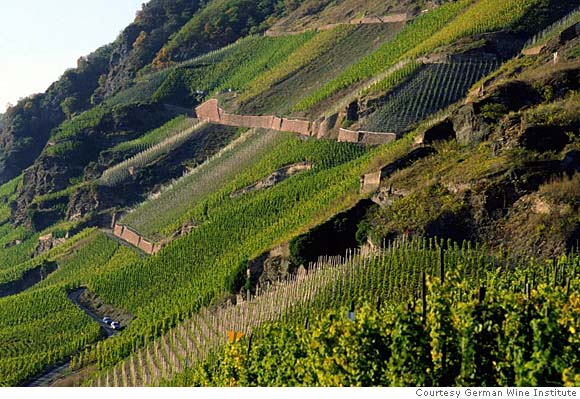
Steep Mosel vineyards in Germany, photo by http://lastingimpressionswineblog.wordpress.com/2011/02/23/german-wine-wineblog-20/

Steep vineyards of the Mosel vineyards in Germany


In other cases, there may be too much sugar for the yeast to convert it all to alcohol. Somewhere around 13-15% abv yeast stops being able to effectively ferment sugar to alcohol and naturally dies off. Super-ripe grapes will thus result in a wine with relatively high levels of alcohol and some residual sweetness. This sweetness can be quite subtle, or it can be syrupy and luscious – as found in dessert wines, which have very high concentrations of sugar in the harvested fruit.

Tasting sugar in wine is a difficult process. We can usually tell if something is ‘moderately sweet’; however it’s very hard to estimate the sweetness level in full-blown dessert wines. Wines with a little bit of residual sugar often have their sweetness masked by acidity and flavour compounds.

Sweet/Dry Wine Chart, Creative Commons photo by http://www.primermagazine.com


Sweetness in wine should be matched by a refreshing acidity for balance. This is especially true for dessert wines, which can come across as cloying without sufficient acidity. On the other hand, a touch of residual sugar, while not tasteable to most people, can give a welcome sense of roundness to a sharply acidic wine.


Sign up for Jonell Galloway and James Flewellen’s  “Celebrate the Chartres Festival of Lights & Autumnal Equinox with a Food & Wine Tasting Masterclass” in France from September 19 to 22, 2013.

___________________________


About James Flewellen

Dr James Flewellen is a biophysicist at the University of Oxford. James learned his trade in taste through the Oxford Blind Wine Tasting Society, of which he was the President from 2010-2012. During his term, he represented Oxford at many international blind tasting competitions – twice winning the prestigious ‘Top Taster’ Award in the annual Varsity blind tasting match against Cambridge University and captaining winning teams in competitions throughout Europe.

One of James’s goals is to clarify the complex and hard-to-navigate world of wine for both novice and experienced tasters. He applies his scientific training to wine education, illuminating concepts of taste, tannin and terroir in an approachable, entertaining manner. James runs wine education courses in Oxford through the The Oxford Wine Blog and is completing the WSET Professional Diploma in Wine and Spirits. He is the regular wine writer for The Rambling Epicure and is the founder of  The Oxford Wine Blog. He is also currently co-authoring The Concise Guide to Wine and Blind Tasting – a book surveying the wine regions of the world and how to blind taste.

Never miss a post
Name: 
Your email address:*
Please enter all required fields
Correct invalid entries

Elements of Wine 2: Alcohol

Published by Saturday, July 27, 2013 Permalink 0


//

James Flewellen photo, wine tasting expert, The Art of Tasting Wine: James FlewellenElements of Wine 2: Alcohol

Wine Tasting with James Flewellen

by James Flewellen

As grapes ripen, they accumulate sugars. At optimal ripeness, the grapes are harvested and sent to the winery for fermentation. Fermentation sees the pressed or crushed grape juice inoculated with yeasts that convert sugar to ethanol – the alcohol that ends up in our wine.

Red Wine Fermenting
Red wine fermenting


The alcoholic strength of a wine thus depends on the initial sugar levels present in the harvested grapes. Grapes grown in cooler climates accumulate sugars more slowly than those grown in hot climes, thus we expect, in general, lower alcohol wines to come from cooler sites. Most dry, unfortified wines fall between 11% and 15% alcohol by volume. A wine may have lower alcohol than this, but with some residual sugar – that is to say not all the available sugars in the grape have been converted to alcohol.

It is legal in some regions of the EU (and certainly throughout the rest of the world) to add sugar to the pressed grape juice prior to fermentation in order to boost the alcoholic strength of the resulting wine. This is called ‘chaptalisation’ (after M. Chaptal, then French Minister of Culture) and is frequently practised in cold vintages in northern Europe. The type of sugar used here is inconsequential as it is all converted to ethanol and contributes nothing to the flavour of the resulting wine.

Focused on wine
Let Ideas Compete / Foter / CC BY-NC-ND


In tasting, alcohol provides the main component of the ‘body’ of the wine – how the wine feels in the mouth. It dissolves certain chemicals found in food much better than water does (capsacain from chillies for instance) and also carries many of the aroma and flavour compounds that are less soluble in pure water. And of course, alcohol provides the intoxication that has been associated with the pleasures of drinking wine for millennia!

Greeny Goodness
sgs_1019 / Foter / CC BY-NC-SA


Alcohol levels can be assessed by aerating the wine as it is held in your mouth. Try this by breathing in over a small amount of liquid. Highly alcoholic wines will register a burning sensation on the back of your throat. As with all structural elements in wine, balance is key. The alcohol should be sufficient to support the flavours of the wine yet not so overpowering as to be the only noticeable feature in the wine. Wines with high levels of alcohol (14%+) can still work, yet they need to matched with a robust body and flavour profile.

Sign up for Jonell Galloway and James Flewellen’s  “Celebrate the Chartres Festival of Lights & Autumnal Equinox with a Food & Wine Tasting Masterclass” in France from September 19 to 22, 2013.

___________________________


About James Flewellen

Dr James Flewellen is a biophysicist at the University of Oxford. James learned his trade in taste through the Oxford Blind Wine Tasting Society, of which he was the President from 2010-2012. During his term, he represented Oxford at many international blind tasting competitions – twice winning the prestigious ‘Top Taster’ Award in the annual Varsity blind tasting match against Cambridge University and captaining winning teams in competitions throughout Europe.

One of James’s goals is to clarify the complex and hard-to-navigate world of wine for both novice and experienced tasters. He applies his scientific training to wine education, illuminating concepts of taste, tannin and terroir in an approachable, entertaining manner. James runs wine education courses in Oxford through the Oxford Wine Academy and is completing the WSET Professional Diploma in Wine and Spirits. He is the regular wine writer for The Rambling Epicure and is the founder of  The Oxford Wine Blog. He is also currently co-authoring The Concise Guide to Wine and Blind Tasting – a book surveying the wine regions of the world and how to blind taste.


Never miss a post
Name: 
Your email address:*
Please enter all required fields
Correct invalid entries

Wine and Food Pairing: Lacquered Pork Tenderloin, Roast Potatoes & Ramson Recipe

Published by Thursday, July 25, 2013 Permalink 0

Wine and Food Pairing: Lacquered Pork Tenderloin, Roast Potatoes & Ramson Recipe

by James Flewellen

Pork is a great meat to play with for wine pairing. Depending on the cut of the animal, how it is cooked and the sauce accompanying the dish you have a whole wealth of wines from which to choose.  Red wine, white wine, dry and savoury, off-dry and fruity; there are many options.


Lacquered Pork Tenderloin, Roast Potatoes & Ramson Recipe, Spontaneous Cuisine. Recipe by Jonell Galloway, editor of The Rambling Epicure.


One of my favourite choices and one I think works very well with this recipe is an Alsatian or New Zealand Pinot Gris. These are full-bodied, rich white wines with a pear and honey bouquet that is the perfect foil for pork in such a sauce. The honey and fruit notes in the wine echo the honey and vanilla flavours in the sauce; the richness of the palate counteracts the piquant mustard and coriander seeds; the body carries enough weight to handle the meatiness of the dish; and the wine brings forth enough acidity to cut through the fat in the fillet and the sauce. Try for a wine with at least 5 years age and you’ll notice truffle and mushroom notes developing to add an additional level of complexity.

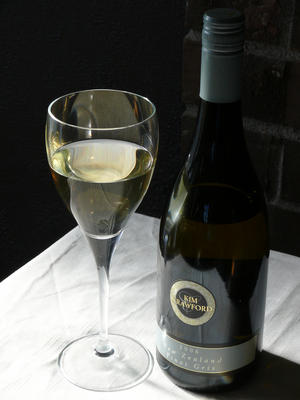
Kim Crawford 2006 Pinot Gris


About James Flewellen

Dr James Flewellen is a biophysicist at the University of Oxford. James learned his trade in taste through the Oxford Blind Wine Tasting Society, of which he was the President from 2010-2012. During his term, he represented Oxford at many international blind tasting competitions – twice winning the prestigious ‘Top Taster’ Award in the annual Varsity blind tasting match against Cambridge University and captaining winning teams in competitions throughout Europe.

One of James’s goals is to clarify the complex and hard-to-navigate world of wine for both novice and experienced tasters. He applies his scientific training to wine education, illuminating concepts of taste, tannin and terroir in an approachable, entertaining manner. James runs wine education courses in Oxford through the Oxford Wine Academy and is completing the WSET Professional Diploma in Wine and Spirits. He is the regular wine writer for The Rambling Epicure and is the founder of The Oxford Wine Blog. He is also currently co-authoring The Concise Guide to Wine and Blind Tasting – a book surveying the wine regions of the world and how to blind taste.


Never miss a post
Name: 
Your email address:*
Please enter all required fields
Correct invalid entries

Switzerland: Brasserie Lipp Geneva: The Brasserie of all Brasseries

Published by Thursday, July 25, 2013 Permalink 0


//

Switzerland: Brasserie Lipp Geneva: The Brasserie of all Brasseries

by Jonell Galloway

From the archives

The Brasserie Lipp in Geneva even tops the one in Paris. Some may say that’s not difficult to do in a sleepy, provincial town like Geneva, but it is not so simple as that.


It’s l’ensemble, the “package” with all its details, that makes it work to perfection: the top-notch French-style service, the professionalism, the decor, the reliability of the food, the atmosphere, its late opening hours, even on Sunday.

You can watch them in action on their site!

I love their site, which gives you a glimpse of all the qualities above through a short video.

Menu

The menu includes classic brasserie fare, such as choucroute, souris d’agneau confite or lamb’s shank – one of the tenderest parts of the lamb, steak with Béarnaise sauce, leeks ravigote and shellfish platters. They offer Gillardeau oysters as well as the usual selection of shellfish found in a brasserie. It is always impeccably fresh.


But unlike many brasseries, they also have a menu that changes with the seasons. It invariably offers an assortment of tartares, cold or hot soups, salads, and dishes that often have North African and Asian accents. One of my favorites that they have been doing for 3 or 4 winters, is the vegetarian couscous. It’s like no other couscous I’ve ever had, a modern, up-to-date “revision” that I never tire of.

Service

If you listen to their video, you’ll understand what I mean about the professionalism of the service. They will never get annoyed with you if you ask questions about the dishes or if you change your mind 3 times. They are old-fashioned, but in the good sense of the term. The servers are always polite and patient.

  • .
    Never miss a post
    Name: 
    Your email address:*
    Please enter all required fields
    Correct invalid entries

UA-21892701-1