Simon Says: Daily Food Quote, September 12, 2011

Published by Monday, September 12, 2011 Permalink 0

by Simón de Swaan

The whole of nature is a conjugation of the verb to eat, in the active and the passive.–William Ralph Inge, 1920

William Ralph Inge was an English author, Anglican priest, Professor of Divinity at Cambridge, and Dean of St Paul’s Cathedral, which provided the appellation by which he was widely known, “Dean Inge.” Author of thirty-five books, he is best known of for his works on Plotinus and neoplatonic philosophy, and on Christian mysticism.


Never miss a post
Name: 
Your email address:*
Please enter all required fields
Correct invalid entries

Food Art: Chunky Chocolate Chip Cookies, food photography by Meeta Khurana Wolff

Published by Monday, September 12, 2011 Permalink 0

See more food photo compositions at Meeta K. Wolff or in our Food Art category.

Never miss a post
Name: 
Your email address:*
Please enter all required fields
Correct invalid entries

A Taste of Switzerland: Absinthe Anyone?

Published by Friday, September 9, 2011 Permalink 0

A Taste of Switzerland: Absinthe Anyone?

by Sonja Holverson

Our thoughts immediately go back to Bohemian culture, to writers and artists of 19th-century France: absinthe, also known as La Fée Verte (literally, “the green fairy”), was created in the canton of Neuchâtel, Switzerland, notably in the Jura Mountains bordering France. Most of the production has traditionally been in small quantities. But absinthe is back after being outlawed for nearly a century.

Absinthe glass and customary spoon

The liquor, high in alcohol content and with a full anise flavor, is made from plants such as anise, fennel, flowers, and leaves of the medicinal plant called Artemisia Absinthium, which we know as wormwood, and which is found in abundance in Switzerland. Other herbs such as lemon balm angelica, dittany, coriander, juniper and nutmeg are sometimes added. The nickname “green fairy” comes from its color, a pale green.

Chemist and absinthe expert T.A. Breaux describes it as “a push-me, pull-you effect of the various herbs; some have a heightening effect while others have a lowering effect.” It as a double impact: a sensation of inebriation along with a heightened state of clarity.

Romanticized by many famous people in the 19th and early 20th centuries, including Henri de Toulouse-Lautrec, Edgar Degas, Vincent van Gogh, Édouard Manet,  Pablo Picasso, Oscar Wilde, Charles Baudelaire, Paul Verlaine, Ernest Hemingway and the list goes on, absinthe is ever-present in both the stories and works of these creative people.

“L’Absinthe” by Edgar Degas 1876

Practical uses were also found during this period of history and absinthe was given to French troops to prevent fever. Naturally, they acquired a taste for the “green fairy” and when they returned home, they popularized the drink in bars, bistros and cabarets. Absinthe was initially expensive, but when prices declined, the French began drinking it to excess and experienced addictive psychoactive reactions. As a result, opposition movements started scare campaigns that resulted in the ban of absinthe in 1914 in France.

Ironically, Switzerland had already banned it in 1907, although the production went underground and home distillers produced the much sought-after liquor clandestinely in small quantities. In the U.S., it was banned in 1912. By 1915, most European countries followed suit, except Britain, where it was not popular, and both the production and consumption of absinthe were made illegal.

In the mid-1990s, legal practices regarding absinthe were highly ambiguous. Drinking it was legal, but producing it was illegal. Former French President Jacques Chirac drew criticism from his own citizens because he drank absinthe during a state visit to Switzerland in the late 1990s. President Chirac and I had something in common but no one really cared if I drank it… Anyway, it was difficult to come by and you had to have friends who lived in the canton of Neuchâtel to get your hands on it.

With renewal of interest on the part of both producers and consumers, the Swiss Parliament lifted the 97-year ban on the production, sales and consumption of absinthe in 2004. A French absinthe producer, Lucid, was the first absinthe producer to receive certification in France in 2007.

Other European countries followed, and by 2008, there were nearly 200 brands of absinthe available in a dozen countries such as Switzerland, France, Spain and the Czech Republic.

In the U.S., the first legal brand of absinthe was approved in 2007: St. George Absinthe Verte, made in Northern California.

Kubler Swiss Absinthe

While visiting Switzerland, some of you may want to taste this once forbidden elixir. Kubler Absinthe was the first Swiss absinthe to become commercially available and has an excellent reputation for being the highest quality of all international absinthe brands. They use only natural plants in accordance with local traditions, rather than extracts or oils that are used by some other European producers.

Another excellent Swiss brand is Absinthe Studer, made of distilled wormwood, a blend of 8 different secretly selected herbs, pure alcohol and fresh water from their own spring. The original recipe has been preserved and passed down from generation to generation despite the 97 years of legal issues.

But the Studer family is open to innovation and have collaborated with the famous haute couturier chocolatiers, the Beschle family in Basel, producing Studer’s absinthe-filled milk chocolate pralines in the shape of the most famous Swiss Alp, the Matterhorn.

Beschle’s Studer Absinthe, Swiss Collection

The country fair stand “Absintissimo” serving absinthe from the local producers of the region is always a highlight at the Fall Automanales Fair held in Geneva every November.

Absintissimo: Swiss-made “green fairy”

So fascinating is the story of absinthe that this elixir is being used as the backdrop for a film currently being produced called “Les Absintheurs” (The Absinthe Drinkers), due out in 2012. The plot is not so much about the drink as about the people in the era when the green fairy was a part of daily life in Paris. The film recounts the life of a talented young woman painter in an art scene dominated by men in 1889 (one year before van Gogh died). It takes places during the Impressionist period in the then-decadent Montmartre neighborhood of Paris.

Enjoy your taste of the once forbidden green fairy while in Switzerland, but if you are obliged go pass through the United States Customs, keep in mind that despite the allowance of local production of absinthe in the U.S., it is prohibited to bring it into the country.

Related articles


A version of this article was originally published in Nile Guide.

Never miss a post
Name: 
Your email address:*
Please enter all required fields
Correct invalid entries

Simon Says: Daily Food Quote, September 9, 2011

Published by Friday, September 9, 2011 Permalink 0

by Simón de Swaan

At a dinner party one should eat wisely but not too well, and talk well but not too wisely.–W. Somerset Maugham, 1896

W. Somerset Maugham was an English playwright, novelist and short story writer, who also had a medical degree and qualified as a surgeon. He did not practice medicine, but instead made us of his medical background in his writing, as in his 1897 novel Liza of Lambeth, which was a tale of working class adultery.


Never miss a post
Name: 
Your email address:*
Please enter all required fields
Correct invalid entries

Food News Daily: September 7, 2011

Published by Thursday, September 8, 2011 Permalink 0

Mainstream Anglo Media and Press

Eat insects for protein, EU suggests, The Independent

Chateau Lafite Sale Tops $500,000, The Wall Street Journal

Why the new McDonald’s menu won’t make us thin, The Guardian

Tamales, L.A.’s original street food, Los Angeles Times

Grilled Chicken With Garlic Purée and Shaved Zucchini Salad (Alice Waters), The Wall Street Journal

Food Photography

Alessandro Guerani

Best of the Anglo Food and Travel Blogs and Sites

Rick Bayless: The trailblazer (defender of Mexican cuisine), Culinate

Celebration Cake, According to Dina

Chocolate pencils for back to school at Patrick Roger, David Lebovitz

Whole hog butchering class, Access Atlanta

Chocolate capital of the world: now Paris wears the world’s sweet crown (David Downie), Gadling

Apricot Stilton Cheese Muffins (Esmaa Self), Foodista

Preserving in Oil and Vinegar, Culinate

World

Poondhu Puli Kuzhambhu : Chettinad Style, Kaarasaaram

Cheesecake Muffins, Baker Street

Chicken Soup with Braaied Mielies, South-African Style, Scrumptious South Africa

Sopa de beringela e tomate # Eggplant and tomato soup, Pratos e Travessas

Alternative Press/Sites

The food industry vs. nutrition standards: a First Amendment issue?, Food Politics

Study says eating with your left hand could prevent overeating, Bliss Tree

Just a Little Bit Longer: How to Keep All Kinds of Food Fresh, Mother Earth News

A Bowl of Eat Local Wisdom: Lemongrass Tomato Soup, Mother Earth News

Related articles


Never miss a post
Name: 
Your email address:*
Please enter all required fields
Correct invalid entries

Switzerland: Watermelon and Fennel Salad Recipe

Published by Thursday, September 8, 2011 Permalink 0

Switzerland: Watermelon and Fennel Salad Recipe

by Jenn Oliver

Until recently, I didn’t know anyone did anything with a watermelon besides just cut it up and eat it. I mean, it’s already completely sweet, juicy, the pure essence of summer. Why mess with the perfection embodied in this pink fruit? The mere sight of a ripe watermelon evokes memories of childhoods past. For me, it evokes images of weeks at girl scout camp, running around outside, carefree, swimming in the lake, making new friends, riding horses…you get the idea.

But why not play, and see just where the flavor of this fruit can go? Have you ever thought about the flavors of this king of summertime snacks and how they would meld with other foods? I certainly hadn’t until Meeta challenged us Plate to Page alumni to photograph watermelon as a fun photography assignment — two photos — one raw, and one in a dish. Yes, a dish. Who puts watermelon in things? Ha, maybe it was time to change my perspective and open my eyes to other possibilities.

Perspective is a funny thing. Sometimes our first impressions have such a profound effect on us that we forget to look for other possibilities right in front of our noses. I think that’s why I like to go for walks and hikes, because all that time away from everything gives my mind space to think and breathe. And sometimes, I even get to get lost and freak out after sitting at a train station for 30 minutes until I figure out that the train only passes through on weekdays…

Continue Reading…

Never miss a post
Name: 
Your email address:*
Please enter all required fields
Correct invalid entries

Simon Says: Daily Food Quote: September 8, 2011

Published by Thursday, September 8, 2011 Permalink 0

by Simón de Swaan

Feasts must be solemn and rare, or else they cease to be feats.–Aldous Huxley, 1929

Aldous Huxley was an English novelist and critic, best known for his novel Brave New World (1931). Besides novels, he published travel books, histories, poems, plays, and essays on philosophy, arts, sociology, religion and morals. Brave New World is so influential that an entire website is devoted to it.

Related articles
Never miss a post
Name: 
Your email address:*
Please enter all required fields
Correct invalid entries

Simon Says: Daily Food Quote, September 7, 2011

Published by Wednesday, September 7, 2011 Permalink 0

by Simon de Swaan

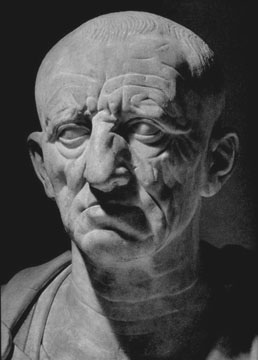
It is a hard matter, my fellow citizens, to argue with the belly, since it has no ears.–Cato the Elder

Cato the Elder was a Roman statesman, referred to as “The Elder” to distinguish him from his great great grandson, Cato the Younger. Although a highly distinguished statesman, he deserves more notice as an author of the first history of Rome, written in Latin.


Related articles
Never miss a post
Name: 
Your email address:*
Please enter all required fields
Correct invalid entries

Food Art: Pasta and Co., food photography by Meeta Khurana Wolff

Published by Wednesday, September 7, 2011 Permalink 0

See more food photo compositions at Meeta K. Wolff or in our Food Art category.

Never miss a post
Name: 
Your email address:*
Please enter all required fields
Correct invalid entries

Food News Daily: September 5, 2011

Published by Monday, September 5, 2011 Permalink 0

Mainstream Anglo Media and Press

5 Ayurvedic mocktails, Times of India

Where Budding Magnates Experiment With Recipes, The New York Times

Secrets of a Blue-Ribbon Brewmaster (a woman!), The Wall Street Journal

Fast food goes gourmet: Fast food chains are trying to gain new market share with ‘gourmet’ products. Have any of them won you round?, The Guardian

Time called on gastropubs: Last orders for metro foodies as hard times see a move back to the bar stool, The IndependentHow to expand your kids’ diets, Seattle Times

Monsanto Corn Falls to Illinois Bugs as Resistance Probe Widens, Bloomberg

Beer as an Ingredient, The New York Times

Market Driven, Oaxaca-Style: In Oaxaca, Mexico, fresh, locally grown food is not a “movement,” but a way of life, The New York Times

Food Photography


Alessandro Guerani

Best of the Anglo Food and Travel Blogs and Sites

Irene’s damage not ‘overrated’ for farmers, Grist

The World’s Most Tech-Savvy Boutique Hotels, The Next Web

Peachy keen: How to pick a peach, Culinate

Lemon Cucumber Cocktail, Leite’s Culinaria

Eat Well, Spend Less: Homemade Substitutes for Grocery Staples, Simple Bites

World

Dad’s Favorite Date Slice, Inside Cuisine

A Few Healthy Pickle Recipes – Green Chili Pepper with Chickpea Flour and Spices, Lite Bite

Lemongrass shrimp, Rasa Malaysia

Alternative Press/Sites

Irene’s damage not ‘overrated’ for farmers, Grist

 Are IQ and vegetarianism linked?, PubMed

Related articles


Never miss a post
Name: 
Your email address:*
Please enter all required fields
Correct invalid entries