Switzerland: Fresh Fruit Séré/Quark Cheese Mousse

Published by Wednesday, August 1, 2012 Permalink 0

by Jonell Galloway

In Switzerland, séré, as it is called in the French-speaking part of the country, or quark, as it is called in the German-speaking part, is a fresh cheese similar to curd cheese or cottage cheese and to ricotta, but the process of making it differs somewhat. Milk is first soured, then warmed until the desired degree of denaturation of milk proteins is met. It is then strained, so that it is smooth in consistency.

It is good eaten simply, with fresh fruit and a touch of sugar, but it can also be used for cooking.

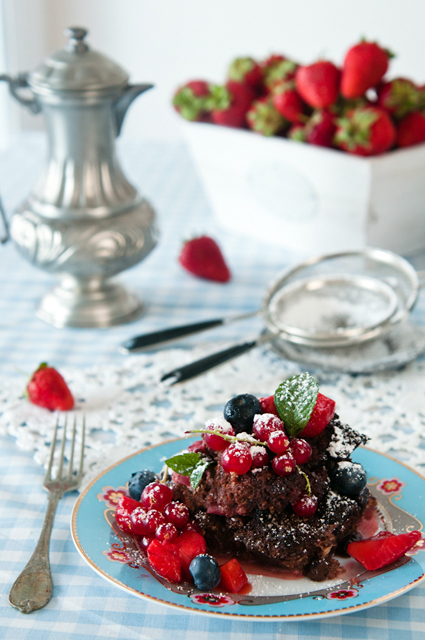
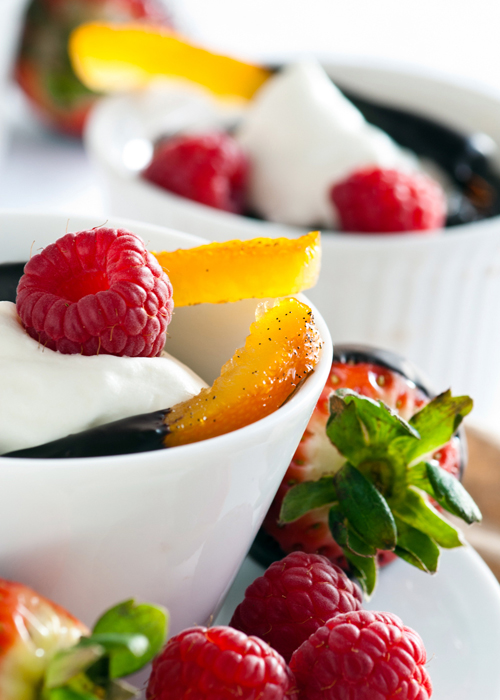
When summer fruit is so abundant, this fresh fruit mousse makes for a different way of eating it.

You can buy either the full-fat version or a low-fat one. The full-fat version will be marked séré de crème in supermarkets; the full-fat version will be marked séré maigre or quark “maigre,” meaning low-fat. For this recipe, it’s best to buy it homemade from the cheesemonger or the full-fat version.

If séré is not available in your area, follow this easy recipe to make it yourself.

Continue Reading…

Never miss a post
Name: 
Your email address:*
Please enter all required fields
Correct invalid entries

Part 4: Step-by-step Fermentation – How to Ferment Vegetables

Published by Wednesday, August 1, 2012 Permalink 0

Part 4: Step-by-step Fermentation

by Diana Zahuranec

How to Ferment Your Own Vegetables

I said in my first fermentation post that I found a couple of particularly helpful websites:

Sandor Ellix Katz, “Making Sauerkraut”
Mary N. Mennes, “Make Your Own Sauerkraut”
Recipes from a German Grandma, “Make Your Own Sauerkraut”

Katz’s was detailed and informative, and I completely trusted his judgment because he is the undisputed wild fermentation expert. Also, he helped my friends and I make cheese, which turned out edible, if squeaky. The unnamed German Grandma had pictures, which I took too and I’ll provide them here for you fermentin’ folks.

Equipment used:

2 big glass bowls
2 freezer bags
Saran wrap
Big plastic tray

Ingredients used:

Click here for French/British/American converter

1 head of cabbage
1 onion
2-3 hot peppers
2 carrots
Stems from a bunch of catalogna (chicory (or a type of), a leafy green with tough stems that I didn’t want to throw out)
1/3 C mildly spicy coarse hot pepper
Salt, water: 3 T salt per 5 pounds of vegetables
Whey from yogurt

Procedure:

Note: This outlines what I did, and might not be the ultimate, end-all-be-all way to ferment; I’m just sharing the experience and knowledge I gained along the way!

(chicory (or a type of), a leafy green with tough stems that I didn’t want to throw out)
1/3 C mildly spicy coarse hot pepper
Salt, water: 3 T salt per 5 pounds of vegetables
Whey from yogurt

Procedure:

Note: This outlines what I did, and might not be the ultimate, end-all-be-all way to ferment; I’m just sharing the experience and knowledge I gained along the way!

[caption id="attachment_27484" align="alignleft" width="319"] Chopped vegetables


Continue Reading…

Never miss a post
Name: 
Your email address:*
Please enter all required fields
Correct invalid entries

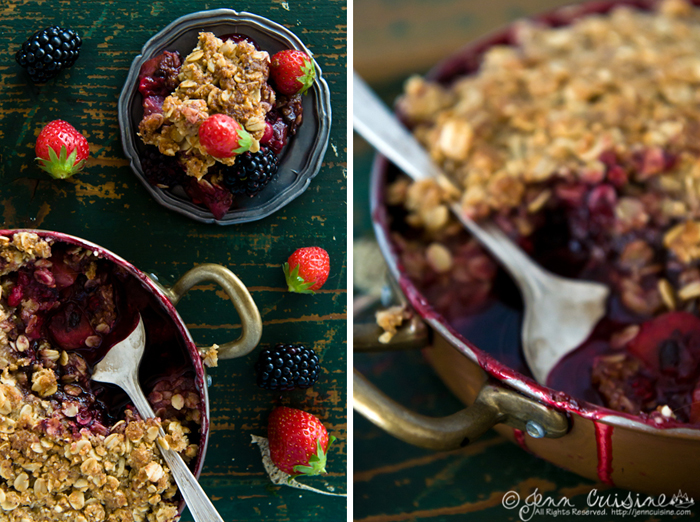
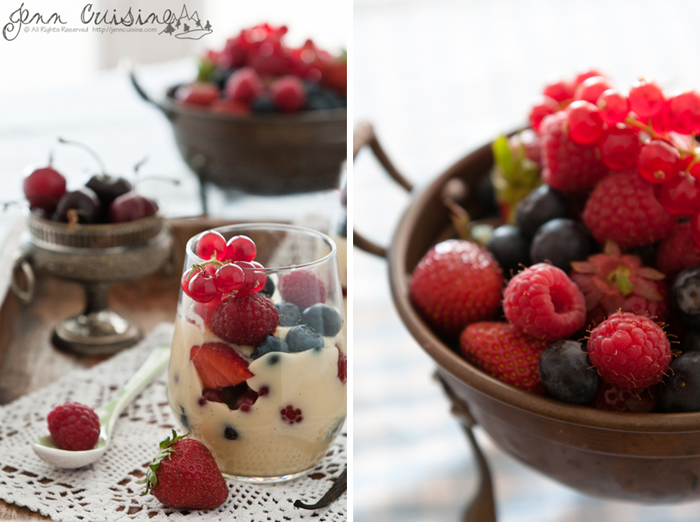
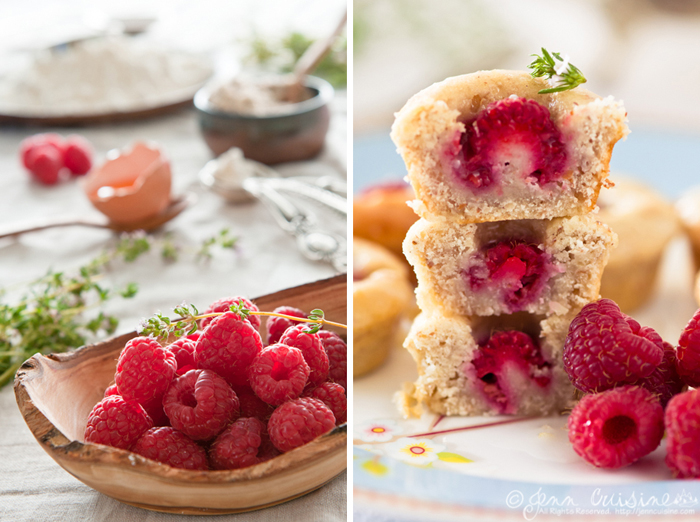
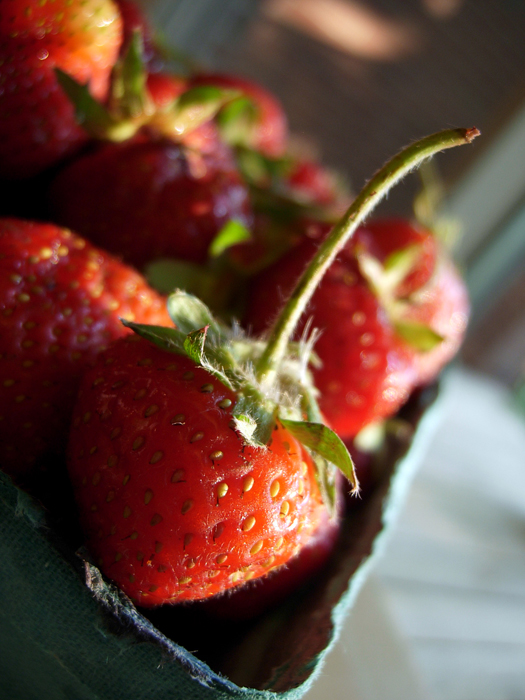
Food Art: Berries, a Summer Delight, a food photography exhibit by Jenn Oliver

Published by Wednesday, August 1, 2012 Permalink 0


Jenn Oliver writes our column Culinary Chemistry. She has a Ph.D. in science, where she explains the scientific aspects of what really goes on when you cook (the next Harold McGee?). She’s been running a gluten-free blog, Jenn Cuisine, since 2008 and her kitchen is more like a laboratory than a kitchen. She’s focuses her chemical calculations and experiments on figuring out how to make traditionally glutinous food gluten-free.


Never miss a post
Name: 
Your email address:*
Please enter all required fields
Correct invalid entries

Simon Says: Daily Food Quote, August 1, 2012

Published by Wednesday, August 1, 2012 Permalink 0

by Simón de Swaan

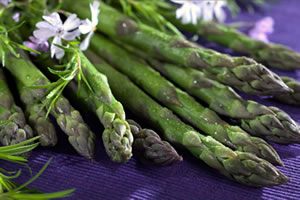
The air pulses with the warm smell of lilac, but as we pass each door, the lilac dominance is subdued by heady wafts of asparagus cooking.–Jane Grigson


Elizabeth David was an English food writer. Grigson’s growing interest in food and cooking led to the writing of her first book, The Observery (1967), which was translated into French, unusual for an English food writer. Elizabeth David read the book and was impressed by it, and recommended Grigson as a food columnist for The Observer, for which she wrote a column from 1968 until her death in 1990.

Never miss a post
Name: 
Your email address:*
Please enter all required fields
Correct invalid entries