Jonell Galloway grew up on Wendell Berry and food straight from a backyard Kentucky garden. She is a freelance writer. She attended Le Cordon Bleu and La Varenne cooking schools in Paris, worked for the GaultMillau restaurant guide, CityGuides and other restaurant guides in France and Paris, and for Gannett Company in the U.S., and collaborated on Le tour du monde en 80 pains / Around the World with 80 Breads with Jean-Philippe de Tonnac in France; André Raboud, Sculptures 2002-2009 in Switzerland; Ma Cuisine Méditerranéenne with Christophe Certain in France, and a biography of French chef Pierre Gagnaire. Before moving to Switzerland, she ran a cooking school called Spontaneous Cuisine in France, and in the U.S., a farm-to-table restaurant called The Three Sisters, which she owned with her two sisters. She organizes the Taste Unlocked bespoke food and wine tasting awareness workshops with James Flewellen, a wine tasting specialist. She is an active member of Slow Food and runs the food-writing website and Facebooks pages under the moniker The Rambling Epicure. Her work has been published in numerous international publications and broadcast on public radio.
Ficelle Picarde, meaning literally “long thin baguette from Picardy,” is not an ancient dish. Marcel Lefèvre invented it for a dinner for dignitaries of the region during an exposition in Amiens in the fifties, and Picardy soon adopted it as its own. The name most likely comes from its long, thin shape, since it’s a crêpe, not a baguette. Its importance in the region is confirmed by the fact that an entire professional fraternity devoted to it was created in 1997, Les compagnons de la ficelle picarde et les compagnes de la rabotte picarde.
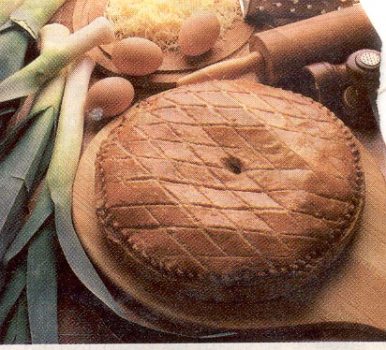
Flamiche is a tart or pie or tourte or quiche from Picardy, depending on who you’re talking to. In Picardy, it is traditionally made with leeks or onions, and sometimes with pumpkin, which is eaten as a savory dish in much of the north of France. It is one of the main traditional starters offered in the region, along with Ficelle Picarde, a crêpe stuffed with ham and mushrooms and served with a cream sauce; Tarte Au Maroillles, a cheese tart, and Rissoles Laonnoises, meat or fish fritters.
Recipe
Ingredients
These are U.S. measurements. Click here for metric and British conversions.
2 9-inch pie crusts 1 1/2 lbs leeks, white only 2 oz. butter 2 egg yolks 1/2 c. crème fraîche Nutmeg Salt and pepper to taste
Egg yolk for pie crust
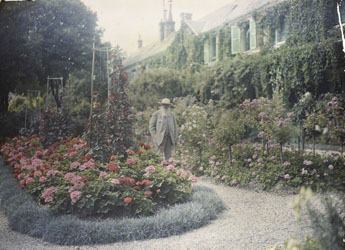
The painter Gaston Balande, 1880-1971, was born in Saujon, France, and took part in numerous Beaux-Arts salons during his lifetime. This painting is in the tradition of Edouard Manet’s Le Déjeuner sur l’Herbe painted in 1862 and 1863, without the brazenness of the nude woman.
Saffron mussel soup is from the Loire region. The particularity of the Loire version of this soup is that it has leeks, which are not commonly used with mussels. The Loire Valley produces more than 24% of all leeks in France, more than any other region.
The proportions of the ingredients can vary, although the fumet needs a bit more precision than the mussels and soup. The general rule is to make as much fumet as you need for the amount of mussels you’ve cooked.
These fruit trees in blossom with the cow in the verdant fields of Lower Normandy and the church steeple in the background could almost be a Pissarro painting. The Impressionists made this sort of village scene familiar to us all. It’s almost like going home.
SEPTEMBER 17-20, 2015, DURING AUTUMN EQUINOX AND LIGHT FESTIVAL IN CHARTRES, FRANCE
Award-winning wine writer James Flewellen and Cordon Bleu-educated cook and food journalist Jonell Galloway present food and wine tasting masterclasses in the historic French city of Chartres. Comprising dedicated wine tastings, sumptuous meals made from local ingredients paired with regional Loire Valley wines and a unique, “sense-awakening” taste experience, our food and wine holiday courses will help unlock your taste buds and introduce the richness of aromas, flavours and textures present in food and wine. A music festival, with live music in the streets, restaurants, theatres, churches and bars, is held to celebrate the Autumn Equinox and to mark the end of the Festival of Lights. To sign up, please click here or fill in the contact form below.
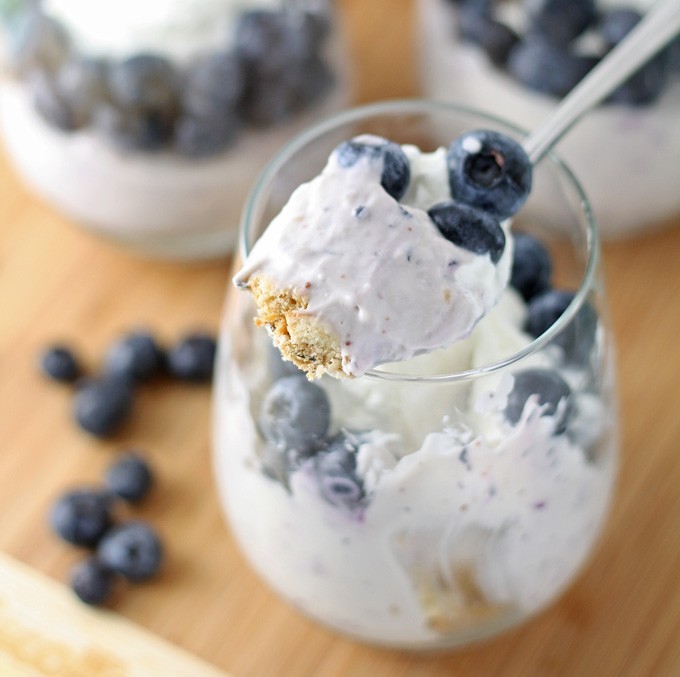
11 x 7 x 2 in. (28 x 18 x 5 cm) baking dish or deep pie tin 1 box Speculoos ginger cookies Mixed summer fruit, washed and chopped into fat chunks such as apricots and blueberries + banana Cinnamon to taste 1 1/2T – 2 T. dark brown cane sugar 1 1/2 – 2 T. maple syrup, depending on sweetness of fruit Dried chili pepper flakes 500 g Quark* or Séré cheese
Line baking dish with Speculoos to form a crust, covering sides as well as bottom of pan.
Chop apricots, blueberries and banana into large bite-size pieces. Place in a bowl. Sprinkle generously with cinnamon. Add 1 1/2 – 2 T. of dark brown sugar, 1 1/2 – 2 T. of maple syrup and a sprinkle of dried chili peppers. Mix well. Marinate for 30 minutes, stirring from time to time.
Mix fruit with one large yogurt-size tub Quark (500 g). Leave to marinate for 30 minutes, stirring from time to time.
Pour quark and fruit mixture into pie pan. Refrigerate for at least 2 hours before serving.
*Quark is a fresh cheese made in the Germanic countries. It is not the same as cottage cheese or cream cheese, since it is made by warming soured milk fermented with mesophile bacteria until it coagulates. It can be replaced by labneh, ricotta, mascarpone, thick fromage blanc or strained yogurt, although the flavor and texture will not be exactly the same.
The Concise Guide to Wine & Blind Tasting is destined to become a modern classic. Written by Neel Burton, psychiatrist and Oxford professor, and James Flewellen, biophysicist at Oxford – together founders of the Oxford Wine Academy — the book is well stocked with vital information about all aspects of wine, from soil and vine to drinking for pleasure and blind tasting.
Its clear, detailed information will appeal to serious amateurs and experienced professionals alike. The first three chapters tackle the history of wine as well as the principles of viticulture and winemaking, using an approach unique to the authors, reflecting their methodical way of thinking and scientific backgrounds. This section serves as a comprehensive, accessible introduction for less seasoned wine drinkers, giving them a firm technical basis and the curiosity to want to continue learning.
The ensuing twenty-three chapters address the world’s geographic regions, including three dedicated to notable French appellations, sparkling wine and fortified wine, respectively. Chapters are well structured, dealing with the lie of the land, climate, soil, grape varieties, appellations, and wine styles, and give thorough attention to each of these components. The authors explain how to differentiate wines based on the interplay of these factors, and address the effect of appearance, palate and nose and how these interact with one’s senses and perceptions. This section serves as a reference for even the most seasoned wine drinker.
For those interested in blind tasting, the appendices explain how to set up a blind tasting, and include crib sheets by grape and terroir — a most useful reference for those interested in honing their skills — along with international classification systems and food and wine matching.
This is both a user’s manual and a connoisseur’s guide, and its clear and fluent exposition sets it apart from other guides. You’ll keep this reference book on your shelf; its pages will yellow (and possibly purple) and show their wear and tear. You might even pass it on to your grandchildren. That’s how good it is.