This stage set at the Teatro Olimpico in Vicenza truly makes the viewer feel they can walk into the set.
Andrea Palladio built this theatre, the first indoor theatre in masonry, between 1580 and 1585, when it was inaugurated. The interior is decorated with elaborate wood, stucco and plaster, and the building is listed on the UNESCO World Heritage List.
It is open for visits, and theatre and musical productions are still held there.
Spices and Corruption: Spices were so expensive that they could be given as gifts. Custom was to give them to judges during trials as thanks…or to corrupt them. In the 14th century, the term “spices” designated a mandatory tax which was added to the subtotal of a bill.–Le Viandier, credited to Guillaume Tirel, alias Taillevent
Make a place to sit down.
Sit down. Be quiet.
You must depend upon
affection, reading, knowledge,
skill—more of each
than you have—inspiration,
work, growing older, patience,
for patience joins time
to eternity. Any readers
who like your work,
doubt their judgment.
ii
Breathe with unconditional breath
the unconditioned air.
Shun electric wire.
Communicate slowly. Live
a three-dimensioned life;
stay away from screens.
Stay away from anything
that obscures the place it is in.
There are no unsacred places;
there are only sacred places
and desecrated places.
iii
Accept what comes from silence.
Make the best you can of it.
Of the little words that come
out of the silence, like prayers
prayed back to the one who prays,
make a poem that does not disturb
the silence from which it came.
3-DAY TASTE AWAKENING COURSE 19-21 JUNE,
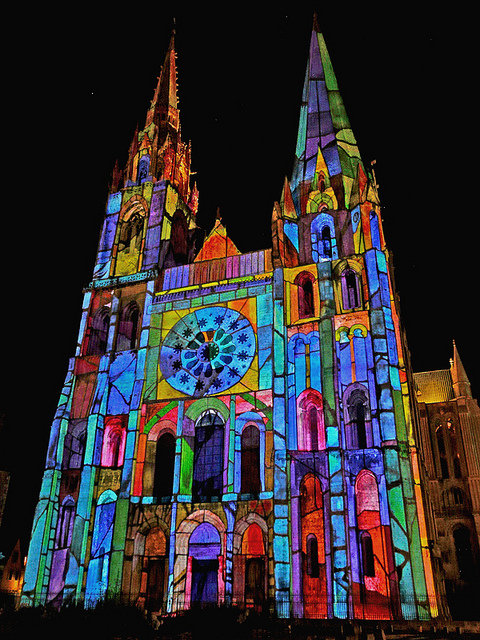
DURING CHARTRES SUMMER SOLSTICE MUSIC FESTIVAL
Award-winning wine writer, James Flewellen, and Cordon Bleu-educated chef and food journalist, Jonell Galloway, present wine and food tasting masterclasses in the historic French city of Chartres. Compromised dedicated wine tastings, sumptuous meals made from local ingredients paired with regional Loire Valley wines and a unique, ‘sense-awakening’ taste experience, our food and wine holiday courses will help unlock your taste buds and introduce the richness of aromas, flavours and textures present in food and wine. A music festival, with live music in the streets, restaurants, theatres, churches and bars, is held to celebrate the Summer Solstice. If you’re interested in signing up, please click here.
It’s worth it to move to Venice just to have a view like this when you walk out of the supermarket. This is in Canaregio, one of the six sestiere or districts of Venice.
This site has a helpful list of tips and resources for food writers. Although outdated, it still serves as a good source, and recommends books, periodicals, works and websites. Click here.
Jonell Galloway grew up on Wendell Berry and food straight from a backyard Kentucky garden. She is a freelance writer. She attended Le Cordon Bleu and La Varenne cooking schools in Paris and the Académie du Vin, worked for the GaultMillau restaurant guide and CityGuides in France and Paris and for Gannett Company in the U.S., and collaborated on Le tour du monde en 80 pains / Around the World with 80 Breads with Jean-Philippe de Tonnac in France; André Raboud, Sculptures 2002-2009 in Switzerland; Ma Cuisine Méditerranéenne with Christophe Certain in France, At the Table: Food and Family around the World with Ken Albala, and a biography of French chef Pierre Gagnaire. She ran a cooking school in France, and owned a farm-to-table restaurant, The Three Sisters’ Café, with her two sisters in the U.S. She organizes the Taste Unlocked bespoke food and wine tasting awareness workshops with James Flewellen, is an active member of Slow Food, and runs the food writing website The Rambling Epicure. Her work has been published in numerous international publications and she has been interviewed on international public radio in France, Switzerland, and the U.S. She has just signed on at In Search of Taste, a British print publication, and is now working on a book, What to Eat in Venice
6 egg yolks 4 egg whites 1 cups brown sugar 1 cup melted butter 1/3 cup old-fashioned oats Juice of one lemon 1 tsp. cinnamon 2 cups peeled, cored, sliced cooking apples 2 egg whites, beaten until they form hard peaks
Food writing is not confined to food writers. After all, food concerns us all and we all have something to say about it. Some use it as metaphor, others as porn. Here are a few examples from classic literature.
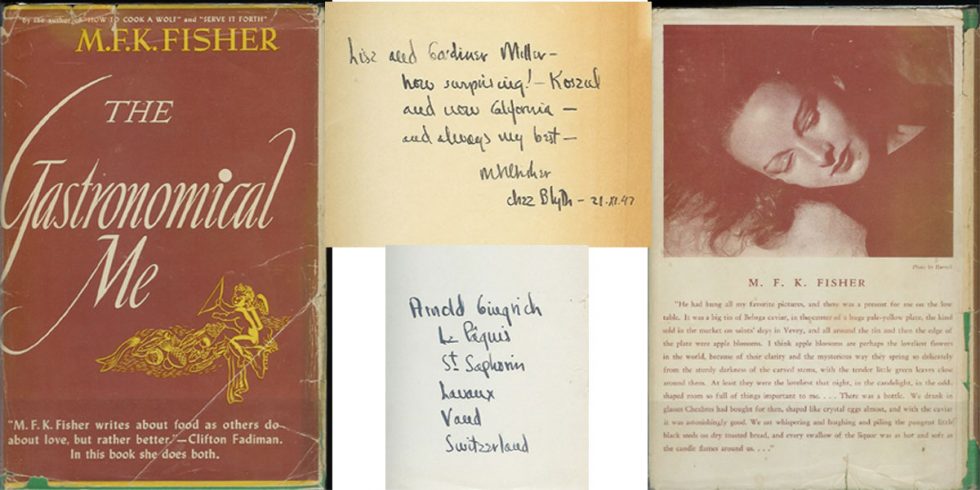
Food as the Essence of Being Human: M.F.K. Fisher
Fisher went straight to the point. Food was intertwined in almost all she wrote and used as a metaphor for the need for love in life. It was inescapable connected with its opposite, hunger.
“It seems to me that our three basic needs, for food and security and love, are so mixed and mingled and entwined that we cannot straightly think of one without the others. So it happens that when I write of hunger, I am really writing about love and the hunger for it, and warmth and the love of it and the hunger for it… and then the warmth and richness and fine reality of hunger satisfied… and it is all one.”
“Tortolita, let me tell you a story,” Estevan said. “This is a South American, wild Indian story about heaven and hell.” Mrs. Parsons made a prudish face, and Estevan went on. “If you go visit hell, you will see a room like this kitchen. There is a pot of delicious stew on the table, with the most delicate aroma you can imagine. All around, people sit, like us. Only they are dying of starvation. They are jibbering and jabbering,” he looked extra hard at Mrs. Parsons, “but they cannot get a bit of this wonderful stew God has made for them. Now, why is that?”
“Because they’re choking? For all eternity?” Lou Ann asked. Hell, for Lou Ann, would naturally be a place filled with sharp objects and small round foods.