Elatia Harris’s Top 10 Food Books 2013

Published by Wednesday, January 15, 2014 Permalink 0

Elatia Harris’s Top 10 Books 2013, on Cooking, Food History & Food Politics

by Elatia Harris

For this list to be coherent, I have to have actually read and truly admired the books on it. Check! If they are cookbooks, I have to have cooked from them with great results. Check! I want to hear what your entries would be – it was a great year for books about food and cooking, and I’ve had to leave many good ones out.

ElatiaBooks ElatiaBooks

1. Cuisine and Empire, by Rachel Laudan

20,000 years of the great movements of history, written with the kitchen at the center. If you want to take a very long view, and think hard about power – getting it, keeping it, getting it back – then the intimate and often surprising relationship between food and power, in Laudan’s telling, will astonish you. The historical counterpart to Harold McGee’s On Food and Cooking, this is a supremely important book that is a great pleasure to read. Don’t be afraid of its bigness, for it’s a truly manageable length. Read it fast, think about it forever.

2. Three Squares, by Abigail Carroll

How did the American Diet evolve? We’re not eating like they did at Plimouth Plantation, or like Thomas Jefferson ate – what ARE we eating like? For a fresh view of what’s uniquely American about our foodways, this book is a treasure.

3. Foodopoly, by Wenonah Hauter

The activist Wenonah Hauter has written Foodopoly to take on, and urge readers to take on, the dark side of our food systems, and it’s a very dark side indeed. Can there be reclamation? Can the trend towards domination by fewer and bigger companies ever be reversed? “Yes, but…” Hauter tells us, and then she tells us what that would take.

4. Behind the Kitchen Door, by Saru Jayaraman

The author is a labor organizer who believes that the maltreatment of food service workers need not be the ugly secret of the US restaurant industry. But right now, it is. What would have to happen, for food service workers to be paid a living wage and given paid sick days? One in every twelve people in the USA works in food service – how should they be treated? In its way, this is a companion volume to Foodopoly, asking all the right questions, answering not a few.

5. Raising Dough, by Elizabeth U

A guide to using other people’s money to finance your socially responsible food business, this is a hard-headed book for mostly young idealists. Brilliantly thorough, if you are on a mission but lack for practical knowledge of the business world. Especially valuable are the ideas for working around a financier’s natural unwillingness to lend money to anyone hoping to do good.

6. Arribes: Everything Else is Noise, by Zev Robinson

Film maker and painter Zev Robinson could turn Arribes, a DVD, into a commanding book, so I’m counting it in. Arribes is a rural area in northwestern Spain where people are 80% self-sufficient. One of those places where life is both simple and difficult – and movingly sustainable. Robinson’s eye for Spanish classical painting serves beautifully here. If by magic Zurbaran and Murillo could see Arribes, they would recognize their own lineages instantly and with pleasure.

7. Mushroom, by Cynthia D. Bertelsen

Confused about the world history of mushrooms? Wondering about foraging for them or choosing them or storing them? And what about a few recipes? Culinary historian Cynthia D. Bertelsen has solved all your problems in this tiny, indispensible book, a delight from beginning to end. You will read it in a snowy evening, you will consult it forever after. And if you’re still not satisfied with the mushrooms in your life, you’ll have instructions for growing your own.

8. Celebraciones Mexicanas, by Andrea Lawson Gray and Adriana Almazan Lahl

Andrea Gray and Adriana Lahl have a winner in this charmingly beautiful cookbook that focuses on the food of Mexico’s festivals. As well as recipes, there is abundant material about history and folklore, much of it highly visual and appealing to children – it’s a perfect family gift. Professional cooks as well as writers, Gray and Lahl know their way around the Mexican kitchen. It’s a labor-intensive cuisine, and the streamlining here is as intelligent as any I have ever seen – no false notes, some truly helpful simplifications. If you want the best ever recipe for Nogada Sauce, one of the signature paradisal items in Like Water for Chocolate, buy the book and turn to page 257.

9. Spice and Kosher, by Dr. Essie Sassoon, Bala Menon, and Kenny Salem

The Jewish community in Cochin, in the South Indian state of Kerala, was intensely lively for 2000 years. It has dwindled now to a few souls, but its culinary traditions belong to the world, many having partaken of, and been absorbed into, mainstream Indian cooking. Knowing that, soon, the cuisine will have outlived its people, the three authors, all originally Jews of Cochin, wrote this excellent cookbook — full of fascinating history, good recipes and directions for good practice — as a testament.

10. Paris to the Pyrenees, by David Downie, with photos by Alison Harris

Travel and food writer nonpareil, David Downie, mounts an interior and a physical struggle against middle age and fading health by walking 750 miles across France – the famous Way of St. James. Well, it’s no saunter. Even the companionship of his wife, the wonderful photographer Alison Harris, whose photos here are a revelation, cannot inure him to the hardships of the pilgrimage route. Readers will ponder how much in this volume is deeply spiritual – to my reading, seeking something you cannot define, yet seeking it body and soul, is a spiritual journey. One that is intermitted, David Downie being David Downie, by some of the most gorgeous repasts I’ve heard tell of.


Never miss a post
Name: 
Your email address:*
Please enter all required fields
Correct invalid entries

The Real Facts about Calories in Junk Food vs. Real Food

Published by Tuesday, January 14, 2014 Permalink 0

by Jonell Galloway

Here are all the facts you need to know about how your body uses the calories from junk food in comparison to those from real food. This article is a fascinating read, and a keeper! See Precision Nutrition.

Here’s an excerpt:


Fast food and apples What Are Your 4 Pounds Made Of?

Remember:

  • Real food regulates appetite – so you don’t overeat
  • Real food controls blood sugar/insulin – so you can avoid energy swings and diabetes
  • Real food provides the best nutrition – so you can remain healthy for life
  • Real food has a sane amount of energy – so that you can’t accidentally overeat
  • Real food has a longstanding relationship with our body – so that our bodies know what to do with it


Never miss a post
Name: 
Your email address:*
Please enter all required fields
Correct invalid entries

Food Art: Apple in a Cage, food photography by SandeeA

Published by Tuesday, January 14, 2014 Permalink 0

SandeeA is a top-notch food photographer and she runs the popular blog La Receta de la Felicidad, where you can find many of the recipes appearing in these photos.

Never miss a post
Name: 
Your email address:*
Please enter all required fields
Correct invalid entries

Sauce for Thought: A Brief History of Spices that Serve as Natural Food Coloring

Published by Saturday, January 11, 2014 Permalink 0

Sauce for Thought: A Brief History of Spices that Serve as Natural Food Coloring

Spice Rack

The catnip ice cream was a pale green, like one of those hundreds of mysterious white paint chips at the hardware store. You are drawn to a white paint chip that appears to be somewhat greener than the other white paint chips. Squinting under the fluorescent lights, you take the paint chip outside to see if the color is different under natural light but there it is again, that lurking feeling that this white chip is really sort of green. That is the subtle coloration of catnip ice cream as well. It is, well, not quite like plain vanilla.

The waiter had notified us, in his endless confusion of specials, that the ice cream flavor of the day was “calamint” and so we ordered a couple of servings to share. The company round the table became animated as each person in turn tasted the ice cream and recognized the flavor of the rangy herb growing wild by the back gate, a favorite of cats worldwide. The flavoring of the novelty ice cream described as “calamint” was actually catnip — and we all had a good laugh, at least until the bill came. In retrospect, the laughter and the memory, and the bonding experience for all of us at the table, merited a high price. Would I order “calamint” ice cream again? Probably not.  Will I repeat the same story over and over again to the annoyance of my family? Absolutely! We ate Catnip Ice Cream at a fancy restaurant and paid for the privilege – can you believe it? Catnip is fuzzier than the other “food-grade” mints like its invasive cousins peppermint or spearmint. It grows taller in an out-of-control way, has a fleshier stem and a lighter colored leaf. The saw-edge of the leaves and the furriness make the leaves look more like nettles than like true mint. That should be a clue that this leaf does not belong in ice cream.

mints and catnip by Alice Deluca

Garden mint, Thai mint, Catnip

There are other odd-tasting food ingredients that are used very specifically for certain culinary purposes. For example, there are a host of ingredients used mostly for coloring such as cochineal (made from scale insects that live on cactuses), annatto (a seed), turmeric (a root), and saffron (from a flower). In small quantities these items brighten foods and make the visual presentation more interesting. However, if a super-sized portion of any of these ingredients is added to food, especially to bland foods (like desserts), the result may be unpleasant and unexpected. “Natural” as these colorings ma be, they can taste weird when they are in the wrong place. Starbucks has been in the news recently for using cochineal coloring in its drinks. Bugs in your drink? Maybe that’s not what vegans want to hear, but bugs have been coloring human food for thousands of years. Ada Boni, in Regional Italian Cooking, notes a recipe for a sort of bread that is flavored and colored with an ancient Italian liqueur called Alkermes (or Alchermes), dyed with a weird insect, not a beetle but a scale insect. To make this bread, the dough is mixed until the color from the liqueur is evenly distributed – a thorough saturation of bug DNA in your bread. Search today’s interweb and you will find people looking for “food grade cochineal” with which to fabricate their own Alkermes  for use in Zuppa Inglese, as they find the liqueur difficult to obtain in the United States for some reason. Cochineal and the other great red bug juice from Kermes have been used to color drinks since Biblical times, according to the entry for “Kermes” in the Encyclopedia Americana (copyright 1962). “Kermes refers to the red gall-like bodies of female scale insects (coccids). Kermes ilicis of the order Hemiptera, source of a red dye known as grain, granum tinctorium, and alkermes, since the time of Moses. The adult females have no legs, but a hard epidermis, are spherical in shape and bright red. They live on twigs of the Kermes oak, Quercus coccifera, a sturdy evergreen shrub or tree, 12 to 20 feet high, found in southern Europe, Asia Minor, and North Africa, and resemble cynipid oak galls. The dye derived from Kermes iliciswas superseded by the more brilliant cochineal after the latter was discovered in Mexico by the Spanish in 1518.”So first there was Kermes, and then Cochineal became a colorant of European cooking in the 16th century. The elixirs that were made from these marvelous insects were considered both lovely and medicinal. They were “natural” and at that time they were ‘organic” too. What could be more natural than products made from a pulverized creature living parasitically on an oak tree or cactus? And how much more attractive for the sick to contemplate a draught of spicy, vivid red liqueur than a small, sterile, modern pill. Perhaps the liqueurs did not solve any of the biological problems of illness, but they must have been somewhat comforting. Wouldn’t it be wonderful if today’s medicines were more like the magical drinks that Alice in Wonderland finds when she is down the rabbit hole? Which would you rather have: a tiny pill that holds no flavor magic and sporting an irrelevant and meaningless name, or a medicine that tastes like “a sort of mixed flavor of cherry-tart, custard, pineapple, roast turkey, toffy, and hot buttered toast” in a bottle with “a paper label with the words ‘Drink Me’ beautifully printed on it in large letters. [ii]” So how does a food conglomerate win, when bugs are off the menu? Colorants like the old cancerous villain “red dye No. 4” or the modern red dye #40 (apparently made from coal) are eyed with deep suspicion by folks interested in natural foods, but chemical dyes solved the historic problem of “fixing” red dyes so that the color remains true over time. Red dyes from beets, red onion skins etc. are notorious for fading and turning brown as they age. Ask a knowledgeable quilt-maker about “turkey red” and they will tell you about the historic challenge of procuring permanent red fabric dyes. Purchase a bottle of Pomegranate liqueur, keep it on the shelf for a few years and you will notice that the red color fades to browner hues. There are a few “natural” and plant-based options for coloring food in the orange-red range. Annatto is made from Achiote seeds  and is a key ingredient in certain Latin food flavoring mixes. The seed can be purchased for only a few pennies per teaspoon. Annatto is the seed of an evergreen plant (a plant that does not shed its leaves seasonally.) Added to hot oil, the seeds leave behind their bright color and very little flavor. The oil keeps for quite a while in the refrigerator and can be used for soups, stews, sautés etc. It is only necessary to fry the seeds a very short while – so that they release their color but do not burn. The seeds themselves are thrown away. In its dry form, the surface of the achiote seed, where the red coloring resides, has almost no taste.

Annatto or Achiote Seeds by Alice DeLuca

Achiote Seeds in a Japanese mortar

The turmeric root (curcuma longa) is a beautiful little root about the size of a finger, and, when in its root form, its inside is the gorgeous color of a deeply orange carrot. Frozen turmeric root is available in Asian grocery stores and lately it is appearing fresh in national chains that focus on healthy and organic food. When dried and pulverized, turmeric has the same hue as a Thai mussuman curry or any of the commercial curry powders. It is a component of French’s mustard and it stains everything it touches, including food-grade plastic and expensive items of clothing. If you indulge in a food coloring taste test, which of course is necessary at some point in your life, the turmeric will color your tongue strangely. Be prepared to offer explanations every time you open your mouth. It will dye your fingernails an unattractive yellow color too. Would turmeric be appropriate for coloring custard or cupcake icing? Probably not, because of its earthy bitterness and strong, stinkbug aroma.

Fresh Turmeric and Powder by Alice DeLuca

Turmeric Root and Turmeric Powder

The Color of Turmeric - Alice DeLuca

Fresh turmeric juice and dried turmeric powder

Saffron is in a class by itself. The gold standard of this type of coloring, saffron made from the stigma of a pretty little purple crocus is the flavoring and coloring agent of the culinary “1 percent” because it is so very, very expensive. It makes an excellent gift since it takes up almost no space, is easy to put away, and does not need to be dusted. Saffron has been precious since ancient times; it is mentioned in the Song of Solomon and was cultivated in England in the 15th century[i]. These days, it is possible to purchase saffron crocuses for the home garden so anyone with a small plot of land could theoretically experiment with growing and harvesting saffron at home. Those who play with flowers know that the inside of a flower has interesting properties and will sometimes stain your hands or clothes. You may be tempted to ditch your career and go in to the saffron farming business. What could be simpler than plucking the stigma from crocuses and hoarding them in your cupboard? Here’s the problem — a single ounce of saffron requires 4,000 stigma, and at 3 stigma per flower the whole front lawn would have to be completely sown with crocuses to yield a crop. Each day, you rise before dawn to pick a few tiny pieces from the blooms of that day, to dry and store. Perhaps this career path is not practical and it is best to “keep the day job.”

Asafran - saffron - Alice DeLuca

Saffron threads next to their bottle

Saffron has a flavor that lends itself to both sweet and savory dishes.  You can smell the powerful aroma of saffron right through the cork. It is prized especially for coloring rice dishes and is superb as an addition to mango ice cream, rendering the ice cream a deeper orange color and adding an odd, woodsy flavor.  Although mango ice cream is good without saffron, mango-saffron ice cream is also excellent, and once you try it you will notice the saffron edge to the flavor and miss the saffron when it is absent. To make a mango-saffron ice cream that is somewhat less sweet than commercial ice creams,  combine,  puree and chill the ingredients in this recipe, then freeze the mixture in an ice cream maker. Mangoes are highly fibrous, with an almost hairy texture, so be sure to puree thoroughly. Any type of mangoes can be used, but they should be perfectly ripe or the flavor will have a sour edge. Notes: this easy formula does not require pre-cooking, and the sugar can be reduced by one tablespoon. I could write an entirely different article addressing the whole color spectrum of natural colorings – a their own Alkermes of ice cream colors is available, and perhaps some enterprising dessert chef will offer a color wheel sampling or crayon-shaped servings of ice cream in the near future. Yellow – mango, saffron, French vanilla with egg yolk, lemon, corn, passion fruit (lilikoi) Orange – apricot, peach, carrot cake, pumpkin pie Red – Pink – hibiscus, raspberry, cherry, strawberry (add cardamom or cayenne pepper), guava Blue-Purple –blackberry, plum, currant, wild blueberry (for a stunning blueberry ice cream see Nick Maglieri’s Perfect Light Desserts) Green –avocado, ground pistachio, pandanus leaf, mint White – vanilla, ginger, honey, banana, coconut Brown – chocolate, caramel, cinnamon, coffee, dulce de leche, maple, nuts Regarding catnip: the pale green leaves of catnip are perfect for your cat’s salad bowl but not for the dessert tray.


[i] Ingersol, Helen. “Saffron.” Encyclopedia Americana. Vol. 24. New York, NY: Americana Corporation, 1962. 104-05. Print. [ii] Carroll, Lewis (1865). Alice in Wonderland.
Never miss a post
Name: 
Your email address:*
Please enter all required fields
Correct invalid entries

Kate Middleton Diet References

Published by Sunday, January 5, 2014 Permalink 0

The eating habits and diets of Kate Middleton, Duchess of Cambridge, spark the interest of many. Here are some reference links.

http://www.cosmopolitan.com/health-fitness/advice/a3557/the-dukan-diet-kate-middleton-weight-loss/

http://www.cosmopolitan.com/health-fitness/advice/a3557/the-dukan-diet-kate-middleton-weight-loss/

http://www.nydailynews.com/life-style/health/kate-middleton-dukan-diet-extreme-pre-wedding-creator-article-1.1954094

http://www.express.co.uk/life-style/diets/487734/Kate-Middleton-diet

http://www.womenshealthmag.com/nutrition/kate-middleton-diet-plan

http://www.ibtimes.com/kate-middleton-pregnant-anorexic-91-pounds-losing-more-weight-report-1624366

http://www.dailymail.co.uk/femail/article-2772507/The-Duchess-Cambridge-Controversial-feminist-Germaine-Greer-launches-scathing-attack-pregnant-Kate-says-royal-family-crushed-personality.html

Never miss a post
Name: 
Your email address:*
Please enter all required fields
Correct invalid entries

Potatoes: Endless Varieties in Switzerland

Published by Sunday, September 29, 2013 Permalink 0


Potatoes: Endless Varieties in Switzerland

by Jonell Galloway

Potatoes: an essential part of the traditional Swiss diet

If there’s one thing we have plenty of in Switzerland, it’s potatoes. I didn’t even like potatoes before I came here and discovered all the subtle differences of texture, taste and all the ways of using them in cooking.

Potatoes are an essential ingredient in almost any traditional Swiss meal. This year’s crop is already starting to show up in local markets.

Large Number of Varieties of Potatoes in Switzerland

The official 2007 Swisspatat list (provided by Agridea, the Swiss agricultural research station) includes 31 different varieties, along with lists for various seasons and types of potatoes, as well as recipes for everyday use as well as for special occasions.

You can take a look at the 31 varieties in the table at the bottom right on the last page of the Swisspatat article to get an idea of which potatoes to look for at what time of the year.

Different Types of Potatoes for Different Uses

There are basically 4 types of potatoes, according to Swisspatat:

  1. Firm or “salad” potatoes. These potatoes do not burst open when cooking. They are moist, fine-grained and not mealy, and can be used in most dishes, with the exception of mashed potatoes and purées.
  2. All-purpose medium-firm potatoes. The skin on these potatoes opens only slightly on cooking. They are somewhat mealy, on the dry side, and have a fine, grainy texture. They are tasty and can be used for most all purposes.
  3. Mealy potatoes. These potatoes burst when cooked, but they are tender, mealy and rather dry. They have a large grain and strong taste and are used mostly for industrial purposes.
  4. Extra-mealy potatoes. These are basically not for cooking and are used for feeding livestock or to make starch, due to their dryness and hard texture.

Continue Reading…

Never miss a post
Name: 
Your email address:*
Please enter all required fields
Correct invalid entries

Saffron Culture: A Pictorial Cycle on Santorini, Part I

Published by Wednesday, September 25, 2013 Permalink 0

by Elatia Harris

OLYMPUS DIGITAL CAMERA

The Saffron Gatherer — one of many girls climbing hills to gather saffron, in Xeste 3, ca. 1750 B.C.E., a large public building in Akrotiri, on Thera (or Santorini). Restoration by painter Thomas Baker.

Part One in a series of articles on aspects of saffron. Photos under the title and below, of wall paintings from the excavated areas of Thera (also called Santorini), are taken from a magnificent site that has expired off the Internet, www.therafoundation.org.

How Far Back Does Saffron Use Go?

images

50,000 years ago in Western Asia, wild-gathered saffron was rubbed onto sacred stones on hilltop shrines. The sun picked them out, and they shone. Millennia later, saffron gave color, radiant in torchlight, to cave paintings in Iraq. Only relatively recently has the saffron crocus been cultivated, the spice valued as a flavoring for food. Before that, it was a ritual substance, a powerful medicine to relieve melancholy and other ills, and a dye for the clothing of high-born women. The association of saffron with female sexuality is long and intimate, referenced in the Song of Songs, in Homer and in Ovid.

The First Pictorial Record of Saffron and Saffron Culture

Where did the wild saffron crocus first appear? There are competing theories, but it’s down to Central Asia and Greece. Where was it first cultivated? In Greece. Saffron is the dark red thread linking many ancient peoples, and the first pictorial record of it was made in the Cyclades, on the island of Thera – more usually called Santorini – in the Late Bronze Age.

Until 1967, when the excavations of Prof. Spyridon Marinatos began bringing it to light, the clock had been stopped on the settlement of Akrotiri, on the Aegean island of Thera, for about 3,600 years. Volcanic ash from the Thera Eruption, the largest geological event of ancient times, had both destroyed and preserved the town, setting it apart from history for a very long time.

river1

A riverscape, from Akroitiri on the Island of Thera — 1800-1700 BCE

Akrotiri_minoan_town

A townscape on the harbor, Akrotiri. 1800-1700 BCE

In the centuries leading up to the eruption, dated around 1650 BCE, Thera was a dolphin-girt paradise, the southernmost island in the Cycladic arc, 70 miles north of Crete. Though Cycladic culture is not quite Minoan, material culture on Thera was rich in Minoan influence, and, through trade, in the influence of Dynastic Egypt. When the language of the Minoans, the tormenting Linear A, is at last understood, more will be revealed. For now, research must be conducted without history’s most ardent kiss — language that we can read.

A German map of the Cyclades and Crete, with Thera (here called Santorini) dead center. Wikimedia Commons

A German map of the Cyclades and Crete, with Thera (here called Santorini) dead center. Wikimedia Commons

phaistos-disc_pieces

The Phaistos Disc, key to the language used by Minoans and Therans

Thanks to the same geothermal activity that would one day disastrously increase, hot water ran in pipes through the multi-storied houses of Akrotiri, Thera’s big town. Ventilation was understood, with light wells sunk in blocks of dwellings. Then as now in the Mediterranean, staples were stored in gigantic ceramic jars – olive oil, grain, dried figs. There was intricate and characteristic jewelry and there was perfume — of coriander, almonds, bergamot and pine. Weaving was so fine that garments could be woven sheer and then embroidered. In the harbor, resinated linen covered the hulls of ships long enough for 30 oarsmen. There were blue-toned vervet monkeys from Egypt, tall stone vases for lilies, and sufficient paint for many radiantly colored and figured walls — had there not been paint, we would know very little of the rest.

And there was saffron. The wild-growing crocus species that produces saffron, C. cartwrightianus, has for purposes of cultivation mostly given over to a selection, C. sativus. Numerous crocus species, some with deep mythological associations, bloom in the late winter, the spring and the fall. C. cartwrightianus and C. sativus, with their petals of violet-blue, bloom in the late fall, a time of tremendous fecundity in both plant and animal life in the Mediterranean. It takes about 70,000 deep orange-red stigma to make a pound of dried saffron.

blue_monkey_detail_thera_4

Minoan Fresco wall painting of " Spring " from Minoan Bronze Age settlement of Akrotiri on the Greek island of Thira, Santorini, Greece. Athens Archaeological Museum.

Minoan_Miniature_Frieze_Admirals_Flotilla_Fresco_Art_Ship_Closeup_650px

In the building known as Xeste 3, larger and more decorated than any yet excavated at Akrotiri, a two-storied chamber of frescoes – true frescoes, painted on wet plaster for a time-defying bond – depicts women and girls gathering saffron crocus blooms, bringing them in baskets to a saffron-cushioned goddess seated on a three-tiered platform. It is by far the most splendid and evocative cycle of paintings from the ancient world to be discovered in our time, and a match for almost any painting from pre-classical antiquity. Xeste 3 was probably a public building – on an ashlar wall there is an altar surmounted by a painted pair of horns tipped and dripping in red and, below, a lustral basin, both too large for domestic use.

If public or semi-public rituals were performed here, then to what end? And in whose propitiation? And how was saffron involved? The cycle of frescoes in Xeste 3 poses many questions, and answers not a few of them most provocatively.

saff1

The Goddess on the Saffron Cushion… To be continued.

_______________________________________

SOURCES CONSULTED in the WRITING of THIS ARTICLE

Books

The White Goddess, by Robert Graves

The Masks of God, Vol. 3: Occidental Mythology, by Joseph Campbell

Creation of the Sacred: Tracks of Biology in Early Religion, by Walter Burkert

Art and Religion in Thera: Reconstructing a Bronze Age Society, by Nanno Marinatos

Thera: Pompeii of the Ancient Aegean, by Christos G. Doumas

Web Resources

Botanical Saffron

Excellent articles for determining this aspect of saffron — never make a botany-based mistake about saffron again!

http://gernot-katzers-spice-pages.com/engl/Croc_sat.html

http://en.wikipedia.org/wiki/Crocus_cartwrightianus

http://en.wikipedia.org/wiki/Crocus_sativus

http://www.botanicalgarden.ubc.ca/potd/2005/07/crocus_sativus.php

http://www.thealpinehouse.fsnet.co.uk/crocus%20pages/Crocus%204.htm

http://www.le.ac.uk/ebulletin-archive/ebulletin/news/press-releases/2010-2019/2010/03/nparticle.2010-03-04.html?searchterm=crocus

Wall Paintings of Thera

The best and most complete site left on the Internet — unfortunately the photos are tiny.

http://www.idryma-theras.org.gr/wall_paintings_exhibition.htm


Elatia Harris is a writer and consulting editor in Cambridge, Mass. She is most often at work on books and articles about food, wine and travel. Contact her at elatiaharrisATgmailDOTcom or via text at 617-599-7159.

Never miss a post
Name: 
Your email address:*
Please enter all required fields
Correct invalid entries

Simon Says: Daily Food Quote, September 20, 2013

Published by Wednesday, September 25, 2013 Permalink 0


Simon de Swaan, Simon Says, The Rambling EpicureSimon Says: Daily Food Quote, September 20, 2013

In a restaurant choose a table near a waiter.–Jewish proverb


Never miss a post
Name: 
Your email address:*
Please enter all required fields
Correct invalid entries

Rosa’s Musings: There is more to a sandwich than two slices of bread, a brief history of the sandwich

Published by Sunday, September 22, 2013 Permalink 0

by Rosa Mayland

A Brief History of the Sandwich


In this brief history of the sandwich, you’ll learn that a sandwich is an extremely versatile and universal food item consisting of two slices of bread in the middle of which is encased a filling, or of a single slice of bread garnished with a topping (tartines/bruschetta, smørrebrød, canapés, etc.). In both cases they come in an infinite number of varieties that differ in flavour, style, texture and size.

The origin of the term dates back to 1762 and saw the light of day in East Kent, England. According to legend, John Montagu aka the Fourth Earl of Sandwich was so busy gambling that he did not want to stop his activities in order to dine, so he ordered the waiter to bring him slices of roast beef enclosed in two wedges of bread. In this way, he could continue playing while eating and would in no manner dirty his fingers. That is how this quick and improvised snack became known as “sandwich”.

Even if the Earl gave his name to this popular “speciality,” it is to be said that bread has been served with meat and/or vegetables for centuries before this “invention” and that its forefather probably already existed in Neolithic times with the advent of the domestication of wheat. The first form of sandwich is attributed to the ancient Jewish wise man Hillel the Elder (~1st century B.C.) from Babylon who apparently put meat from the lamb sacrificed for Passover and bitter herbs (horseradish, chicory, sow thistle, eryngo, and lettuce) between pieces of matzo (kosher cracker-like, unleavened bread). Another genre of sandwich was common during the Middle Ages: thick slabs of stale bread called “trenchers” were used as plates and can be regarded as the precursors to the open-faced sandwich.

At the beginning, sandwiches represented a humble and simple lower-class meal, but by the middle of the 18th century, the aristocracy started serving them as a late-night collation, and they were considered very chic. Then with the breakthrough of the Industrial Revolution in the 19th century and its hordes of restless workers slaving away in factories, sandwiches became a working-class luncheon, since they were practical, easily accessible, nourishing (calorific), inexpensive, portable and could be eaten in a rush.

After having first appeared in England as well as Spain, the sandwich rapidly spread through the rest of Europe and the United States, where it was first promoted as an elaborate main dish. The 20th century saw the rise of the sandwich in the U.S. and the Mediterranean when bread became an indispensable component of people’s diet and started being consumed in much larger quantities than in the past.

Continue Reading…

Never miss a post
Name: 
Your email address:*
Please enter all required fields
Correct invalid entries

Full-Sensory Taste and Proust

Published by Tuesday, September 17, 2013 Permalink 0


Jonell Galloway, The Rambling Epicure, Mindful Eating, Spontaneous Cuisine, Editor of The Rambling Epicure.Full-Sensory Taste and Proust

by Jonell Galloway

We think of taste as something universal that we have in common with all (or most) human beings, as a mechanical and chemical process that requires no thought. If we could measure the data that goes into our final judgment about the taste of a food, we’d likely be in for a shock. Perhaps surprisingly, our subconscious also plays a major role in what we like or dislike, and we use all our senses to determine this.

Harrison Flavoring Extracts, photo by http://www.loc.gov/rr/scitech/SciRefGuides/taste.html


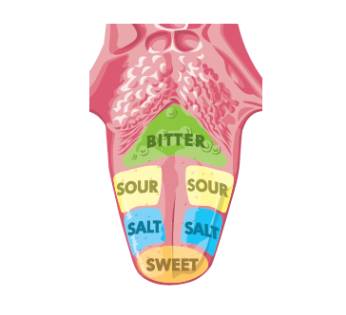
Traditionally, when we study the four elements of taste, they are presented as follows:

Tastes on Tongue, photo (R) http://leavingbio.net/the%20senses_files/the%20senses.htm


There is no need to explain these. We are all familiar with them.

Today, taste specialists have added a fifth to that list: umami. Taking its name from Japanese, umami is a pleasant savory taste occurring naturally in many foods, including meat, fish, vegetables and dairy products. It is subtle and blends well with other tastes to expand and round them out. Some researchers, such as Adam Hadhazi, think there are even more tastes to be added.

But in reality, taste or flavor involves all five senses. Yes: sight, hearing, touch, taste and smell.

5SensesSheperd


Some researchers, such as Gordon M. Shepherd, would have it that what we most often refer to as “taste” is in fact flavor, and that flavor is largely made up of what he calls “retrosmell”. It is true that in the past we were taught that primates lost touch with their sense of smell when they started holding their heads upright, far from the ground, and standing on two legs instead of four, but today, that is called into question. Shepherd is the one who challenged this long-held premise back in 1974.

Retronasal smell, also known as “retrosmell” or “mouth-smell”, is an addition to the conventional teaching about taste; it is an integral part of flavor. Retrosmell takes place while you’re chewing and swallowing, as well as while you’re breathing. When you exhale, you draw “chemicals released by the food into the nasal cavity, where they are sensed and transmitted to the brain,” says Medical Discovery News. It is what defines the aftertaste that stays in your mouth after sipping a good wine, for example.

I have lived much of my life through what I like to call “full-sensory taste.” Of course, I consider sour, sweet, bitter and salty, but the other senses also come into play. When I read a good restaurant menu, I focus on individual ingredients and can quite easily conjure up the final combination of flavors, i.e. taste, a dish will have. Just as when I shop, I first see the ingredient, then I might imagine how it sounds in my mouth (yes, I really do that). This is usually a function of whether it is crunchy, in which case it makes quite a lot of noise, or whether it is creamy, and spreads over the tongue and goes down smoothly (umami comes in here). I even like to touch certain ingredients, such as tomatoes, to see whether they are firm or mushy, or cereals, to make sure they’re still crisp.

Neurogastronomy by Gordon J. Shepherd, photo by http://www.cupblog.org/?m=201112


On principle, I always smell vegetables and fruit before buying. Though today’s strict standards and expectations on the part of customers are largely visual, looks do not tell the entire story. A tomato might well be perfectly red, round and standard in size, but I know from experience that real tomatoes that you pick from the garden are not perfect to look at, and it is not this so-called “perfection” that determines the taste. As my best friend’s mother used to say, “Art is never perfect, and don’t forget that.” And thus is nature.

Multi generation family smelling tomatoes


From my grandfather’s garden I bring in another element of taste: nostalgia. I will forever associate the chlorophyll-filled smells of the fresh vegetables and fruits from his garden with a sense of well being. I remember getting on my knees to smell the tomatoes before I picked them, like an animal with my nose close to the vines. After we’d finished harvesting for the day, with sweat on our brows, I’d sit on his lap under the shade of trees and drink ice water, his blue eyes sparkling in the sun as he laughed. I’d often hear my horse neighing in the field next door, see the horse barn in the distance. The stifling heat of the Kentucky sun would from time to time be broken up by a breeze that came suddenly out of nowhere, lasting only a few seconds, just enough to help evaporate our perspiration and bring with it a waft of horse sweat. When we finally carried our harvest into the house, my grandmother would start preparing dinner, changing those fresh scents of chlorophyll into seasoned scents of the traditional Kentucky dishes she mastered. The ensemble — all the sensory input and all the partly subconscious thoughts and feelings from these days gone by — is my definition of a perfect time and place and world, as simple as that may seem. It was a full-sensory experience, existing now in the form of subconscious associations that are totally my own, associations that form my likes and dislikes.

Lemonade stand, photo (C) common license http://maddycakesmuse.blogspot.ch/2010/04/nostalgic-memories-lemonade-stand-for.html


When I walk through the farmers market, I use all my senses and some nostalgia too. First I look, filtering out what experience tells me is not fresh or of good quality. I “create” dishes in my mind, “using” the ingredients that seem freshest and imagining the flavor of those ingredients together. It is a full-sensory experience. I imagine the crunchiness, unctuousness, aroma, the acidity, saltiness, bitterness, sweetness, umami. Associations from the past often rush in without me being conscious of them. It’s like a sentence from Proust. In one very long sentence, Proust takes you through all the senses and sometimes back again, and time is suspended, letting them all blend together to make an astonishing whole that is forever your own. This passage, quoted often, is just one example:

And soon, mechanically, weary after a dull day with the prospect of a depressing morrow, I raised to my lips a spoonful of the tea in which I had soaked a morsel of the cake. No sooner had the warm liquid, and the crumbs with it, touched my palate than a shudder ran through my whole body, and I stopped, intent upon the extraordinary changes that were taking place. . . . I was conscious that it was connected with the taste of tea and cake, but that it infinitely transcended those savors, could not, indeed, be of the same nature as theirs.

Proust is, of course, referring to the conscious pleasure that comes through the senses, to which is inevitably added subconscious associations.

To sum it up, when you bite into a potato chip, you start by looking at it to see if it looks appetizing. When you put it in your mouth, you feel the crunch with your teeth (touch) and you hear it. You taste the salt; you taste and smell the flavoring, and it may well have a retrosmell, a taste/smell that lingers in the back of your mouth, even after you’ve swallowed it. All this gives you an idea, often formed from the past, of what it should be like in your mouth. If that “historical” expectation is not met, you probably won’t like the chip.

Original flavor Popchips

From this perspective, flavor in the traditional sense of the word takes on a whole new complexity. The traditional elements of flavor are combined with signals and messages from the other senses and with nostalgia and other subconscious associations. Our likes and dislikes become, like Proust’s description, a rich, unique blend of all these elements. There are indeed objective elements, but these cannot stand alone in producing the astonishing whole that is your own, which no one in the world has perceived exactly in the same way. Tasting becomes a moment suspended in time, a moment that is yours and yours only.

In this series of articles, we will explore these elements of full-sensory taste.


References:

Retrosmell, by Pamela Bond

Medical Discovery News

Umami

Taste: Surprising Stories and Science about Why Food Tastes Good, by Barb Stuckey

The Science of Taste and Flavor, Library of Congress

Neurogastronomy: How the Brain Creates Flavor and Why It Matters, by Gordon M. Shepherd

Oxford Journal: Chemical Senses, “Odour-evoked Autobiographical Memories: Psychological Investigations of Proustian Phenomena,” by Simon Chu and John J. Downes

“Yummy Umami: The 6th Basic Taste?,” by Diana Zahuranec


Never miss a post
Name: 
Your email address:*
Please enter all required fields
Correct invalid entries

UA-21892701-1