Food Art: Italian Apricot Gelato, food photography by Giulia Scarpaleggia

Published by Wednesday, July 24, 2013 Permalink 0


//


We’d like to welcome Italian food photographer Guila Scarpaleggia, who runs the website Juls’ Kitchen, to The Rambling Epicure.

Guila Scarpaleggia’s Bio

My name is Giulia Scarpaleggia, I am an optimist, a dreamer, a 28 29 30 31 year old full-time herbs blogger. I am the one who appears in the reflections of the spoons in this blog’s photos and – I have to admit it – I am also responsible for the missing slices in each cake.

I live in Tuscany, in the countryside between Siena and Florence, I dream of a blooming vegetable garden, though I am content with a brick wall crammed with pots of fresh herbs and a February 2009 plant that suffers from the heat.

Continue Reading…

Never miss a post
Name: 
Your email address:*
Please enter all required fields
Correct invalid entries

Grandma’s Green Walnuts meet Nonna’s Nocino

Published by Wednesday, July 24, 2013 Permalink 0


//

Gareth Jones, food and travel writerGrandma’s Green Walnuts meet Nonna’s Nocino

by Gareth Jones

A tradition so richly experienced on the festival eve of San Giovanni, better known as “St. John’s,” in Spilamberto (near Modena – Emilia-Romagna) had me transported me back to innocent childhood days in Wales. Straying across the fields from the parental home I’d live more in my grandmother’s old cottage – hers was once an inn on a long forgotten village green and was built using the village stocks as a door lintel into her dining room. So the story goes, mature hardwood had been short for building and everything was saved – including timbers from broken ships, recognised even then by their Lloyd’s number carved or burnt into the side. Grandma had one of those too – and stirring tales of bravery at sea to go with it.

Around this time (end-June/early-July), yet knowing nothing then of the Saint’s Day, we would pick ‘green’ walnuts – green skinned and soft before their hard shells formed below the fleshy outer casing.

IMG_1083 - Copy (263x350)


These we would wash, dry and prick with a pin several times per nut. They would then be cooked in salted water, dried and let to cool before being set to cure in a vinegar sweetened with brown sugar – or perhaps it was molasses given the rich, dark colour. There are recipes going back through the ages – even Hannah Glasse in her The Art of Cookery wrote three. One each for ‘green’, ‘white’ and ‘black’ walnuts.

There would surely have been mace and nutmeg in Grandma’s recipe as there were her two favourite spices – she wore a whole nutmeg about her person, swearing it would ward off arthritis. At over 86 years when she died, arthritis was never one of her ailments.

Continue Reading…

Never miss a post
Name: 
Your email address:*
Please enter all required fields
Correct invalid entries

The Kitchen at the Center of History: An Interview with Rachel Laudan

Published by Tuesday, July 23, 2013 Permalink 0


Rachel Lauden, author of Cusine & Empire

Rachel Laudan, author of Cuisine & Empire

by Elatia Harris

All photos courtesy of Rachel Laudan

Rachel Laudan is the prize-winning author of The Food of Paradise: Exploring Hawaii’s Culinary Heritage and a co-editor of the Oxford Companion to the History of Modern Science. In this wide-ranging interview, Rachel and I talk about her long-awaited book, Cuisine and Empire: Cooking in World History. Paul Freedman remarks that  the book is “a riveting and unique combination of culinary ideas and exposition on the materiality of eating.” Other delighted early readers include Anne Willan, Naomi Duguid and Dan Headrick. As a food lover, a cook, a world traveler or a student of cultural history, you might have asked yourself: What is this thing called food? If so, this is the book for you. 

Laudan_Cuisine-001

ELATIA HARRIS: To begin, I would love to know what was involved in the transition from historian of science to historian of food. I can remember when there was no such academic discipline as food history, and I’ll warrant so can many readers.

RACHEL LAUDAN: I can remember when there was no such discipline as science history! I think history is the thread through my life. Growing up in history-heavy Wiltshire, I felt I had to escape the weight of the past. I studied the key historical science, geology, at university, although this was almost unheard of for a woman. I then changed to history and philosophy of science and technology. Then to history of food. History is my way of understanding things.

A lot of food writing is about how we feel about food, particularly about the good feelings that food induces. I’m more interested in how we think about food. In fact, I put culinary philosophy at the center of my book. Our culinary philosophy is the bridge between food and culture, between what we eat and how we relate to the natural world, including our bodies, to the social world, and to the gods or morality.

EH: Your earlier book, The Food of Paradise, necessarily dealt with food politics and food history. So many cultures were blended into local food in Hawaii. I treasure that book — almost a miniature of what you’re doing in Cuisine and Empire.

RL: Well, thank you. It came as a surprise to me that I had a subject for a book-length treatment of something to do with food or cooking — as interested in the subject as I certainly was. The only genre I knew was the cookbook, and I am not cut out to write recipes.  

It was prompted by a move to teach at the University of Hawaii in the mid-1980s. I went reluctantly, convinced by the tourist propaganda that the resources of the islands consisted of little more than sandy beaches and grass-skirted dancers doing the hula.

I couldn’t have been more wrong. These tiny islands, the most remote inhabited land on earth, have extraordinarily various peoples and environments. And as to the food, I was humiliatingly lost. The first morning in the office, Barbara Hoshida, the department secretary, held out a plate of golf-ball sized fried, well, fried whats? “These are Okinawan andagi,” she explained, “They’re just like Portuguese malasadas.”  I didn’t dare ask what Portuguese malasadas were. 

Before I knew it I had a stack of essays on the foods of the three diasporas that had ended up in the islands: the taro-based cuisine of the peoples from the South Pacific (the Hawaiians); the rice-based cuisine of the Asians (Koreans, Han and Hakka Chinese, Japanese, Okinawans, and Ilocanos and Tagalogs from the Philippines); and the bread-based cuisine of the Anglos (British and Americans).

Continue Reading…

Never miss a post
Name: 
Your email address:*
Please enter all required fields
Correct invalid entries

Bookings for Celebrate the Chartres Festival of Lights & Autumnal Equinox with a Food & Wine Tasting Masterclass

Published by Tuesday, July 23, 2013 Permalink 0

We are having technical difficulties with the booking system for the Chartres Festival of Lights & Autumnal Equinox with a Food & Wine Tasting Masterclass. If you want to reserve, simply click on the Paypal button at the top right of  the sidebar to pay by Paypal, or the  blue Contact Us button at the top right of the home page to pay by bank transfer. We’ll send you all the necessary details. Sorry for the inconvenience!


Chartres Cathedral Lighted, creative common license, photographer unknown


Never miss a post
Name: 
Your email address:*
Please enter all required fields
Correct invalid entries

Culinary Chemistry: The Truth about Soy Sauce and Gluten Content

Published by Tuesday, July 23, 2013 Permalink 0

Food writer, Culinary Chemistry, The Rambling Epicure

Culinary Chemistry: The Truth about Soy Sauce and Gluten Content

by Jenn Oliver

From the archives

Soy Sauce and Umami: Now a Staple in Western Cuisine

Soy sauce has been around as a staple condiment in Asian cuisine for thousands of years, used for flavoring all manner of dishes and foods. It’s prized for the “umami” character it gives to the overall taste of a dish, and can have a wide range of subtle notes beyond the obvious saltiness.


For example, Japanese tamari is often wheat free (I stress, not always). Still, most of the soy sauces available on store shelves contain wheat. While there is some debate as to exactly how much gluten from wheat survives the fermentation and processing, the Celiac Disease Foundation Foundation does list soy sauce as a food that may contain gluten and needs to be verified. The Mayo Clinic also states that soy sauce should be avoided unless otherwise labeled. There is also considerable anecdotal evidence of experiences of people being “glutened” by soy sauce (my husband included). Therefore, for those who must eat gluten free, soy sauce immediately becomes a food that requires attention and is a complicated topic.

Continue Reading…

Never miss a post
Name: 
Your email address:*
Please enter all required fields
Correct invalid entries

Green Leafy Foods Can be Dangerous to Your Health

Published by Saturday, July 20, 2013 Permalink 0

//

The Rambling Epicure, Editor, Jonell Galloway, food writer.

Green Leafy Foods Can be Dangerous to Your Health

From the archives

by Jonell Galloway

The Huffington Post says Americans have reason for their eternal, but ever-changing, plate fright. In the US, E. Coli, Salmonella, Norovirus and numerous other bacteria and viruses are found in food more often that we might think.

Peppery pourpier from the Lake Geneva region.

The Center for Science in the Public Interest (CSPI), a non-profit, consumer advocacy group, often referred to as the “American food police”, says the leafy greens we are encouraged to eat every day can in fact be the most dangerous of all vegetables. Over the last 20 years, there has been some 363 outbreaks and 13,568 illnesses due to green leafy foods alone.

According to Dr. Steve Swanson of the U.S. Centers for Disease Control, lettuce is only second to ground or minced beef in cases of E. Coli. Snopes gives a good explanation of how all this happens, and many suggest that we lay off pre-washed, bagged salads until more is know about exactly how greens are contaminated.

One thing is almost sure: one of the reasons salad is particularly more high risk than other vegetables is that we most often eat it raw. So wash your salad, and then wash it again. Don’t just spray it. Wash it in a basin or sink, and change the water several times.

The other high risk food is eggs, numbering 352 outbreaks in the US in the last 20 years, with 11,163 cases of illness reported.

If we want to make a “top ten” list, the other culprits, in order, are tuna, oysters, potatoes, cheese, ice cream, tomatoes, sprouts and berries.

Continue Reading…

Never miss a post
Name: 
Your email address:*
Please enter all required fields
Correct invalid entries

Elements of Wine 1: Acidity

Published by Friday, July 19, 2013 Permalink 0


James Flewellen photo, wine tasting expert, The Art of Tasting Wine: James FlewellenElements of Wine 1: Acidity

by James Flewellen

Acid in wine, photo by http://www.google.fr/imgres?client=firefox-a&sa=X&rls=org.mozilla:en-US:official&biw=1280&bih=527&tbm=isch&tbnid=0zJCNLOa8IHTHM:&imgrefurl=http://www.winesandwinemaking.com/acidity_wine.php&docid=lU-Yh-q_nn94CM&imgurl=http://www.winesandwinemaking.com/images/wine_acid.jpg&w=300&h=240&ei=la7pUYacEo7E4gSelYHYBA&zoom=1&iact=hc&vpx=768&vpy=131&dur=2051&hovh=192&hovw=240&tx=72&ty=94&page=1&tbnh=145&tbnw=178&start=0&ndsp=20&ved=1t:429,r:5,s:0,i:97 (CC)


Naturally occurring acids are present in all fruits. The major acids found in grapes are malic and tartaric. When the grape juice is fermented to become wine, these acids survive the fermentation process to end up in the bottle you’re about to open.

Acidity in wine plays a very important role in the overall structural harmony of the drink. Acid is required to balance residual sugar and alcohol. It also cuts through oils and fats present in food, providing the ideal palate cleanser between mouthfuls. An ideal wine will have a balanced acidity. Too much acid and the wine can be unpleasantly tart or sharp tasting; too little and it can taste ‘flabby’ or not as refreshing as it should.

Acids in Wine, photo by http://www.google.fr/imgres?client=firefox-a&hs=dae&sa=X&rls=org.mozilla:en-US:official&biw=1280&bih=527&tbm=isch&tbnid=m1IjwTmnK6CrlM:&imgrefurl=http://www.internationalwineguild.com/ask-iwg-acidity-and-organic-pairings&docid=foKo3uUC8dXDiM&imgurl=http://www.internationalwineguild.com/uploads/Image/AcidsinWine.jpg&w=669&h=1000&ei=f7LpUavBI-Sg4gTb9ICoBw&zoom=1&iact=hc&vpx=1057&vpy=4&dur=12309&hovh=275&hovw=184&tx=133&ty=143&page=1&tbnh=143&tbnw=103&start=0&ndsp=21&ved=1t:429,r:20,s:0,i:145 (CC)


The way in which we perceive acidity varies according to a number of factors. Different grape varieties will have different concentrations of acids, thus can taste more or less ‘acidic’. The climatic conditions throughout the growing season are also important – insufficient warmth or sunlight will mean the acids in the grapes do not ‘soften’ enough before harvest and the resulting wine may be tart and unpleasant. Other organic chemicals in the wine will also influence how we perceive acidity. Two wines may have the same pH, yet a wine with residual sugar that masks the immediate effect of the acid will come across as less acidic initially.

English: Diagram of the wine grape berry.

Diagram of the wine grape berry.


Practices in the winery can also change the acidity in the final wine from that we might expect in the initial grape juice. Malic acid can be converted to lactic acid, which comes across as a ‘softer’ acid on the palate, through a malolactic conversion by certain species of bacteria. Most red wines undergo a malolactic conversion (sometimes called a ‘fermentation’, though this is not strictly correct), which is why red wines often taste softer than whites.

In general we can register acidity by a tingling sensation on the sides of our tongue. Another approach is the ‘saliva response test’ – how quickly saliva returns to our mouth immediately after spitting or swallowing the wine. This can give us clues as to the grape variety, the growing conditions and the sorts of food the wine might pair well with.


Join James Flewellen and Jonell Galloway at “Celebrate the Chartres Festival of Lights & Autumnal Equinox with a Food & Wine Tasting Masterclass” in France from September 19 to 22, 2013.

_________________________

Dr James Flewellen is a biophysicist at the University of Oxford. James learned his trade in taste through the Oxford Blind Wine Tasting Society, of which he was the President from 2010-2012. During his term, he represented Oxford at many international blind tasting competitions – twice winning the prestigious ‘Top Taster’ Award in the annual Varsity blind tasting match against Cambridge University and captaining winning teams in competitions throughout Europe.

One of James’s goals is to clarify the complex and hard-to-navigate world of wine for both novice and experienced tasters. He applies his scientific training to wine education, illuminating concepts of taste, tannin and terroir in an approachable, entertaining manner. James runs wine education courses in Oxford through the Oxford Wine Academy and is completing the WSET Professional Diploma in Wine and Spirits. He is the regular wine writer for The Rambling Epicure and is the founder of The Oxford Wine Blog. He is also currently co-authoring The Concise Guide to Wine and Blind Tasting – a book surveying the wine regions of the world and how to blind taste.


Never miss a post
Name: 
Your email address:*
Please enter all required fields
Correct invalid entries

Switzerland: Valais Apricots and 10 Things You Can Do with Them

Published by Friday, July 19, 2013 Permalink 0

Switzerland: Valais Apricots and 10 Things You Can Do with ThemJonell Galloway, Spontaneous Cuisine, Mindful Eating, Slow Food, Editor of The Rambling Epicure

by Jonell Galloway

Height of season for Valais apricots, considered best in Switzerland

It is the height of the Valais apricot season, I thought it timely to offer you a few ideas for using them while they’re ripe and ready.

Choosing your apricots

apricots_valais_tree_switzerland_suisse_geneva
Photo courtesy of Ellen Wallace.

The first and most important thing is to buy tree-ripened apricots. By definition, this means local ones, since ripe apricots are soft to the touch and do not travel well.

If you plan to eat them fresh, they should be soft, but not blemished or bruised. The riper they are, the more flavorful they are.

If you are using them for cooking, the riper the better, and you can even get by with blemishes as long as they are not rotten-looking. As a general rule, the softer the sweeter.

You will often see crates of extra-ripe apricots discounted in farmers markets. Look them over, and if there are not too many black or rotting ones, they are actually the best for cooking purposes, especially for jams, cakes and sauces.

Recipe ideas for apricots

Note: With all apricot recipes, the amount of sugar used depends on the acidity of the apricots. The acidity depends on the ripeness, origin and variety. With so many factors coming into play, taste tests are indispensable and the quantity of sugar should be determined by taste, using the quantities given here as a guideline.

Continue Reading…

Never miss a post
Name: 
Your email address:*
Please enter all required fields
Correct invalid entries

Simon Says: Daily Food Quote, July 19, 2013

Published by Friday, July 19, 2013 Permalink 0


Simon de Swaan, Simon Says, The Rambling Epicure, Switzerlandby Simon de Swaan

Food doesn’t exist, but can only be invented. And reinvented. –– Joyce Carol Oates

Joyce Carol Oates is an American author, born on June 16, 1938, in Lockport, New York. She developed a love for writing as a child, going on to become an acclaimed, bestselling scribe known for her novels, stories, poetry and essays, and winning the National Book Award for 1969’s them. Oates has had a prolific, award-winning career, with books such as A Garden of Earthly Delights, We Were the Mulvaneys, Blonde, The Gravedigger’s Daughter and The Accursed.

————————–

Simon de Swaan is Food and Beverage Director at the Four Seasons hotel in New York City. He studied at the Culinary Institute of America and has an incredible collection of antique cookbooks and books about food and eating, from which he often posts interesting and unusual quotes. In his column Simon Says, he gives us daily food quotes from his tomes.


Never miss a post
Name: 
Your email address:*
Please enter all required fields
Correct invalid entries

Summertime: Best Time to Start a Diet

Published by Wednesday, July 17, 2013 Permalink 0

The Rambling Epicure, Editor, Jonell Galloway, food writer.Summertime: Best Time to Start a Diet

by Jonell Galloway

Summertime is diet time: an approach to changing your eating habits

A diet rich in soy and whey protein, found in ...

Summertime is the best time to start changing your eating habits. Fruits and vegetables are tastier and cheaper in summer, so your tastebuds are satisfied, but with fewer calories and more fiber. You can take advantage of this time to start a lifestyle change that will not only help you lose weight, but hopefully change your way of eating for the rest of your life.

The Swiss seem to have understood some of the basic rules better than others, according to our 27 July 2009 article on the Swiss preference for fresh fruit and milk products.

Fill the kitchen with fruit

Start getting getting as much as possible of your sugar intake from fresh fruit.

Berries of all kinds are among the highest in fiber, and can be used in a variety of ways. In the Lake Geneva region, we have the good fortune of having berries from May and sometimes until late October or the beginning of November. If you want to nibble on something, you can just pop a handful in your mouth.
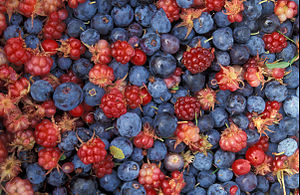
Alaska wild berries from the Innoko N...


Cherries are also easy to just pop in your mouth when you want to nibble on something.

According to WebMD, tomatoes and peppers of all colors are both in the fruit family. They are rich in Vitamin A, Vitamin C, and lycopene, and low in calories. Munch on them to prevent snacking on processed foods.

Fruit is also full of water, so it makes you feel full, without eating any fat or carbohydrates.

There are endless combinations of fruit to throw into your smoothies or that can be mixed with fiber-filled granola, muesli or oats, along with some plain, sugar-free yogurt.

Make it a goal to eat fruit in some new way every time you need a sugar fix. A bowl of berries or cherries can even replace a glass of red wine, from time to time, and your tastebuds might not even notice it.

Fill the kitchen and fridge with fresh local vegetables

Buying local ensures that vegetables are fresher and therefore more flavorful.

An emphasis should be put on vegetables that can be eaten raw, and that are easy to prepare.  If you have a little hunger pang, gnaw on a baby carrot stick, or slice a sun-ripened tomato, and add salt and a trickle of olive oil. If you can get your hands on some sun-ripened cherry tomatoes, you can pop them in your mouth like potato chips.

Cherry pepper poppers


Make a big batch of gazpacho. It keeps for a few days and the high water content makes you feel full. It is also full of fiber and vitamins.

In the Lake Geneva region, we are blessed with a plethora of wild greens. In farmers markets, you can choose your own and make your own mesclun, or mixed greens, or buy the farmers’ own mixes , which vary from one producer to another. This wide variety lets you make a different kind of salad every day. The varieties are endless. But one warning about salads: the bad fats and calories are in the dressing, so try and make your own dressings, using good oils, yogurt, tahini, crushed tomatoes, etc.

The fact that summer vegetables are full of flavor will help you get in the habit of munching on vegetables instead of fat-filled snacks like chips and sausages.

Fill the fridge with plain yogurt and cottage cheese

Yogurt is full of iodine, calcium and phosphorous, and loads of other nutrients. According to The World’s Healthiest Foods, the Journal of the American Dietetic Association found low-fat, calcium-rich foods such as yogurt, which has the same fat content as the milk in your region (this varies from place to place, but hovers around 3.8% in the Lake Geneva region), to have a negative correlation with body fat. They encourage parents to accustom children to incorporate it into their diet in light of growing problems of obesity in children.

"Eat More Cottage Cheese...You'll Need Le...


The 11 January 2005 issue of International Journal of Obesity found that obese adolescents who eat more than 3 yogurts a day in conjunction with a lower-calorie diet and an increase in physical activity lost 22% more than adolescents in a control group which only cut back on calories and had a lower calcium intake. Increased calcium intake can also help reduce weight, in particular abdominal fat.

Yogurt is also a source of low-fat protein, just like beans and cottage cheese. Both yogurt and cottage cheese open the door to endless combinations of fruit. The old-fashioned Mayo clinic diet of cottage cheese and a peach is not all that bad if your peach is ripe and juicy. Cottage cheese can also be doctored with herbs, to make it a savory dish.

Start getting your protein from low-fat sources

Gradually start replacing your sources of protein with yogurt, cottage cheese, eggs, beans, or soy-based products. Try making your smoothies with soy milk from time to time. Quark has more fat than the other options, but is still a low-fat source of protein as long as cream has not been added to it (read the label and fat content).

The more fiber the better

The more fiber-filled food you eat, the fuller you will feel. Over the long run, you will eat less fatty food.

More fiber helps you cut down on carbohydrates, and start decreasing their intake in your diet.

Water, water, water: never enough

Fiber soaks up water, making your tummy feel full. In summer, you need more water anyway, so it’s a good time to get in the habit of drinking your eight glasses of water per day.

Take another look at the food pyramid and the USFDA guidelines for healthy eating

The old food pyramid.

The US Food and Drug Administration is full of good advice about how to intelligently read food labels and make your calories count. Print out the pyramid and tape it onto your kitchen bulletin board or refrigerator door. Print out the food guidance and diet articles, and study them from time to time.

MyPlate.gov chart

MyPlate replaces the old U.S. food pyramid


Unfortunately, their new food pyramid that came out earlier this year is totally color-coded and has no words because it is intended to be interactive, so I’m showing you the old one. Disabled World has added excellent explanations to the new one (it might be better to print theirs).

Eat 5 to 6 mini-meals instead of 3 large meals per day

Dr. Sue Cunningham from the University of Tennessee Health Science Center in the U.S. says that the human body is meant to be fed every 4 to 5 hours. Eating 2 or 3 mini-meals, consisting of healthy options, and 3 regular meals, in smaller portions, is therefore an ideal way to lose weight.

Continue eating out, but change your approach

When eating out, avoid ordering dishes with pastry, cream, and butter. Give preference to dishes containing lots of vegetables. Don’t hesitate to ask the server what is served with your dishes, and don’t hesitate to ask for side orders of vegetables and salads, even if they’re not listed on the menu. Skip the French fries and chips. Ask if you can replace them with salad or another vegetable. The more vegetables and salad, the merrier.

If you really can’t pass up dessert, try and choose fruit-based puddings, or homemade sorbets made with seasonal fruit. Don’t hesitate to ask if desserts are served with cream, whether they’re really sweet or rich, or any other question that might help you maintain your healthy ways. If you ask nicely and explain why you’re asking, servers rarely mind giving you advice about which desserts are healthier than others.

Cut down on carbohydrates

Winter vegetables tend to be higher in carbohydrates, so this approach to eating should by definition cut down your carbohydrate intake. Just remember to continue along the same lines once winter vegetables start again, and keep the level of carbohydrates in your diet low.

Give preference to the farmers market

The farmers market is a great way to give emotional support to these new eating habits. Take your camera along, and glory in the beauty of all the summer colors and beautifully stacked fruit and vegetables. Take your children along, and use the occasion to teach them why it’s better to eat fruit than artificially-flavored candy and show them the glories of summer as if it were an art show.

Change your supermarket buying habits

You might want to put a copy of the articles you’ve printed out in your pocket before going to the supermarket. That way you can read the labels on everything you buy and consult your list if you’re not sure whether an ingredient is good or bad. Sometimes just reading the label will scare you away from foods that are bad for you.

Photo courtesy of http://www.coachcalorie.com/where-do-you-shop-in-the-grocery-store/


Don’t even go to the danger zones in the supermarket: chips, traditional savory cocktail accompaniments, sausage, frozen pizzas, cakes, cookies and biscuits, candy, or anything else that might be on the bad list, just waiting to tempt you.

It’s probably not advisable to take your children to the supermarket with you if you’re trying to make a true lifestyle change. They risk leading you down the candy aisle.

Avoid processed foods containing bad fats and needless additions of sugar.

If you find reading labels tedious, it’s better to stick to unprocessed foods and buy as much as possible at the farmers market or in the fresh food department of the supermarket.

Give preference to good fats

Good fats include monosaturated fats, contained in nuts and avocadoes and in canola (huile de colza) and olive oils. Polyunsaturated fats are found in fish such as salmon and fish oil, as well as in corn, soy, safflower oil and sunflower oil (huile de tournesol). Omega 3 falls into this category.

Photo courtesy of http://adventuresinhealth.co.uk/2013/diet-and-nutrition/why-is-fat-bad-for-you-part-3/

Photo courtesy of Adventures in Health


Bad fats include saturated fats, found in all animal products, as well as in some oils, such as coconut (huile de coco) and palm oil (huile de palme), which are to be strictly avoided. Both these oils are a big favorite of processed food manufacturers.

Trans fats do not even occur in nature. Scientists invented them to make processed foods last longer. They are the favorite fat used in fast food, and are used to make most margarine.

Check out healthier products such as soy milk and different types of sugar-free, low-fat, milk-based products such as the fresh cheese Serra, found in the Lake Geneva region, and delicious when eaten with berries, or cottage cheese, good with peaches or apricots. Herb-flavored cottage cheese is now available in almost all supermarkets. Traditional cheeses with higher fat contents are not advisable.

Good-Fats-Vs-Bad-Fats


Stock up on olive oil. Try to replace butter with olive oil as often as possible. For example, it’s wonderful on toast with a clove of garlic run over it, and it makes a tasty fried egg. If you want a more neutral taste, give preference to canola oil.

Gradually, you will realize that you are cutting down on bad fats — the trans fatty acids and saturated fats — and fat in general. You will gradually train your stomach not to crave foods full of bad fats and carbohydrates

Towards a new way of eating

This is not a diet in the traditional sense of the word. It is just a way of improving your eating habits so that you are healthier and feel better about yourself. No matter what your current eating habits, you will almost surely lose a little weight if you follow these guidelines. In addition, you’ll feel better about yourself, because you’ll feel you’re taking good care of yourself.

If your BMI is significantly higher than the average for your age and sex, it is best to consult a doctor.

Please note that these are guidelines for healthy eating. I am NOT a dietitian. Medical advice is required for serious weight problems.


Continue Reading…

Never miss a post
Name: 
Your email address:*
Please enter all required fields
Correct invalid entries

UA-21892701-1