Culinary Travel: Jonell Takes a Jaunt to Petite France in Strasbourg, a photo essay

Published by Thursday, June 6, 2013 Permalink 0


Culinary Travel: Jonell Takes a Jaunt to Petite France in Strasbourg

Husband Peter and I recently took a jaunt to Strasbourg with our German “family”, the Joerchels, to eat in a cozy little bistro in the heart of Petite France, the canal district of Strasbourg. Here’s a sample of the architecture and atmosphere of Petite France.


Never miss a post
Name: 
Your email address:*
Please enter all required fields
Correct invalid entries

Food Art: The Incredible Sensuality of Lemons and Pomegranates, painting by Gerard van Honsthorst

Published by Thursday, June 6, 2013 Permalink 1


Gerard van Honsthorst was born in Utrecht in the Netherlands in 1590, the son of a textile painter and tapestry cartoonist. Like many Dutch painters of his day, he studied in Italy, where he became known as Gherardo delle Notti, or “Gerard of the Night Scenes,” because his figures often depicted dark figures in the night.

Van Honsthorst was apprenticed to Abraham Bloemaert, the most celebrated master in Utrecht, with whom he probably made the trip to Italy between 1610 and 1615. During his stay in Italy, Van Honthorst was influenced by Caravaggio, who was at his height. He copied his technique and spread it in the Netherlands. His school is referred to as the Utrecht caravaggists.

The main body of his work consists of commissions for religious paintings, many from his Italian period, such as The Beheading of St. John the Baptist (S. Maria delle Scala, Rome), Christ Before the High Priest (c. 1617, National Gallery, London), and the Supper Party (1620, Uffizi, Florence), all nocturnal scenes.

Van Honsthorst was appointed dean of the Utrecht painter’s guild in 1625 and remained in office for many years. Van Honthorst’s fame soon spread, and in 1628 he was invited to work in London at the court of King Charles I, but returned in less than a year.

He married Sophia Coopmans in 1622 and died a rich man in 1656.


Never miss a post
Name: 
Your email address:*
Please enter all required fields
Correct invalid entries

The Top 10 Restaurants in French-Speaking Switzerland

Published by Wednesday, June 5, 2013 Permalink 0

I compiled this list of the top 10 restaurants in French-speaking Switzerland from the March 28, 2013, issue of the French-language magazine L’Hebdo.

  1. Hôtel de Ville – Benoît, Crissier
  2. Domaine de Châteauvieux, Satigny
  3. Hôtel Terminus – Didier de Courten, Sierre
  4. L’Ermitage de Bernard Ravet, Vufflens-Le-Château
  5. Le Pont de Brent, Brent
  6. Le Cerf, Cossonax
  7. Hôtel Beau-Rivage, Le Chat Botté, Geneva
  8. Hôtel Beau-Rivage, Anne-Sophie Pic, Lausanne
  9. Georges Wenger, Le Noirmont
  10. Denis Martin, Vevey

English: Logo of the Swiss magazine L'Hebdo Fr...

Never miss a post
Name: 
Your email address:*
Please enter all required fields
Correct invalid entries

Food Art: The Incredible Sensuality of a Lemon, a still life painting by Ralf Heynen

Published by Wednesday, June 5, 2013 Permalink 0


Ralf Heynen is a contemporary still life and portrait painter from the Netherlands.

The incredible twists of the lemon peel bring a particular energy to this painting. Although it appears to be simple, the lemon peel is hanging on to the pulp of the lemon itself for dear life, just by a string. Meanwhile, the lemon is staid, still, unflinching in its almost perfect roundness. It looks heavy and sure of itself as compared to the peel, which is thick and rough and “struggling” to wrench itself from the body of the fruit or “mother”.

Click here to see more of Ralf’s work.

Never miss a post
Name: 
Your email address:*
Please enter all required fields
Correct invalid entries

Food Art: Polpo / Octopus, food photography by Alessandro Boscolo Agostoni

Published by Wednesday, June 5, 2013 Permalink 0

This photo appears in Alessandro’s ongoing exhibit, Italian Food Rambling, on this site.


Bio of Alessandro Boscolo Agostini

Bilingual English/Italiano

My first love for photography started with a little theft: as a little boy I stole my father’s Vöiglander and I started taking pictures on my own, just using my instinct. At that time my father’s camera seemed to me the best camera possible in the whole world, until I reached junior high school and I gave it up for a Bencini all my own. But my little theft came all back to me; my girlfriend to whom I had lent my camera never gave it back to me: that can be considered petty theft, no?

Growing up, I robbed again: in high school I stole time I might have devoted to photography and dedicated myself to my other passion, music. I studied drums and played jazz music. But it was just an infatuation, because I went back to my first love and never left it again. And as a pledge of love, I gave up my history studies in college, causing great distress to many people, but not to myself.

Continue Reading…

Never miss a post
Name: 
Your email address:*
Please enter all required fields
Correct invalid entries

A Mesolithic Dinner: Food, Wine and Art by Jane Le Besque

Published by Tuesday, June 4, 2013 Permalink 0

by Jonell Galloway

A Mesolithic Dinner: Food, Wine and Art by Jane Le Besque
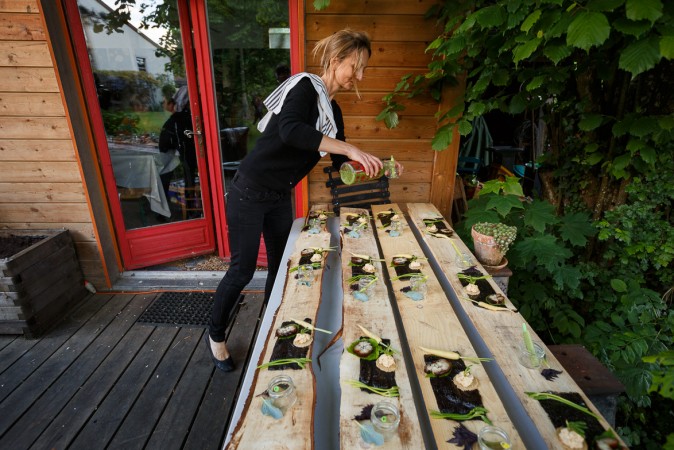
 

Jane Le Besque hosted a “mesolithic dinner” on June 30, 2013, in her home in the Pays de Gex just over the border in France, an event sponsored by Slow Food Geneva. The dinner was cooked using ancient flavor combinations and techniques, and served on split logs onto which slate plates were placed and used as plates.

What Food Did Jane Le Besque Serve at Her Mesolithic Dinner?

Although Jane’s dinner was labeled “Mesolithic”, it was indeed much more than that. She covered the evolution of food from the post-glacial hunter-gather periods, through the Mesolithic and Neolithic, and going on to the Ancient Greeks and Romans, centering on Europe.

It started with the Mesolithic era, with an assortment of coastal and lake fish, eel, root vegetables and wild greens. The meal then slipped in to the Neolithic era with galettes made from ground lentils, peas and barley, served with spit-roasted boar. The menu ended with an Iron-Age “travelers pack” of dried fruits and dried-porridge slices fried in cumin and butter. The Bronze Age brought blue cheese and butter.

Drinks consisted of mead, more often referred to as “honey wine,” more in the style of the ancient Greeks and Romans than of more ancient peoples, and beer.

What is the Mesolithic?

As a reminder, the Mesolithic Age refers to the pre-agricultural period between 10,000 and 5,000 BCE in Europe, and variations of this period in other parts of the world. The term “pre-agricultural” is key in understanding what ingredients were available. The three terms paleolithic, mesolithic and mesolithic refer to what is generally called the “Stone Age,” i.e. the post-glacial hunter-gatherer period, when humans started to use stone tools and food was gathered rather than farmed.


During the early Stone Ages or paleolithic (2.6 million years ago to around 10,000 BP), humans used some stone tools and utensils, but many tools were made from organic matter such as bone, fibers, and wood. Hunting and gathering were the chief ways of providing food. During the neolithic, starting around 10,200 BCE and ending between 4,500 to 2,000 BCE, depending on the location, we saw the beginning of farming. The mesolithic overlapped the other two ages, once again, at different times in different places. Metal tools brought these three Stone Ages to an end.
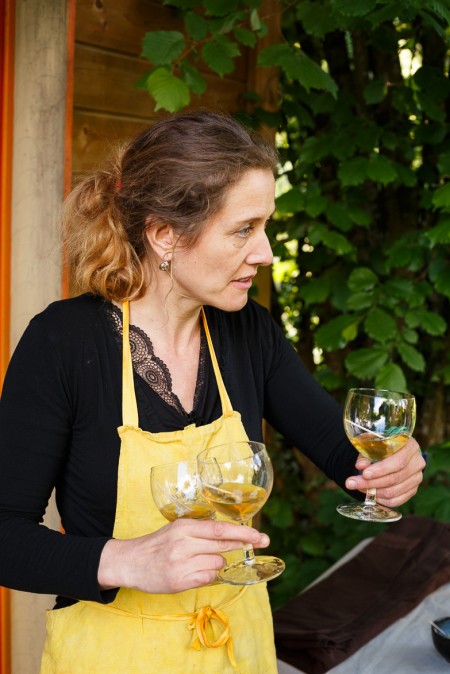
Jane Le Besque, artist and Mesolithic chef, serving mead


Early Stone Age cooking was generally on leaves or directly over the embers, although clay cookware has recently been found in China dating from 19,2000–20,000 years ago, during the ice age. Stone Age plates usually consisted of a rock or other flattish surface found in nature, such as the flattened split logs Jane used in the same manner as we use wooden tables today. Earthenware did not appear on the dinner table until much later.

What Did You Usually Eat at Mesolithic Dinners?

What did they eat? Pretty much whatever they found and killed that was edible: meat, fish, wild plants. The specifics of this depended on the location, climate and season. Meals included the day’s finds. This might consist of berries, wild greens and other wild vegetables and plants.

Meat and later fish were not an everyday affair. They were difficult to come by and difficult to preserve, depending on the location (salt was found in Romania as early as 10,000 years ago). Stone  Age people ate very little grain, since agriculture didn’t exist yet. Hazelnuts and other nuts were often roasted, and stored for winter. Wild boar was common; dairy products and cheese were on the menu, although a limited variety.

About Jane Le Besque

Jane Le Besque lives and works with her family at the foot of the French Jura, a few minutes from Geneva, in the foothills of the Jura mountains.

She was born in England and has a Breton grandfather, hence the name. Since graduating from Birmingham Art College in 1986, she continued her studies at l’Ecole des Beaux Arts in Paris. She afterwards lived and worked in Toulouse, London, and now outside Geneva.
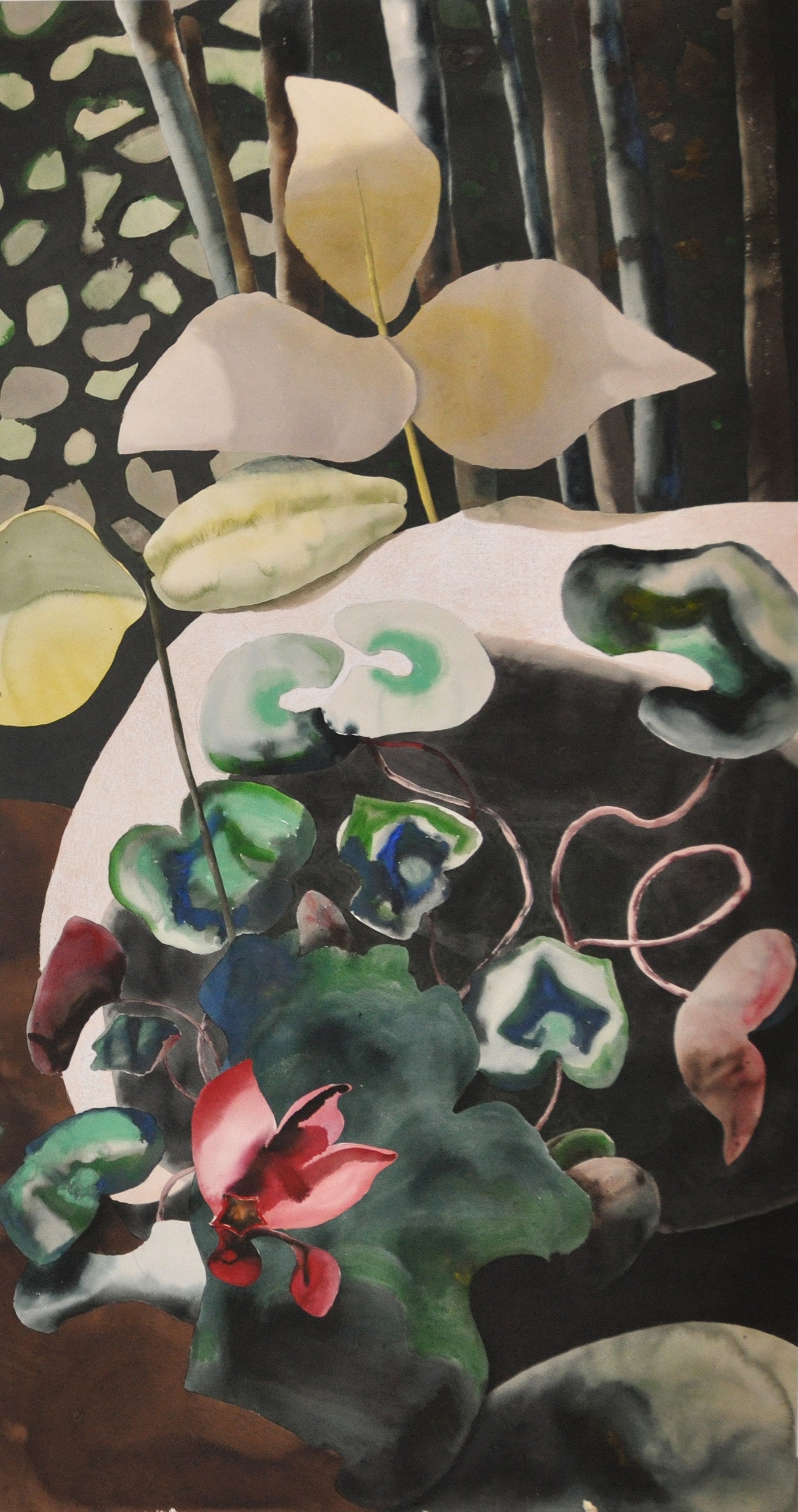


Jane has always painted. She is her happiest walking through the woods and gathering berries, mushrooms, acorns, flowers and leaves to use in her cooking and painting.

One might say Jane has been interested in mesolithic cooking even before she learned the word. As a child, she spent her time gathering the wild things she now uses in her paintings,  making dresses out of them.

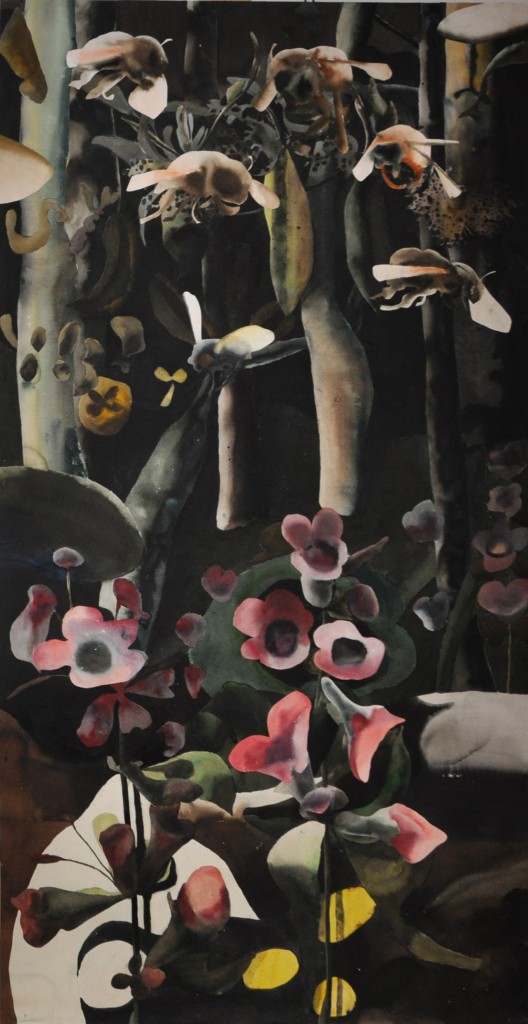
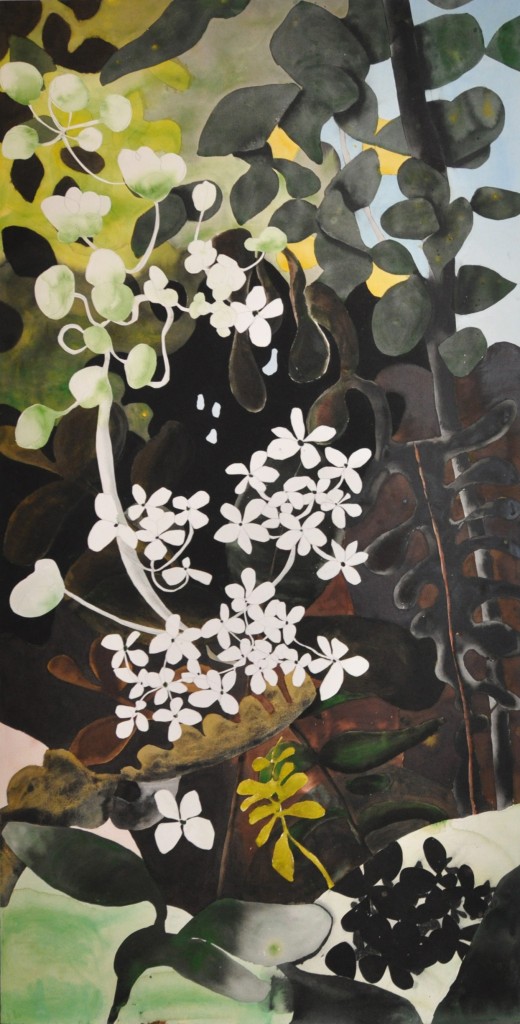
Her paintings are an intense reflection of her “gatherer” spirit. The Mesolithic dinner was held in her studio, lined with her paintings of flora of all types.



Never miss a post
Name: 
Your email address:*
Please enter all required fields
Correct invalid entries

Culinary Travel: Jonell Eats her Way through Mannheim, Germany

Published by Sunday, June 2, 2013 Permalink 0

Culinary Travel: Jonell Galloway Eats her Way through Mannheim, Germany

Photos from my culinary travels in Mannheim, Germany. Mannheim is not known for its cuisine, but it is known for its white asparagus, just like in Alsace. So we took a jaunt to the farmers market and bought the choicest spears from a vendor who sells only white asparagus. The Mannheim cheesecake we bought in the market is the best I’ve ever eaten.

Never miss a post
Name: 
Your email address:*
Please enter all required fields
Correct invalid entries

Switzerland: Geneva Restaurant Suggestions

Published by Sunday, June 2, 2013 Permalink 0


//


by

Jardins de Brunswick (in front of Le Richemond), rue Adémar-Fabri 7, 1201 Geneva. +41 022 731 60 16. Open 07H15 to 22H00 Mon. thru Wed, 07H15 to 24H00 Thurs. and Fri., and 10H00 to 24h00 on Saturday. Closed Sundays. info@cottagecafe.ch, www.cottagecafe.ch

When you have to meet someone near the quai du Mont-Blanc or in the Pâquis neighborhood, this is a great stopoff if you don’t have the pocketbook for the more upscale Richemond and Beau-Rivage venues right behind it. Plus, it is in a beautiful setting, right smack in the middle of the Brunswick gardens.

It’s nice in both summer and winter. The terrace is spectacular, of course, and you even get glimpses of jet d’eau from time time. Inside, it’s cozy and funky.

Breakfast includes birchermuësli, homemade jams and freshly squeezed juices. They have a daily lunch menu, serve pastries in the afternoon, and tapas starting at 18h00.

There is a selection of good quality local wines by the glass or bottle, along with some wines from other places.

Quirinale

Rue de la Rôtisserie 6, 1204 Geneva. +41 022 748 48 48

I’ve only had the truffle pizza, which is the house specialty, but I have been dreaming of it ever since.

Emmanuel de Savoie is part owner I hear.

Great central location, chic and full of jetsetters, and a little pricey if you eat a 3-course meal with wine. They do have lunch specials however, and that truffle pizza . . .

La Terrazza

Route de Florissant 51, 1206 Geneva. +41 022 345 56 00. Open for lunch and dinner. Closed Saturday and Sunday.

I discovered this almost hidden Swiss-style café-restaurant many years ago on my treks back and forth to the Beaulieu clinique.

Mr. Borella started as waiter at the Lion d’Or during its golden age. He later set out on his own and has been in this same location for about 25 years. Mrs. Borella cooks and Mr. Borella serves. They are from the Dolomites, so they cook hardy, traditional dishes, as well as some well turned-out Swiss classics.

The price is about as right as you can get, and they buy all their ingredients from local producers. The tomatoes taste like tomatoes and the salads, well they come straight from Chapuis.

Nologo Restaurant

Rue de Fribourg 11, 1201 Geneva. +41 022 901 03 33. Open Mon. thru Fri. lunch and dinner, Sat. dinner only. Closed Sundays. resto@nologo.ch, www.nologo.ch

This is Japanese food like you eat in Japan, not adapted for Western tastes. Wonderful mixtures of unusual flavors and ingredients like you’d never find in your regular, standardized-menu sushi bars.

Don’t count on them being friendly, just think about what’s on your plate. Tiny space so reserve well ahead.

Never miss a post
Name: 
Your email address:*
Please enter all required fields
Correct invalid entries

Apollonia Poilâne and the Making of the Paris Poilâne Bread “Empire”

Published by Saturday, June 1, 2013 Permalink 0

by Jonell Galloway

Did the French Bread Revolution start with Poilâne Bread?

The familiar French word for friend, “copain,” means “to share bread with each other.”–Apollonia Poilâne, now head of the Poilâne bread “empire”

A humble baker called Pierre Poilâne started a bakery on the rue du Cherche-Midi in Paris in 1932. The 6th arrondissement was not a chic neighborhood at the time; penniless artists lived there, and often paid Poilâne in paintings. We might ask, did the French Bread Revolution start here at 8 rue du Cherche-Midi?

Poilâne used stoneground, unprocessed, whole-grain flour and sourdough starter, baking his bread in a wood oven — then unheard of in Paris, the capital of the baguette. It was unfashionable to eat anything other than white bread. This way of thinking was further reinforced by WWII, during which the French had no choice but to eat heavy, dark bread. He continued making it nonetheless, says France Today, and today, Apollonia Poilâne, Pierre’s granddaughter, runs the bakery.

Until 2007, she studied at Harvard and ran the bakery at the same time, having her personal supply of bread sent to her every week in Boston.

Note the elegant “P” carved into the top of each loaf.


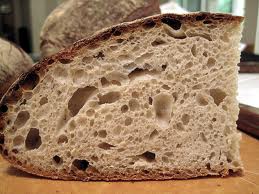
This now-classic Poilâne loaf has a hard, crusty outside and a firm, dense crumb on the inside. It can keep be eaten fresh for up to 5 days after baking, after which it can be toasted.

Inside Pain Poilane bread creative common license http://www.thefreshloaf.com/keyword/pointeacalliere


Pain Poilâne or miche, meaning “round loaf,” weighs in at around 2 kg / 4.4 lb. The recipe is secret, and it is not a whole-grain bread in the traditional sense of the word. Environmentally correct, pesticide-free varieties of wheat are grown and stored. They are then stone-ground, thus preserving the wheat germ. Stone grinding makes it possible to eliminate any coarse bran that might contain impurities.

Poilâne flour is what is called in French farine biseor wheatmeal — a brown flour intermediate between white flour and wholemeal flour — which maintains a higher nutritional value than white flour. Levain or sourdough starter and salt from the salterns of Guérande, a swamp of salt water in Brittany.

Pierre brought this type of bread with him from his native Normandy, where loaves were large and round, in the style of what the French now call “country bread.” Today, it is distributed all over the world.

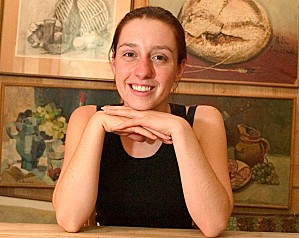
Apollonia Poilâne, current owner of Poilâne bread bakeries


Pierre’s sons Lionel and Max took over the bakery in 1970. Just like Apollonia, they had learned bread baking by working right alongside their father, and continued the tradition of the original round loaf marked with the signature “P.” They eventually took separate paths, with Lionel keeping the original bakery started by his father, and Max going off on his own to start a bakery under his own name, Max Poilâne. In Paris, people have long discussions over which of the brothers makes/made the better bread, since both have continued to bake their father’s signature recipe.

Lionel Poilâne is better known outside France, since he grew the original family business, making it into an international name. This growth was made possible by his excellent teaching skills and his embracing of modern developments in the industry, such as the use of machine kneading, while at the same time maintaining his father’s philosophy of each baker following and taking responsibility for his or her loaves from start to finish. He referred to his concept as “retro-innovation.”

Lionel and his wife died when their helicopter, piloted by Lionel, crashed in 2002, leaving behind daughters Athena and Apollonia, the latter who is now following in her father’s footsteps. She started running the bakery on graduation from high school.

In this video, Martha Stewart visits the Poilâne bakery in Paris and learns about the bread making process in an interview with 22-year-old Apollonia Poilâne when she was still at Harvard. Click here to watch the video interview of Apollonia by Martha Stewart herself.


Martha Stewart

The offiical Poilâne site lists a number of recipes, for making and using some of the Poilâne bread and pastries.


Poilâne Bakeries

8 rue du Cherche-Midi, Paris 6th arrondissement
Tel. +33 (0) 1 45 48 42 59
 
49 bld de Grenelle, Paris 15th arrondissement
Tel. +33 (0) 1 45 79 11 49
Open on Sundays
 
38 rue Debelleyme, Paris 3rd arrondissement
Tel. +33 (0) 1 44 61 83 39
Open on Sundays
 
46 Elizabeth Street, London SW1W
Tel. +44 (0) 207 808 4910


To read more about the French Bread Revolution, see also (bilingual in French and English):

The Revolution of French Bread Baking (part 1), by Jean-Philippe de Tonnac

The Revolution of French Bread Baking (part 2), by Jean-Philippe de Tonnac

Book Review: Jean-Philippe de Tonnac’s “Dictionnaire Universel du Pain” or Universal Dictionary of Bread, by Jean-Philippe de Tonnac

The 7 Lives of Bread: Pascal Auriac, master bread baker in Laguiole, a hidden corner of France, by Jean-Philippe de Tonnac

Never miss a post
Name: 
Your email address:*
Please enter all required fields
Correct invalid entries

Daily Food Quote: Mahatma Gandhi on Food and God

Published by Friday, May 31, 2013 Permalink 0

by Jonell Galloway

To a man with an empty stomach food is God.–Mahatma Gandhi

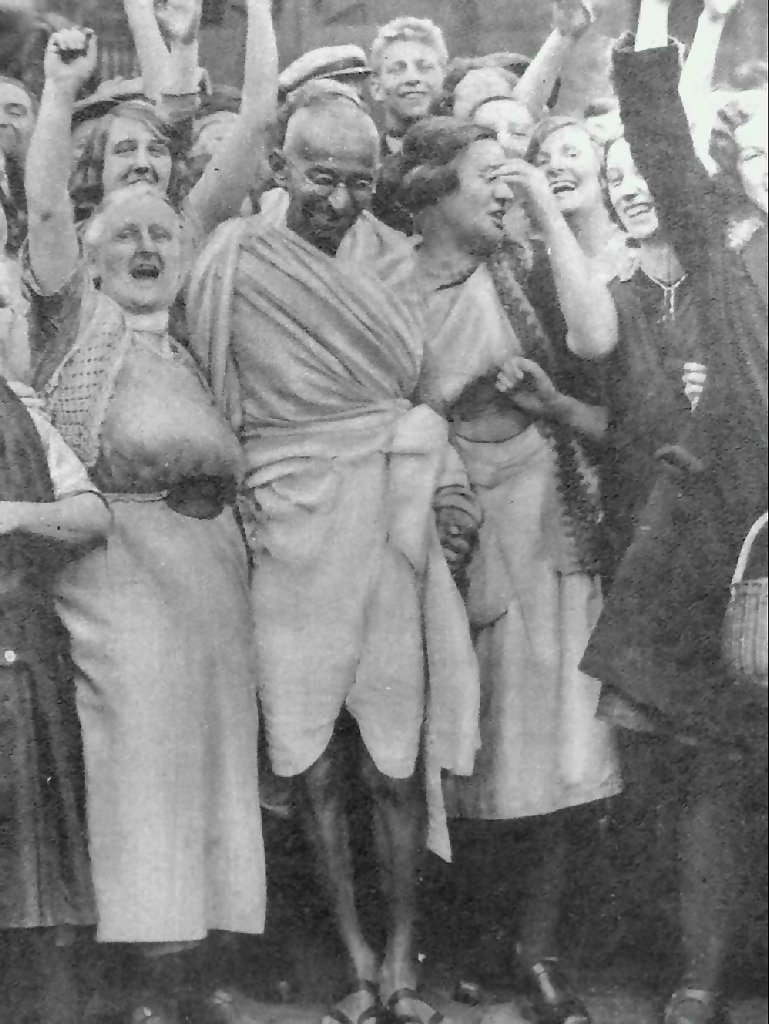
Mahatma Gandhi with textile workers at Darwen,...

Mahatma Gandhi with textile workers at Darwen, Lancashire, England, September 26, 1931.


Mohandas Karamchand Gandhi, more commonly known as “Mahatma Gandhi,” was born on October 2, 1869, in Porbandar, India. He studied law and became a defender of Indian rights both in India and South Africa, where he lived and worked for some 20 years. His method of opposing British rule and treatment was through mass non-violent civil disobedience, which has made him a model for peaceful revolution around the world.

Gandhi believed in living a simple life. He wove and made his own clothes, was a vegetarian and used traditional Indian fasts both for self-purification and protests against British discriminatory legislation against Indians. His philosophy of life and political “action” remain a beacon of hope for oppressed people around the world.


Never miss a post
Name: 
Your email address:*
Please enter all required fields
Correct invalid entries

UA-21892701-1