America is the only country to provide food aid in the form of food, says The New York Times

Published by Sunday, April 28, 2013 Permalink 0

by Jonell Galloway

Common sense might well tell you that it is more likely that the food really gets to the country in need of aid if you send it in the form of food and not dollars. According to more than 30 studies, the custom of “shipping food overseas in American-flagged vessels is inefficient, costly” and even harmful to the very communities the U.S. is trying to help. This information is supported by experts, who say this manner of distribution drives down the price of local produce by as much as fifty percent. The U.S. is the only country to give food aid in this manner, and Obama is proposing change that could matter.

Click here to read The New York Times editorial.

Official photographic portrait of US President...

Official photographic portrait of U.S. President Barack


Never miss a post
Name: 
Your email address:*
Please enter all required fields
Correct invalid entries

New on The Rambling Epicure: List Your Real Food or Photo Blog

Published by Friday, April 26, 2013 Permalink 0

by Jonell Galloway

We’ve just created a widget in the right-hand sidebar that allows all real food sites, blogs and readers to enter their URL on our list of visitors, whether it be a recipe, photo, news, farming, or other real-food related site. All you need to do is enter your RSS feed URL. Sign up soon so we can form a community of like-minded people!

From artsy

Photo courtesy of Ilian


to philosophical and literary

The Unsettling of America: Culture & Agriculture

The Unsettling of America: Culture & Agriculture (Photo credit: elycefeliz)


Continue Reading…

Never miss a post
Name: 
Your email address:*
Please enter all required fields
Correct invalid entries

MarketDay: End of April in Swiss Farmers Market, a Photo Essay, by Jonell Galloway

Published by Friday, April 26, 2013 Permalink 0
Never miss a post
Name: 
Your email address:*
Please enter all required fields
Correct invalid entries

Kentuckian Bill Sanders’ Extra Virgin Olive Oil Named “One of the Best Olive Oils in the World”

Published by Tuesday, April 23, 2013 Permalink 0

by Jonell Galloway

Native Kentuckian from Maysville, Bill Sanders has spent a lifetime training his taste buds and nose. A graduate of the University of Kentucky, Sanders went on to study law at Salmon P. Chase College of Law in Cincinnati, Ohio, embellishing his résumé with other studies of quite a different nature: sensory evaluation of olive oil and professional wine studies at Culinary Institute of America.


Sanders started Crush and Press in January 2009, financing it through a Kickstarter campaign to which I gladly donated.  The olive oil quickly took off, and has already received mention as “one of the best olive oils in the world.” This olive oil, Sanders Fresh Press, received the mention.

Congratulations, fellow Kentuckian!


Never miss a post
Name: 
Your email address:*
Please enter all required fields
Correct invalid entries

The Rambling Epicure Made Loads of New Friends at the Wendell Berry Conference 2013

Published by Tuesday, April 23, 2013 Permalink 0

by Jonell Galloway

“A Rambling Epicure”: a short article about my work

One great thing about spending 3 days with a group of like-minded people, who have come from all over the country (and Switzerland) to pay homage to their “spiritual guide”, Wendell Berry, is that the audience is already filtered, and you can be sure to meet people you can relate to and that you will stay in contact with.

Wendell Berry speaking in Frankfort, Indiana

Wendell Berry speaking in Frankfort, Indiana


Such is the case with Elias Crim, a native Texan who spent “several good years studying classics and medieval Italian at U.C. Berkeley before wasting several more years in financial journalism around Chicago.” Crim has also written for The American Scholar, The American Conservative, the Washington Times and The Chicago Observer.

This is the only photo ID I could muster up and I think it rather amusing.


He also runs a website, Solidarity Hall, which he describes as “as a hospitable old hostelry, a mental oasis in the deserted landscapes that surround us. We no longer have the coffeehouses of eighteenth-century London, where Samuel Johnson and his friends said more of substance in an hour than our blogs today could manage in a week. Nor do we have a local culture of pubs such as Chesterton’s Old Cheshire Cheese, where friendship could flourish easily, even amidst clashing opinions.” I thoroughly recommend that you take a look and start a conversation of your own.

Elias was so kind to publish this article, “A Rambling Epicure,” about my work after the Wendell Berry conference. I invite you to take a look.

Start here and then continue on Solidarity Hall:

Jonell Galloway is surely the only person from Hardinsburg, Kentucky, to ever study Sanskrit. But that’s secondary. More important is the way this spiritual daughter of Wendell Berry has developed the Rambling Epicure, an encyclopedic and literate website which describes itself thusly: “A gastronome’s guide to mindful eating. A serious approach to real-food shopping, cooking, and dining.”

Click here to continue.


Never miss a post
Name: 
Your email address:*
Please enter all required fields
Correct invalid entries

Paris to the Pyrenees: David Downie Eats His Way Down the Way of St. James, Interview by Elatia Harris

Published by Monday, April 22, 2013 Permalink 0


Left: Cross with Rocks, copyright Alison Harris.
Right: Forest Cathedral, copyright Alison Harris


Interview by Elatia Harris

Their 50th birthdays in sight, the acclaimed travel and food writer David Downie, and his wife, the photographer Alison Harris, decided that trekking from Paris to Spain, would be just the thing. They are based in Paris, so the Way of St. James, for a millennium one of the world’s most celebrated pilgrimage routes, was right at their back door. Neither Alison nor David is religious — the classical pilgrimage experience was not what they were seeking. What were they seeking? Renewal, changed perspectives. Perhaps to test themselves, over 72 days and 1100 km of — at times — very rough terrain. And thereby hangs a tale.

Paris to the Pyrenees: A Skeptic Pilgrim Walks the Way of St. James, launches this week. Scroll to the end to see book tour information. Permission to post on TRE the superb photos from the book was granted by Alison Harris.


ELATIA HARRIS: There has been a lot in the news lately on pilgrimage, however one understands the phenomenon. People who do it talk about needing to lose their routine and find themselves. Most set out alone, meeting others en route. You and Alison started together.

DAVID DOWNIE: Our choice to walk together happened organically. I had planned to do this on my own. Alison came along to keep me out of trouble. If you ask her, she’s likely to say it was her idea about 25 years ago, when she suggested we do something similar.

EH: Readers cannot but wonder how they would hold up, in these circumstances. I pictured a long leisurely walk through a French countryside movie. Cows, chateaux…oh, perhaps a few mildly strenuous stints.  I was so wrong. This was a test of all your combined resources. It would be for any couple. 72 days of togetherness and real physical hardship. And you had already spent years collaborating on your books.

DD: Like some old couples, we have merged in mind and spirit — if such a thing exists — while remaining very different people, and very pig-headedly independent. So, while we were together on the pilgrimage, we were often apart both in our mental spheres and physically. Alison stopped constantly, ran ahead, took detours, disappeared, got lost—often, though not always, in pursuit of a photograph. She probably walked twice as many miles as I did. By the end of the pilgrimage, my regard for her had only deepened. I can’t speak for her, of course.

Continue Reading…

Never miss a post
Name: 
Your email address:*
Please enter all required fields
Correct invalid entries

The Big Apple on a Budget: Tocqueville, a New York Restaurant Review

Published by Thursday, April 18, 2013 Permalink 0

The Big Apple on a Budget: Tocqueville, a New York Restaurant Review

by Leonor White

I discovered Tocqueville last New Year’s Eve, and it’s been my go-to place ever since when special people come to town. My latest visit to this understated yet elegant Union Square New American-French restaurant with a French flare and amiable, well-trained servers brought rave “reviews” from the entire table.

Seven days a week, the restaurant offers an excellent value prix fixe menu ($29). The menu consists of three courses — appetizer, main course and dessert — as well as an amuse-bouche and interesting housemade bread à go-go. In the evening, Tocqueville offers a pre-theatre menu at $44, as well as a full à la carte menu. We went for Saturday lunch, when the restaurant was unusually uncrowded, so we sat on the ground floor from where we could enjoy a view of the restaurant’s refined décor. The dining room was pleasantly quiet with tables set widely apart and well-designed acoustics, allowing us to concentrate on the marvelous food and have good conversation too.

As mentioned, the prix fixe offers three courses, with two choices per course. From the appetizers, everyone tried both offerings, the “creamless sunchoke soup” and the “salad with mushroom terrine”; both dishes were flawless, the flavors bold but balanced. Prior to our appetizer arriving, we were served an excellent “roasted asparagus and beets” amuse-bouche, a great start to our culinary adventure. Throughout the lunch we were also able to enjoy an assortment of homemade bread, namely, brioche, focaccia filled with olive chunks, and crusty, white sourdough with homemade butter (you heard me right, homemade).

Continue Reading…

Never miss a post
Name: 
Your email address:*
Please enter all required fields
Correct invalid entries

The Art of Tasting Wine with James Flewellen: Spotlight on Pinot Noir

Published by Monday, April 15, 2013 Permalink 0

The Art of Tasting Wine with James Flewellen: Spotlight on Pinot Noir

by James Flewellen

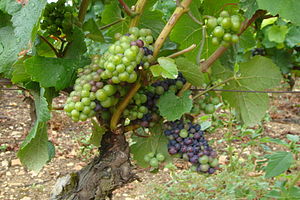
Pinot Noir is a light-skinned red grape originating from Burgundy in its modern form. Although, the Burgundians have been working with Pinot for around a thousand years, so the term ‘modern’ should be taken with a grain of salt!


The grape typically produces light-bodied wines with aromas ranging from fresh red fruit (raspberry, strawberry, cherry) to black (blackberry, mulberry) depending on the local climate of the vineyard. Warmer sites tend to produce wines with ‘blacker’ and riper fruit flavours. Alongside the fruit, good Pinot exhibits a fresh minerally, or even pleasantly ‘grassy’ character – complemented by the grape’s naturally high acidity on the palate. With bottle maturation, the wine develops notes of mushroom and decaying autumnal leaves — expressed evocatively by the French term sous-bois — which translates as ‘forest floor’. The thin skins of the grapes mean that the wines are generally low in tannin, though tannins are usually very fine-grained and punctuate the wine sufficiently so it can be enjoyed with food.

Pinot Noir is a notoriously fickle grape and is very difficult to handle. Burgundy’s millennium of association with Pinot Noir means that it produces the best in the world — and that the Burgundian clones of the grape are ideally suited to Burgundy’s continental climate. Explaining Burgundy’s appellation system would take an entire post of its own, but there are two main subregions for Pinot Noir there: Côte de Beaune and Côte de Nuits. These are further divided into villages, which may be further identified by vineyard — and these can be classified as either Premier Cru or Grand Cru indicating the quality level of the grapes.

Pinot grapes in Burgundy going through the pro...

Continue Reading…

Never miss a post
Name: 
Your email address:*
Please enter all required fields
Correct invalid entries

Interview with Najat Kaanache, The Pilgrim Chef from El Bulli

Published by Wednesday, April 3, 2013 Permalink 0

Interview with Najat Kaanache, The Pilgrim Chef from El Bulli

One Woman’s Tireless Pursuit of the Whimsical Spirit of Food: An Interview with Najat Kaanache


IMG1895.jpg


1. Do you remember the moment when you became interested in food?

I was just five years old and my grandma finally trusted me to help make the bread. Each grain was so precious and I was as focused in the kitchen then as I am now!

I remember making bread with my mother and the respect she taught me for the whole process of growing and cooking nutritious food for the family. Simple, natural food was the standard at home. We were so poor that a small piece of hard, crusty bread with a bowl of lentil soup was a luxury. We grew almost all of our food on our property and only went into town to buy flour.

2. Who influenced you most and did they teach you about cooking and food?

Ferran Adria taught me to give my brain and my hands the freedom to create magical dishes. At el Bulli, we practiced the “art of doing” and everything Ferran has achieved came from hard work; none of his innovations was accomplished by accident.

3. Do you think with your taste buds?

I feel with them…my hands, eyes, heart and soul all have taste buds!

4. Where did you start your culinary studies (a little history)?

My first technical training was at Culinary School in Rotterdam, but I’d been butchering, foraging, harvesting, processing and cooking daily since early childhood. Food has always been my way of life.

5. At what point did you become interested in molecular cuisine?

I was working in Rotterdam when I started reading about Grant Achatz and Ferran Adria. I set my intention to do my next training with them, and although I knew it would be next to impossible, I worked every day to make it happen. I dreamed of making crazy sexy food and these two chefs introduced me to a new paradigm of creativity, using science and technology in the kitchen.

6. There are those who say molecular cuisine is unhealthy. What are your thoughts on this?

Food can be prepared in so many ways.  For me, it’s unhealthy to eat packaged and processed foods without regard for where they originate or what additives they contain. Molecular gastronomy is an experimental way of cooking, but master chefs use only the highest quality organic ingredients and utilize technology just to present the best of each product to the guest. This modern style of cooking really boils down to a measure of creativity, not health. The so-called “chemicals” used are very common, benign food-safe chemicals and only trace amounts are used.  What worries me are all the “natural” blueberry products that contain absolutely no blueberries, just Modified Corn Starch, High Fructose Corn Syrup, Partially Hydrogenated Soybean Oil, Red #40, Blue #1 and Blue #2!

7. You often talk about your dreams and how you are in the process of making them into reality. You seem to have already realized many of your dreams. Which ones do you still have left to fulfill?

I haven’t even started, but I have just a few humble dreams. I would love to be able to offer a perfectly ripe heirloom tomato to every child in the world who’s never had the chance to taste something so vital and naturally delicious.  I would also love to stop big multinational companies from mass-producing horrible GMO foods.

I dream of making “clean” food available for everyone, but for that to happen people have to take an active interest and demand to know how their food is made.  People will pay so much for a pair of shoes, a car or a handbag, and then they give so little thought and attention to the most important thing in their life, which actually becomes a part of their body, FOOD !!

8. You once told me you’d always been a nomad, even with your parents. Can you talk to us a little about that?

My soul was born free and I remain a free spirit, home for me is everywhere. I live simply and make my home anywhere I am. I learn from people and I always need new people around me. I need to see, feel and experience in order to understand the world in which I live. I’m from the Atlas in Morocco and I grew up between there and San Sebastian. I feel so fortunate for the unique mix of cultures I was exposed to throughout my life; it was just amazing.

9. You’ve done internships with many famous chefs I believe? Can you tell us about your adventures?

Each of them gave me all I needed to become the best chef I could be. Grant Achatz made me believe that I was not crazy with my focus and intensity in the kitchen.  Rene Redzepi made me believe that yes, I can create elegant, interesting dishes with just the products I had around in nature. I already knew that deep inside, but it was great to see it in the context of a three-star Michelin setting. Thomas Keller taught me that I was correct in having an insane sense of urgency, and being determined to execute perfection for each guest. And Ferran Adria gave me the chance to free my mind. I don’t have rules and regulations in my brain, only freedom. Everything I can visualize in my brain I can bring to life with my food. Once I’ve seen it in my brain, I just need to find the way to make it happen! That is the magic of creativity, freedom and hard work.

Another thing I achieved with Ferran Adria was to completely kill my ego. That’s perhaps the most special lesson he imparts on his chefs (we call them Los Chicos del Bulli – The Boys of el Bulli, most of whom started very young and spent over 20 years working side-by-side with him). These boys, now men, create magic with food and carry the “World’s Best” title, but they have absolutely no ego and nothing to prove; they simply are who they are…chefs.

Najat Kaanache
http://www.najatkaanache.com
The Pilgrim Chef  at http://elbulli-arco.blogspot.com
Facebook: http://www.facebook.com/NajatKaanache%20″
Twitter: @ThePilgrimChef http://twitter.com/#%21/ThePilgrimChef



Never miss a post
Name: 
Your email address:*
Please enter all required fields
Correct invalid entries

Food Poetry: Ancient Mexican Wisdom on Land, Plants and Self Development

Published by Monday, April 1, 2013 Permalink 0

Poem in English and Spanish

by Adriana Pérez de Legaspi

Care for things of the earth; cut some firewood, cultivate the earth, plant prickly pears, plant yucas.
You will have to drink, eat, get dressed.
Thereafter you will be standing, you will be your true self, you will walk on your own two feet.
Thereafter you will be well spoken of, you will be praised.
Thereafter you will be known.

Ten cuidado de las cosas de la tierra; haz algo corta leña, labra la tierra, planta nopales, planta magueyes.
Tendrás que beber, que comer, que vestir.
Con eso estarás en pie, serás verdadero, con eso andarás.
Con eso se hablará de ti, se te alabará.
Con eso te darás a conocer.


Never miss a post
Name: 
Your email address:*
Please enter all required fields
Correct invalid entries

UA-21892701-1