A Look at Slow Food’s Salone del Gusto, October 2012, in Turin, Italy

Published by Saturday, November 3, 2012 Permalink 0

by Diana Zahuranec

Salone del Gusto ended on Monday 29, but I can’t stop thinking about it.

Salone del Gusto, held in Turin, Italy, is a Slow Food biannual food fair and conference. To sum it up in these few words undermines everything else it is, too, and its importance as an event that brings together producers from all over the world. These are producers that grow ancient varieties of grain to save genetic biodiversity, that make Slow Food Presidia cheeses or salumi, that pipe their cannoli full of the freshest organic ricotta you’ve ever tasted, and whose principles and values align with your own and, it goes without saying, Slow Food’s – good, clean, and fair food for all.

The Slow Food mascot

For all things Slow Food, here are some links courtesy of Scoop.it and Slow Food. To understand a few of those words in the paragraph above, just look at the end of the article.

This year, Salone del Gusto was a marriage of the original Salone del Gusto, first held in 2006, and Terra Madre, first held in 2004. While both events had food artisans and producers from all over the world, different activities were held at each and were not all accessible to the public. Salone del Gusto focused more on the exposition and sale of high quality foods and products, while Terra Madre was a gathering of a network of food producers from around the world. Having never been to either of these before, I can’t offer judgment on the differences of before and after. What I would love to do is share my first-time impressions of this year’s.

To say Salone is a food fair means that, like your down-home county fair, the place is jumping with activity – with a few notable differences. The funnel cakes are replaced with French butter cookies in 20 different flavors, the groundhog whacking game is replaced with the foodie’s (divisive word, I know) form of fun, that is vertical Barolo wine tastings, and that feeling of riding the Zipper right after you eat your funnel cake is replaced by the feeling of pressing up against crowds right after you drink your Barolo wines.

Continue Reading…

Never miss a post
Name: 
Your email address:*
Please enter all required fields
Correct invalid entries

Slow Food’s Salone del Gusto 2012, Turin, Italy, photo essay 1

Published by Saturday, November 3, 2012 Permalink 0

by Jonell Galloway

I went camera-crazy at the Slow Food Salone del Gusto 2012 in Turin, Italy. Here are my unedited photos, part 1, documenting the incredible products available. The signs tell you where the product came from and give a full description in English and Italian. Watch the slideshow!

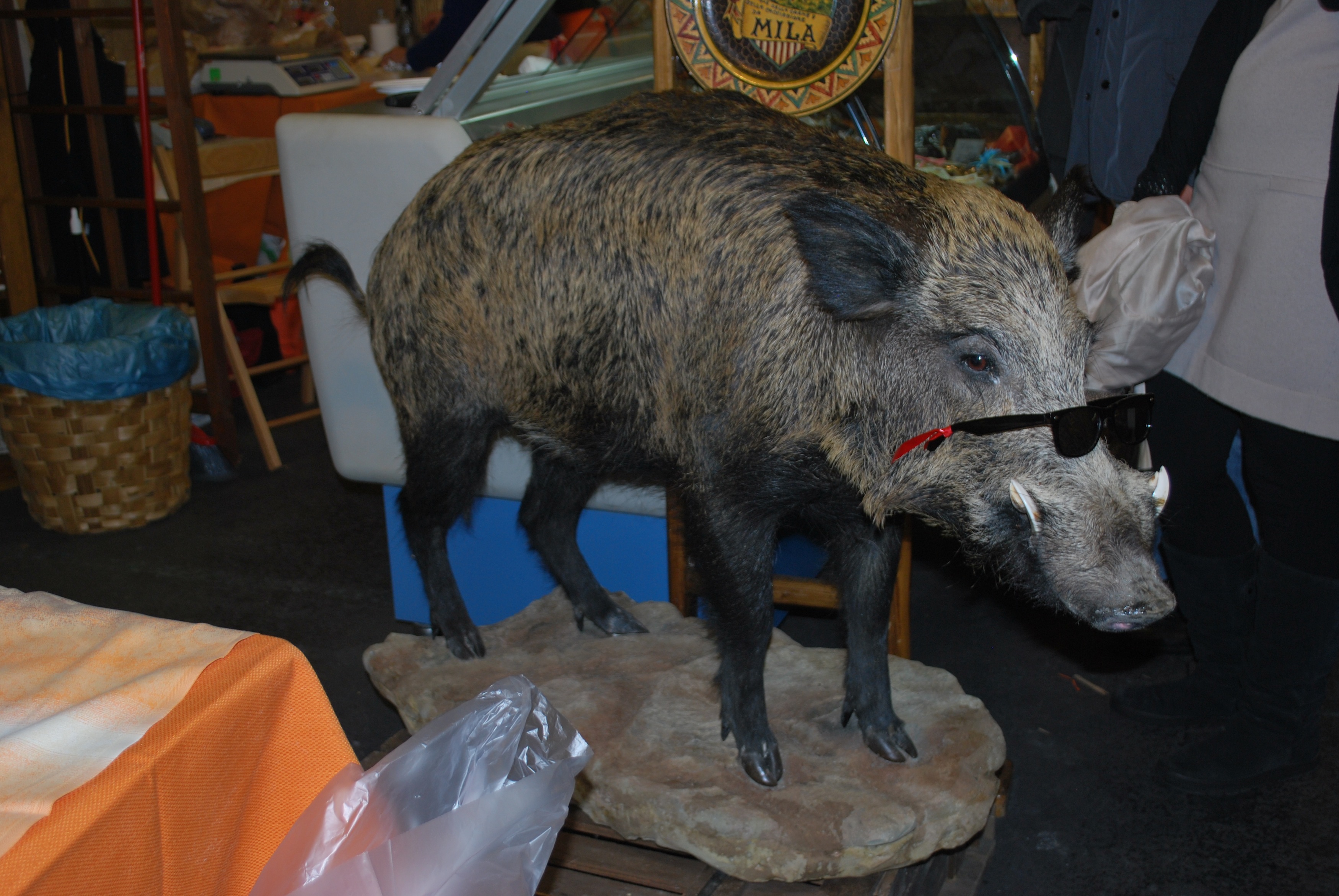
Wild boar with sunglasses, Piemonte,Slow Food Salone del Gusto 2012, Turin, Italy

Image 1 of 28

Never miss a post
Name: 
Your email address:*
Please enter all required fields
Correct invalid entries

Handmade Italian cheese from Tuscany at the Salone del Gusto 2012 in Turin, Italy

Published by Friday, November 2, 2012 Permalink 0


Related articles


Never miss a post
Name: 
Your email address:*
Please enter all required fields
Correct invalid entries

Beef Production in Feedlots – How we do it in Australia

Published by Friday, November 2, 2012 Permalink 0

by Amanda McInerney

I have no illusions. The majority of people do not think too hard about where their food comes from. There are lots of reasons for that – life can be a pretty distracting business for many and they just don’t need another thing on their plate (pardon my pun) to cause anxiety and emotional or financial stress. What concerns me, though, is that those who find their way to my site and others like it and actively choose to consider their food options do so from a well-informed foundation. To that end I always endeavor to make sure I am as well informed as possible about a subject before I start “blowing off “about it.


I’m a carnivore and a (very) small-scale Angus beef producer, so have a direct interest in how beef is produced in this country. My cattle live a very pleasant life indeed and their end is relatively quick and clean, but for some time now I’ve been curious about what happens to other cattle. While it would be nice if all livestock could avoid the industrial food system, this is unlikely to happen any time soon and I wanted to try to understand how the general beef production model works. These days we hear much that is negative in relation to U.S. feedlots, so I’ve been interested in learning about the conditions on Australian feedlots and comparing our system with the the US model. Recently, I have had several requests for information regarding the perceived difficulties of sourcing grass-fed beef and a query regarding the Australian commitment to corn crops and government subsidies of them, so clearly I’m not the only one who needs to become a little more well-informed on this subject.

There are quite a lot of clean, comfortable and slightly detached ways to go about researching a topic these days, but never let it be said that your trusty correspondent was reluctant to face up to the cold hard facts of life – which is how I found myself at one of Australia’s largest feedlots and processing plants just outside of Toowoomba in Queensland last week. I was pleased to be able to accept an offer from Meat & Livestock Australia to see, absolutely first-hand, exactly how feedlotting is operated here and, while it is a little tricky to use the word “enjoy” in this context, I certainly found the experience enlightening and even bracing.

Housing cattle in feedlots is an intensive animal feeding technique designed to fatten livestock and encourage the deposit of more fat in the beast’s muscles – known as marbling. There are approximately 600 accredited beef cattle feedlots in Australia, with over 95% family-owned and -operated. In the U.S. the feedlots are much, much bigger than any here in Australia, often holding 150,000 to 200,000 head of cattle. Beef City, the lot I visited, has a 25,000-head capacity and we have only one other which is larger than that in this country.

The fact is most Australian beef is grass-fed and even feedlot cattle spend 80-90% of their lives on grass, only being sent to feedlots for “finishing”.  Cattle are generally sent to feedlots when poor pasture quality during poor seasons or during the dryer winter months, and in southern Australia during the dryer summer months, can result in low weight gain and the need for feedlot finishing.  In comparison, U.S. beef cattle are introduced to a grain diet very early – indeed, some are weaned on to it – and generally spend a much larger percentage of their life confined in small feedlot yards.

As I’m sure many are aware, U.S. grain-feeding is heavily dependent upon a ration of GM corn by-products (obtained from ethanol production), with the addition of antibiotics to prevent the infections that will arise as a result of the stress placed on the beasts. Once again, this is not at all the case here.  Australian feedlots use a much more varied combination of wheat, barley and sorghum – all grains which cattle prefer to grass – and follow strict transitional protocols over a period of weeks to ensure that the beasts have no rumen problems from a sudden change in diet. Antibiotics are NOT used as preventatives here in Australia and are only ever introduced on direct evidence of infection.

Australian feedlots are regulated through the industry’s quality assurance program, the National Feedlot Accreditation Scheme which, in 1995, was the first agricultural quality assurance scheme introduced in Australia and means that every lot in the country is individually audited every year. Environmental aspects are of significant importance here in Australia, too, and all feedlots have to provide monitoring data on soil quality and water tables annually.

My own impressions of Beef City in no way contradicted any of these facts. I was one of a group who were visiting the lot as part of their training and we were taken through every single part of the operation. Nothing was hidden from us, no question went unanswered, and the only thing we were requested not to photograph was the actual kill in the abattoir – not an unreasonable request, I thought.

The cattle in the yards (which were ALL shaded) were content, relaxed, but alert and very curious about the visitors – just as my own cattle in the paddocks are. They are very inquisitive beasts and like to know what is going on. Another thing which is worth knowing about cattle is that they are highly “vocal” and leave you in no doubt if they are unhappy or distressed about something. There was not a murmur out of this lot – apart from the odd contented conversational lowing – and certainly not the calling I hear from mine if one or two of them become separated, or the anxious bellowing of the cows when the calves are separated from the herd.  If they were uncomfortable or distressed, they sure weren’t talking about it.

I’m not aiming to convert anyone with the above thoughts, nor am I posing as any sort of a mouthpiece for industrial agriculture – this is simply an issue which is of personal interest to me. As it turns out,  the facts are a good deal less confronting than I expected and I’m nowhere near as horrified as I thought I’d be.   Large-scale meat production not going to go away and, if we are going to eat it, there is no point in being squeamish about how it gets on our plates. As meat-eaters we have a responsibility to the beast that dies for our dinner and that responsibility includes treating it respectfully while it is alive. Of course, that will not happen in every case, but the standards which are in place are helping us get there. I believe that, as far as Australian beef production is concerned, we are on the right track.

 

Never miss a post
Name: 
Your email address:*
Please enter all required fields
Correct invalid entries

Switzerland: Raphael of Fribourg making Fribourg-style Swiss fondue using cheese he makes

Published by Friday, November 2, 2012 Permalink 0

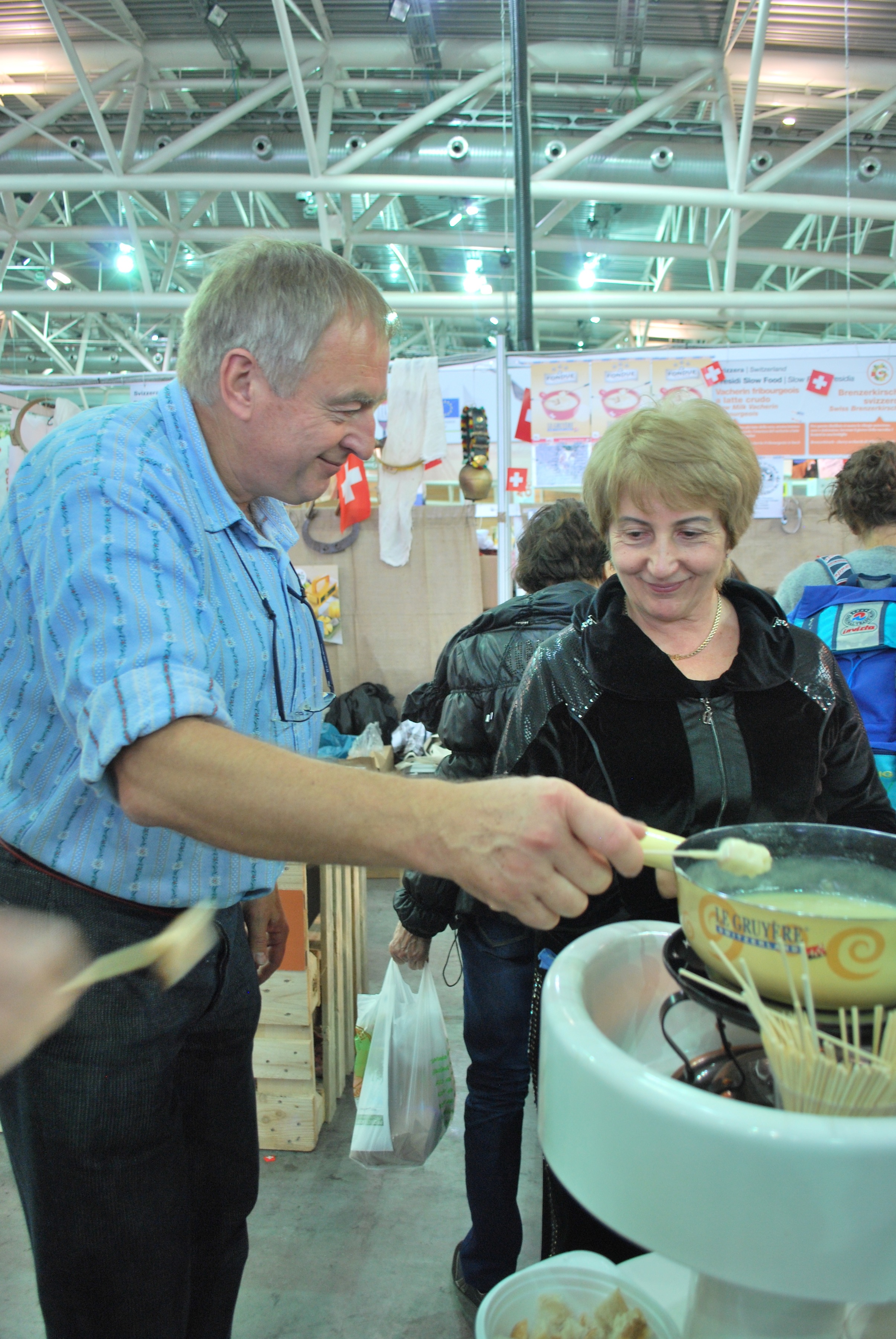
Fribourg-style Swiss fondue is referred to as moitié-moitié. Unlike fondues from other regions, it is made with a hard, cooked cheese native to Fribourg, known as Vacherin Fribourgeois (not to be confused with Vacherin or Mont d’Or). The recipe calls for half Vacherin Fribourgeois and half Swiss Gruyère.

In this photo, Raphael is making fondue using the handmade cheeses he makes himself, at the Slow Food Switzerland stand at the Salone del Gusto in Turin, Italy last week. The visitors ran to his stand every time he put a new pot of fondue out. Obviously, it was very good!


Never miss a post
Name: 
Your email address:*
Please enter all required fields
Correct invalid entries

What we’re reading: food sculptures, hugging carrots, revolting cakes, Salone del Gusto 2012, 100 best American cakes

Published by Thursday, November 1, 2012 Permalink 0

by Jonell Galloway

Click here to keep up with the latest in world food and wine news.


Never miss a post
Name: 
Your email address:*
Please enter all required fields
Correct invalid entries

Opening of Salon du Chocolat 2012 chocolate show in Paris

Published by Thursday, November 1, 2012 Permalink 0

by Jonell Galloway

Take a look at this lovely chocolate dress fashion parade to celebrating the opening of the show.


Click here to see entire show. Which dress is your favorite?

Never miss a post
Name: 
Your email address:*
Please enter all required fields
Correct invalid entries

Food Art: Kumquat Tian, food photography by Meeta Khurana Wolff

Published by Thursday, November 1, 2012 Permalink 0

Meeta K. Wolff is a freelance food photographer, stylist and writer, currently living in the culturally rich city of Weimar in Germany with her German husband and their 8-year-old son, where she enjoys preparing multicultural, home-cooked meals using fresh organic ingredients. When she is not styling, photographing or writing about food, Meeta loves to travel the world, exploring new cultures and capturing it all on camera. The unique mood that Meeta creates in her food photography is also found in her travel, still life and landscape photography.

Born in India, Meeta was brought up in and went on to train in some of the world’s finest hotels, where food was always an important part of her life. Her love for food photography stems from her passion for food itself, and she combines her two greatest enthusiasms on her multifaceted, award-winning blog, What’s For Lunch, Honey? The recipes she develops and creates are documented by her powerful, yet refreshing, food photography and styling.

See more food photo compositions at Meeta K. Wolff.

Never miss a post
Name: 
Your email address:*
Please enter all required fields
Correct invalid entries

The Art of Tasting Wine with James Flewellen: Quality

Published by Tuesday, October 30, 2012 Permalink 0

by James Flewellen

One of the common themes running through my wine education courses and writings is that you, the taster, are the final authority on whether you like a wine or not. While I can tell you whether a wine is well made, and give my perception of the aromas, flavours and structure of a wine, I can’t get inside your head to assess your perception of a wine or whether you like it or not.

There are, however, some objective guidelines on assessing a wine for its quality. These are espoused by the WSET and various other wine educators and can be remembered easily by the acronym ‘BLIC‘.

B is for balance. A well-balanced wine will have a consistency between the aromas you smell and flavours you taste. The acidity will match the body of the wine and any sweetness. It won’t be sharp and unpleasant; nor will it be flabby and soft. The alcohol will suit the body of the wine and not be too harsh nor weak. If a wine has been aged in oak, then the level of oak will support the natural fruit flavours rather than overwhelm them. One factor that should be taken into consideration is the age of a wine and when it is expected to be drunk. A barrel sample of a very fine wine will not necessarily be in balance, yet it should be by the time the wine is ready to be drunk a decade later. One of the hardest jobs I’ve seen in the wine business is that of winemakers assess their newly-fermented wine and to make decisions on how to mature it based on their projections of how the wine will develop.

The length of the wine is straightforward. Simply: the longer the better. After swallowing, the finest wines will linger over your senses for many tens of seconds, even minutes in some cases! The one caveat is that the remaining flavours should be enjoyable. I’ve had at least one occasion of a wine with a very bitter flavour and an unpleasantly long finish.

Intensity is the next criterion. It’s a bit of a double-edged sword in that an overly intense wine can be overwhelming in some cases. If a particular aroma or flavour dominates at the expense of the balance or complexity of the wine, then too much intensity is a bad thing. However, with this in mind, the best wines will have an intensity and concentration of flavour that is precise yet generous.

Finally, we have complexity. This is perhaps the most difficult criterion for a wine to achieve. Complexity in a wine begins with high quality grapes. The vineyard must be well tended and the grapes healthy before a winemaker can make great wine. The winemaker’s skill is in preserving the complex biochemicals that occur naturally in the grape, enhancing and concentrating them, while still maintaining balance. Further complexity in a wine is achieved through judicious use of oak for maturation. Finally, the time spent in bottle results in further subtle and complex chemical reactions that develop ever new flavours in a wine. The end result of a fine wine that is opened at its optimal age for drinking is a plethora of aromas and flavours that change and evolve in the glass. The exact aromas and sensations can be hard to describe, yet the finish always leaves you wanting more!

__________________

James Flewellen is The Rambling Epicure wine columnist. James is a biophysicist at the University of Oxford. Originally from New Zealand, the huge range of wine James discovered in Europe spurred his interest in all things vinous. He became involved in the University’s Blind Wine Tasting Society and has recently completed a two-year term as its President. During this time he represented the University in a number of domestic and international wine tasting competitions, winning several awards. He is currently completing the WSET Diploma in Wine and Spirits. James has a passion for wine communication and education and runs the Oxford Wine Blog and the Oxford Wine Academy.

Never miss a post
Name: 
Your email address:*
Please enter all required fields
Correct invalid entries

ONGOING TECHNICAL DIFFICULTIES ON THE RAMBLING EPICURE SITE

Published by Tuesday, October 30, 2012 Permalink 0

Please bear with us. Have a wonderful week!

Never miss a post
Name: 
Your email address:*
Please enter all required fields
Correct invalid entries

UA-21892701-1