Food Art: Voluptuous Veal Meatballs, by Meeta Khurana Wolff

Published by Tuesday, August 7, 2012 Permalink 0

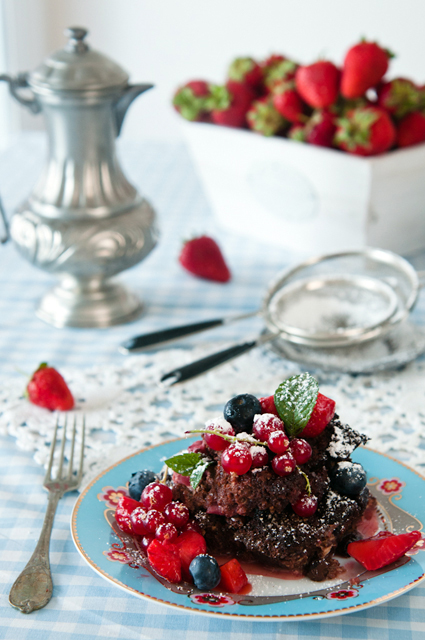
Meeta Khurana Wolffis a freelance food photographer, stylist and writer, currently living in the culturally rich city of Weimar in Germany with her German husband and their 8-year-old son, where she enjoys preparing multicultural, home-cooked meals using fresh organic ingredients. When she is not styling, photographing or writing about food, Meeta loves to travel the world, exploring new cultures and capturing it all on camera. The unique mood that Meeta creates in her food photography is also found in her travel, still life and landscape photography.

Born in India, Meeta was brought up in and went on to train in some of the world’s finest hotels, where food was always an important part of her life. Her love for food photography stems from her passion for food itself, and she combines her two greatest enthusiasms on her multifaceted, award-winning blog, What’s For Lunch, Honey? The recipes she develops and creates are documented by her powerful, yet refreshing, food photography and styling.

See more food photo compositions at Meeta K. Wolff.

Never miss a post
Name: 
Your email address:*
Please enter all required fields
Correct invalid entries

Simon Says: Daily Food Quote, August 3, 2012

Published by Friday, August 3, 2012 Permalink 0

by Simón de Swaan

One should never refuse an invitation to lunch or dinner, for one never knows what one may have to eat the next day.–Édouard de Pomiane, Cooking with Pomiane, 1962

Édouard Alexandre de Pomiane (1875-1964) was a French scientist, radio broadcaster, and food writer. His best-known works to have been translated into English are and Cooking with Pomiane. His recipes often take pains to demystify cooking by explaining the chemical processes at work.


Never miss a post
Name: 
Your email address:*
Please enter all required fields
Correct invalid entries

How Smart is a Sheep? The Churra da Terra Quente

Published by Friday, August 3, 2012 Permalink 0

by Diana Zahuranec

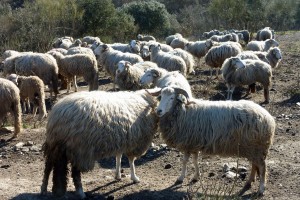
As I stood in the crisp air and bright sun of a Portuguese farm with the other Slow Food University of Gastronomic Sciences students, a single question popped into my mind. We were learning about the Churra da Terra Quente sheep breed, an indigenous and endangered animal with tangled wool and long, dirty tails. They were a rough-looking lot, but watched us curiously and weren’t as shy as other sheep I’ve unwittingly terrified just by standing by them. Some scratched their dirty wool on dry tree trunks, and others flopped down onto the dry soil that was bereft of rain for 4 ½ months, unconsciously dirtying themselves even more. They had curly horns like trofiette pasta. I got the impression that they were happy, or content, to be out in the sun watching us watching them.

Churra da Terra Quente sheep in the dry Douro


In an indigenous flock – or group, or pack, or what-have-you – the purity of the breed is kept by inbreeding. In dogs, I know this leads to some odd character traits: Dalmations, for example, can be suddenly temperamental; my family’s Vizsla at times suffered anxiety and, strangely for a dog, psychological problems – and was also, of course, the most intelligent dog on earth.

Continue Reading…

Never miss a post
Name: 
Your email address:*
Please enter all required fields
Correct invalid entries

Food Art: Kentucky Route 127 Yard Sale, a food & other photography exhibit by Dave Cronen

Published by Thursday, August 2, 2012 Permalink 0

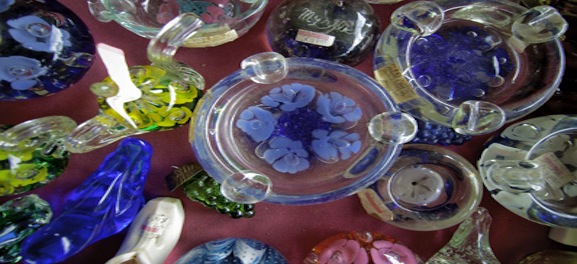
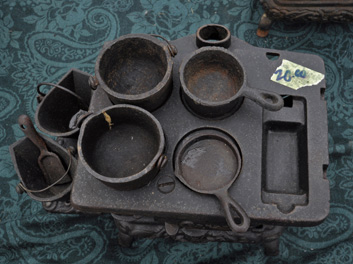
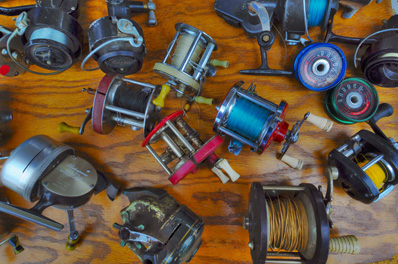
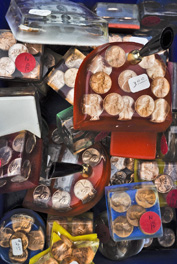
Interview with Dave Cronen: I am not a big fan of yard sales per se but I have to admit when you lump them all together for 400 miles (from Michigan to Alabama), they do have a draw. Once a year, usually in August, on a secondary road called Route 127, buyers and sellers meet to buy and sell their wares. One thing I have noticed is the inordinate amount of kitchen stuff. One is an item, 15 is a collection. I’ve enjoyed photographing the patterns and shapes and the colors of America throughout my career as a photographer.

Never miss a post
Name: 
Your email address:*
Please enter all required fields
Correct invalid entries

Simon Says: Daily Food Quote, August 2, 2012

Published by Thursday, August 2, 2012 Permalink 0

by Simón de Swaan

A chief maxim in dining with comfort is to have what you want when you want it.—Thomas Walker, The Original, 1835


Thomas Walker was a police magistrate and author. On 20 May 1835 he began publishing The Original, and continued it weekly until the following 2 Dec. It is a collection of his thoughts on many subjects, intended to raise “the national tone in whatever concerns us socially or individually,” but his admirable papers on health and gastronomy form the chief attraction of the work.


Never miss a post
Name: 
Your email address:*
Please enter all required fields
Correct invalid entries

Simple Sustenance: Summer in a Bowl — Honey-Ginger Papaya Salad

Published by Thursday, August 2, 2012 Permalink 0

by Renu Chhabra

One cannot think well, love well, sleep well, if one has not dined well. —Virginia Woolf

Sunshine and outdoors! Summer is in full swing. We have been experiencing beautiful warm days — some warmer than others. But that’s the beauty of this season.

Farmers markets are exploding with seasonal produce and an abundance of flower power. And local honey farms are showcasing their products with great pride. In fact, I recently attended a lecture about bee pollination at our local Whole Foods Market. It is amazing how these tiny bees create something so rewarding, one bit at a time. It definitely makes me respect every drop of honey I use. Especially at a time when there is quite a buzz about honey among health-conscious people like me who try to avoid refined sugars, and want to preserve this precious commodity. So I say, love our honey bees and respect their hard work.

Continue Reading…

Never miss a post
Name: 
Your email address:*
Please enter all required fields
Correct invalid entries

Switzerland: Fresh Fruit Séré/Quark Cheese Mousse

Published by Wednesday, August 1, 2012 Permalink 0

by Jonell Galloway

In Switzerland, séré, as it is called in the French-speaking part of the country, or quark, as it is called in the German-speaking part, is a fresh cheese similar to curd cheese or cottage cheese and to ricotta, but the process of making it differs somewhat. Milk is first soured, then warmed until the desired degree of denaturation of milk proteins is met. It is then strained, so that it is smooth in consistency.

It is good eaten simply, with fresh fruit and a touch of sugar, but it can also be used for cooking.

When summer fruit is so abundant, this fresh fruit mousse makes for a different way of eating it.

You can buy either the full-fat version or a low-fat one. The full-fat version will be marked séré de crème in supermarkets; the full-fat version will be marked séré maigre or quark “maigre,” meaning low-fat. For this recipe, it’s best to buy it homemade from the cheesemonger or the full-fat version.

If séré is not available in your area, follow this easy recipe to make it yourself.

Continue Reading…

Never miss a post
Name: 
Your email address:*
Please enter all required fields
Correct invalid entries

Part 4: Step-by-step Fermentation – How to Ferment Vegetables

Published by Wednesday, August 1, 2012 Permalink 0

Part 4: Step-by-step Fermentation

by Diana Zahuranec

How to Ferment Your Own Vegetables

I said in my first fermentation post that I found a couple of particularly helpful websites:

Sandor Ellix Katz, “Making Sauerkraut”
Mary N. Mennes, “Make Your Own Sauerkraut”
Recipes from a German Grandma, “Make Your Own Sauerkraut”

Katz’s was detailed and informative, and I completely trusted his judgment because he is the undisputed wild fermentation expert. Also, he helped my friends and I make cheese, which turned out edible, if squeaky. The unnamed German Grandma had pictures, which I took too and I’ll provide them here for you fermentin’ folks.

Equipment used:

2 big glass bowls
2 freezer bags
Saran wrap
Big plastic tray

Ingredients used:

Click here for French/British/American converter

1 head of cabbage
1 onion
2-3 hot peppers
2 carrots
Stems from a bunch of catalogna (chicory (or a type of), a leafy green with tough stems that I didn’t want to throw out)
1/3 C mildly spicy coarse hot pepper
Salt, water: 3 T salt per 5 pounds of vegetables
Whey from yogurt

Procedure:

Note: This outlines what I did, and might not be the ultimate, end-all-be-all way to ferment; I’m just sharing the experience and knowledge I gained along the way!

(chicory (or a type of), a leafy green with tough stems that I didn’t want to throw out)
1/3 C mildly spicy coarse hot pepper
Salt, water: 3 T salt per 5 pounds of vegetables
Whey from yogurt

Procedure:

Note: This outlines what I did, and might not be the ultimate, end-all-be-all way to ferment; I’m just sharing the experience and knowledge I gained along the way!

[caption id="attachment_27484" align="alignleft" width="319"] Chopped vegetables


Continue Reading…

Never miss a post
Name: 
Your email address:*
Please enter all required fields
Correct invalid entries

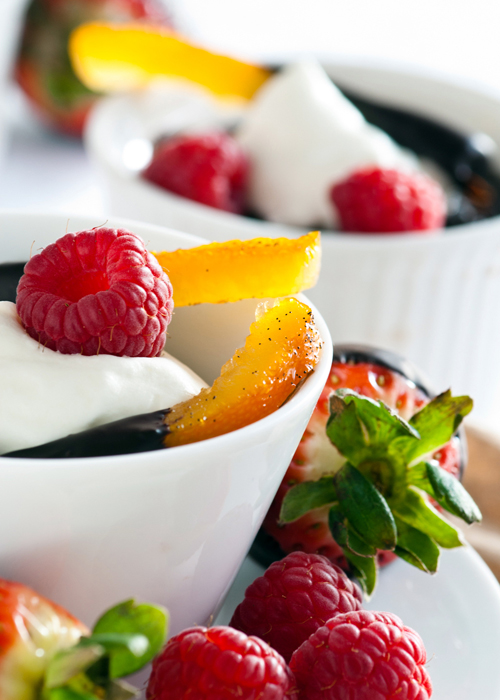
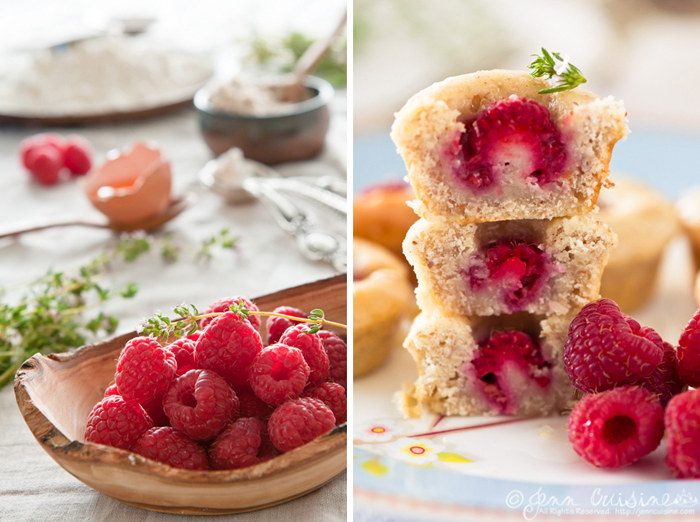
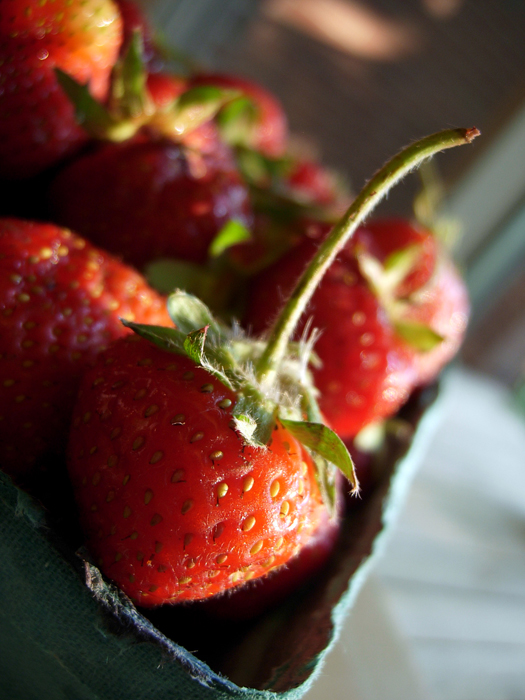
Food Art: Berries, a Summer Delight, a food photography exhibit by Jenn Oliver

Published by Wednesday, August 1, 2012 Permalink 0


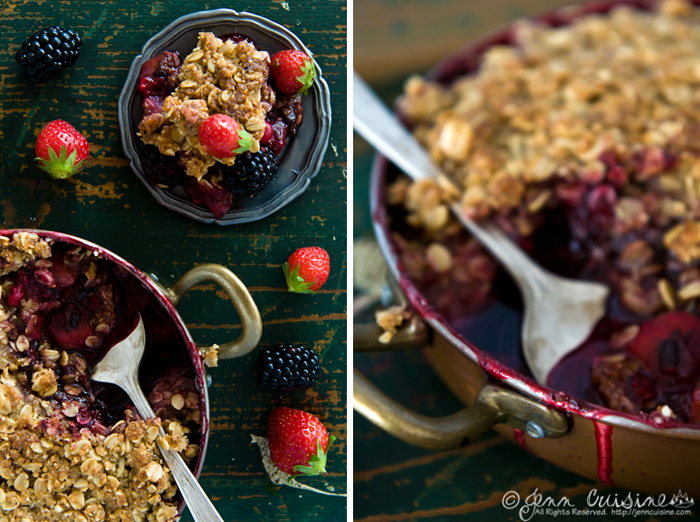
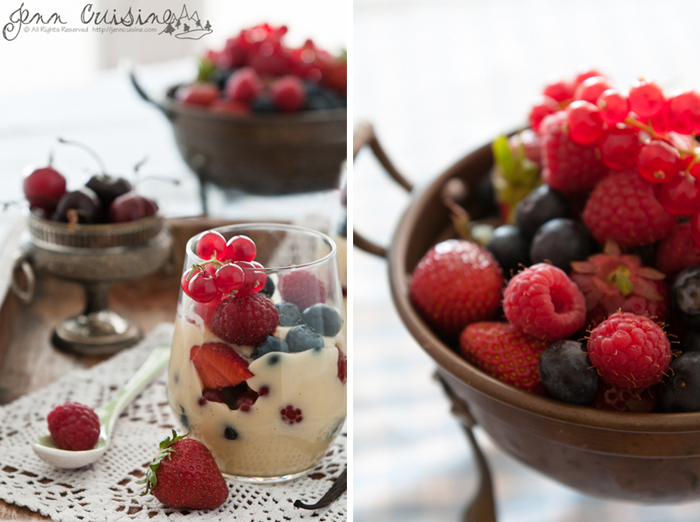
Jenn Oliver writes our column Culinary Chemistry. She has a Ph.D. in science, where she explains the scientific aspects of what really goes on when you cook (the next Harold McGee?). She’s been running a gluten-free blog, Jenn Cuisine, since 2008 and her kitchen is more like a laboratory than a kitchen. She’s focuses her chemical calculations and experiments on figuring out how to make traditionally glutinous food gluten-free.


Never miss a post
Name: 
Your email address:*
Please enter all required fields
Correct invalid entries

Simon Says: Daily Food Quote, August 1, 2012

Published by Wednesday, August 1, 2012 Permalink 0

by Simón de Swaan

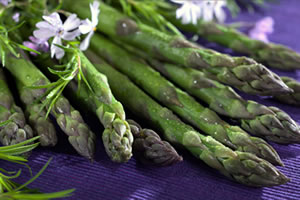
The air pulses with the warm smell of lilac, but as we pass each door, the lilac dominance is subdued by heady wafts of asparagus cooking.–Jane Grigson


Elizabeth David was an English food writer. Grigson’s growing interest in food and cooking led to the writing of her first book, The Observery (1967), which was translated into French, unusual for an English food writer. Elizabeth David read the book and was impressed by it, and recommended Grigson as a food columnist for The Observer, for which she wrote a column from 1968 until her death in 1990.

Never miss a post
Name: 
Your email address:*
Please enter all required fields
Correct invalid entries

UA-21892701-1