Food Art: Apples, Lace and Pie, food photography by Prerna Singh

Published by Tuesday, February 21, 2012 Permalink 0

Prerna Singh runs the award-winning food blog Indian Simmer, which was a finalist in the prestigious Saveur Best Food Blogs this year. Her photos are at the same time sophisticated and rustic, giving a natural yet polished look to the simplest of foods. She grew up in India, but now lives in the U.S. with her husband and daughter.

Prerna uses a Canon 50mm f1.4 lens and photographs in natural light, occasionally using reflectors.

Never miss a post
Name: 
Your email address:*
Please enter all required fields
Correct invalid entries

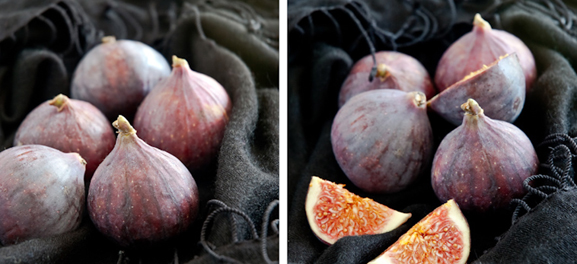
Food Art: The Glory of Figs, by Meeta Khurana Wolff

Published by Friday, December 23, 2011 Permalink 0

See more beautiful photo compositions at Meeta K. Wolff. She runs the popular blog What’s For Lunch Honey?

Never miss a post
Name: 
Your email address:*
Please enter all required fields
Correct invalid entries

Simon Says: Daily Food Quote, November 8, 2011

Published by Tuesday, November 8, 2011 Permalink 0

by Simón de Swaan

VIII. The table is the only place where man is never bored for the first hour.–Jean Anthelme Brillat-Savarin

Jean Anthelme Brillat-Savarin was a French lawyer and politician, and gained fame as an epicure and gastronome. His famous work, Physiologie du goût (Physiology of Taste), was published in December 1825. The full title is Physiologie du Goût, ou Méditations de Gastronomie Transcendante; ouvrage théorique, historique et à l’ordre du jour, dédié aux Gastronomes parisiens, par un Professeur, membre de plusieurs sociétés littéraires et savantes. The book has never been out of print since it first appeared, two months before Brillat-Savarin’s death. Its most notable English translation was done by food writer and critic M.F.K. Fisher, who remarked, “I hold myself blessed among translators.” Her translation was first published in 1949.


Never miss a post
Name: 
Your email address:*
Please enter all required fields
Correct invalid entries

Simon Says: Daily Food Quote, November 7, 2011

Published by Monday, November 7, 2011 Permalink 0

by Simón de Swaan

It is not from the benevolence of the butcher, the brewer, or the baker that we expect our dinner, but from their regard to their own interest.–Adam Smith, 1776

Adam Smith was a Scottish social philosopher and a pioneer of political economy. One of the key figures of the Scottish Enlightenment, Smith is the author of The Theory of Moral Sentiments and An Inquiry into the Nature and Causes of the Wealth of Nations. An Inquiry into the Nature and Causes of the Wealth of Nations, generally referred to by its shortened title “The Wealth of Nations,” is the magnum opus of the Scottish economist and moral philosopher Adam Smith. First published in 1776, it is a reflection on economics at the beginning of the Industrial Revolution and argues that free market economies are more productive and beneficial to their societies. The book is a fundamental work in classical economics.


Never miss a post
Name: 
Your email address:*
Please enter all required fields
Correct invalid entries

Simon Says: Daily Food Quote, November 3, 2011

Published by Thursday, November 3, 2011 Permalink 0

by Simón de Swaan

If you don’t eat yer meat, you can’t have any pudding. How can you have any pudding if you don’t eat yer meat?–Pink Floyd, “Another Brick in the Wall,” Part II (1979)

Pink Floyd were an English rock band that achieved worldwide success with their progressive and psychedelic rock music. Their work is marked by the use of philosophical lyrics, sonic experimentation, innovative album art, and elaborate live shows. Pink Floyd are one of the most commercially successful and influential rock music groups of all time.

Click here to listen to a video of the song.

Pink Floyd in 1968 (from left to right): Nick ...


Never miss a post
Name: 
Your email address:*
Please enter all required fields
Correct invalid entries

Simon Says: Daily Food Quote, October 21, 2011

Published by Friday, October 21, 2011 Permalink 0

by Simón de Swaan

Once a turnip said, “I taste very good with honey.” “Go you boaster,” replied the honey, “I taste good without you.“–Russian folktale


Never miss a post
Name: 
Your email address:*
Please enter all required fields
Correct invalid entries

Simon Says: Daily Food Quote, October 14, 2011

Published by Friday, October 14, 2011 Permalink 0

by Simón de Swaan

A fruit is a vegetable with looks and money. Plus, if you let fruit, it turns into wine, something Brussels sprouts never do.–P.J. O’Rourke, 1997

Patrick Jake “P. J.” O’Rourke (born November 14, 1947) is an American political satirist, journalist, writer, and author.

His latest book, Don’t Vote—It Just Encourages the Bastard, was published in September 2010. Both Time and The Wall Street Journal have called him “the funniest writer in America.”


Continue Reading…

Never miss a post
Name: 
Your email address:*
Please enter all required fields
Correct invalid entries

Simon Says: Daily Food Quote, October 7, 2011

Published by Friday, October 7, 2011 Permalink 0

by Simón de Swaan

Gluttony is a great fault; but we do not necessarily dislike a glutton. We only dislike the glutton when he becomes a gourmet — that is, we only dislike him when he not only wants the best for himself, but knows what is best for other people.–G.K. Chesterton (1874-1936)

C.K. Chesterton was a prolific English writer. In addition to writing poetry, plays, and philosophy, he also wrote literary and art criticism, biographies, fantasy fiction works and detective fiction. Chesterton has been called the “prince of paradox.”  He is well known for his reasoned apologetics, and even some of those who disagree with him have recognized the universal appeal of such works as Orthodoxy and The Everlasting Man.


Continue Reading…

Never miss a post
Name: 
Your email address:*
Please enter all required fields
Correct invalid entries

Food News Daily: September 27, 2011

Published by Tuesday, September 27, 2011 Permalink 0

Mainstream Anglo Media and Press

Nigel Slater’s classic salsa verde recipe, The Guardian

Is Junk Food Really Cheaper?, The New York Times

Small Factories Take Root in Africa, Wall Street Journal

For Rosh Hashanah, honey, you have options, Los Angeles Times

A new generation of student cooks?, Is the accepted wisdom about students being uninterested in cooking still accurate or is it a myth kept alive by those who graduated years or decades ago?, The Guardian

Asian snack time is all the time, The Seattle Times

Munch ado about Doritos, one man’s iconic snack, The Washington Post

Best of the Anglo Food and Travel Blogs

From Polenta to Peach Cobbler, Measure Free Hippie Cook

Continue Reading…

Never miss a post
Name: 
Your email address:*
Please enter all required fields
Correct invalid entries

David Downie: Gallette, Italian Riviera Sea Biscuits

Published by Tuesday, September 27, 2011 Permalink 0

by David Downie

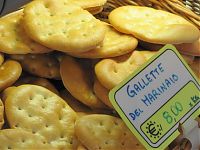
gallette del marinaio, sea biscuits, panificio maccarini

Everyone knows about the focaccia of Genoa and the Italian Riviera. But who remembers the region’s hardtack?

Sea biscuits: those hard, dry crackers that sailors would take with them on long journeys, because normal bread got moldy within days?
In Italian, sea biscuits are called “gallette.” The same word is used for the surf-worn, flattened stones you find on beaches. That’s because sea biscuits look very much like those stones, with pock marks.

There used to be hundreds of bakeries up and down the coast of Italy, and in America too, that baked sea biscuits. Now only a handful continue the tradition, most of them in Liguria, and only one makes gallette in the old-fashioned way, meaning the way they were made in the nineteenth and early twentieth centuries.

Continue Reading…

Never miss a post
Name: 
Your email address:*
Please enter all required fields
Correct invalid entries

UA-21892701-1