Elements of Wine 3: Sugar

Published by Wednesday, July 31, 2013 Permalink 0


//

Elements of Wine 3: Sugar

Wine Tasting with James Flewellen

James Flewellen photo, wine tasting expert, The Art of Tasting Wine: James Flewellenby James Flewellen

As mentioned in my previous post on alcohol in wine, sugars accumulate in grapes as they ripen. At harvest time, grapes have a level of what is termed ‘potential alcohol’, that is the alcoholic strength of the future wine should all sugar in it be fermented to alcohol by the action of yeast cells. However, in some cases not all the sugar is fermented, leaving what is termed ‘residual sugar’ in the wine and a noticeable sweetness on the palate.

There are a number of ways to obtain sweetness in wine. The fermentation may be stopped deliberately, perhaps through addition of sulphur dioxide, which kills yeast, or through passing the wine through a membrane filter to remove the yeasts. This results in a wine of lower alcoholic strength and some residual sugar. A classic example is Riesling from the Mosel in Germany, which typically has 7-9% abv (Alcohol By Volume) and varying levels of sweetness depending on the initial level of ripeness of the grapes.
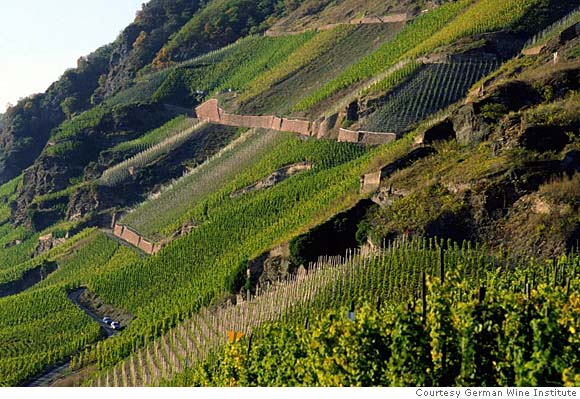
Steep Mosel vineyards in Germany, photo by http://lastingimpressionswineblog.wordpress.com/2011/02/23/german-wine-wineblog-20/

Steep vineyards of the Mosel vineyards in Germany


In other cases, there may be too much sugar for the yeast to convert it all to alcohol. Somewhere around 13-15% abv yeast stops being able to effectively ferment sugar to alcohol and naturally dies off. Super-ripe grapes will thus result in a wine with relatively high levels of alcohol and some residual sweetness. This sweetness can be quite subtle, or it can be syrupy and luscious – as found in dessert wines, which have very high concentrations of sugar in the harvested fruit.

Tasting sugar in wine is a difficult process. We can usually tell if something is ‘moderately sweet’; however it’s very hard to estimate the sweetness level in full-blown dessert wines. Wines with a little bit of residual sugar often have their sweetness masked by acidity and flavour compounds.

Sweet/Dry Wine Chart, Creative Commons photo by http://www.primermagazine.com


Sweetness in wine should be matched by a refreshing acidity for balance. This is especially true for dessert wines, which can come across as cloying without sufficient acidity. On the other hand, a touch of residual sugar, while not tasteable to most people, can give a welcome sense of roundness to a sharply acidic wine.


Sign up for Jonell Galloway and James Flewellen’s  “Celebrate the Chartres Festival of Lights & Autumnal Equinox with a Food & Wine Tasting Masterclass” in France from September 19 to 22, 2013.

___________________________


About James Flewellen

Dr James Flewellen is a biophysicist at the University of Oxford. James learned his trade in taste through the Oxford Blind Wine Tasting Society, of which he was the President from 2010-2012. During his term, he represented Oxford at many international blind tasting competitions – twice winning the prestigious ‘Top Taster’ Award in the annual Varsity blind tasting match against Cambridge University and captaining winning teams in competitions throughout Europe.

One of James’s goals is to clarify the complex and hard-to-navigate world of wine for both novice and experienced tasters. He applies his scientific training to wine education, illuminating concepts of taste, tannin and terroir in an approachable, entertaining manner. James runs wine education courses in Oxford through the The Oxford Wine Blog and is completing the WSET Professional Diploma in Wine and Spirits. He is the regular wine writer for The Rambling Epicure and is the founder of  The Oxford Wine Blog. He is also currently co-authoring The Concise Guide to Wine and Blind Tasting – a book surveying the wine regions of the world and how to blind taste.

Never miss a post
Name: 
Your email address:*
Please enter all required fields
Correct invalid entries

Elements of Wine 2: Alcohol

Published by Saturday, July 27, 2013 Permalink 0


//

James Flewellen photo, wine tasting expert, The Art of Tasting Wine: James FlewellenElements of Wine 2: Alcohol

Wine Tasting with James Flewellen

by James Flewellen

As grapes ripen, they accumulate sugars. At optimal ripeness, the grapes are harvested and sent to the winery for fermentation. Fermentation sees the pressed or crushed grape juice inoculated with yeasts that convert sugar to ethanol – the alcohol that ends up in our wine.

Red Wine Fermenting
Red wine fermenting


The alcoholic strength of a wine thus depends on the initial sugar levels present in the harvested grapes. Grapes grown in cooler climates accumulate sugars more slowly than those grown in hot climes, thus we expect, in general, lower alcohol wines to come from cooler sites. Most dry, unfortified wines fall between 11% and 15% alcohol by volume. A wine may have lower alcohol than this, but with some residual sugar – that is to say not all the available sugars in the grape have been converted to alcohol.

It is legal in some regions of the EU (and certainly throughout the rest of the world) to add sugar to the pressed grape juice prior to fermentation in order to boost the alcoholic strength of the resulting wine. This is called ‘chaptalisation’ (after M. Chaptal, then French Minister of Culture) and is frequently practised in cold vintages in northern Europe. The type of sugar used here is inconsequential as it is all converted to ethanol and contributes nothing to the flavour of the resulting wine.

Focused on wine
Let Ideas Compete / Foter / CC BY-NC-ND


In tasting, alcohol provides the main component of the ‘body’ of the wine – how the wine feels in the mouth. It dissolves certain chemicals found in food much better than water does (capsacain from chillies for instance) and also carries many of the aroma and flavour compounds that are less soluble in pure water. And of course, alcohol provides the intoxication that has been associated with the pleasures of drinking wine for millennia!

Greeny Goodness
sgs_1019 / Foter / CC BY-NC-SA


Alcohol levels can be assessed by aerating the wine as it is held in your mouth. Try this by breathing in over a small amount of liquid. Highly alcoholic wines will register a burning sensation on the back of your throat. As with all structural elements in wine, balance is key. The alcohol should be sufficient to support the flavours of the wine yet not so overpowering as to be the only noticeable feature in the wine. Wines with high levels of alcohol (14%+) can still work, yet they need to matched with a robust body and flavour profile.

Sign up for Jonell Galloway and James Flewellen’s  “Celebrate the Chartres Festival of Lights & Autumnal Equinox with a Food & Wine Tasting Masterclass” in France from September 19 to 22, 2013.

___________________________


About James Flewellen

Dr James Flewellen is a biophysicist at the University of Oxford. James learned his trade in taste through the Oxford Blind Wine Tasting Society, of which he was the President from 2010-2012. During his term, he represented Oxford at many international blind tasting competitions – twice winning the prestigious ‘Top Taster’ Award in the annual Varsity blind tasting match against Cambridge University and captaining winning teams in competitions throughout Europe.

One of James’s goals is to clarify the complex and hard-to-navigate world of wine for both novice and experienced tasters. He applies his scientific training to wine education, illuminating concepts of taste, tannin and terroir in an approachable, entertaining manner. James runs wine education courses in Oxford through the Oxford Wine Academy and is completing the WSET Professional Diploma in Wine and Spirits. He is the regular wine writer for The Rambling Epicure and is the founder of  The Oxford Wine Blog. He is also currently co-authoring The Concise Guide to Wine and Blind Tasting – a book surveying the wine regions of the world and how to blind taste.


Never miss a post
Name: 
Your email address:*
Please enter all required fields
Correct invalid entries

Wine and Food Pairing: Lacquered Pork Tenderloin, Roast Potatoes & Ramson Recipe

Published by Thursday, July 25, 2013 Permalink 0

Wine and Food Pairing: Lacquered Pork Tenderloin, Roast Potatoes & Ramson Recipe

by James Flewellen

Pork is a great meat to play with for wine pairing. Depending on the cut of the animal, how it is cooked and the sauce accompanying the dish you have a whole wealth of wines from which to choose.  Red wine, white wine, dry and savoury, off-dry and fruity; there are many options.


Lacquered Pork Tenderloin, Roast Potatoes & Ramson Recipe, Spontaneous Cuisine. Recipe by Jonell Galloway, editor of The Rambling Epicure.


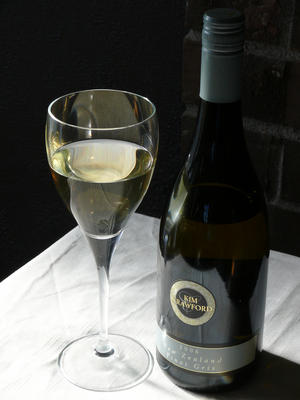
One of my favourite choices and one I think works very well with this recipe is an Alsatian or New Zealand Pinot Gris. These are full-bodied, rich white wines with a pear and honey bouquet that is the perfect foil for pork in such a sauce. The honey and fruit notes in the wine echo the honey and vanilla flavours in the sauce; the richness of the palate counteracts the piquant mustard and coriander seeds; the body carries enough weight to handle the meatiness of the dish; and the wine brings forth enough acidity to cut through the fat in the fillet and the sauce. Try for a wine with at least 5 years age and you’ll notice truffle and mushroom notes developing to add an additional level of complexity.

Kim Crawford 2006 Pinot Gris


About James Flewellen

Dr James Flewellen is a biophysicist at the University of Oxford. James learned his trade in taste through the Oxford Blind Wine Tasting Society, of which he was the President from 2010-2012. During his term, he represented Oxford at many international blind tasting competitions – twice winning the prestigious ‘Top Taster’ Award in the annual Varsity blind tasting match against Cambridge University and captaining winning teams in competitions throughout Europe.

One of James’s goals is to clarify the complex and hard-to-navigate world of wine for both novice and experienced tasters. He applies his scientific training to wine education, illuminating concepts of taste, tannin and terroir in an approachable, entertaining manner. James runs wine education courses in Oxford through the Oxford Wine Academy and is completing the WSET Professional Diploma in Wine and Spirits. He is the regular wine writer for The Rambling Epicure and is the founder of The Oxford Wine Blog. He is also currently co-authoring The Concise Guide to Wine and Blind Tasting – a book surveying the wine regions of the world and how to blind taste.


Never miss a post
Name: 
Your email address:*
Please enter all required fields
Correct invalid entries

Grandma’s Green Walnuts meet Nonna’s Nocino

Published by Wednesday, July 24, 2013 Permalink 0


//

Gareth Jones, food and travel writerGrandma’s Green Walnuts meet Nonna’s Nocino

by Gareth Jones

A tradition so richly experienced on the festival eve of San Giovanni, better known as “St. John’s,” in Spilamberto (near Modena – Emilia-Romagna) had me transported me back to innocent childhood days in Wales. Straying across the fields from the parental home I’d live more in my grandmother’s old cottage – hers was once an inn on a long forgotten village green and was built using the village stocks as a door lintel into her dining room. So the story goes, mature hardwood had been short for building and everything was saved – including timbers from broken ships, recognised even then by their Lloyd’s number carved or burnt into the side. Grandma had one of those too – and stirring tales of bravery at sea to go with it.

Around this time (end-June/early-July), yet knowing nothing then of the Saint’s Day, we would pick ‘green’ walnuts – green skinned and soft before their hard shells formed below the fleshy outer casing.

IMG_1083 - Copy (263x350)


These we would wash, dry and prick with a pin several times per nut. They would then be cooked in salted water, dried and let to cool before being set to cure in a vinegar sweetened with brown sugar – or perhaps it was molasses given the rich, dark colour. There are recipes going back through the ages – even Hannah Glasse in her The Art of Cookery wrote three. One each for ‘green’, ‘white’ and ‘black’ walnuts.

There would surely have been mace and nutmeg in Grandma’s recipe as there were her two favourite spices – she wore a whole nutmeg about her person, swearing it would ward off arthritis. At over 86 years when she died, arthritis was never one of her ailments.

Continue Reading…

Never miss a post
Name: 
Your email address:*
Please enter all required fields
Correct invalid entries

Elements of Wine 1: Acidity

Published by Friday, July 19, 2013 Permalink 0


James Flewellen photo, wine tasting expert, The Art of Tasting Wine: James FlewellenElements of Wine 1: Acidity

by James Flewellen

Acid in wine, photo by http://www.google.fr/imgres?client=firefox-a&sa=X&rls=org.mozilla:en-US:official&biw=1280&bih=527&tbm=isch&tbnid=0zJCNLOa8IHTHM:&imgrefurl=http://www.winesandwinemaking.com/acidity_wine.php&docid=lU-Yh-q_nn94CM&imgurl=http://www.winesandwinemaking.com/images/wine_acid.jpg&w=300&h=240&ei=la7pUYacEo7E4gSelYHYBA&zoom=1&iact=hc&vpx=768&vpy=131&dur=2051&hovh=192&hovw=240&tx=72&ty=94&page=1&tbnh=145&tbnw=178&start=0&ndsp=20&ved=1t:429,r:5,s:0,i:97 (CC)


Naturally occurring acids are present in all fruits. The major acids found in grapes are malic and tartaric. When the grape juice is fermented to become wine, these acids survive the fermentation process to end up in the bottle you’re about to open.

Acidity in wine plays a very important role in the overall structural harmony of the drink. Acid is required to balance residual sugar and alcohol. It also cuts through oils and fats present in food, providing the ideal palate cleanser between mouthfuls. An ideal wine will have a balanced acidity. Too much acid and the wine can be unpleasantly tart or sharp tasting; too little and it can taste ‘flabby’ or not as refreshing as it should.

Acids in Wine, photo by http://www.google.fr/imgres?client=firefox-a&hs=dae&sa=X&rls=org.mozilla:en-US:official&biw=1280&bih=527&tbm=isch&tbnid=m1IjwTmnK6CrlM:&imgrefurl=http://www.internationalwineguild.com/ask-iwg-acidity-and-organic-pairings&docid=foKo3uUC8dXDiM&imgurl=http://www.internationalwineguild.com/uploads/Image/AcidsinWine.jpg&w=669&h=1000&ei=f7LpUavBI-Sg4gTb9ICoBw&zoom=1&iact=hc&vpx=1057&vpy=4&dur=12309&hovh=275&hovw=184&tx=133&ty=143&page=1&tbnh=143&tbnw=103&start=0&ndsp=21&ved=1t:429,r:20,s:0,i:145 (CC)


The way in which we perceive acidity varies according to a number of factors. Different grape varieties will have different concentrations of acids, thus can taste more or less ‘acidic’. The climatic conditions throughout the growing season are also important – insufficient warmth or sunlight will mean the acids in the grapes do not ‘soften’ enough before harvest and the resulting wine may be tart and unpleasant. Other organic chemicals in the wine will also influence how we perceive acidity. Two wines may have the same pH, yet a wine with residual sugar that masks the immediate effect of the acid will come across as less acidic initially.

English: Diagram of the wine grape berry.

Diagram of the wine grape berry.


Practices in the winery can also change the acidity in the final wine from that we might expect in the initial grape juice. Malic acid can be converted to lactic acid, which comes across as a ‘softer’ acid on the palate, through a malolactic conversion by certain species of bacteria. Most red wines undergo a malolactic conversion (sometimes called a ‘fermentation’, though this is not strictly correct), which is why red wines often taste softer than whites.

In general we can register acidity by a tingling sensation on the sides of our tongue. Another approach is the ‘saliva response test’ – how quickly saliva returns to our mouth immediately after spitting or swallowing the wine. This can give us clues as to the grape variety, the growing conditions and the sorts of food the wine might pair well with.


Join James Flewellen and Jonell Galloway at “Celebrate the Chartres Festival of Lights & Autumnal Equinox with a Food & Wine Tasting Masterclass” in France from September 19 to 22, 2013.

_________________________

Dr James Flewellen is a biophysicist at the University of Oxford. James learned his trade in taste through the Oxford Blind Wine Tasting Society, of which he was the President from 2010-2012. During his term, he represented Oxford at many international blind tasting competitions – twice winning the prestigious ‘Top Taster’ Award in the annual Varsity blind tasting match against Cambridge University and captaining winning teams in competitions throughout Europe.

One of James’s goals is to clarify the complex and hard-to-navigate world of wine for both novice and experienced tasters. He applies his scientific training to wine education, illuminating concepts of taste, tannin and terroir in an approachable, entertaining manner. James runs wine education courses in Oxford through the Oxford Wine Academy and is completing the WSET Professional Diploma in Wine and Spirits. He is the regular wine writer for The Rambling Epicure and is the founder of The Oxford Wine Blog. He is also currently co-authoring The Concise Guide to Wine and Blind Tasting – a book surveying the wine regions of the world and how to blind taste.


Never miss a post
Name: 
Your email address:*
Please enter all required fields
Correct invalid entries

Wine and Food Pairing: Trofie alle Castagne Pasta with Pesto, Potatoes and Green Beans

Published by Monday, July 15, 2013 Permalink 0


//

Wine and Food Pairing with James Flewellen: Trofie alle Castagne Pasta with Pesto, Potatoes and Green Beans

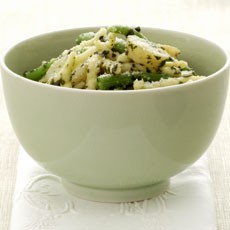
Trofie alle Castagne with Pesto, Potatoes and Green Bean recipe

Trofie alle Castagne with Pesto, Potatoes and Green Bean

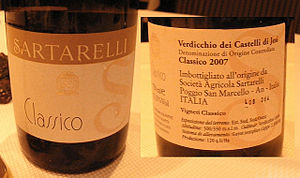
Try a Verdicchio wine from central Italy with this dish. This white wine has a complex, subtle, more vegetal flavour profile, as opposed to bright fruit and floral notes. This herbaceous quality will go very well with the similar flavours found in the green beans, while the acid in the wine will cut through the fats in the cheese and the oil in the pesto leaving your palate refreshed.

English: Bottle of Verdicchio dei Castelli di ...


If you like your fruity wines, try a decent Pinot Grigio, whose acid will play a similar role to the Verdicchio. But be warned – many of the mass market Pinot Grigios out there have an overly fruity flavour profile and a touch of sweetness, which won’t complement the pesto as well.

On the red side and staying true to the Italian theme, a lighter red will do the job. You want something savoury on the whole and not overly tannic or alcoholic – which can be hard to find in Italy! A lighter-bodied Chianti Classico could work well, but you may want to have extra Parmesan on hand to round out the tannins!


Join James Flewellen and Jonell Galloway at “Celebrate the Chartres Festival of Lights & Autumnal Equinox with a Food & Wine Tasting Masterclass” in France from September 19 to 22, 2013.


___________________________

Dr James Flewellen is a biophysicist at the University of Oxford. James learned his trade in taste through the Oxford Blind Wine Tasting Society, of which he was the President from 2010-2012. During his term, he represented Oxford at many international blind tasting competitions – twice winning the prestigious ‘Top Taster’ Award in the annual Varsity blind tasting match against Cambridge University and captaining winning teams in competitions throughout Europe.

One of James’s goals is to clarify the complex and hard-to-navigate world of wine for both novice and experienced tasters. He applies his scientific training to wine education, illuminating concepts of taste, tannin and terroir in an approachable, entertaining manner. James runs wine education courses in Oxford through the Oxford Wine Academy and is completing the WSET Professional Diploma in Wine and Spirits. He is the regular wine writer for The Rambling Epicure and is the founder of The Oxford Wine Blog. He is also currently co-authoring The Concise Guide to Wine and Blind Tasting – a book surveying the wine regions of the world and how to blind taste.


Never miss a post
Name: 
Your email address:*
Please enter all required fields
Correct invalid entries

Wine and Food Pairing for Beginners, an Infographic

Published by Monday, July 8, 2013 Permalink 0


Wine and Food Pairing for Beginners, an Infographic

Wine Pairing Chart


Jonell Galloway and James Flewellen will be giving a food and wine tasting Masterclass in Chartres from September 19 to 22. Here is a thorough description: Celebrate the Chartres Festival of Lights & Autumnal Equinox with a Food & Wine Tasting Masterclass. Click here to reserve your place!


Never miss a post
Name: 
Your email address:*
Please enter all required fields
Correct invalid entries

Wine & Food Pairing with James Flewellen: Boeuf Bourguignon

Published by Monday, July 8, 2013 Permalink 1

Wine and Food Pairing: Boeuf Bourguignon

by James Flewellen

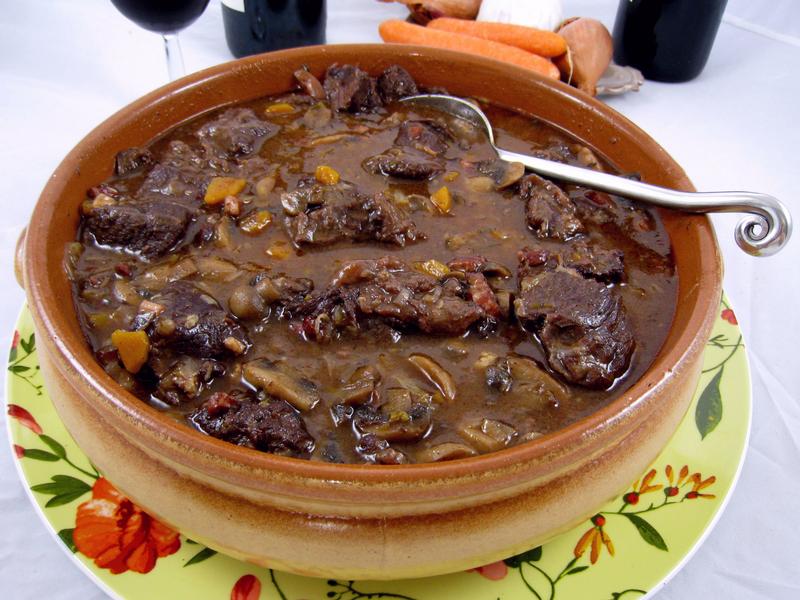
Here’s our recipe for Boeuf Bourguignon

boeuf-bourguignon-798901288110937


Pinot Noir

The classic wine for this hearty dish is a relatively youthful Burgundian Pinot Noir – ideally the same wine you’ve used in the cooking. The bright fruit flavours in the wine complement the savoury spice in the dish and the tannins – fine as they typically are in red Burgundy – interact with the proteins in the meat to bring overall harmony to the meal. An older Pinot Noir will have developed more subtle, complex savoury notes, which may be overwhelmed by the bold array of flavours in the stew, thus I’d stick to a more youthful example and save the mature wine until when you can enjoy it in all its glory.

French Countryside


Other Pinot Noirs from around the world will also work – particularly the rich, clean fruit profile of a New Zealand Pinot. You could also try a ‘serious’ Beaujolais Cru – made from the Gamay grape. These Cru wines are slightly more expensive than the infamous Beaujolais Nouveau, yet they provide a more complex flavour profile and robust, yet integrated tannins. The best, from for instance Moulin à Vent, Morgon and Fleurie, start to resemble their cousins from Burgundy to the north and as such, offer excellent value for money.


365.202: Summer wine thing


Cabernet Franc

To the west of Burgundy, the Loire valley produces a number of wines that would go very well with the dish. Sancerre Rouge is the Loire’s expression of Pinot Noir and, I feel, too light in body to stand up to a stew. A Chinon or Bourgueil, however, made from Cabernet Franc, is well up to the task. The thicker skins of Cabernet Franc make for more robust tannin, which go perfectly with beef. Meanwhile, these wines typically have a rich fruity core in their flavour profile not dissimilar to young Burgundy, although more towards blackcurrant rather than raspberry on the fruit spectrum. Cabernet Franc can also introduce leafy, minerally and peppery notes, which can serve as a lovely foil to the sweetness in the vegetables in the stew.

Couly-Dutheil Chinon Clos de l'Olive 1999 (Loire Valley)

Jonell Galloway and James Flewellen will be giving a food and wine tasting Masterclass in Chartres from September 19 to 22. Here is a thorough description: Celebrate the Chartres Festival of Lights & Autumnal Equinox with a Food & Wine Tasting Masterclass. Click here to reserve your place!

About James Flewellen

Dr James Flewellen is a biophysicist at the University of Oxford. James learned his trade in taste through the Oxford Blind Wine Tasting Society, of which he was the President from 2010-2012. During his term, he represented Oxford at many international blind tasting competitions – twice winning the prestigious ‘Top Taster’ Award in the annual Varsity blind tasting match against Cambridge University and captaining winning teams in competitions throughout Europe.

One of James’s goals is to clarify the complex and hard-to-navigate world of wine for both novice and experienced tasters. He applies his scientific training to wine education, illuminating concepts of taste, tannin and terroir in an approachable, entertaining manner. James runs wine education courses in Oxford through the Oxford Wine Academy and is completing the WSET Professional Diploma in Wine and Spirits. He is the regular wine writer for The Rambling Epicure and is the founder of The Oxford Wine Blog. He is also currently co-authoring The Concise Guide to Wine and Blind Tasting – a book surveying the wine regions of the world and how to blind taste.


Never miss a post
Name: 
Your email address:*
Please enter all required fields
Correct invalid entries

The Art of Tasting Wine with James Flewellen: Top 10 White Wine Grapes

Published by Sunday, June 23, 2013 Permalink 0

The Art of Tasting Wine with James Flewellen: Top 10 White Wine Grapes

by James Flewellen

With over 1,300(!) vine varieties out there making commercial wine, it’s a tough task to narrow down to only 10. Nevertheless, here are my ‘top 10’ white wine producing grapes. The order is my own preference, based on commercial importance, potential quality of the grape and whether it produces a ‘classic style’.

10. Albariño

Deutsch: Albariño-Weingut. Weingut Granbazan. ...

Bodega Granbazán en las Rías Baixas, producer of Albariño


Perhaps a controversial start to the list, Albariño is a rising star in my book. The grape can produce well-balanced aromatic, peachy wines with fresh acidity, suitable as an aperitif or with fish and vegetarian dishes. It’s not yet grown much outside its native Galicia in Spain (and parts of Portugal), yet its stature is certainly on the up and much interest is being shown in growing the grape in a number of new world countries.

9. Gewurztraminer

Tramin - Gewurztraminer Grapes

Tramin – Gewurztraminer Grapes (Photo credit: Lynne Hand)


A very distinctive grape producing ‘love-em or hate-em’ wines. Gewurztraminer has its spiritual home in Alsace, France, though can be found throughout Central Europe and in many new world countries. The grape is typically pink-skinned and produces an abundance of sugars in the right growing conditions. This leads to deeply-coloured, rich, full-bodied wines – many of which are off-dry, or even sweet. Gewurztraminer wines are flamboyantly fragrant with unmistakable notes of lychee, pot pourri and sometimes cloves.

8. Viognier

English: Viognier grapes ripening on a vine in...

Viognier grapes ripening on a vine in Amador county, California.


Another full-bodied, distinctively aromatic wine. Viognier brings forth characteristic notes of peach, apricot and ginger. The very best examples come from the tiny appellation of Condrieu, in the Rhône Valley in France. However, it is found in the blended white wines of southern France, and increasingly in the new world. A single producer in the Barossa, South Australia — Yalumba — could be credited with re-popularising this grape and bringing it to a new audience in the modern era.

Continue Reading…

Never miss a post
Name: 
Your email address:*
Please enter all required fields
Correct invalid entries

The Art of Tasting Wine with James Flewellen: Wine Diamonds in White Wine

Published by Tuesday, May 28, 2013 Permalink 0

by James Flewellen

Wine Diamonds in White Wine

There are a number of legitimate reasons for sending a wine back at a restaurant: the wine could be oxidised, be contaminated by ‘cork taint’, suffer from excess volatile acidity, or have unpleasant Brettanomyces aromas. One common cause for complaint, however, is the presence of tartrate crystals or ‘wine diamonds’. Wine diamonds in white wine are a natural occurrence.

These are clear crystalline deposits found usually in certain white wines, especially Riesling. They are either potassium bitartrate (a.k.a. cream of tartar) or calcium tartrate — both found naturally in grapes, and which follow through to the final bottle in the winemaking process. They are certainly not tartaric acid, sugar, or bits of glass! These wine diamonds are perfectly natural and completely harmless. In the glass, they sink to the bottom and will barely impose on your enjoyment of the wine. Or, the wine can simply be decanted, with the crystals remaining in the bottle.

Wine diamonds in white wine left over from a glass of excellent Austrian Gruner Veltliner.

These crystals can be removed before bottling, however it is an involved process involving chilling the wine and passing it through filters. This is energetically expensive and the filtration process can remove flavour compounds that give the wine its complexity and character. Producers of fine wines prefer to mess with the wine as minimally as possible to deliver the best possible quality to the consumer.

So if you do see some wine diamonds in your wine, this is not a cause for complaint. Rather, be assured that the winemaker cares about his wine so much that he has chosen not to remove them to deliver the best possible wine to you!

__________________

James Flewellen is The Rambling Epicure wine columnist. James is a biophysicist at the University of Oxford. Originally from New Zealand, the huge range of wine James discovered in Europe spurred his interest in all things vinous. He became involved in the University’s Blind Wine Tasting Society and has recently completed a two-year term as its President. During this time he represented the University in a number of domestic and international wine tasting competitions, winning several awards. He is currently completing the WSET Diploma in Wine and Spirits. James has a passion for wine communication and education and runs the Oxford Wine Blog and wine tasting courses through the Oxford Wine Academy.


Never miss a post
Name: 
Your email address:*
Please enter all required fields
Correct invalid entries

UA-21892701-1