David Downie: Guanciale: An Obituary and a Homage to Rome’s Jowl Bacon, Part 3

Published by Tuesday, August 2, 2011 Permalink 0

by David Downie

The Carilli brothers are no longer in business; the fine art of making traditional guanciale is threatened with extinction in Rome. But the memory of the Carilli brothers’ passion, and the lingering taste of their excellent products, live on in those of us who knew them. They also live on—perhaps to a lesser degree—in the remaining guanciale-makers of the city.


These are the best of the dozen or so norcinerie, salumerie, and salsamenterie in Rome that still make their own guanciale, the following are the best—to my knowledge. Each shop also sells a wide selection of other specialties, from dried mushrooms to farro (emmer), salami, grappa, sapa (reduced grape must) and artisanallypasta made by small, traditional producers.

Antica Norcineria— Giuseppe Simoni and his son Alberto, Umbrians by birth, operate one of Rome’s longest-established oldest pork butcher shops, which happens to be in via della Scrofa, “Sow Street.” The Simonis produce guanciale faster than the Carillis did; the cure lasts ten days and the aging about 20 days. But the results are excellent.

via della Scrofa, Rome, telephone 06.68806114

Baldassari Emma— A family-run salumeria that ages its guanciale for 45 to 90 days, enough time to develop complex flavor.

Piazza Unità, 28, Rome, telephone 06.3243252

Vincenzo Cecchini & C. —Virgilio Cecchini runs this family salumeria, in operation since 1930. Virgilio’s roots are in Collazzoni di Preci, six miles outside Norcia, and his hogs are raised in the mountains of Umbria and the adjacent Marche. Mild and fresh-tasting, Cecchini guanciale gets a sprinkling of mashed fresh garlic and sea salt before spending a week in a vat at just above freezing. Coated with black pepper or chili, it hangs for just a week or two in the shop’s marble-clad back room, so it must be cooked before it is eaten.

Via Merulana, 85, Rome, telephone 06.77207535

Norcineria Umbra — At this family run norcineria, the flavorful guanciali are aged for up to three months.

Via Pomezia, 28, Rome, telephone 06.77209695

America’s only guanciale maker?

Salumeria Biellese — To my knowledge, this Manhattan shop makes the only authentic Italian-style guanciale in America. Marc Buzzio sells his guanciale whole, averaging two pounds, small by Roman standards, mostly to upscale New York restaurants. The meat is Du Breton certified-organic Canadian pork. The jowls are cured for 35 days and strung up to dry for 45 days, so they can be eaten raw or cooked. The result is more compact in texture and drier than the Roman, and the flavor is with a delicately herby  flavor. I’ve used this guanciale extensively to prepare classic Roman dishes (for example, when testing the recipes for my cookbook Cooking the Roman Way), and it compares favorably with the traditional Roman.

378 Eighth Avenue (at 29th Street), New York, New York 10001, telephone 212.736.7376, fax 212.736.1093

___________________________

David Downie is the author of Cooking the Roman Way: Authentic Recipes from the Home Cooks and Trattorias of Rome, and Food Wine Rome (a complete food- and wine-lover’s guide to the city); his latest book about Rome is Quiet Corners of Rome (over 50 silent, serene, often secret corners of the city). All three volumes are illustrated by color photographs by Alison Harris.

Never miss a post
Name: 
Your email address:*
Please enter all required fields
Correct invalid entries

Simon Says: Daily Food Quote, August 2, 2011

Published by Tuesday, August 2, 2011 Permalink 0

by Simón de Swaan

Frying gives cooks numerous ways of concealing what appeared the day before and in a pinch facilitates sudden demands, for it takes little more time to fry a four-pound carp than to boil an egg.–Jean-Anthelme Brillat-Savarin

Jean-Anthelme Brillat-Savarin (1755-1826) was a French gastronome, lawyer, magistrate and author who helped to develop the art of food writing. His most famous and influential book, The Physiology of Taste, consists of 8 volumes and was published in December of 1825, two months before his death at the age of 71. His influence is so significant that a cow’s milk cheese, a rum yeast cake, and a ring mold are all named after him. He is considered by many to have been the best food critic ever.


Plaque Brillat-Savarin, 11 rue des Filles-Sain...


Never miss a post
Name: 
Your email address:*
Please enter all required fields
Correct invalid entries

Simon Says: Daily Food Quote, August 1, 2011

Published by Monday, August 1, 2011 Permalink 0

by Simón de Swaan

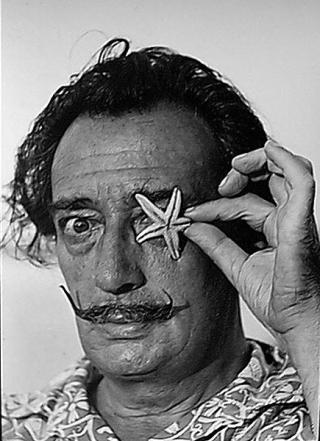
At the age of six I wanted to be a cook. At seven I wanted to be Napoleon. And my ambition has been growing steadily ever since.–Salvador Dalì

Salvador Dali (1904-1989) was a Spanish sculptor, painter and artist primarily known for being an innovator in the Surrealist movement. His theory of “critical paranoia” purported that an artist should cultivate genuine delusion, resembling that of clinical paranoia, while in reality remaining residually conscious that this release of reason was a deliberate and temporary suspension.

Never miss a post
Name: 
Your email address:*
Please enter all required fields
Correct invalid entries

Kids in the Kitchen: Daily Food Joke for Kids, July 29, 2011

Published by Friday, July 29, 2011 Permalink 0

What did the mother ghost tell the baby ghost when he ate too fast?

Stop goblin your food.

Courtesy of Cooking With Kids.

Never miss a post
Name: 
Your email address:*
Please enter all required fields
Correct invalid entries

French Food Quotes: Daily Food Quotes, July 28, 2011

Published by Thursday, July 28, 2011 Permalink 0

by curry

“…..an ignorant and pretentious bunch try to improve on what is already the finest….. The improviser sets himself up at the stove just as he does anywhere else. With his eyes turned to heaven instead of on his saucepans, he drops in a pinch of Sidonie-Gabrielle Colette powder here, a spoonful of brandy there, and somewhere else, something even worse — a few drops of custard! He uses any old stuffing, he dribbles in some frightful additive. . .. Old words, classic terms, and traditions are all flouted by these priests of improvisation — it seems that we are a long way removed from the discreet combinations of flavors, thought out at length, that were once the basis of French gourmandise. . . “.–Colette (Sidonie Gabrielle), French novelist, in Prisons et Paradis, 1933

Known as Colette, Sidonie-Gabrielle Colette, born into an upper middle class family, in France. She spent most of her childhood in Burgundy, and also maintained her taste for the freedom that country life lent. In Paris, she lived the Bohemian life and frequented the salons of the period. She started by writing for musical halls, signed by her first husband, and even showed up at the Moulin Rouge dressed as a man, but went on to journalism and literature. Her books remained in the spirit of music halls, often shocking the public with their explicit descriptions of sex and the senses.

Never miss a post
Name: 
Your email address:*
Please enter all required fields
Correct invalid entries

French Food Quotes: Daily Food Quote, July 26, 2011

Published by Wednesday, July 27, 2011 Permalink 0

by Jonell Galloway

This is my invariable advice to people: Learn how to cook — try new recipes, learn from your mistakes, be fearless, and above all have fun!–Julia Child

Julia Child brought French food to post-war America. When her husband Paul was posted to Paris, she studied at L’Ecole du Cordon Bleu, and went on to form her own cooking school with fellow students Simone Beck and Louisette Bertholle. The threesome went on to write the 2-volume classic Mastering the Art of French Cooking, which covered all the basic techniques and dishes of classic French cuisine.

Never miss a post
Name: 
Your email address:*
Please enter all required fields
Correct invalid entries

David Downie: Guanciale: An Obituary and a Homage to Rome’s Jowl Bacon, Part 2

Published by Tuesday, July 26, 2011 Permalink 0

by David Downie

Click here to read Part 1

For centuries, Rome’s demand for cured hog jowl was met by hundreds of specialized pork butchers and salami makers. The first are called norcini and are both butchers and salted-pork product makers. The second, salumieri or salsamentari, do not usually get involved in the butchering of the pigs. Norcia, the mountain town in Umbria famed for its black truffles, gave its name to norcini, such as the Carilli brothers were: they came from the area. It has been the heartland of great pork and wild boar for millennia. Both animals feed on acorns from the forests that gave Umbria its name. (Umbre and variants originally meant “shady” or “dark,” as in a dark forest of oaks.)

Continue Reading…

Never miss a post
Name: 
Your email address:*
Please enter all required fields
Correct invalid entries

Simon Says: Daily Food Quote, July 21, 2011

Published by Friday, July 22, 2011 Permalink 0

Good bread is the most fundamentally satisfying of all foods; and good bread with fresh butter, the greatest of feasts.–James Beard

James Beard (1903-1985) was an American chef and food writer who authored 20 books and was instrumental in bringing French cooking to America in the 1950s. World Culinary Institute gives a brief biography. His legacy lives on through the James Beard Foundation.

Never miss a post
Name: 
Your email address:*
Please enter all required fields
Correct invalid entries

Simon Says: Daily Food Quote, July 21, 2011

Published by Thursday, July 21, 2011 Permalink 0

by Simon de Swaan

The whole Mediterranean, the sculpture, the palm, the gold beads, the bearded heroes, the wine, the ideas, the ships, the moonlight, the winged gorgons, the bronze men, the philosophers -all of it seems to rise in the sour, pungent taste of these black olives between the teeth. A taste older than meat, older than wine. A taste as old as cold water.–Lawrence Durell

Lawrence Durrell (1912-1990), who wrote the modern classic Prospero’s Cell (1945) about time spent in Corfu, was born in India but spent most of his life abroad. Though educated in Britain, he resisted affiliation with Britain and preferred to be considered cosmopolitan. He was a novelist, poet, dramatist, and travel writer.


Never miss a post
Name: 
Your email address:*
Please enter all required fields
Correct invalid entries

David Downie: Chartres: Sacred and Profane

Published by Wednesday, July 20, 2011 Permalink 0

by David Downie

Last weekend my travel feature on the cathedral and lively town of Chartres ran in the San Francisco Sunday Chronicle Travel section — the cover story. This was the first time I’d written anything for the Chron since 2007. I was a regular contributor from the late 1980s until then, but somehow, after John Flinn left as editor, things went quiet. I had 6 books to write — three Terroir Guides, a thriller, a history of the American Academy in Rome, a book about Rome’s quiet corners… and Hit the Road, Jacques, about our 750-mile trek across France… a book my agent is currently showing to editors in New York… So, there wasn’t much time for magazine and newspaper work.

I’m happy to say that the affable “new” travel editor, Spud Hilton, in the saddle for the last few years, was glad to have me contribute again to the section. I hope this is the first of many pieces.

Back to Chartres and a teaser, the first few lines of the story, and a link. Photos are included and, believe or not, I took them. The par-blind photographer.

The voices of vacationers partying at cafés faded as I left Chartres’ picture-postcard main square and entered the dusky nave of the cathedral. Blinking until my eyes adjusted, I stared up at dozens of jewel-like stained glass windows glowing an otherworldly blue. READ FULL ARTICLE

Never miss a post
Name: 
Your email address:*
Please enter all required fields
Correct invalid entries

UA-21892701-1