Simon Says: Daily Food Quote, June 18, 2013

Published by Tuesday, June 18, 2013 Permalink 0

Simon Says: Daily Food Quote, June 18, 2013

by Simón de Swaan

The greatest dishes are very simple dishes.–Auguste Escoffier
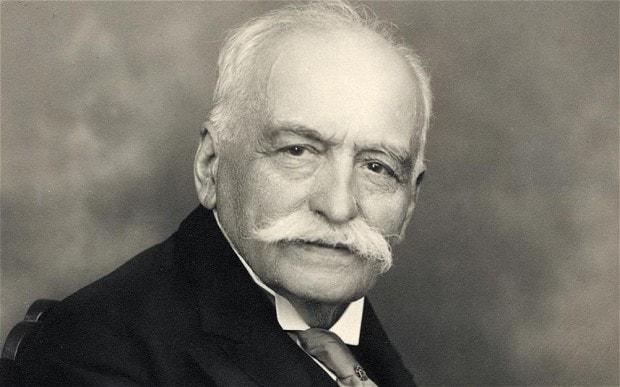


French chef, restaurateur and culinary writer August Escoffier (1846 – 1935) popularized and updated traditional French cooking methods. He is a legendary figure among chefs and gourmands, and was one of the most important leaders in the development of modern French cuisine.

Three of Escoffier’s most noted career achievements are revolutionizing and modernizing the menu, the art of cooking, and the organization of the professional kitchen. Escoffier simplified the menu as it had been, writing the dishes down in the order in which they would be served (service à la Russe), referred to Russian style service. He also developed the first à la carte menu. His books are still used by culinary students and chefs alike.


_atrk_opts = { atrk_acct:”vvoMh1aIE7000g”, domain:”theramblingepicure.com”,dynamic: true};
(function() { var as = document.createElement(‘script’); as.type = ‘text/javascript’; as.async = true; as.src = “https://d31qbv1cthcecs.cloudfront.net/atrk.js”; var s = document.getElementsByTagName(‘script’)[0];s.parentNode.insertBefore(as, s); })();


Never miss a post
Name: 
Your email address:*
Please enter all required fields
Correct invalid entries

Simon Says: Daily Food Quote, June 17, 2013

Published by Monday, June 17, 2013 Permalink 0


by Simón de Swaan

A nickel will get you on the subway, but garlic will get you a seat.—old New York proverb

New York City subway, Park Place, http://www.theramblingepicure.com/wp-content/uploads/2019/08/7c466963c851d426f396ee330d3b8020.jpg


_atrk_opts = { atrk_acct:”vvoMh1aIE7000g”, domain:”theramblingepicure.com”,dynamic: true};
(function() { var as = document.createElement(‘script’); as.type = ‘text/javascript’; as.async = true; as.src = “https://d31qbv1cthcecs.cloudfront.net/atrk.js”; var s = document.getElementsByTagName(‘script’)[0];s.parentNode.insertBefore(as, s); })();


Never miss a post
Name: 
Your email address:*
Please enter all required fields
Correct invalid entries

Food Quote: Nelson Mandela on Food

Published by Wednesday, June 12, 2013 Permalink 0

by Jonell Galloway

Nelson Mandela on Food

I was not born with a hunger to be free. I was born free. Free in every way that I could know. Free to run in the fields near my mother’s hut, free to swim in the clear stream that ran through my village, free to roast mealies [corn] under the stars … It was only when I learnt that my boyhood freedom was an illusion … that I began to hunger for it.–Nelson Mandela

Photo courtesy of The Guardian

has provided “the backdrop and occasionally the primary cause for momentous personal and political events in the life of Nelson Mandela.” In his autobiography, he took an innovative approach to history and showed that a great man’s life can be measured out in mouthfuls, both bitter and sweet. With this title, the reader can cook and taste Nelson Mandela’s journey from the corn grinding stone of his boyhood through wedding cakes and curries to prison hunger strikes, presidential banquets and ultimately into a dotage marked by the sweetest of just desserts. Tales told in sandwiches, sugar and samoosas speak eloquently of intellectual awakenings, emotional longings and always the struggle for racial equality. He was always motivated by hunger, either longing for food he couldn’t have, or depriving himself of food in the name of freedom.

“Only the truly food obsessed would read such a statement and consider the stomach from whence it came, but I did and the result is a gastro-political biography entitled Hunger for Freedom, the story of food in the life of Nelson Mandela,” he told Ana Trapedo of The Guardian.

When in prison, he wrote to former wife Winnie: “How I long for amasi (traditional South African fermented milk), thick and sour! You know darling there is one respect in which I dwarf all my contemporaries or at least about which I can confidently claim to be second to none – healthy appetite,” he told Trapedo.


Never miss a post
Name: 
Your email address:*
Please enter all required fields
Correct invalid entries

Food Quote: The Tragedy of the Absence of Hunger, by Amélie Nothomb

Published by Sunday, June 9, 2013 Permalink 0

Food Quote: The Tragedy of the Absence of Hunger, by Amélie Nothomb

We have yet to focus on the tragedy that the absence of hunger causes.–Amélie Nothomb, The Life of Hunger, 2006

L’absence de faim est un drame sur lequel nul ne s’est penché.–Amélie Nothomb, La biographie de la faim, 2006


Amélie Nothomb was born in Japan in 1967 to Belgian diplomats. She has had long periods of anorexia, which she swears to have conquered, and truly knows the feeling of hunger.

Her eccentric, complex personality, behavior and dress have made her somewhat of an icon on the French-language literature scene. She publishes one novel every fall in September, drinks champagne while she works, always wears a tall black hat similar to a witch’s hat, and only sleeps four hours a day.


Never miss a post
Name: 
Your email address:*
Please enter all required fields
Correct invalid entries

Daily Food Quote: Mahatma Gandhi on Food and God

Published by Friday, May 31, 2013 Permalink 0

by Jonell Galloway

To a man with an empty stomach food is God.–Mahatma Gandhi

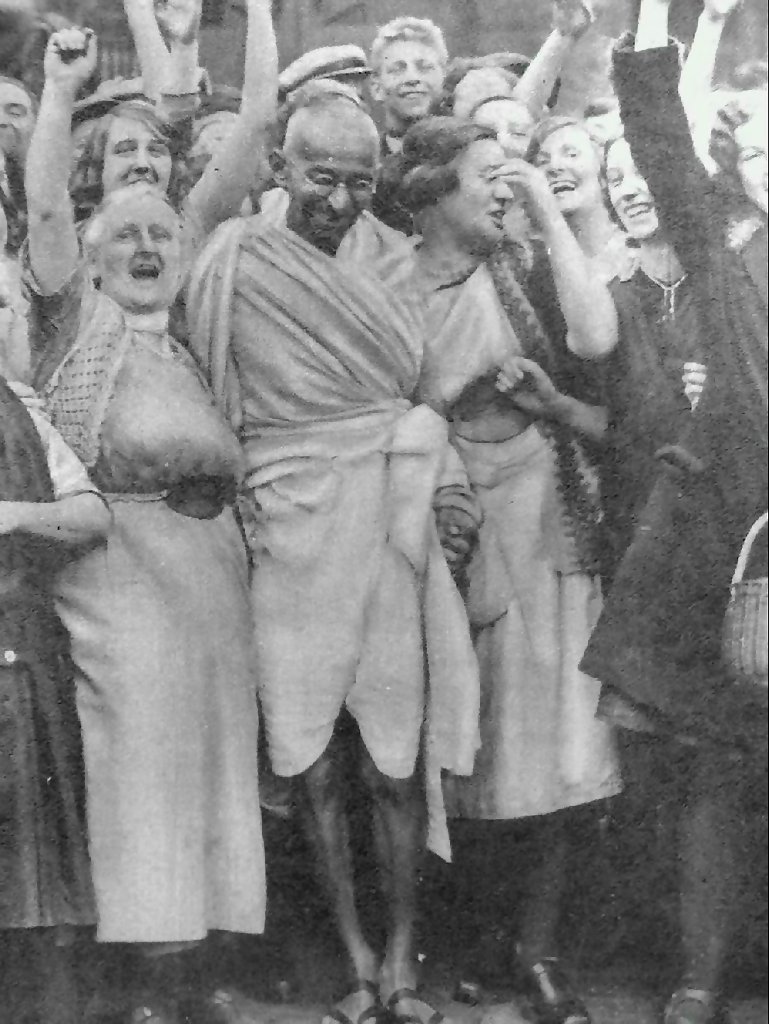
Mahatma Gandhi with textile workers at Darwen,...

Mahatma Gandhi with textile workers at Darwen, Lancashire, England, September 26, 1931.


Mohandas Karamchand Gandhi, more commonly known as “Mahatma Gandhi,” was born on October 2, 1869, in Porbandar, India. He studied law and became a defender of Indian rights both in India and South Africa, where he lived and worked for some 20 years. His method of opposing British rule and treatment was through mass non-violent civil disobedience, which has made him a model for peaceful revolution around the world.

Gandhi believed in living a simple life. He wove and made his own clothes, was a vegetarian and used traditional Indian fasts both for self-purification and protests against British discriminatory legislation against Indians. His philosophy of life and political “action” remain a beacon of hope for oppressed people around the world.


Never miss a post
Name: 
Your email address:*
Please enter all required fields
Correct invalid entries

Daily Food Quote: Mahatma Gandhi on Hunger and Eating

Published by Friday, May 24, 2013 Permalink 0

Daily Food Quote: Mahatma Gandhi on Hunger and Eating

There are people in the world so hungry, that God cannot appear to them except in the form of bread.–Mahatma Gandhi


Mohandas Karamchand Gandhi, more commonly known as “Mahatma Gandhi,” was born on October 2, 1869, in Porbandar, India. He studied law and became a defender of Indian rights both in India and South Africa, where he lived and worked for some 20 years. His method of opposing British rule and treatment was through mass non-violent civil disobedience, which has made him a model for peaceful revolution around the world.

Gandhi believed in living a simple life. He wove and made his own clothes, was a vegetarian and used traditional Indian fasts both for self-purification and protests against British discriminatory legislation against Indians. His philosophy of life and political “action” remain a beacon of hope for oppressed people around the world.


Never miss a post
Name: 
Your email address:*
Please enter all required fields
Correct invalid entries

Simon Says: Daily Food Quote, May 10, 2013

Published by Friday, May 10, 2013 Permalink 0

Simon Says: Daily Food Quote, May 10, 2013

by Simón de Swaan

A good cook is the peculiar gift of the gods. He must be a perfect creature from the brain to the palate, from the palate to the finger’s end.–Walter Savage Landor

Walter Savage Landor


Walter Savage Landor was an English writer and poet who lived from 1775–1864. He wrote in both English and Latin, but much preferred Latin, which put him at a disadvantage in terms of readership. His best known works were the prose Imaginary Conversations, “five volumes of imaginary conversations between personalities of classical Greece and Rome: poets and authors; statesmen and women; and fortunate and unfortunate individuals” (Wikipedia), and the poem “Rose Aylmer,” but the critical acclaim he received from poets and reviewers such as John Milton, T.S. Eliot, and John Butler Yeats was not matched by public popularity.


Never miss a post
Name: 
Your email address:*
Please enter all required fields
Correct invalid entries

Simon Says: Daily Food Quote, May 9, 2013

Published by Thursday, May 9, 2013 Permalink 0

Simon Says: Daily Food Quote, May 9, 2013

by Simón de Swaan

It is true that I live almost entirely on bivalves.  I prefer them as they are – and I think that oysters au naturel are as much a mental as a material enjoyment: you are eating the whole ocean.–Isak Dinesen


Karen von Blixen-Fineck was a Danish writer who wrote principally under the pseudo name Isak Dinesen — but also under the names Osceola and Pierre Andrézel — in Danish, French and English. She was married to her Swedish second cousin, the . She is best known for her book Out of Africa about her time living on her coffee plantation in the hills of Kenya, and for her short story “Out of Africa,” both of which were adapted into Academy Award-winning films.


Never miss a post
Name: 
Your email address:*
Please enter all required fields
Correct invalid entries

Simon Says: Daily Food Quote, May 8, 2013

Published by Wednesday, May 8, 2013 Permalink 0

Simon Says: Daily Food Quote, May 8, 2013

by Simón de Swaan

What a flavor (oysters) have – mellow, coppery, with almost a creaminess when you chew and analyze. I drank some good beer with them and floated on a gastronomically sensual cloud.–James Beard


James Andrew Beard was an American chef, cookbook writer, cooking teacher and television celebrity. Beard became active in the culinary community in New York soon after World War II, going on to become a true culinary reference in the United States. He helped Americans discover, identify and define their culinary heritage through his travels, teaching, and work, and through some 20 cookbooks, about half of which are still in print. His lively and sometimes eccentric personality made him somewhat of a celebrity, but his true measure lies in “his vast culinary knowledge; they are the measure of the times, too. The James Beard collection is a slice of American history. Written between 1940 and 1983, the books tell us through the language of food what we had and what we longed for, who we were and whom we hoped to become,” said Alexandra Zohn and Peggy Grodinsky in James Beard (1903–1985): The Complete Works.

His work lives on through the Beard Foundation which continues to provide culinary education and encourage excellence in American cuisine.


  • Snapshots with Chefs at the 2013 James Beard Foundation Awards
  • Blue Hill Tops James Beard Food Awards, Chef Title Split – Bloomberg
  • And the 2013 James Beard winners are …
  • Dan Barber’s Blue Hill wins top James Beard Foundation award
  • Beards name ChopChop top food publication of 2013
Never miss a post
Name: 
Your email address:*
Please enter all required fields
Correct invalid entries

Simon Says: Daily Food Quote, May 7, 2013

Published by Tuesday, May 7, 2013 Permalink 0

Simon Says: Daily Food Quote, May 7, 2013

by Simón de Swaan

Almost every person has something secret he likes to eat.— M.F.K. Fisher


Mary Frances Kennedy Fisher was a preeminent American food writer. She was also a founder of the Napa Valley Wine Library. She wrote some 27 books, including a translation of The Physiology of Taste by Jean-Anthelme Brillat-Savarin, an authoritative classic about eating as a sensory experience. Two volumes of her journals and correspondence came out shortly before her death in 1992, Stay Me, Oh Comfort Me: Journals and Stories, 1933-1941.


Never miss a post
Name: 
Your email address:*
Please enter all required fields
Correct invalid entries

UA-21892701-1