Salone del Gusto versus Good, Clean, and Fair: Part 2

Published by Monday, November 26, 2012 Permalink 0

by Diana Zahuranec

In Salone del Gusto versus Good, Clean, and Fair: Part 1, I’ve already mentioned some healthy skepticism about the presence of two big Italian names at Salone del Gusto: Lavazza Italian coffee, and the supermarket Coop.

Lavazza takes on the responsibility of Fair Trade coffee, but wearing a label doesn’t necessarily prove honest actions behind it. There are loopholes to be jumped in any policy. Without venturing beyond the comfort of online research to the plantations in South America, however, I couldn’t say with utter certainty how good, clean, and fair they are. My main conclusions? Don’t check off the Good Deed Done for the Day box just by buying Fair Trade, without knowing all the facts behind it.

It just doesn’t look Slow Food-y

As for Coop, I was very surprised to see this popular Italian supermarket in a haven of small-time producers at the Salone. Coop is no WalMart nor, on this side of the Atlantic, EuroSpin; shopping in my local Coop store, I’ve noticed very high quality, Alpine mountain cheeses, for example, alongside the added-preservatives-colors-skim-milk-binder, generic salumi; and I suppose I notice more organic produce overall. As far as the realm of supermarkets is concerned, my limited observations earn Coop a dull gold star. But a place at Salone del Gusto? Hardly, I thought.

Asking fellow Slow Food members what they thought, a Swiss friend informed me that it was in large part thanks to Coop, a charter member of Slow Food, that Slow Food Switzerland was initiated and is running strong today. Polish that gold star!

In fact, Slow Food and Coop have a partnership, with Coop supporting and promoting Slow Food values through selling local products as well as over 100 Presidia products (a Presidia labeled food being the equivalent of a protected or endangered animal in the food world).

Coop’s powerful, positive presence in the world of local producers and Presidia was brought home when I sat in for a tasting of some products during Salone del Gusto. Not that I wanted to taste anything. By the end of one of Salone’s last days, I had done as much tasting as my belly and buds could bear. But my legs were tired, and Coop had set up a booth lined with dangling Prosciutto legs, plastic chairs in rows, and a tasting of jam and juice. I didn’t resist.

The tasting was introduced by a Coop Quality Control employee and a representative of a Bosnian company based in Bratunac called Frutti di Pace, or “Peace Fruits.” Together, they told a story of how the Coop employee traveled to Bosnia for this product, met with the Bosnian woman, and formed an instant friendship that was strengthened, as in all cultures, over an abundant welcoming meal.

The employee found that the hardworking spirit and community of the women of Frutti di Pace were as charming as the incredible, all-natural flavors of their products were delicious.

Frutti di Pace was established after the Bosnia and Herzegovina War in 1992-1995. The members of this cooperative, mostly widowed women or women with husbands injured from the war, wanted to spur growth: of the local economy, of a long-held tradition ground to a halt from the war (raspberry production), and of a sense of community and confidence.

The first product we tasted was a thick raspberry juice. No colors, sugars, or conservatives were added – just water and red raspberry. It was exactly like plucking a handful of raspberries from a bush, squishing them all into your mouth, and squeezing out the juices with your tongue. The jams were next, and equally impressive in their bright, strong raspberry flavors. It lacked seeds, but that’s a personal preference of mine for raspberry jams.

Frutti di Pace spent ten years trying to get into the European market. The speaker was overwhelmed almost to tears when she recalled how happy they had been when Coop began selling their products. “’To hope’ is still difficult after everything we’ve been through,” she said.

My knee-jerk reaction to “supermarket” is “too much fluorescent light!” and then, “against all things Slow Food.” But this is not true (well, the second one). Today’s food market is pulled in two directions: one towards a global system made of imports, exports, and oil, the other towards local, small production, trends, and being organic. It’s important to consider the possibility that, between these two polar opposites, not everything is black and white. The grey areas will be necessary to marry two things that won’t go away for better or for worse: supermarkets in many parts of the world, and the importance of strong, local economies and good, clean, and fair food in all parts of the world.

Selling local food (or organic, or from a small producer, etc.) through a medium that everyone uses and will continue to use as long as it exists is ethically responsible and also quite genius.

The question remains: Does Coop Italia earn the good, clean, and fair award? It is still a supermarket that sells items ranging from low to high quality, from all parts of the world, and at prices too low to actually be profitable for the producer. But the answer is nevertheless yes – just, in a rather grey way.

Never miss a post
Name: 
Your email address:*
Please enter all required fields
Correct invalid entries

Thanksgiving Turkey News: Tips on Choosing, Buying and Cooking

Published by Tuesday, November 20, 2012 Permalink 0

by Jonell Galloway

How to Choose, Buy and Bake a Turkey in the U.S. and Europe

The USDA gives useful facts about about turkey hygiene and cooking, all based on the assumption that you’re cooking frozen turkey. If you live in the U.S., you’ll most likely be cooking a frozen turkey, so this information is spot-on.

Julia Child’s The Way to Cook still rates top on my list for detailed, illustrated explanations of how to prepare and cook a turkey and lots of other tips.

If you live in Western Europe, there are plenty of free-range, grain-fed turkeys. I order mine months ahead from a farmer near me, since in Europe they only eat turkey at Christmas and they won’t be fattened otherwise.

In Paris, in the 7th and 16th arrondissements in particular, many butchers have fattened turkeys for Thanksgiving, and they are often free range and natural. One of the most prized origins in France is dinde de Bresse, which of course comes from Bresse and is free range. In Geneva, you can buy these, stuffed or unstuffed, at La Boucherie Molard across from the Globus during the Thanksgiving period.

If you live in other cities in Western Europe, you may not have a lot of choice. I’ve had a number of bad experiences ordering turkeys through the butchers in the provinces. They are never sure whether they’ll actually receive a fattened turkey or a scrawny thing which was intended to be fat for Christmas. If you live in the country, however, try and find a turkey farmer near you. They will invariably be cheaper and often better.

Free-range, organic turkeys will never weigh as much as the supermarket variety, but the ratio of meat to bone is greater. It’s amazing how much meat there is on a 9 or 10 lb. turkey.

I have never tasted Mary’s Turkey in California, but they sound appetizing. Mary certainly takes her poultry seriously. They are free-range, vegetarian-fed, gluten-free, and free of all antibiotics, preservatives and hormones. They are also USDA-certified organic. You can order them online, or find a store near you that sells them.

Click here to watch an entertaining but helpful video about the dangers of frying turkeys.

Chowhound has a great discussion board about whether free-range, heritage turkeys are worth the price. I would always vote for free-range and natural. They have more meat and less bone, probably due to the fact that they’ve not been gorged with antibiotics, steroids and we probably don’t want to know what else. In addition, they don’t taste like meal.

The wild turkey population is growing in much of the U.S., so I’m sure many are tempted to shoot a big one for Thanksgiving. That’s all fine, but keep in mind: cooking a wild turkey is an entirely different bag of worms. If they are large, they risk tasting gamy. Here is some good common-sense advice for preparing and cooking them.

Truth About Turkey” gives an excellent layman’s explanation about how the various kinds of turkey in the U.S. are raised.

Have a Slow Food Thanksgiving” gives a list and directories of where to buy heritage, organic and free-range turkeys in the U.S.

Whenever possible, buy directly from a local farmer. When buying fresh turkey, always ask about the “use by” date. It will depend on packaging as well as when the turkey has been slaughtered. If bought fresh and unpackaged, The New York Times and Seattle Times suggest you can keep it one or two days maximum in the refrigerator, so plan your pick-up time carefully.


Related articles
Never miss a post
Name: 
Your email address:*
Please enter all required fields
Correct invalid entries

Sicilian Orange and Fennel Salad

Published by Thursday, November 15, 2012 Permalink 0


//

Sicilian Orange and Fennel Salad Recipe

by Diana Zahuranec

As fall slips into winter, the open air markets in Turin, Italy push nature’s seasonal fruits and vegetables to make early appearances in the crates and boxes stacked inside each bancarella, or stand. Oranges, grapefruits, and clementines from Calabria and Sicily showed their waxy globes in the middle of October; bitter turnip tops called cime di rapa were available by the end of September; spiky artichokes, still not technically in season, have been around for weeks.

The sweet, crispy finocchio, or fennel, one of my newly-discovered favorites, entered the scene two weeks ago at the beginning of November. Last year’s discovery that I’ve waited impatiently for since the end of September is the sweet, soft kaki vaniglia, the persimmon, which has a designated corner in my refrigerator. These bombs of juicy, fruity sugar are an after dinner treat that could almost replace autumn pies. Almost.

According to the illustrated and finely detailed wheel of seasonal fruits and vegetables that I bought at Eataly, citrus fruits have just begun their yearly cycle in November. I pat myself on the back, since I resisted buying these until a few days ago. There was one mysterious exception in the form of yellow-green skinned citrus fruits, easy to peel and sour-sweet inside. They came from Calabria, and the hulking, big man that sold them ensured me they were sweet and ripe, never mind their greenness. The man who sold them seemed to have been plucked from another time and place, where people can and still do pick oranges in the fields all day for decent wages, the weakening winter sun warm on their backs. His nails were dirty and his accent thick (presumably Calabrian).

Once at a food photographer’s studio in Emilia-Romagna, the chefs and food stylists there prepared a tangy, salty, sweet salad from the South. It had been inspired by the chef’s Sicilian roots. It’s now one of my favorite meals, and I have to wait for these seasonal fruits and vegetables before I can enjoy it. It evokes flavors from a land where the sun shines across fields with rows and rows of citrus trees, bright orbs decorating the branches in a warm Christmastime.

The traditional olives to pair with this are black ones, but I had green, which I might actually prefer. Being the salt queen that I am, a shot of capers hits the spot, but I don’t know how “traditional” that is. Also, blood oranges knock the pretty factor up a notch for this already aesthetically-pleasing plate.

Recipe

Sicilian Orange and Fennel Salad

For 2-4 people (depending on if using as a light lunch or as a side dish)


Ingredients

1 large fennel
1 medium orange
¼ red onion, sliced finely (or less)
¼ cup black or green olives, pitted and sliced thinly
Salt and pepper to taste
Extra virgin olive oil
Optional: 1-2 Tbsp capers, hot pepper
  1. Slice the fennel in half, and then core each half by cutting out the tough triangular sections at the bottom.
  2. Trim the ends, reserving green fennel leaves for garnish. Trim any bruised parts. Slice finely and set aside. Note: I also slice the very end green stems, because they’re strong in flavor and very crunchy. They may be too astringent for some tastes.
  3. Peel the orange. Setting it on its side, slice it very thinly so that each piece is divided into segments. Keep them as full round slices, or break them into halves or double segments.
  4. Layer the fennel, orange, and onion, then scatter the sliced olives over the top. Sprinkle with salt and pepper, drizzle with olive oil, and garnish with the fennel leaves. Add a dash of hot pepper and a sprinkling of capers if you so choose.
Never miss a post
Name: 
Your email address:*
Please enter all required fields
Correct invalid entries

Pumpkin “Museum”, Salone del Gusto 2012, Slow Food Italia

Published by Tuesday, November 13, 2012 Permalink 0

All the Pumpkins Varieties in the World: A Photo Essay

by Jonell Galloway

Pumpkin varieties of the world, Salone del Gusto 2012

Image 1 of 6


Never miss a post
Name: 
Your email address:*
Please enter all required fields
Correct invalid entries

Weight Loss Challenge: Eat Smaller Portions

Published by Thursday, September 13, 2012 Permalink 0

by Jonell Galloway

Eating smaller portions is not always as easy as it sounds.

In restaurants, they invariably serve portions much larger than you would take if you were serving yourself. I decided a long time ago that I would eat until I felt full, and not feel guilty about leaving the rest. My husband and children often end up eating the rest or taking it home in a doggie bag. I often solve this problem by ordering two starters and no dessert, which is a somewhat less noticeable way to go about it.

Continue Reading…

Never miss a post
Name: 
Your email address:*
Please enter all required fields
Correct invalid entries

MarketDay: Swiss Farmers Market, Late August

Published by Tuesday, September 4, 2012 Permalink 0

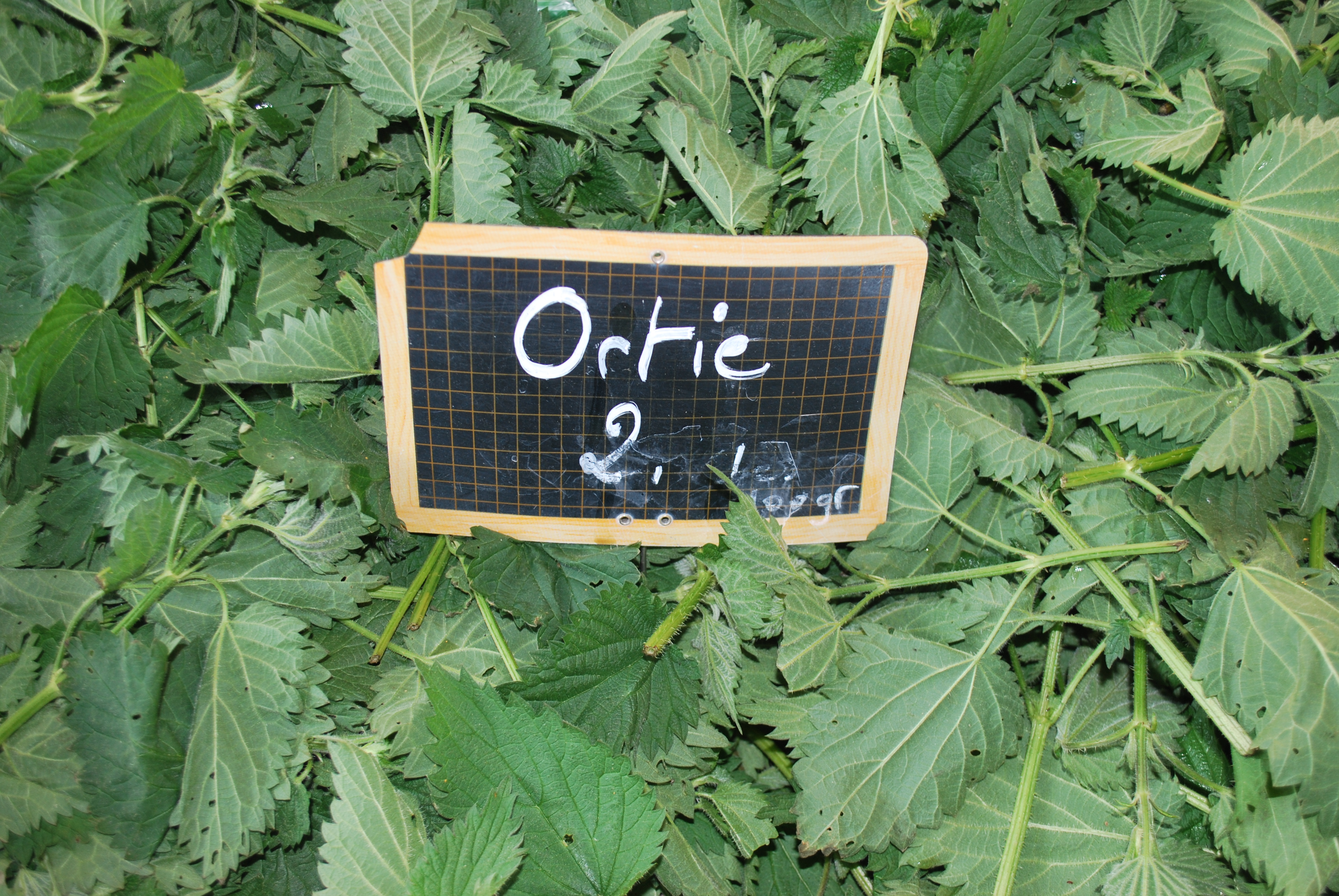
Take a walk through the late August farmers market in Switzerland with Jonell Galloway.

Never miss a post
Name: 
Your email address:*
Please enter all required fields
Correct invalid entries

Food Art: Kentucky Route 127 Yard Sale, a food & other photography exhibit by Dave Cronen

Published by Thursday, August 2, 2012 Permalink 0

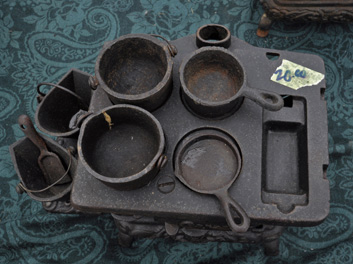
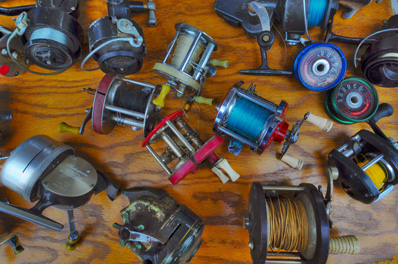
Interview with Dave Cronen: I am not a big fan of yard sales per se but I have to admit when you lump them all together for 400 miles (from Michigan to Alabama), they do have a draw. Once a year, usually in August, on a secondary road called Route 127, buyers and sellers meet to buy and sell their wares. One thing I have noticed is the inordinate amount of kitchen stuff. One is an item, 15 is a collection. I’ve enjoyed photographing the patterns and shapes and the colors of America throughout my career as a photographer.

Never miss a post
Name: 
Your email address:*
Please enter all required fields
Correct invalid entries

Rosa’s Musings: In Sync with the Seasons: Baked Apricots Stuffed with Almond Paste

Published by Tuesday, July 17, 2012 Permalink 0

by Rosa Mayland

INCREASE YOUR GASTRONOMIC EXPERIENCE BY EATING IN SYNC WITH THE SEASONS

Baked Apricots 2 bis The Rambling Epicure Rosa's Musings Rosa Mayland

With the arrival of hotter weather, I am thrilled that some of my favorite fruits are starting to grace (super)market stalls. They are so fabulous that I can never get enough of them. Not one week goes by without me making either pies, pastries, cakes, trifles, crumbles, clafoutis or cobblers in my itsy-bitsy apartment kitchen.

Continue Reading…

Never miss a post
Name: 
Your email address:*
Please enter all required fields
Correct invalid entries

Switzerland: Looking for a Farmers Market in Geneva?

Published by Saturday, July 14, 2012 Permalink 0

Click here for Geneva Tourism’s list. Take a look at this photo documentary of what’s on offer at Swiss farmers markets.


Never miss a post
Name: 
Your email address:*
Please enter all required fields
Correct invalid entries

Barbie’s Secret to Weight Loss: Don’t Eat

Published by Monday, April 2, 2012 Permalink 0

by Jonell Galloway

Reprint of our most popular article

Barbie’s secret to weight loss was “don’t eat”: Is that your teen’s philosophy?

The 1965 Slumber Party Barbie came with her very own How to Lose Weight book. The main message was “don’t eat.” Along with this book came a bathroom scale always set at 110 pounds/49.9 kilograms, says Teen Beauty Tips. According to Malisa Morsman, “Barbie is the plastic equivalent of a 5-foot, 9-inch (1.75 m) woman with a 36-inch (91.5 cm) bust, 33-inch (83.8 cm) hips, and an impossibly small 18-inch waist (45.7 cm).”

Photo courtesy of Mental Floss.

Continue Reading…

Never miss a post
Name: 
Your email address:*
Please enter all required fields
Correct invalid entries

UA-21892701-1