Kids in the Kitchen: Teach Your Kids How to Shop for Food

Published by Monday, June 17, 2013 Permalink 0


//

The Rambling Epicure, Editor, Jonell Galloway, food writer.Kids in the Kitchen: Teach Your Kids How to Shop for Food

by Jonell Galloway

Summertime is the perfect time to start!

Farmers Market

Going to the farmers market can be made into an exciting, weekly event. Summer offers lots of fresh fruit that they can choose to make their smoothies, to put on their breakfast cereal, or to make fruit salads. Vegetables are tastier in summer than in winter, and there is a larger selection, so it is also an occasion to encourage them to try more vegetables. If they choose fruit and vegetables themselves, they will feel more part of the process, and are more likely to eat them.

Making the Shopping List

Start by discussing the fruits and vegetables that are in season with your child before you go to the market. For the Lake Geneva region, you can look at our MarketDay photo albums, published regularly, to get an idea of what you can expect to find. If you are planning on making a meal together, choose the dishes and ingredients together when making your shopping list. If it’s fruit for snacks or smoothies, let them decide which ones they prefer.

It is a good idea to put up a food pyramid and a seasonal products chart somewhere in the kitchen, so you can refer to it when planning meals with the children, and also to explain why they must eat food such as green vegetables or fruit, for example. More suggestions are available in our 9 May 2009 post A fun, interactive guide for teaching your children good eating habits.

Explain the importance of buying local when possible. It is not only cheaper, but fresher, and therefore has more vitamins.

At the Market

Once you’re at the market, let them start looking for the items on the list. When they’ve spotted them, explain how to choose, by color, smell, touch, ripeness, etc., but make sure to ask the vendor if it’s all right to touch first.

This is also a time to let them look for products that have a local origin written on the tags, and to explain that if the products are local, they are also more ecological, because the cost of transport is less, and that in turn makes them more economical. It takes a lot of fuel to bring tomatoes from Holland in July and August when we have them right here in the region. Reduced transport also cuts pollution.

Buying from local producers allows children to have direct contact with the farmers, and to ask questions if they like. Farmers love to talk about what they have lovingly produced, and this in turn encourages children to appreciate farmers’ hard work and the satisfaction that it brings them. There is a reciprocity: the farmer gives you something he or she has produced with care, and you in turn get to satisfy your tastebuds.

Make kids part of the entire process by letting them help prepare the meal or dish afterwards. Once again, they are more likely to eat it if they help prepare it.


//

Never miss a post
Name: 
Your email address:*
Please enter all required fields
Correct invalid entries

David Downie: Artful Parisian Pastry: Paris Past, Part 1

Published by Monday, June 17, 2013 Permalink 0

David Downie: Artful Parisian Pastry: Paris Past, Part 1

by David Downie

What do the glories of ancient Greece and imperial Rome, baroque Naples and pre-revolutionary “Let-them-eat-cake” France have in common with contemporary Paris?

Easy: artful pastry.


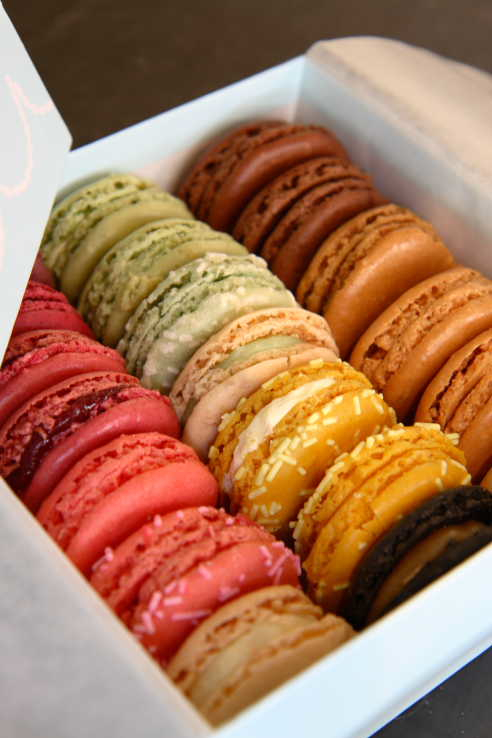
Toss out a euro coin nowadays and it will probably land on a Paris pâtisserie whose chef is bent on titillating customers’ taste buds while dazzling eyes and lightening wallets. White chocolate roses crown red powdered-sugar lips. Fruit still-lifes à la Caravaggio top praline plinths. Dark chocolate treasure chests enclose luscious layer cakes, and bras are not of silk but of purest chocolat.

Training in artistic Parisian pastry making is also in vogue: ever since the renowned École Grégoire-Ferrandi cooking school began partnering with mega-star Pierre Hermé, the chef Vogue has dubbed “the Picasso of pastry”, the “Haute Pâtisserie” concept has ruled Paris tastes.

“The fine arts number five,” wrote Marie-Antoine Carême in the late 18th century, “painting, sculpture, poetry, music and architecture, the principal branch of which is pastry.”

Ever the tongue-in-cheek wit, not for nothing Carême was known as “the king of chefs and the chef of kings”. His claim to pastry fame was the invention of Pièces Montées—precursors of today’s tiered wedding cakes. Remember Tony Curtis and Marilyn Monroe in Some Like it Hot? Carême pièces were big enough to hide a man, like the cakes machine gun-toting Mafiosi burst from in gangster movies.

Continue Reading…

Never miss a post
Name: 
Your email address:*
Please enter all required fields
Correct invalid entries

Culinary Travel: Jonell Eats her Way through Paris in June, a Photo Essay

Published by Friday, June 7, 2013 Permalink 0


There’s no better time to eat your way through Paris than in June. It is abundant with local fresh fruits and vegetables, sunshine and flowers. It’s a sensual experience that one must experience at least once in a lifetime.

This slide show gives you a glimpse of just how beautiful and sensual it is. Enjoy.


Never miss a post
Name: 
Your email address:*
Please enter all required fields
Correct invalid entries

Apollonia Poilâne and the Making of the Paris Poilâne Bread “Empire”

Published by Saturday, June 1, 2013 Permalink 0

by Jonell Galloway

Did the French Bread Revolution start with Poilâne Bread?

The familiar French word for friend, “copain,” means “to share bread with each other.”–Apollonia Poilâne, now head of the Poilâne bread “empire”

A humble baker called Pierre Poilâne started a bakery on the rue du Cherche-Midi in Paris in 1932. The 6th arrondissement was not a chic neighborhood at the time; penniless artists lived there, and often paid Poilâne in paintings. We might ask, did the French Bread Revolution start here at 8 rue du Cherche-Midi?

Poilâne used stoneground, unprocessed, whole-grain flour and sourdough starter, baking his bread in a wood oven — then unheard of in Paris, the capital of the baguette. It was unfashionable to eat anything other than white bread. This way of thinking was further reinforced by WWII, during which the French had no choice but to eat heavy, dark bread. He continued making it nonetheless, says France Today, and today, Apollonia Poilâne, Pierre’s granddaughter, runs the bakery.

Until 2007, she studied at Harvard and ran the bakery at the same time, having her personal supply of bread sent to her every week in Boston.

Note the elegant “P” carved into the top of each loaf.


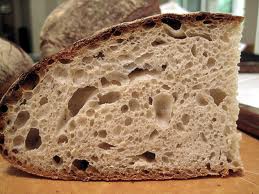
This now-classic Poilâne loaf has a hard, crusty outside and a firm, dense crumb on the inside. It can keep be eaten fresh for up to 5 days after baking, after which it can be toasted.

Inside Pain Poilane bread creative common license http://www.thefreshloaf.com/keyword/pointeacalliere


Pain Poilâne or miche, meaning “round loaf,” weighs in at around 2 kg / 4.4 lb. The recipe is secret, and it is not a whole-grain bread in the traditional sense of the word. Environmentally correct, pesticide-free varieties of wheat are grown and stored. They are then stone-ground, thus preserving the wheat germ. Stone grinding makes it possible to eliminate any coarse bran that might contain impurities.

Poilâne flour is what is called in French farine biseor wheatmeal — a brown flour intermediate between white flour and wholemeal flour — which maintains a higher nutritional value than white flour. Levain or sourdough starter and salt from the salterns of Guérande, a swamp of salt water in Brittany.

Pierre brought this type of bread with him from his native Normandy, where loaves were large and round, in the style of what the French now call “country bread.” Today, it is distributed all over the world.

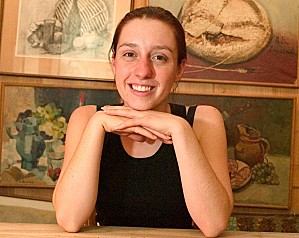
Apollonia Poilâne, current owner of Poilâne bread bakeries


Pierre’s sons Lionel and Max took over the bakery in 1970. Just like Apollonia, they had learned bread baking by working right alongside their father, and continued the tradition of the original round loaf marked with the signature “P.” They eventually took separate paths, with Lionel keeping the original bakery started by his father, and Max going off on his own to start a bakery under his own name, Max Poilâne. In Paris, people have long discussions over which of the brothers makes/made the better bread, since both have continued to bake their father’s signature recipe.

Lionel Poilâne is better known outside France, since he grew the original family business, making it into an international name. This growth was made possible by his excellent teaching skills and his embracing of modern developments in the industry, such as the use of machine kneading, while at the same time maintaining his father’s philosophy of each baker following and taking responsibility for his or her loaves from start to finish. He referred to his concept as “retro-innovation.”

Lionel and his wife died when their helicopter, piloted by Lionel, crashed in 2002, leaving behind daughters Athena and Apollonia, the latter who is now following in her father’s footsteps. She started running the bakery on graduation from high school.

In this video, Martha Stewart visits the Poilâne bakery in Paris and learns about the bread making process in an interview with 22-year-old Apollonia Poilâne when she was still at Harvard. Click here to watch the video interview of Apollonia by Martha Stewart herself.


Martha Stewart

The offiical Poilâne site lists a number of recipes, for making and using some of the Poilâne bread and pastries.


Poilâne Bakeries

8 rue du Cherche-Midi, Paris 6th arrondissement
Tel. +33 (0) 1 45 48 42 59
 
49 bld de Grenelle, Paris 15th arrondissement
Tel. +33 (0) 1 45 79 11 49
Open on Sundays
 
38 rue Debelleyme, Paris 3rd arrondissement
Tel. +33 (0) 1 44 61 83 39
Open on Sundays
 
46 Elizabeth Street, London SW1W
Tel. +44 (0) 207 808 4910


To read more about the French Bread Revolution, see also (bilingual in French and English):

The Revolution of French Bread Baking (part 1), by Jean-Philippe de Tonnac

The Revolution of French Bread Baking (part 2), by Jean-Philippe de Tonnac

Book Review: Jean-Philippe de Tonnac’s “Dictionnaire Universel du Pain” or Universal Dictionary of Bread, by Jean-Philippe de Tonnac

The 7 Lives of Bread: Pascal Auriac, master bread baker in Laguiole, a hidden corner of France, by Jean-Philippe de Tonnac

Never miss a post
Name: 
Your email address:*
Please enter all required fields
Correct invalid entries

Geneva and Lausanne: Sustainable Living Resources in Switzerland

Published by Tuesday, May 21, 2013 Permalink 0

Geneva and Lausanne: Sustainable Living Resources in Switzerland

This is a new list for sustainable living in Geneva and Lausanne and we’ll be adding to it and updating it on a regular basis. We will extend it to other French-speaking cities as we add to the list.

Free WiFi in Geneva and Lausanne


GENEVA

The city of Geneva is in the process of setting up free WiFi hotspots in and around Geneva, referred to as “GeSpots”. The project is a long-term project, but terminals are already available at the locations marked in green. Click here to see the map.

LAUSANNE

Free WiFi hotspots are available in the following locations in Lausanne: Saint-François, Riponne, Flon, Palud, Montbenon, Navigation, Port d’Ouchy and at the Service des Automobiles automobile registration and inspection office and the Blécherette aerodrome.

Farmers and Open-air Markets

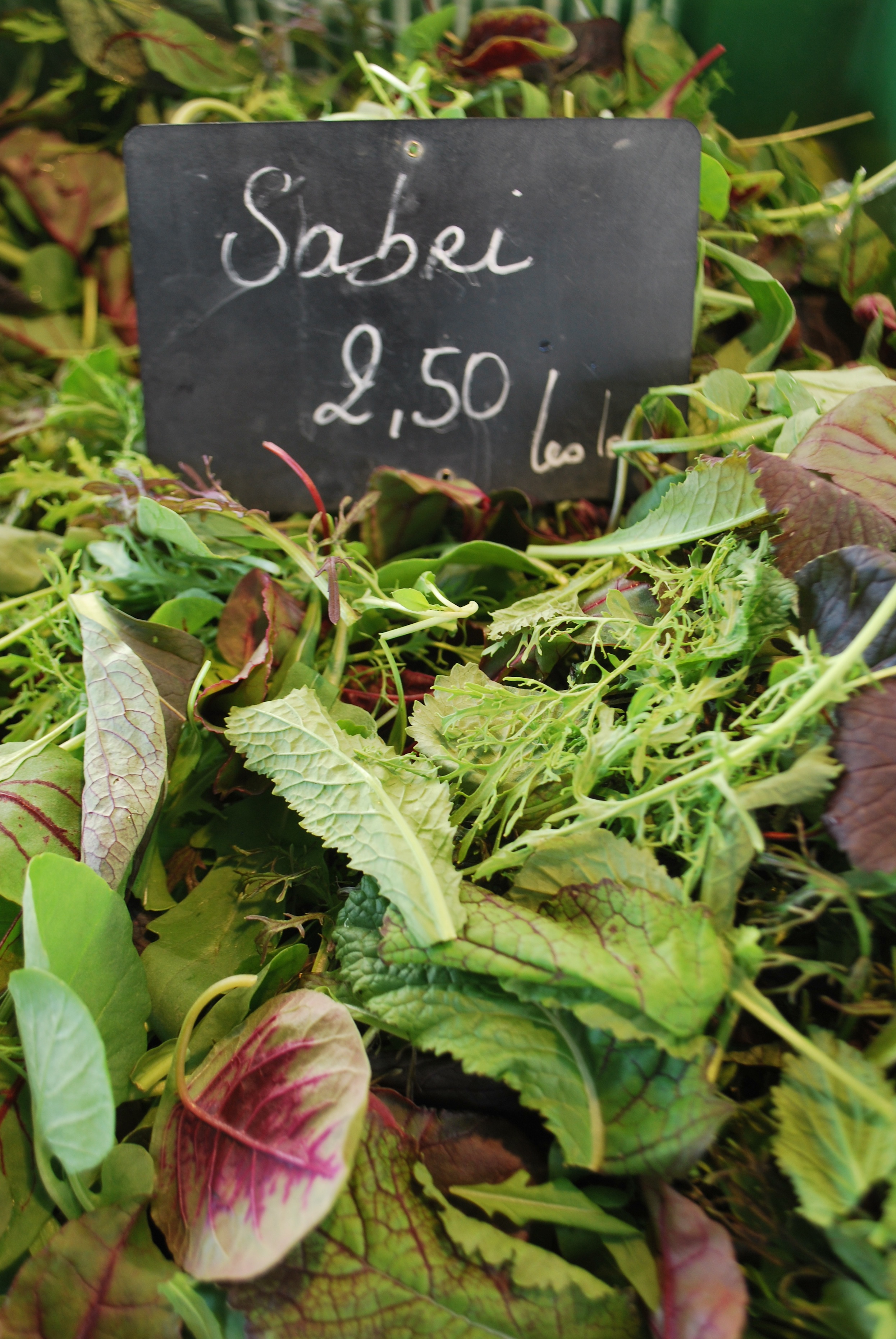
Sandrine Chapuis’ own mesclun, mixed greens from hills of Geneva


GENEVA

This site lists all the markets by day. A handy map is included with each listing so you can see where it is located in Geneva.

LAUSANNE

The Marchés Lausannois site lists the weekly markets:

Downtown/Center of Town Markets

Wednesday and Saturday, 8 a.m. to 2:30 a.m.
In downtown pedestrian streets: agricultural produce and products
On Place de la Riponne: bakery, butcher, fowl, mushrooms and non-food products

Nettles


Marché de Chauderon / Chauderon Market

Thursday, 9 a.m. to 7 p.m.
Flea market

Marché du boulevard de Grancy / Boulevard de Grancy Market

Monday and Thursday, 8 a.m. to 1 p.m.

Marché des Chômeurs

Thursday, 8 a.m. to 7 p.m.
Place de la Riponne: flea market and miscellaneous other goods


Never miss a post
Name: 
Your email address:*
Please enter all required fields
Correct invalid entries

MarketDay: End of April in Swiss Farmers Market, a Photo Essay, by Jonell Galloway

Published by Friday, April 26, 2013 Permalink 0
Never miss a post
Name: 
Your email address:*
Please enter all required fields
Correct invalid entries

Local vs. Non-local Food: The Arguments

Published by Saturday, January 12, 2013 Permalink 0

by Jonell Galloway

I think we got spoiled by eating cheap food from all over the world. That put us out of sync with nature and skewed the price of local produce and products vs. produce and products from distant places, leading us to waste what we once had held precious because it was seasonal and local and therefore rare. Slow Food USA and Josh Viertel were right in fighting for fair wages for our own farmers and trying to lead us back to a way of eating that is in line with nature, which of course means paying a little more, but improving our health and local economy.


There are many more arguments to be put forth. Let’s talk about it: the pros and cons, your experiences, your convictions, etc. We’d love to get a big discussion going here.

Click here to watch Building a Slow Food Nation, outlining the history of Slow Food in the U.S., and including Josh Viertel’s view.


Never miss a post
Name: 
Your email address:*
Please enter all required fields
Correct invalid entries

What we’re reading: bread pots, bad cooking myths, how the French Revolution changed food history, gourmet vegetarian

Published by Thursday, December 20, 2012 Permalink 0

by Jonell Galloway

Click here to find the best in current food news and trends in the world of real food, Slow Food and mindful eating.


Never miss a post
Name: 
Your email address:*
Please enter all required fields
Correct invalid entries

The Big Apple on a Budget: Celeste, a New York Restaurant Review

Published by Wednesday, December 19, 2012 Permalink 0

The Big Apple on a Budget: Celeste, a New York Restaurant Review

by Leonor White

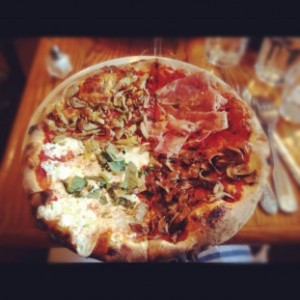
Celeste, located on Amsterdam Avenue between 84th and 85th, in New York, is one of my favorite places when I’m facing a cash squeeze. Thanks to the excellent value it offers, as well as the authentic Italian food it serves, it has deservedly become a popular fixture in the neighborhood.

After being greeted by the owner, you are taken to your table and presented with fantastic Italian bread and extra-virgin olive oil. The antipasti range from Fegatini Di Pollo (chicken livers) to Saute Di Cozze (sautéed clams) to Crostini Con Alici (breadsticks wrapped in anchovies), and my personal favorite, the Involtini De Melanzane, consisting of eggplant rolls stuffed with prosciutto and pecorino cheese baked with tomato sauce.


Continue Reading…

Never miss a post
Name: 
Your email address:*
Please enter all required fields
Correct invalid entries

What we’re reading: Persian chicken stew, Yam’Tcha Chinese fusion in Paris, anti-inflammatory recipes, Slow Down Diet

Published by Tuesday, November 27, 2012 Permalink 0

by Jonell Galloway

Click here to keep up with the latest in world food and wine news.


Never miss a post
Name: 
Your email address:*
Please enter all required fields
Correct invalid entries

UA-21892701-1