France and Italy’s relationship through time, wine & food
PROGRAM FOR 4-DAY MASTERCLASS TASTING WEEKEND IN CHARTRES
with Jonell Galloway and James Flewellen
4th to 7th October 2018
——- Course Overview
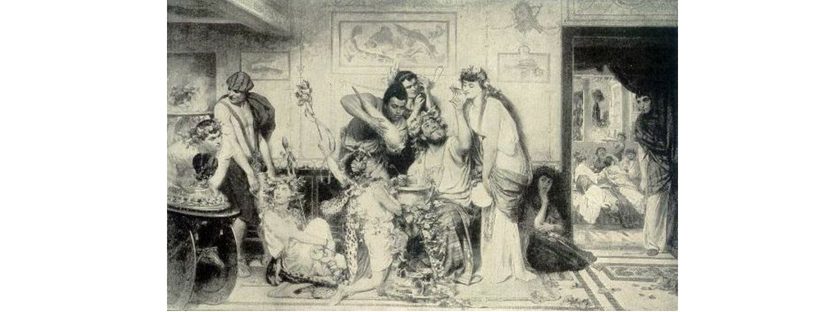
FRANCE AND ITALY ARE TITANS OF EUROPEAN culinary culture. The nations of today are inheritors of rich culinary traditions that are the result of millennia of interweaving relationships between the peoples who inhabit these lands. This is a process that predates even the Romans and continues very much into the 21st century.
Over this four-day weekend, we explore the culinary and vinous relationships between France and Italy from Roman times through to today. We will look at what each nation has gifted the other through various lenses, including food, drink and culinary culture.
The masterclass involves sumptuous feasting, tutored wine tastings, and intellectual discussion. Bring your taste buds, something to say and a willingness to learn!
I’ve come home. No, I should state that differently. I’ve had to redefine home.
We have decided to spend winters in Venice and summers in France and Switzerland. I have been absent from The Rambling Epicure over the last year and a half only in body, not in spirit. I continue living like a nomad, often not taking time to unpack my suitcase, hopping from Venice to Chartres and occasionally landing in Switzerland, which is still officially my home.
I am alive and I even kick from time to time just to make sure I still can. During this long absence, I fought an unnamed virus. Italian, French and Swiss doctors agreed that it would pass and it finally has. It was, in principle, an entirely physical ailment, yet became trying to the spirit.
In France, many a festive occasion is highlighted with sea bass. And since France and Venice are first cousins once removed, it turns out to be rather the same in Venice. A big fat bass is considered a treat.
Both places make sea bass in a salt crust, which is perhaps the cooking method that best preserves the juices, but when you have a nice wild one, which is rare enough these days, it will stand up to roasting.
I got inspiration for this recipe from a traditional Venetian recipe called branzino con patate et olive, or sea bass with potatoes and olives, in which they cook the bass on a bed of thinly sliced potatoes. One finds it in the better restaurants, but rarely in the touristy ones, perhaps because it’s time-consuming, although not difficult.
I’m wild about vegetables, so I added the sun-dried tomatoes, which add not only color, but a deeper flavor and more texture, an idea I got from Hosteria Al Vecio Bragosso near San Apostoli in our neighborhood of Cannaregio. The baby Swiss chard is also my addition.
Sometimes I add olives, sometimes not. Other times, I add capers, and other times both. This partially depends on whether the bass is wild or farmed. The farmed ones lack full flavor and these additions add some life as well as contrast to the dish. Onions can also add spark, especially to a farm-raised bass.
As always, my French touch means that I add a bit more wine than the Venetians. I do like my sauce. After all, that’s what life is all about, isn’t it?
Recipe
Serves 4
Whole sea bass, wild if possible, cleaned and scaled, about 3 lbs. or 1.5 kg
4 large potatoes, scrubbed but not peeled 10 sun-dried tomatoes, chopped finely 1 large onion, thinly sliced Parsley, chopped coarsely 2-3 cups white wine 4-5 branches of fresh rosemary Olive oil
One bunch of young Swiss chard or bietola
Salted capers
Black olives (optional) Salt and pepper to taste
Heavy metal roasting pan
Pour 2-3 tablespoons of olive oil into the roasting pan. A broiler pan or heavy roasting pan is perfect.
Place the potatoes and sun-dried tomatoes in the pan, in a single layer, turning them to evenly coat them in the olive oil.
Salt and pepper to taste.
Place in oven, turning every 5 minutes and adding oil if they start drying out. Cook until the potatoes start to feel soft, but firm, when pricked with a knife or 15-20 minutes.
Remove the vegetables from the oven. Turn carefully in the pan juices.
Evenly distribute the onions, parsley and branches of rosemary, setting one branch aside.
Place the sea bass on the bed of potatoes. Insert one branch of rosemary in the cavity.
Salt and pepper to taste.
Add one cup of white wine to the bottom of the pan.
Place in the oven and lower the temperature to 400°F / 200°C, adding more white wine every time it evaporates and turning the potatoes each time. This prevents the potatoes from sticking and rehumidifies the sun-dried tomatoes.
After 15-20 minutes, use a metal spatula and check whether the top of the fish is cooked by carefully trying to lift it off the bone. It is important to use a metal spatula because it “cuts through” the fish; a rubber one is thicker and might mangle the flesh. If it can barely be lifted away from the bone, the top is nearly cooked, so remove the pan from the oven and carefully turn it. You may need two heavy-duty spatulas or utensils to do so because of the weight.
Return it to the oven for another 15-20 minutes, checking it in the same manner using a metal spatula to see if it is cooked, and adding white wine as necessary.
When the fish is fully cooked — just enough to lift it off the bone — lay the leaves of chard over the fish and vegetables and return to the oven for 1 minute, just enough to wilt it.
Remove the baking pan from the oven and turn the chard in the rendered juices. Filet the fish; it will usually be possible to simply lift it off with a metal spatula.
Serve immediately.
Serve salted capers as a garnish.
Serve any white wine left in the pan as sauce.
Tip: If you hesitate about adding this much white wine, you can substitute half of it with freshly squeezed orange juice. The exact cooking time of the sea bass varies depending on the thickness of the fish, thus the importance of using the spatula technique. There is no need to add lemon when serving, since the white wine gives an acidic edge. You can also use turbot for this dish; follow the same steps, but because it is not as thick as bass, the cooking time will be less.
Many say this is the ultimate Venetian specialty, but considering that Venetians eat mainly fish, one could easily argue that point. A good fegato can be the highlight of a day or weekend, however.
Everyone loves caramelized onions, but some people dislike even the idea of eating liver. Calf’s liver is finer than beef or chicken, and when it’s topped with sweet onions, it is indeed a highly refined dish.
You’ll see the influence of my background in French cuisine; I went a bit heavy on the white wine when deglazing the pan, but it renders a succulent sauce.
One of the crucial elements to the success of this dish is that the liver be of exceptional quality and thinly sliced. Thick slabs simply don’t work and take away from the refined aspect of this dish.
Another secret is to slow cook the onions and to just seize the liver, no more. If you cook it more and on slow heat, it will become leathery.
Recipe
Ingredients
400 g onions 3-4 tablespoons olive oil
400 g calf’s liver cut in extra-thin slices 1-2 cups white wine Salt and pepper to taste Italian parsley, chopped
Skillet large enough to spread liver in a single layer
White polenta
Continue Reading…
Please choose a color:
The only time to eat diet food is while you’re waiting for the steak to cook.
Taste Unlocked Autumn Equinox 2015 in Chartres, France
Taste Unlocked 2015 was a great success. Our guests have returned to England, but the house reverberates with the still-fresh memories of their presence and the joys of good food, fine wine and the excellent company we shared. Happy souvenirs of their visit, a few unfinished bottles we tasted will be emptied in coming days, but we shall toast our special guests each time we partake.
I prepared traditional dishes from the Beauce region, using the recipes I’ve researched over the years and the best products from local farmers and producers. These were accompanied by what we consider our local wine, that of the Loire Valley, which starts less than 50 miles down the road from here.
We kicked off the weekend on Thursday over a dinner of locally farmed duck cooked in Eure-et-Loire apple cider and served with Beauce turnips and carrots and apples. This was followed by a curried green gauge plum sautée with Financier almond cake.
No one loves cream or creaminess more than the French. They love it so much that they call all sorts of things other than cream “crème“: cream soups, pudding, sauces, custard filling, pastry cream, coffee with hot milk, puréed chestnuts, almond cream, cream horns, and even certain liqueurs. Just about anything creamy is likely to be called cream in French.
Cream has existed ever since milk existed. Despite our association with French cuisine, in general, cream is more a specialty of the north of France where it’s cooler, of the land of butter, than of the south, the land of olive oil and duck fat.
Normandy might well be called the cream capital of the world, or at least of France. The Vikings brought what we now call Normande cows to Normandy a thousand years ago. They, along with Jersey cows, are known for the quality of their fatty, high-protein milk, which makes excellent cream, butter and cheese. Half of all French milk and cream now comes from Normandy.
From Southern biscuits to French baguette. You might wonder how a country girl from Kentucky who grew up on fried chicken, creamed corn, biscuits, cornbread, and church supper fruit pies could be qualified to tell others about boeuf bourguignon, cassoulet, choucroute or coq au vin. Yes, I’m writing a book we’ll call The French and What They Eat, since the title hasn’t yet been finalized. I’ll tell you the story in the book — from a general store/cream station/feedstore in a spot in the road in Kentucky, where the loafers discussed whether it was better to put a bag of peanuts into a Coke or an RC, to the City of Light and the Cordon Bleu Cooking School, eventually cooking, eating and drinking my way around France.
“What to Eat in France,” a series of regional French recipes with a story and a bit of history, is laying the groundwork for this book. If you’d like to follow the series on a regular basis, sign up for the newsletter in the right-hand column.
Spices and Corruption: Spices were so expensive that they could be given as gifts. Custom was to give them to judges during trials as thanks…or to corrupt them. In the 14th century, the term “spices” designated a mandatory tax which was added to the subtotal of a bill.–Le Viandier, credited to Guillaume Tirel, alias Taillevent
Food and Wine Tasting Masterclass in Chartres, France
18 – 21 SEPTEMBER 2014
Exploring the Food and Wine of the Beauce and the Loire Valley
with James Flewellen and Jonell Galloway
Through a series of tutored workshops, this 4-day weekend workshop will help unlock your tastebuds and introduce the richness of aromas, flavors and textures present in food and wine. Our exploration is enabled through local food from the Beauce and wine from the Loire Valley and coincides with the Chartres Festival of Lights and the Autumnal Equinox.
For course details click here and to make your reservation click here.