




Related articles
|
|

A Literary Culinary Journal

by Simón de Swaan
The ultimate aim of civility and good manners is to please: to please one’s guest or to please one’s host. To this end one uses the rules laid down by tradition: of welcome, generosity, affability, cheerfulness and consideration for others. People entertain warmly and joyously. To persuade a friend to stay for lunch is a triumph and a precious honour. To entertain many together is to honour them all mutually. It is equally an honour to be a guest.—Claudia Roden, A Book of Middle Eastern Food, 1968
Claudia Roden is a cookbook writer and cultural anthropologist based in the United Kingdom. She was born in 1936 in Cairo, Egypt. A Book on Middle Eastern Food is a classic in the world of cookbooks, and James Beard referred to it as “a landmark in the field of cookery.”

|
|
One should never refuse an invitation to lunch or dinner, for one never knows what one may have to eat the next day.–Édouard de Pomiane, Cooking with Pomiane, 1962
Édouard Alexandre de Pomiane (1875-1964) was a French scientist, radio broadcaster, and food writer. His best-known works to have been translated into English are 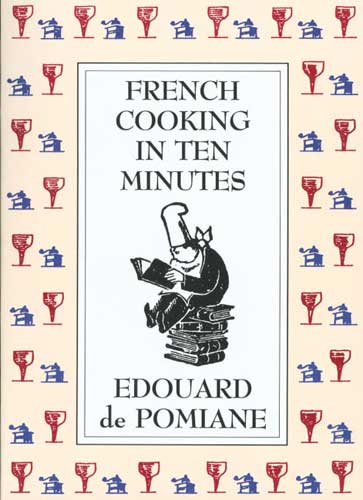 and Cooking with Pomiane. His recipes often take pains to demystify cooking by explaining the chemical processes at work.
|
|
by Simón de Swaan
A chief maxim in dining with comfort is to have what you want when you want it.—Thomas Walker, The Original, 1835
Thomas Walker was a police magistrate and author. On 20 May 1835 he began publishing The Original, and continued it weekly until the following 2 Dec. It is a collection of his thoughts on many subjects, intended to raise “the national tone in whatever concerns us socially or individually,” but his admirable papers on health and gastronomy form the chief attraction of the work.
|
|

by Renu Chhabra
One cannot think well, love well, sleep well, if one has not dined well. —Virginia Woolf

Sunshine and outdoors! Summer is in full swing. We have been experiencing beautiful warm days — some warmer than others. But that’s the beauty of this season.
Farmers markets are exploding with seasonal produce and an abundance of flower power. And local honey farms are showcasing their products with great pride. In fact, I recently attended a lecture about bee pollination at our local Whole Foods Market. It is amazing how these tiny bees create something so rewarding, one bit at a time. It definitely makes me respect every drop of honey I use. Especially at a time when there is quite a buzz about honey among health-conscious people like me who try to avoid refined sugars, and want to preserve this precious commodity. So I say, love our honey bees and respect their hard work.
|
|
by Simón de Swaan
The air pulses with the warm smell of lilac, but as we pass each door, the lilac dominance is subdued by heady wafts of asparagus cooking.–Jane Grigson
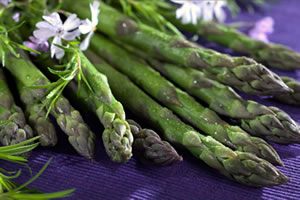
Elizabeth David was an English food writer. Grigson’s growing interest in food and cooking led to the writing of her first book, The Observery (1967), which was translated into French, unusual for an English food writer. Elizabeth David read the book and was impressed by it, and recommended Grigson as a food columnist for The Observer, for which she wrote a column from 1968 until her death in 1990.
|
|
by Simón de Swaan
The artichoke above all is a vegetable expression of civilized living, of the long view, of increasing delight by anticipation and crescendo. No wonder it was once regarded as an aphrodisiac. It had no place in the troll’s world of instant gratification. It makes no appeal to the meat-and-two veg. mentality.–Jane Grigson

Jane Grigson was an English food writer. Grigson’s growing interest in food and cooking led to the writing of her first book, Charcuterie and French Pork Cookery (1967), which was translated into French, unusual for an English food writer. Elizabeth David read the book and was impressed by it, and recommended Grigson as a food columnist for The Observer, for which she wrote a column from 1968 until her death in 1990.
|
|
Salt is the policeman of taste: it keeps the various flavors of a dish in order and restrains the stronger from tyrannizing over the weaker.--Margaret Visser
Salt plays an important role in our daily life. Not only is it a vital substance for all living creatures, as it regulates the water content of our body, but it is also makes food taste better. Nobody can survive or cook without sodium chloride.
|
|
The Rambling Epicure is a daily international food chronicle, and the first online newspaper to follow global food trends and news.
Based in Switzerland, The Rambling Epicure joins the voices of some of the best food and wine writers and artists from around the world interested in promoting a mindful, responsible approach to real food shopping, cooking, and eating, as well as food politics, safety, history, art, literature and philosophy.
Our ambition is to feature contributions in numerous languages, with all articles being translated into the common language, English, conveying the differing points of view of chefs, home cooks, and diners of different cultures.
Our ambitious goal is to cover food and wine from every corner of the globe. We are still looking for writers and artists/photographers.
|
|

These photos are by SandeeA, author of the column Food Play, and who runs a site called La Receta de la Felicidad. SandeeA is never lacking ideas when it comes to playful, fun recipes. Click here to find the recipe for this Giant Oreo Cake. It would be a great recipe to get your kids in the kitchen!
|
|
 Meet Jonell Galloway, a freelance writer and editor specialized in French cuisine.


