Foraging and Post-Neolithic Cooking: Antonio’s Wild Spinach Salad Recipe, by Jane Le Besque

Published by Sunday, June 16, 2013 Permalink 0

Foraging and Post-Neolithic Cooking: Antonio’s Wild Spinach Salad Recipe, by Jane Le Besque

Antonio’s Wild Spinach Salad Recipe

Jane and Antonio’s recipe is based on foraging and what they imagine post-neolithic cooking to be, foraging and all, but with a modern twist, i.e. the olive oil.


Continue Reading…

Never miss a post
Name: 
Your email address:*
Please enter all required fields
Correct invalid entries

A Mesolithic Dinner: Food, Wine and Art by Jane Le Besque

Published by Tuesday, June 4, 2013 Permalink 0

by Jonell Galloway

A Mesolithic Dinner: Food, Wine and Art by Jane Le Besque
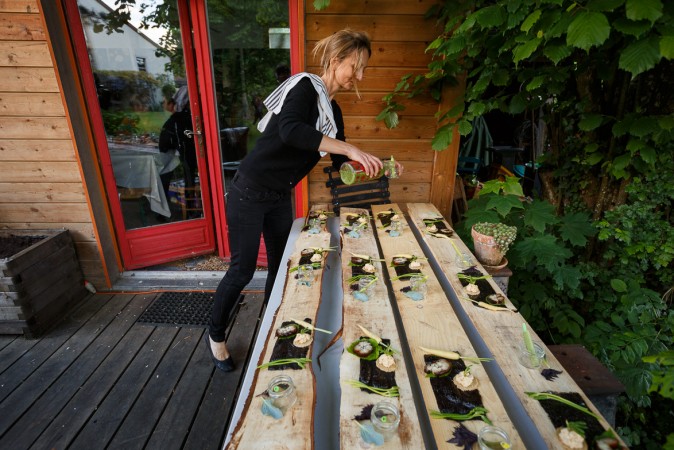
 

Jane Le Besque hosted a “mesolithic dinner” on June 30, 2013, in her home in the Pays de Gex just over the border in France, an event sponsored by Slow Food Geneva. The dinner was cooked using ancient flavor combinations and techniques, and served on split logs onto which slate plates were placed and used as plates.

What Food Did Jane Le Besque Serve at Her Mesolithic Dinner?

Although Jane’s dinner was labeled “Mesolithic”, it was indeed much more than that. She covered the evolution of food from the post-glacial hunter-gather periods, through the Mesolithic and Neolithic, and going on to the Ancient Greeks and Romans, centering on Europe.

It started with the Mesolithic era, with an assortment of coastal and lake fish, eel, root vegetables and wild greens. The meal then slipped in to the Neolithic era with galettes made from ground lentils, peas and barley, served with spit-roasted boar. The menu ended with an Iron-Age “travelers pack” of dried fruits and dried-porridge slices fried in cumin and butter. The Bronze Age brought blue cheese and butter.

Drinks consisted of mead, more often referred to as “honey wine,” more in the style of the ancient Greeks and Romans than of more ancient peoples, and beer.

What is the Mesolithic?

As a reminder, the Mesolithic Age refers to the pre-agricultural period between 10,000 and 5,000 BCE in Europe, and variations of this period in other parts of the world. The term “pre-agricultural” is key in understanding what ingredients were available. The three terms paleolithic, mesolithic and mesolithic refer to what is generally called the “Stone Age,” i.e. the post-glacial hunter-gatherer period, when humans started to use stone tools and food was gathered rather than farmed.


During the early Stone Ages or paleolithic (2.6 million years ago to around 10,000 BP), humans used some stone tools and utensils, but many tools were made from organic matter such as bone, fibers, and wood. Hunting and gathering were the chief ways of providing food. During the neolithic, starting around 10,200 BCE and ending between 4,500 to 2,000 BCE, depending on the location, we saw the beginning of farming. The mesolithic overlapped the other two ages, once again, at different times in different places. Metal tools brought these three Stone Ages to an end.
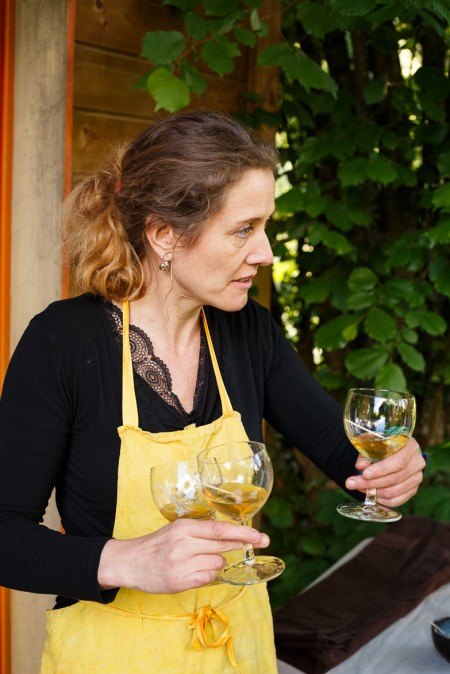
Jane Le Besque, artist and Mesolithic chef, serving mead


Early Stone Age cooking was generally on leaves or directly over the embers, although clay cookware has recently been found in China dating from 19,2000–20,000 years ago, during the ice age. Stone Age plates usually consisted of a rock or other flattish surface found in nature, such as the flattened split logs Jane used in the same manner as we use wooden tables today. Earthenware did not appear on the dinner table until much later.

What Did You Usually Eat at Mesolithic Dinners?

What did they eat? Pretty much whatever they found and killed that was edible: meat, fish, wild plants. The specifics of this depended on the location, climate and season. Meals included the day’s finds. This might consist of berries, wild greens and other wild vegetables and plants.

Meat and later fish were not an everyday affair. They were difficult to come by and difficult to preserve, depending on the location (salt was found in Romania as early as 10,000 years ago). Stone  Age people ate very little grain, since agriculture didn’t exist yet. Hazelnuts and other nuts were often roasted, and stored for winter. Wild boar was common; dairy products and cheese were on the menu, although a limited variety.

About Jane Le Besque

Jane Le Besque lives and works with her family at the foot of the French Jura, a few minutes from Geneva, in the foothills of the Jura mountains.

She was born in England and has a Breton grandfather, hence the name. Since graduating from Birmingham Art College in 1986, she continued her studies at l’Ecole des Beaux Arts in Paris. She afterwards lived and worked in Toulouse, London, and now outside Geneva.
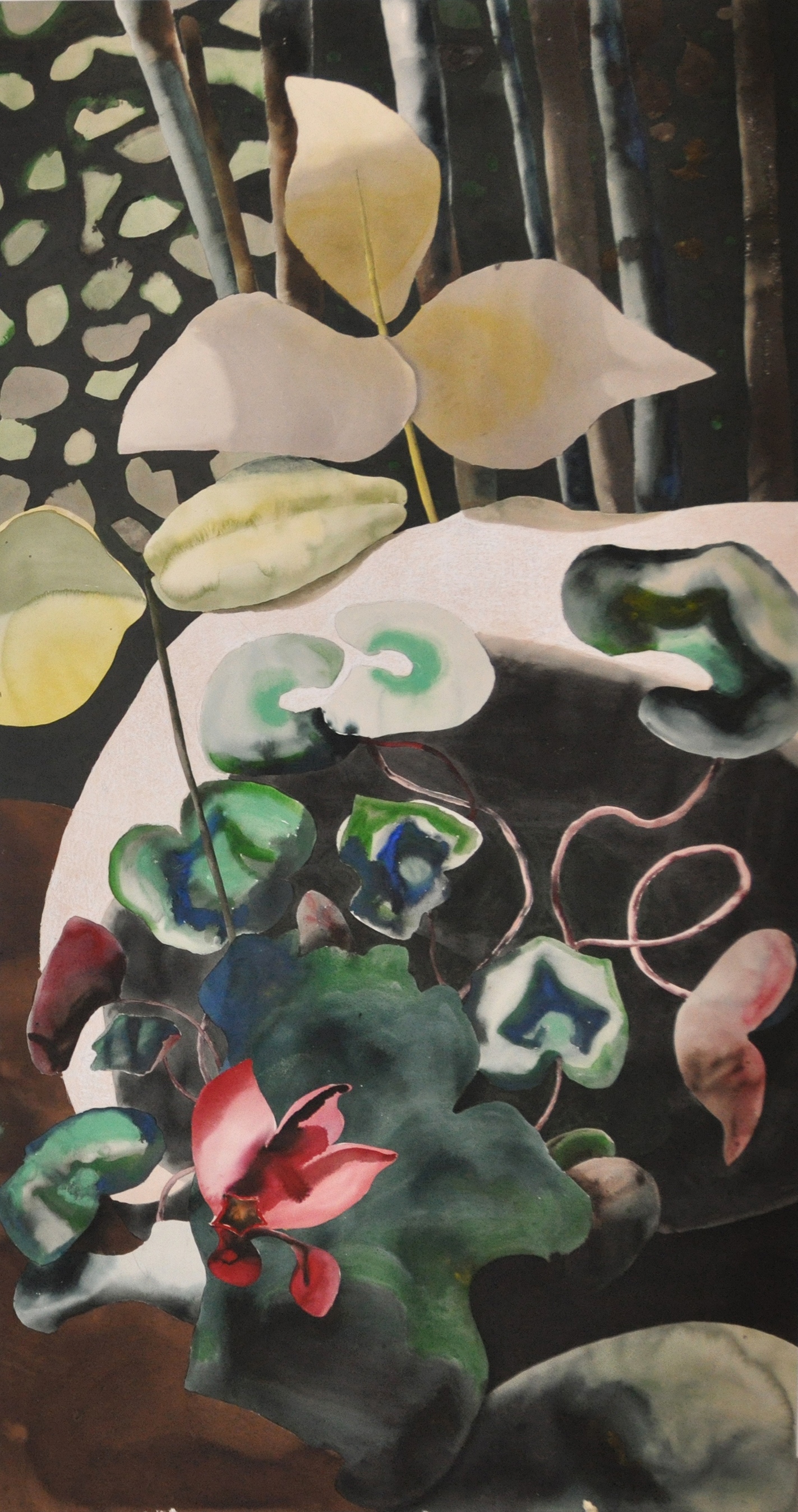


Jane has always painted. She is her happiest walking through the woods and gathering berries, mushrooms, acorns, flowers and leaves to use in her cooking and painting.

One might say Jane has been interested in mesolithic cooking even before she learned the word. As a child, she spent her time gathering the wild things she now uses in her paintings,  making dresses out of them.

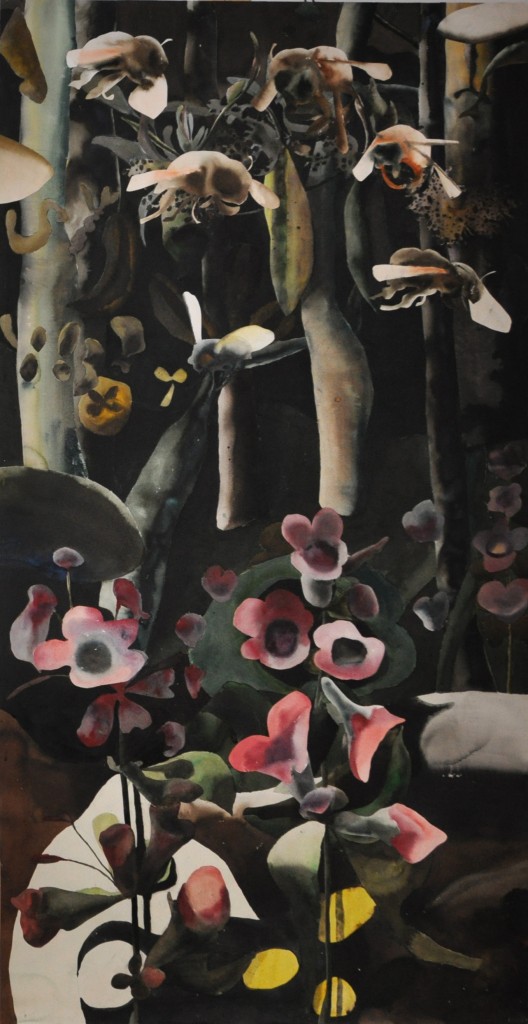
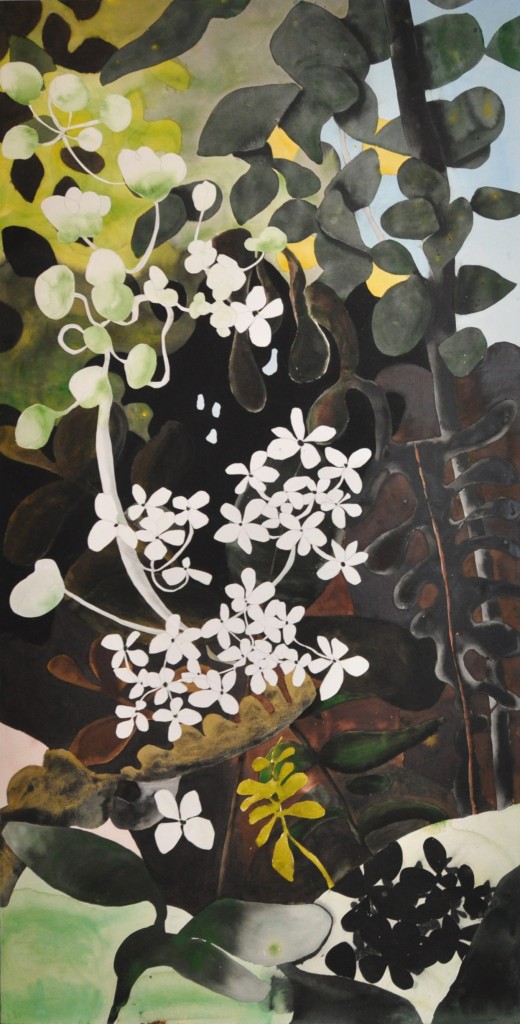
Her paintings are an intense reflection of her “gatherer” spirit. The Mesolithic dinner was held in her studio, lined with her paintings of flora of all types.



Never miss a post
Name: 
Your email address:*
Please enter all required fields
Correct invalid entries

Meet New Zealand Celebrity Chef Annabel Langbein

Published by Tuesday, September 25, 2012 Permalink 0

by Amanda McInerney

The celebrity cooks and chefs of the United States, the UK and Europe are frequently familiar to Australians too, but I sometimes wonder if the reverse is true. We’ve bred some truly remarkable kitchen talents down here in the antipodes — both in Australia and New Zealand — and we well and truly have our share of local celebrity chefs on TV shows and cookbook shelves. While the international Masterchef franchise has blazed across our screens and spawned an entire new crop of  culinary household names, there are plenty that have been steadily and consistently doing their kitchen/foodie thing without all of that fanfare and I’m taking this opportunity to introduce you to one of them.

Continue Reading…

Never miss a post
Name: 
Your email address:*
Please enter all required fields
Correct invalid entries

1.3 kg black truffle for sale in Perigord, France

Published by Thursday, February 23, 2012 Permalink 0

The Daily Mail in the U.K. says what is possibly the world’s biggest black truffle went on sale in the Sarlat truffle market last week.

Black truffles are the most sought-after and expensive mushrooms in existence, and are said to be an aphrodisiac, due to a “compound within the truffle similar to androstenol, the sex pheromone of boar saliva, to which the sow is keenly attracted.”

Click here to read more.

Truffle 3


Continue Reading…

Never miss a post
Name: 
Your email address:*
Please enter all required fields
Correct invalid entries

Portuguese Delights: Arbutus or “Tree Strawberry” Cream

Published by Friday, December 16, 2011 Permalink 0

by Gerês

I love to go to Gerês in autumn: The warm colors of the leaves. The tranquility of the surroundings and the breathtaking landscape always take me to another dimension, hard to define in only words. I lose myself in those glorious woods; I lose track of time too.

I take my time walking, enjoying nature’s generosity and gathering mushrooms and arbutus, also known as “tree strawberries”. And this year I was happy to discover that the arbutus trees were covered with vibrant yellow, red, and orange berries, most of them ready to be picked and eaten. They have a delicious sweet/tart taste and a singular texture. Soft but with very small pips, that give them a tiny bit of crunch, and perfect when dipped and baked in a smooth cream. They remind me of my care-free childhood in the hills of Gerês, when only the present existed and every moment had a magical aura.

When I returned home, I still had all these tastes and scents floating in my mind and I wanted to make them into some delicious concrete delight instead of just a memory. Once more, I found myself pottering in the kitchen, cooking a smooth fruity cream made out of memories.

Recipe

Continue Reading…

Never miss a post
Name: 
Your email address:*
Please enter all required fields
Correct invalid entries

Wendell Berry on Small-scale Farming in Good Times and Bad

Published by Tuesday, October 25, 2011 Permalink 0

by Jonell Galloway

Quote from Wendell Berry‘s Bringing it to the Table, On Farming and Food, introduction by Michael Pollan

In the time when my memories begin –the late 1930s — people in the country did not go around empty-handed as much as they do now. As I remember them from that time, farm people on the way somewhere characteristically had buckets or kettles or baskets in their hands, sometimes sacks on their shoulders.

Those were hard times — not unusual in our agricultural history — and so a lot of the fetching and carrying had to do with foraging, searching the fields and woods for nature’s free provisions: greens in the spring-time, fruits and berries in the summer, nuts in the fall. There was fishing in warm weather and hunting in cold weather; people did these things for food and for pleasure, not for “sport.” The economies of many households were small and thorough, and people took these season opportunities seriously.

Never miss a post
Name: 
Your email address:*
Please enter all required fields
Correct invalid entries

Wild Woman on Feral Acres: Can One Eat Soapweed Without Frothing at the Mouth?

Published by Friday, June 10, 2011 Permalink 0

by Esmaa Self


In a word: yes.

Narrow leaf yucca blossoms.

Soapweed is a common name for narrow leaf yucca, which is also known as yucca angustissima and moohu, the latter being the Hopi name for this useful plant. No matter what you choose to call it, you can find yucca growing wild all over the American west.

Our back yard, for instance.

The yucca plant is exceptionally beneficial: the leaves contain a strong fiber that can be used to weave cloth, the root can be used as soap, plus the long stem can be used as a vegetable, as can the flowers and the fruit.

As part of our plan to reduce our exposure to GE and GMO foods, and to further reduce our carbon footprint while optimizing our use of this fabulous property, eating free, readily available and nutritious wild food just makes sense.

So when the yucca plants began to bloom this week, I began to harvest.

Continue Reading…

Never miss a post
Name: 
Your email address:*
Please enter all required fields
Correct invalid entries

UA-21892701-1