Food and Wine Tasting Masterclass in Chartres

Published by Thursday, June 15, 2017 Permalink 0

Exploring the Food and Wine of the Beauce and the Loire Valley

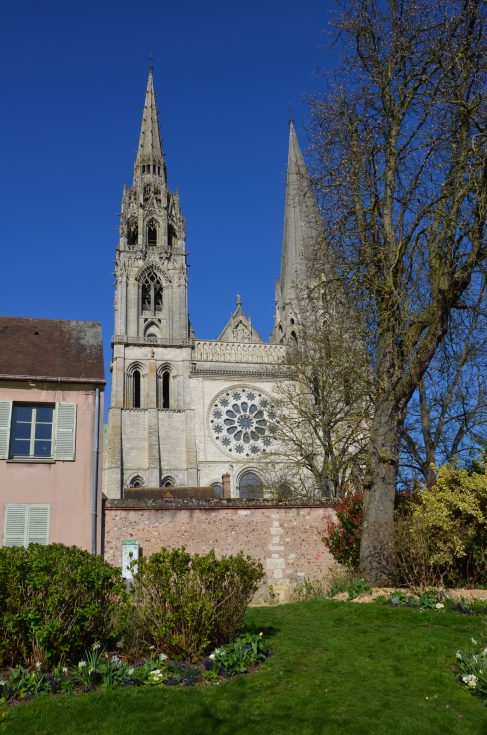
Award-winning wine writer, James Flewellen, and Cordon Bleu-educated cook and food journalist, Jonell Galloway, present wine and food tasting masterclasses in the historic French city of Chartres. Comprising dedicated wine tastings, sumptuous meals made from local ingredients paired with regional Loire Valley wines and a unique, “sense-awakening” taste experience, our food and wine holiday courses will help unlock your taste buds and introduce the richness of aromas, flavors and textures present in food and wine.

  • Courses conducted in English
  • All lunches, dinners, and wine included
  • We use only the highest quality, locally-sourced produce and ingredients
  • Over 10 hours of professional food and wine tasting instruction
  • Taste over 20 (4-day course) different wines from the Loire Valley
  • Learn the art of food and wine pairing
  • Dine and learn in a 1,000-year-old converted chapel
  • Socialize with like-minded wine- and food-lovers
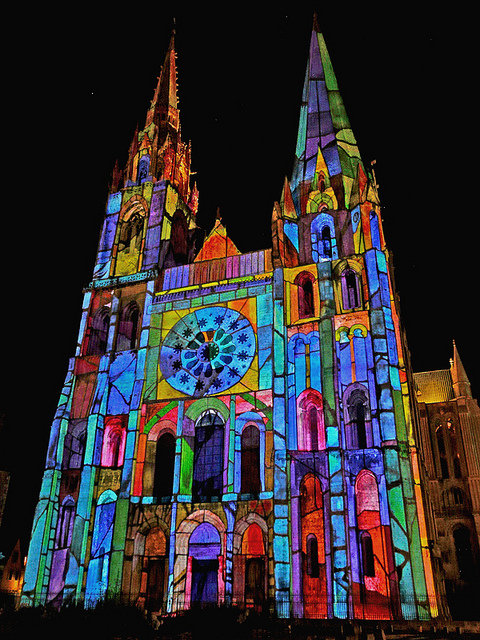
  • Experience the atmosphere of the Chartres Festival of Lights in a UNESCO World Heritage site
  • Guided city tour & collection from the station included

Click here for more details.

Dates for our 2017 masterclass are now confirmed:

  • Our signature 4-day Taste Unlocked masterclass costs €695pp and runs from 14–17 September, coinciding with the world-famous Chartres Fête de la Lumière.

James and Jonell are also available for bespoke tasting courses and events throughout the year for groups of 4 or more. Please contact us for more information.

Never miss a post
Name: 
Your email address:*
Please enter all required fields
Correct invalid entries

3-DAY TASTE AWAKENING COURSE IN CHARTRES

Published by Tuesday, June 30, 2015 Permalink 0

SEPTEMBER 17-20, 2015, DURING AUTUMN EQUINOX AND LIGHT FESTIVAL IN CHARTRES, FRANCE

Award-winning wine writer James Flewellen and Cordon Bleu-educated cook and food journalist Jonell Galloway present food and wine tasting masterclasses in the historic French city of Chartres. Comprising dedicated wine tastings, sumptuous meals made from local ingredients paired with regional Loire Valley wines and a unique, “sense-awakening” taste experience, our food and wine holiday courses will help unlock your taste buds and introduce the richness of aromas, flavours and textures present in food and wine. A music festival, with live music in the streets, restaurants, theatres, churches and bars, is held to celebrate the Autumn Equinox and to mark the end of the Festival of Lights. To sign up, please click here or fill in the contact form below.

Continue Reading…

Never miss a post
Name: 
Your email address:*
Please enter all required fields
Correct invalid entries

3-DAY TASTE AWAKENING COURSE 19-21 JUNE, DURING CHARTRES SUMMER SOLSTICE MUSIC FESTIVAL

Published by Wednesday, March 11, 2015 Permalink 0

3-DAY TASTE AWAKENING COURSE 19-21 JUNE,
DURING CHARTRES SUMMER SOLSTICE MUSIC FESTIVAL

Award-winning wine writer, James Flewellen, and Cordon Bleu-educated chef and food journalist, Jonell Galloway, present wine and food tasting masterclasses in the historic French city of Chartres. Compromised dedicated wine tastings, sumptuous meals made from local ingredients paired with regional Loire Valley wines and a unique, ‘sense-awakening’ taste experience, our food and wine holiday courses will help unlock your taste buds and introduce the richness of aromas, flavours and textures present in food and wine. A music festival, with live music in the streets, restaurants, theatres, churches and bars, is held to celebrate the Summer Solstice. If you’re interested in signing up, please click here.

Never miss a post
Name: 
Your email address:*
Please enter all required fields
Correct invalid entries

Food & Wine Tasting Masterclass, Chartres, France

Published by Wednesday, July 30, 2014 Permalink 1

Food and Wine Tasting Masterclass in Chartres, France

18 – 21 SEPTEMBER 2014

Exploring the Food and Wine of the  Beauce and the Loire Valley

with James Flewellen and Jonell Galloway

Through a series of tutored workshops, this 4-day weekend workshop will help unlock your tastebuds and introduce the richness of aromas, flavors and textures present in food and wine. Our exploration is enabled through local food from the Beauce and wine from the Loire Valley and coincides with the Chartres Festival of Lights and the Autumnal Equinox.

For course details click here and to make your reservation click here.

Contact: info@tasteunlocked.com.

Continue Reading…

Never miss a post
Name: 
Your email address:*
Please enter all required fields
Correct invalid entries

The Art of Tasting Wine with James Flewellen: Spotlight on Chardonnay Grapes

Published by Monday, June 24, 2013 Permalink 0

The Art of Tasting Wine with James Flewellen: Spotlight on Chardonnay Grapes

by James Flewellen

Just as Pinot Noir is Burgundy’s queen of red grapes, so Chardonnay is Burgundy’s king of whites. Although originating from Burgundy, Chardonnay is so widely grown around the world it is now considered to be an ‘international variety’. 

Chardonnay is often described as a ‘winemaker’s grape’ in that the primary qualities of the grape are overwhelmed by the winemaking procedure, meaning the winemaker has an essentially blank canvas upon which to work. I take exception to this somewhat in that there is certainly something about Chardonnay that makes it ‘Chardonnay’, it’s just that this quality may vary depending on location and climate.

Chardonnay grapes close up, creative commons photo by  Dan Random / Foter.com /
Close-up view of Chardonnay grapes


The typical flavour profile of the grape is green apple and lemon if grown in cool places like Chablis in France, moving through to ripe red apple, peach and melon in warmer climes and eventually to tropical pineapple, mango and even banana notes in hot climates such as California and parts of Australia. Wines from hotter places tend to have a fatter, heavier texture, lower acidity and higher alcohol, whereas those from cold climates can be lean, austere and steely.

Chardonnay and oak go together like a hand in glove. Although there are many ways of integrating oak flavours with those of the grape, some winemakers in the past have chosen to overwhelm the natural expression of the grape with an unsubtle whack of oak. This has led to the association in many people’s minds that Chardonnay “tastes like wood.” Judicious use of new French oak adds butter, toast, nutty aromas and flavours to the wine, while new American oak brings a slightly ‘sweeter’ coconut or white chocolate profile. While some very fine wines can be profoundly ‘oaky’, to my mind this should always work with the available fruit flavours rather than overwhelm them. There is a recent movement in new world countries such as Australia and New Zealand to produce leaner, more mineral Chardonnays with very little new oak influence, while this has been practised as the norm in Chablis, in particular, for decades.

Continue Reading…

Never miss a post
Name: 
Your email address:*
Please enter all required fields
Correct invalid entries

The Art of Tasting Wine with James Flewellen: Spotlight on Pinot Noir

Published by Monday, April 15, 2013 Permalink 0

The Art of Tasting Wine with James Flewellen: Spotlight on Pinot Noir

by James Flewellen

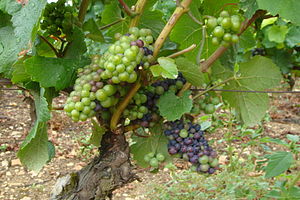
Pinot Noir is a light-skinned red grape originating from Burgundy in its modern form. Although, the Burgundians have been working with Pinot for around a thousand years, so the term ‘modern’ should be taken with a grain of salt!


The grape typically produces light-bodied wines with aromas ranging from fresh red fruit (raspberry, strawberry, cherry) to black (blackberry, mulberry) depending on the local climate of the vineyard. Warmer sites tend to produce wines with ‘blacker’ and riper fruit flavours. Alongside the fruit, good Pinot exhibits a fresh minerally, or even pleasantly ‘grassy’ character – complemented by the grape’s naturally high acidity on the palate. With bottle maturation, the wine develops notes of mushroom and decaying autumnal leaves — expressed evocatively by the French term sous-bois — which translates as ‘forest floor’. The thin skins of the grapes mean that the wines are generally low in tannin, though tannins are usually very fine-grained and punctuate the wine sufficiently so it can be enjoyed with food.

Pinot Noir is a notoriously fickle grape and is very difficult to handle. Burgundy’s millennium of association with Pinot Noir means that it produces the best in the world — and that the Burgundian clones of the grape are ideally suited to Burgundy’s continental climate. Explaining Burgundy’s appellation system would take an entire post of its own, but there are two main subregions for Pinot Noir there: Côte de Beaune and Côte de Nuits. These are further divided into villages, which may be further identified by vineyard — and these can be classified as either Premier Cru or Grand Cru indicating the quality level of the grapes.

Pinot grapes in Burgundy going through the pro...

Continue Reading…

Never miss a post
Name: 
Your email address:*
Please enter all required fields
Correct invalid entries

The Art of Tasting Wine with James Flewellen: Top 10 Wines of 2012

Published by Saturday, December 22, 2012 Permalink 0

by James Flewellen

recent post by my friend Tom Parker on his top wines of the last year inspired me to go through my notes to consider the same question. Wine tasting being the highly subjective and opinionated business that it is, it is nigh on impossible to narrow down a list of the best wines one has tasted in a year. Thus, I’ll go for the most enjoyable wines I can recall from the past 12 months to create my list of the top 10 wines of 2012.

Enjoyment of wine is predicated on many things other than the quality of the wine itself – the situation, the company, your frame of mind, for instance. And I’ve found that tasting great wines in a sterile, academic or commercial setting doesn’t really do justice to the mystic and sublime essence of a magical beverage. I’ve tried to take these factors into account in my list, as well as reflecting a range of styles and the locations I’ve visited throughout the year.

So, in no particular order:

Pewsey Vale vineyard, Eden Valley.

1. Pewsey Vale ‘The Contours’ Riesling 2006. Eden Valley, South Australia.

A beautiful wine from a beautiful place. ‘The Contours’ is made from the best fruit in one tiny sub-plot from the Pewsey Vale vineyard high above the Eden Valley floor. 2006 was the most recent release at the time. Lively lime,  blossom and tertiary notes developing. Refreshing and elegant.

2. Bollinger Grande Année 2002. Champagne, France.

I love rich champagne styles and Bollinger is always a sure performer for me in this regard. The superb 2002 vintage brings even more leanness and length to this wine. Still a baby in drinking terms but very hard to resist!

3. Brokenwood ‘The Graveyard’ Shiraz 2001. Hunter Valley, NSW, Australia.

Hunter Valley Shiraz is so unlike the jammy Barossan ‘fruit bombs’ that most outside of Sydney associate with Aussie Shiraz. It can be wonderfully complex, earthy and Hermitage-esque. ‘The Graveyard’ is one of the best, and it was a rare privilege to taste such a great wine at an age it deserved to be drunk.

4. Langmeil ‘The Freedom 1843’ Shiraz 2009. Barossa, South Australia.

Tiny amounts of this wine are made from one of the oldest plots of vines remaining in the world. 1843 refers to the year of planting. This wine is nothing like any Barossa Shiraz I’ve ever tasted. Incredibly concentrated and animally. Far too young at three years old, but an amazing wine to experience nonetheless.

Ancient Shiraz vine in Langmeil's 1843 Freedom vineyard.

5. Cornas, Les Grandes Terrasses, Paul Jaboulet Aîné, 2001, Northern Rhône, France.

Rounding out a trio of Shiraz/Syrah: I showed this wine at a recent tasting in Oxford and was mightily impressed by its length, complexity and great value for money. Drinking very well now.

6. Moss Wood Cabernet Sauvignon Reserve 2010 (barrel sample). Margaret River, Western Australia.

The most enjoyable barrel sample I’ve ever tasted. The wine had been blended from the individually-aged parcels and was into its second round of oaking. Incredibly taut, balanced and complex. Brimming with potential.

7. Phélan Ségur 1996. St Estèphe, Bordeaux, France.

During a trip to Bordeaux over the summer, Phélan stood out for their hospitality, their obvious attention to detail in the winery, and their delicious wines. We were so impressed that a friend hosted a mini-vertical of Phélan later in the year. The ’96 was the most mature, complex and enjoyable of these, although many of the other vintages will get there in time.

With David Ling at Hugel following a portfolio tasting.

8. Hugel Pinot Gris Sélection de Grains Nobles 1976. Alsace, France.

One of the most astonishing dessert wines I’ve ever had. Pulled completely out of the bag during a visit to the charming Hugel property in Riquewihr. Endless length and complexity and a beautiful balance between sweetness, acidity and the perceived dryness all great dessert wines get with age.

9. Pirinoa Road Reserve Pinot Noir 2008. Martinborough, New Zealand.

A brilliant pretender to the Burgundian crown of Pinot supremacy. Great balance between lively red fruit, floral overtones and meaty depths. Still young but starting to develop delicious tertiary character.

10. Marie-Thèrese Chappaz Grain d’Or 2010. Valais, Switzerland.

A fascinating and unusual wine. Marie-Thèrese Chappaz makes extraordinary wines from her vantage point in some of the world’s steepest vineyards overlooking the Rhône River in Switzerland. This wine is mostly Marsanne, from gnarly 90-year-old vines (with a good claim to being the oldest in Switzerland), and spends 18 months in barrel. Still too young, but it’s so hard to get your hands on a mature example of these wines — they are all sold in person every year in May at the winery!

Grain d'Or at the Chappaz vineyard in Valais.

Commended

Jansz Traditional Method Sparkling. Tasmania, Australia. When my budget won’t extend to champagne or English Sparkling, Jansz is my delicious, great value fallback option.

Three Choirs Midsummer Hill, 2011. Gloucestershire, England. Brilliant value, light, fruity English offering.

Macrocarpa Pinot Gris, 2011. Marlborough, New Zealand. Lovely single vineyard expression of Pinot Gris firmly in the Alsatian mould.

The Lane Chardonnay 2009. Adelaide Hills, South Australia. Delicious Chardonnay with judicious and balanced use of oak. Went with a delicious lunch at the winery.

McGuigan Semillon Bin 9000 1997. Hunter Valley, NSW, Australia. Hunter Valley Semillon is certainly one of Australia’s great gifts to the world of wine. Lovely to taste one with significant bottle age to bring out the subtle tarragon and nutty notes.

Duas Pedras 2009. Alentejo, Portugal. Touriga Nacional blended with Syrah, this is a powerful, rewarding wine that needs decanting in advance and has become one of my staple reds.

I hope you all have a wonderful Christmas and holiday season with plenty of good cheer and fine bottles. I’m not yet sure what I’ll be drinking on Christmas Day, but I have a feeling I’ll stick to my favourites: something French, something Kiwi, something sparkling, something Pinot…

__________________

James Flewellen is The Rambling Epicure wine columnist. James is a biophysicist at the University of Oxford. Originally from New Zealand, the huge range of wine James discovered in Europe spurred his interest in all things vinous. He became involved in the University’s Blind Wine Tasting Society and has recently completed a two-year term as its President. During this time he represented the University in a number of domestic and international wine tasting competitions, winning several awards. He is currently completing the WSET Diploma in Wine and Spirits. James has a passion for wine communication and education and runs the Oxford Wine Blog and the Oxford Wine Academy.

Never miss a post
Name: 
Your email address:*
Please enter all required fields
Correct invalid entries

La Vendange: The Grape Harvest on a Small Country Estate in France

Published by Monday, September 24, 2012 Permalink 0

by Vendange

When we lived in the white wine we had vines. We were outrageously excited about the prospect of making our own wine. Of course, we were sure it would be wonderful. I mean, we had been drinking it for years, we should know how to do it, right?

Continue Reading…

Never miss a post
Name: 
Your email address:*
Please enter all required fields
Correct invalid entries

Fine Wines give Geneva a Great Evening

Published by Sunday, December 5, 2010 Permalink 0


Kickoff of Switzerland’s spring wine tastings: Berthaudin at the Beau Rivage

Massaya comes from a long line of winemakers, and has expanded the family business into a distributorship of wines of a quality that only someone “born in the vines” could put together.

His spring wine tasting Tuesday 5 May at the Geneva Beau Rivage hotel offered a well-balanced collection of hand-picked wines from all over the world, including the sought-after Lebanese wine Massaya.

Berthaudin: Geneva and Vaud wines, and it’s a family affair

Claude Berthaudin.

Continue Reading…

Never miss a post
Name: 
Your email address:*
Please enter all required fields
Correct invalid entries

UA-21892701-1