The Kitchen at the Center of History: An Interview with Rachel Laudan

Published by Tuesday, July 23, 2013 Permalink 0


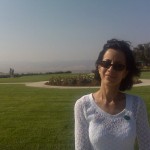
Rachel Lauden, author of Cusine & Empire

Rachel Laudan, author of Cuisine & Empire

by Elatia Harris

All photos courtesy of Rachel Laudan

Rachel Laudan is the prize-winning author of The Food of Paradise: Exploring Hawaii’s Culinary Heritage and a co-editor of the Oxford Companion to the History of Modern Science. In this wide-ranging interview, Rachel and I talk about her long-awaited book, Cuisine and Empire: Cooking in World History. Paul Freedman remarks that  the book is a riveting and unique combination of culinary ideas and exposition on the materiality of eating.” Other delighted early readers include Anne Willan, Naomi Duguid and Dan Headrick. As a food lover, a cook, a world traveler or a student of cultural history, you might have asked yourself: What is this thing called food? If so, this is the book for you. 

Laudan_Cuisine-001

ELATIA HARRIS: To begin, I would love to know what was involved in the transition from historian of science to historian of food. I can remember when there was no such academic discipline as food history, and I’ll warrant so can many readers.

RACHEL LAUDAN: I can remember when there was no such discipline as science history! I think history is the thread through my life. Growing up in history-heavy Wiltshire, I felt I had to escape the weight of the past. I studied the key historical science, geology, at university, although this was almost unheard of for a woman. I then changed to history and philosophy of science and technology. Then to history of food. History is my way of understanding things.

A lot of food writing is about how we feel about food, particularly about the good feelings that food induces. I’m more interested in how we think about food. In fact, I put culinary philosophy at the center of my book. Our culinary philosophy is the bridge between food and culture, between what we eat and how we relate to the natural world, including our bodies, to the social world, and to the gods or morality.

EH: Your earlier book, The Food of Paradise, necessarily dealt with food politics and food history. So many cultures were blended into local food in Hawaii. I treasure that book — almost a miniature of what you’re doing in Cuisine and Empire.

RL: Well, thank you. It came as a surprise to me that I had a subject for a book-length treatment of something to do with food or cooking — as interested in the subject as I certainly was. The only genre I knew was the cookbook, and I am not cut out to write recipes.  

It was prompted by a move to teach at the University of Hawaii in the mid-1980s. I went reluctantly, convinced by the tourist propaganda that the resources of the islands consisted of little more than sandy beaches and grass-skirted dancers doing the hula.

I couldn’t have been more wrong. These tiny islands, the most remote inhabited land on earth, have extraordinarily various peoples and environments. And as to the food, I was humiliatingly lost. The first morning in the office, Barbara Hoshida, the department secretary, held out a plate of golf-ball sized fried, well, fried whats? “These are Okinawan andagi,” she explained, “They’re just like Portuguese malasadas.”  I didn’t dare ask what Portuguese malasadas were. 

Before I knew it I had a stack of essays on the foods of the three diasporas that had ended up in the islands: the taro-based cuisine of the peoples from the South Pacific (the Hawaiians); the rice-based cuisine of the Asians (Koreans, Han and Hakka Chinese, Japanese, Okinawans, and Ilocanos and Tagalogs from the Philippines); and the bread-based cuisine of the Anglos (British and Americans).

Continue Reading…

Never miss a post
Name: 
Your email address:*
Please enter all required fields
Correct invalid entries

Food Vocabulary: What’s a Femivore?

Published by Monday, May 13, 2013 Permalink 0

by The Femivore’s Dilemma

Are you a Grist? This word was recently added to the Urban Dictionary.


Origin of the Term “Femivore”

The word was coined by Peggy Orenstein in her essay “The Femivore’s Dilemma” for today’s New York Times Magazine, says Natural News, and is obviously inspired by the term “locavore.”

Educated career women, or “femivores”, all over the U.S. are choosing to give up their careers and go back to the farm (sometimes an urban farm) and back to the kitchen — often the same women who refused to take anything even vaguely similar to a Home Economics class, much less a class in agriculture. DIY, raising chickens and gardening are back, and there is an abundance resources available on the Internet for those who are new at it offering detailed how-to’s and recipes for all of it, with popular DIY sites such as Mother Earth News, Middleground Farm, and Mother Earth News. Femivores often reach out from their newly chosen isolation through blogs and social networks, and share their discoveries, successes and failures with other femivores, such as writer Esmaa Self on Middleground Farm or “backyard eggs”.

This became the subject of a heated debate a few weeks ago when Michael Pollan’s book came out. On Is Michael Pollan a sexist pig? Emily Matchar questioned whether Pollan was a “sexist pig” in saying “we need to get back in the kitchen,” since “American women cook 78 percent of dinners, make 93 percent of the food purchases, and spend three times as many hours in the kitchen as men.”


Never miss a post
Name: 
Your email address:*
Please enter all required fields
Correct invalid entries

New on The Rambling Epicure: List Your Real Food or Photo Blog

Published by Friday, April 26, 2013 Permalink 0

by Jonell Galloway

We’ve just created a widget in the right-hand sidebar that allows all real food sites, blogs and readers to enter their URL on our list of visitors, whether it be a recipe, photo, news, farming, or other real-food related site. All you need to do is enter your RSS feed URL. Sign up soon so we can form a community of like-minded people!

From artsy

Photo courtesy of Ilian


to philosophical and literary

The Unsettling of America: Culture & Agriculture

The Unsettling of America: Culture & Agriculture (Photo credit: elycefeliz)


Continue Reading…

Never miss a post
Name: 
Your email address:*
Please enter all required fields
Correct invalid entries

Daily Food Quotes: Farm Philosophy from Wendell Berry

Published by Sunday, March 24, 2013 Permalink 0

by Jonell Galloway

For 50 or 60 years, we have let ourselves believe that as long as we have money we will have food. This is a mistake. If we continue our offenses against the land and the labor by which we are fed, the food supply will decline, and we will have a problem far more complex than the failure of our paper economy. The government will bring forth no food by providing hundreds of billions of dollars to the agribusiness corporations.

Wendell Berry, “in the op-ed piece he published with his old friend and collaborator Wes Jackson, shortly after the economy crashed in the fall of 2008.” (Michael Pollan, in introduction to Wendell Berry’s Bringing it to the Table: On Farming and Food).


Wendell Berry speaking in Frankfort, Indiana

Wendell Berry speaking in Frankfort, Indiana

Never miss a post
Name:

Your email address:*

Please enter all required fields
Correct invalid entries

Related articles

Never miss a post
Name: 
Your email address:*
Please enter all required fields
Correct invalid entries

Simple Sustenance: Kale Power — Kale and Sunflower Seed Pesto

Published by Tuesday, August 7, 2012 Permalink 0

by Renu Chhabra


“Eat food. Not too much. Mostly plants.” Michael Pollan

This one is for kale lovers. I know. I am one of them. Until not too long ago, I did not have the slightest idea of its existence; or let’s just say, it did not visit my produce bag. But once I tasted it, I was hooked on the amazing wonders of kale like most health enthusiasts.

Kale is known by several flattering names — Queen of Greens, Powerhouse of Nutrients, King of Greens. These days kale is one of the most talked about super foods. From soups and stews to salads and stir fries, it has found its way in every possible form of cooking. Kale juice anyone? How about kale chips for a healthy snack? And if that’s not enough, just puree these hearty leaves to transform them into pesto. Now that opens up several more ways to enjoy its versatility.  Stir it in pasta, spread it on breads and crackers, or thin it a little to make dressings. If none of those options are appealing to you, a few spoonfuls as is works for me.

Speaking of pesto, I made this recipe with sunflower seeds instead of nuts. Sunflower seeds provide fair share of good fats, and they also give it a rustic texture. I left cheese out making thus making it an option for vegans. But if you prefer a cheesy flavor, add some pecorino or parmigiano. Good olive oil, lemon, and garlic with a few grinds of sea salt make it absolutely delicious. Store in refrigerator and enjoy.

Recipe

1 medium bunch kale, stems removed
1 large clove of garlic
½ cup unsalted roasted sunflower seeds
Juice of one large lemon
Sea salt to taste
Freshly ground pepper (optional)
½ cup olive oil

Instructions

Put kale leaves in boiling water for 30 seconds. Drain in a colander, and run cold water over to stop the cooking process. Squeeze kale to remove water completely.

In a food processor, pulse garlic a couple times. Add sunflower seeds and pulse again 2-3 times. Add kale, lemon juice, salt, pepper and puree.  Drizzle oil while the machine is running. Puree it to desired consistency.

Adjust lemon and salt to taste. If the pesto is too thick for your taste, add a little water.


  • In a food processor, pulse garlic a couple times. Add sunflower seeds and pulse again 2-3 times. Add kale, lemon juice, salt, pepper and puree.  Drizzle oil while the machine is running. Puree it to desired consistency.

    Adjust lemon and salt to taste. If the pesto is too thick for your taste, add a little water.


    Never miss a post
    Name: 
    Your email address:*
    Please enter all required fields
    Correct invalid entries

Feeding the World using Fossil Fuels vs. Without

Published by Friday, March 2, 2012 Permalink 0

A film by Marija Jacimovic and Benoit Detalle

[youtube http://youtu.be/WvyV_idFAZA nolink]


Never miss a post
Name: 
Your email address:*
Please enter all required fields
Correct invalid entries

UA-21892701-1