Wine & Food Pairing with James Flewellen: Boeuf Bourguignon

Published by Monday, July 8, 2013 Permalink 1

Wine and Food Pairing: Boeuf Bourguignon

by James Flewellen

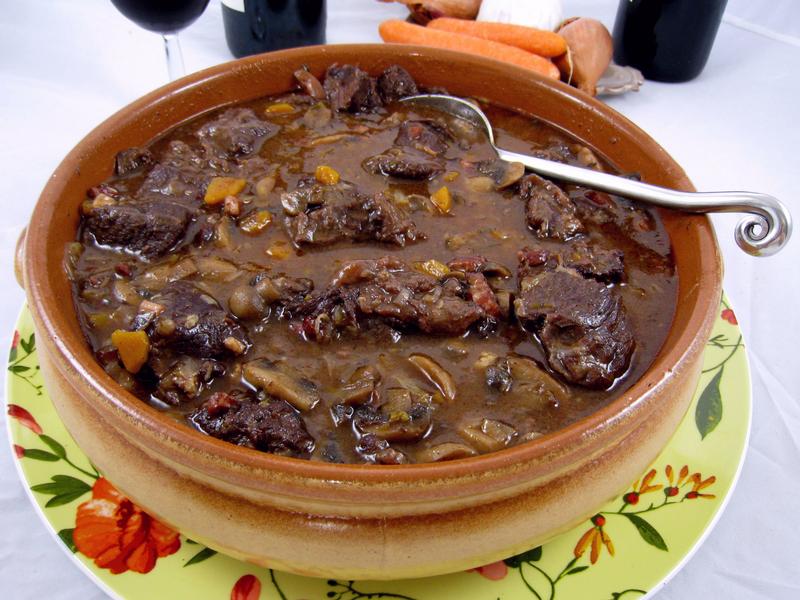
Here’s our recipe for Boeuf Bourguignon

boeuf-bourguignon-798901288110937


Pinot Noir

The classic wine for this hearty dish is a relatively youthful Burgundian Pinot Noir – ideally the same wine you’ve used in the cooking. The bright fruit flavours in the wine complement the savoury spice in the dish and the tannins – fine as they typically are in red Burgundy – interact with the proteins in the meat to bring overall harmony to the meal. An older Pinot Noir will have developed more subtle, complex savoury notes, which may be overwhelmed by the bold array of flavours in the stew, thus I’d stick to a more youthful example and save the mature wine until when you can enjoy it in all its glory.

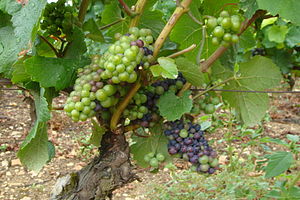
French Countryside


Other Pinot Noirs from around the world will also work – particularly the rich, clean fruit profile of a New Zealand Pinot. You could also try a ‘serious’ Beaujolais Cru – made from the Gamay grape. These Cru wines are slightly more expensive than the infamous Beaujolais Nouveau, yet they provide a more complex flavour profile and robust, yet integrated tannins. The best, from for instance Moulin à Vent, Morgon and Fleurie, start to resemble their cousins from Burgundy to the north and as such, offer excellent value for money.


365.202: Summer wine thing


Cabernet Franc

To the west of Burgundy, the Loire valley produces a number of wines that would go very well with the dish. Sancerre Rouge is the Loire’s expression of Pinot Noir and, I feel, too light in body to stand up to a stew. A Chinon or Bourgueil, however, made from Cabernet Franc, is well up to the task. The thicker skins of Cabernet Franc make for more robust tannin, which go perfectly with beef. Meanwhile, these wines typically have a rich fruity core in their flavour profile not dissimilar to young Burgundy, although more towards blackcurrant rather than raspberry on the fruit spectrum. Cabernet Franc can also introduce leafy, minerally and peppery notes, which can serve as a lovely foil to the sweetness in the vegetables in the stew.

Couly-Dutheil Chinon Clos de l'Olive 1999 (Loire Valley)

Jonell Galloway and James Flewellen will be giving a food and wine tasting Masterclass in Chartres from September 19 to 22. Here is a thorough description: Celebrate the Chartres Festival of Lights & Autumnal Equinox with a Food & Wine Tasting Masterclass. Click here to reserve your place!

About James Flewellen

Dr James Flewellen is a biophysicist at the University of Oxford. James learned his trade in taste through the Oxford Blind Wine Tasting Society, of which he was the President from 2010-2012. During his term, he represented Oxford at many international blind tasting competitions – twice winning the prestigious ‘Top Taster’ Award in the annual Varsity blind tasting match against Cambridge University and captaining winning teams in competitions throughout Europe.

One of James’s goals is to clarify the complex and hard-to-navigate world of wine for both novice and experienced tasters. He applies his scientific training to wine education, illuminating concepts of taste, tannin and terroir in an approachable, entertaining manner. James runs wine education courses in Oxford through the Oxford Wine Academy and is completing the WSET Professional Diploma in Wine and Spirits. He is the regular wine writer for The Rambling Epicure and is the founder of The Oxford Wine Blog. He is also currently co-authoring The Concise Guide to Wine and Blind Tasting – a book surveying the wine regions of the world and how to blind taste.


Never miss a post
Name: 
Your email address:*
Please enter all required fields
Correct invalid entries

The Art of Tasting Wine with James Flewellen: Top 10 Red Wine Grapes

Published by Thursday, May 23, 2013 Permalink 0

The Art of Tasting Wine with James Flewellen: Top 10 Red Wine Grapes

by James Flewellen

My last post covered what I consider the ‘top 10’ white wine producing grapes. Finding a similar list for the top 10 red wine grapes is no less difficult — perhaps even more so with the propensity for red wines to be a blend of a number of different grapes. Again, the order is my own preference, based on commercial importance, potential quality of the grape, and whether it produces a ‘classic style’.

TOP 10 RED WINE GRAPES

10. Malbec

Malbec is one of the six permitted red wine grapes in Bordeaux, although few producers take advantage of its rich, plummy flavours. You are more likely to find Malbec predominating in blends of southern French appellations, such as Cahors, where the grape is called ‘Cot’. These wines are typically full-bodied, deep in colour, with plum flavours alongside ferric, inky notes too. Malbec has found a second home in Argentina, where it is the country’s signature red grape. In Argentina, the mineral notes subside somewhat, and a purer fruit note comes to the fore. The tannins, plentiful in Cahors, are softer in the Argentinian expression.


8. Sangiovese

This rather romantically named grape (‘Blood of Jupiter’) is the key component of wines from the Chianti region in Tuscany — arguably Italy’s most famous red wine export. The grape produces ruby-coloured wines with notes of cherries and almond. The palate can show high acid with tart cherry flavours, medium to high levels of alcohol and drying, austere tannins. The best examples develop savoury, tea-like notes with age and undeniable complexity. Brunello di Montalcino is perhaps the most interesting expression of Sangiovese, from a wine-lover’s perspective. Best served with food on account of the fierce tannins though! Sangiovese is also a component in many of the so-called ‘Super-Tuscan’ blends, along with Cabernet Sauvignon and Merlot.

Sangiovese ready to harvest


7. Tempranillo

As Sangiovese is to Tuscany, Tempranillo is to the Rioja region — and indeed to many parts of Spain. Rioja is now perhaps Spain’s most famous wine export after Cava and within this region the Tempranillo grape has found a plethora of styles. The traditional style of Rioja saw ageing in mostly American oak barrels, complementing the strawberry notes from the grape with a sweet vanilla and coconut aroma from the oak. The balance between oak and fruit notes depends on the length of time the wine is aged in the barrels. With age, these wines develop pleasant grassy and ‘farmyardy’ aromas. A ‘new’ style of Rioja has emerged in recent years, favouring French oak and pushing fruit notes to the fore. Tempranillo is also a key component in many other regions of Spain, such as Ribera del Duero, and in Portugal too, where it is known as Tinto Roriz.


6. Cabernet Franc

The second Bordeaux grape on the list, although in Bordeaux, Cabernet Franc usually plays second or third fiddle to Cabernet Sauvignon and/or Merlot. This by no means diminishes its importance for the region, however. For a classic expression of a varietal wine we head north to the Loire valley — to classic regions such as Saumur, Chinon and Bourgueil. Here, the grapes produce a medium-bodied purple wine with high acidity and fine, powdery tannins. Due to the cooler climate in the Loire, these wines have leafy, herbaceous notes to go with blackcurrant, blackberry and a distinctive mineral note many describe as ‘pencil shavings’!


5. Grenache

Grenache is the stalwart of the Southern Rhône, where it makes up the dominant component of blended wines along with Syrah, Mourvèdre and many others. This grape is a the heart of famous appellations such as Châteauneuf-du-Pape, Gigondas and Vaqueyras. Unusual among grape vines, it can tolerate heat and drought remarkably well with its ability to close its stomata to minimise water loss through evaporation. This feature also explains its success in South Australia — another hot, dry part of the world. The Aussies have followed the Southern Rhône model and produce similar blended wines — typically called ‘GSM’ after the three major grape components. Grenache is also to be found in Priorato and other parts of Spain, where it is known as ‘Garnacha’ and typically blended with Cariñena (a.k.a. Carignan). Grenache produces wines with high alcohol, low acidity and fine, dry tannins. The flavour profile is usually of strawberry with a characteristic white pepper spiciness.

Photo courtesy of WineFolly.com


4. Merlot

Merlot was much maligned by Paul Giamatti’s character in the film Sideways – although in an ironic twist, his prized bottle of 1961 Cheval Blanc contains a major component of Merlot. Perhaps Merlot’s unfairly poor image comes from the many mass-produced French and New World wines where the grape is used to make soft, undemanding, plummy, easy drinking wines. However, at its best, Merlot produces elegant wines with savoury flavours combining with juicy plum and fruitcake spice notes. While the grape does not lend to the most structured wines, there can still be relatively firm, drying tannins, allowing the best examples of Merlot to age very well. The most famous examples of Merlot come from the Right Bank of Bordeaux in appellations such as St Emilion and Pomerol. Here, Merlot is typically blended with Cabernet Franc to produce some of the finest wines in the world. Merlot is, of course, a component of the Left Bank Bordeaux wines, although here it comes in second to Cabernet Sauvignon. Merlot can also be found in Bordeaux-imitation blends around the world and as a varietal wine in parts of the New World – especially California, New Zealand and Chile.


3. Syrah/Shiraz

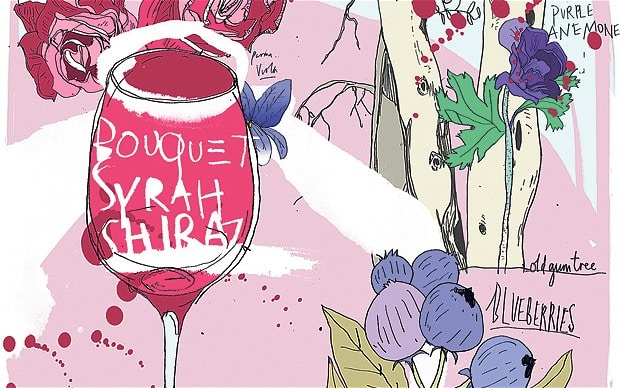
Whereas the Southern Rhône follows the model of blending many grapes to create Grenache-dominated wines, the Northern Rhône sticks to a single grape: Syrah. Historically, Syrah has produced the most revered wines in France — emanating from Hermitage, Côte-Rotie, St Joseph and Cornas — and it has only been relatively recently that the focus has shifted to Bordeaux and to Burgundy. The best examples are very long-lived and offer very good value to the fine wine connoisseur. Syrah from the Rhône is medium- to full-bodied, with firm, slightly coarse tannins, crisp acidity and complex notes of plum, blackcurrant, black pepper, roasted meat, liquorice, treacle, herbs, among others. Syrah is, of course, equally famous in Australia, where it is known as ‘Shiraz‘ and found throughout the entire country. In fact, Australia has the oldest Shiraz grape vines in the world, with a number of regions unaffected by the phylloxera blight that destroyed European vineyards in the late 1800s. The classic style is that of the Barossa Valley or McLaren Vale — jammy black fruits, often with notes of spicy salami, black pepper, and eucalyptus. Australian Shiraz is usually more full-bodied with lower acidity than that of the Rhône, although wine from the slightly cooler region of the Hunter Valley can approach a Rhône-like style.
http://www.telegraph.co.uk/foodanddrink/wine/8706849/Syrah-from-Chile-and-New-Zealand.html

Photo link to the Telegraph


2. Cabernet Sauvignon

The predominant grape in some of the world’s most revered and expensive wines: those of the Left Bank of Bordeaux. In the right climate and on the right soils, Cabernet Sauvignon offers elegance, power, structure and harmony that few other grapes can match. However, in search of the perfect structure the grape can produce austere flavours in the wine, which is why this grape is best suited to blending with others. This is the origin of the ‘Bordeaux blend’, which sees Cabernet Sauvignon melded with Merlot, Cabernet Franc, Malbec and Petit Verdot. Cabernet Sauvignon brings classic notes of blackcurrant, cedar, and bell peppers alongside vanilla and nuts from maturation in new French oak, which is typical in Bordeaux. On the palate, the grape brings crisp acidity and firm, structured tannins, and both of these can ensure a long ageing potential. The Bordeaux style has found favour in many other parts of the world, from the ‘Super-Tuscans’ of Italy to equivalents in Spain, California, Australia and South America. The best examples of these are among these nations’ finest wines also.


1. Pinot Noir

As Chardonnay is the Burgundian king of white wines for me, so Pinot Noir is the queen of reds. Fickle, hypersensitive,  ill-tempered, yet oh-so-magical when it all pays off, tasting a great Pinot Noir is an unforgettable experience. At its best the grape offers up swirling, subtle aromas of raspberry, strawberry, cherry and blackberry, a refreshing minerality and an earthy, leafy quality that is quite indescribable, yet summed up beautifully in the French term sous-bois – or ‘forest floor’. Burgundy still holds the crown for the most desirable Pinots – indeed wines – on the planet, due in no small part to its 1,000-year history in growing the grape. The grape is notoriously difficult to work with and susceptible to very minor changes in climate. Various places around the world have taken on the challenge of making great Pinot – New Zealand, Oregon and Tasmania are considered the best pretenders to the crown and can produce some very good (and much better value-for-money) wines. But these are all new kids on the block, and have a few centuries ahead of them to really get to know the grape, and for the grape to get to know their new homes.

__________________

James Flewellen is The Rambling Epicure wine columnist. James is a biophysicist at the University of Oxford. Originally from New Zealand, the huge range of wine James discovered in Europe spurred his interest in all things vinous. He became involved in the University’s Blind Wine Tasting Society and has recently completed a two-year term as its President. During this time he represented the University in a number of domestic and international wine tasting competitions, winning several awards. He is currently completing the WSET Diploma in Wine and Spirits. James has a passion for wine communication and education and runs the Oxford Wine Blog and wine tasting courses through the Oxford Wine Academy.

Never miss a post
Name: 
Your email address:*
Please enter all required fields
Correct invalid entries

The Big Apple on a Budget: Tocqueville, a New York Restaurant Review

Published by Thursday, April 18, 2013 Permalink 0

The Big Apple on a Budget: Tocqueville, a New York Restaurant Review

by Leonor White

I discovered Tocqueville last New Year’s Eve, and it’s been my go-to place ever since when special people come to town. My latest visit to this understated yet elegant Union Square New American-French restaurant with a French flare and amiable, well-trained servers brought rave “reviews” from the entire table.

Seven days a week, the restaurant offers an excellent value prix fixe menu ($29). The menu consists of three courses — appetizer, main course and dessert — as well as an amuse-bouche and interesting housemade bread à go-go. In the evening, Tocqueville offers a pre-theatre menu at $44, as well as a full à la carte menu. We went for Saturday lunch, when the restaurant was unusually uncrowded, so we sat on the ground floor from where we could enjoy a view of the restaurant’s refined décor. The dining room was pleasantly quiet with tables set widely apart and well-designed acoustics, allowing us to concentrate on the marvelous food and have good conversation too.

As mentioned, the prix fixe offers three courses, with two choices per course. From the appetizers, everyone tried both offerings, the “creamless sunchoke soup” and the “salad with mushroom terrine”; both dishes were flawless, the flavors bold but balanced. Prior to our appetizer arriving, we were served an excellent “roasted asparagus and beetsamuse-bouche, a great start to our culinary adventure. Throughout the lunch we were also able to enjoy an assortment of homemade bread, namely, brioche, focaccia filled with olive chunks, and crusty, white sourdough with homemade butter (you heard me right, homemade).

Continue Reading…

Never miss a post
Name: 
Your email address:*
Please enter all required fields
Correct invalid entries

The Art of Tasting Wine with James Flewellen: Spotlight on Pinot Noir

Published by Monday, April 15, 2013 Permalink 0

The Art of Tasting Wine with James Flewellen: Spotlight on Pinot Noir

by James Flewellen

Pinot Noir is a light-skinned red grape originating from Burgundy in its modern form. Although, the Burgundians have been working with Pinot for around a thousand years, so the term ‘modern’ should be taken with a grain of salt!


The grape typically produces light-bodied wines with aromas ranging from fresh red fruit (raspberry, strawberry, cherry) to black (blackberry, mulberry) depending on the local climate of the vineyard. Warmer sites tend to produce wines with ‘blacker’ and riper fruit flavours. Alongside the fruit, good Pinot exhibits a fresh minerally, or even pleasantly ‘grassy’ character – complemented by the grape’s naturally high acidity on the palate. With bottle maturation, the wine develops notes of mushroom and decaying autumnal leaves — expressed evocatively by the French term sous-bois — which translates as ‘forest floor’. The thin skins of the grapes mean that the wines are generally low in tannin, though tannins are usually very fine-grained and punctuate the wine sufficiently so it can be enjoyed with food.

Pinot Noir is a notoriously fickle grape and is very difficult to handle. Burgundy’s millennium of association with Pinot Noir means that it produces the best in the world — and that the Burgundian clones of the grape are ideally suited to Burgundy’s continental climate. Explaining Burgundy’s appellation system would take an entire post of its own, but there are two main subregions for Pinot Noir there: Côte de Beaune and Côte de Nuits. These are further divided into villages, which may be further identified by vineyard — and these can be classified as either Premier Cru or Grand Cru indicating the quality level of the grapes.

Pinot grapes in Burgundy going through the pro...

Continue Reading…

Never miss a post
Name: 
Your email address:*
Please enter all required fields
Correct invalid entries

A Look at Slow Food’s Salone del Gusto, October 2012, in Turin, Italy

Published by Saturday, November 3, 2012 Permalink 0

by Diana Zahuranec

Salone del Gusto ended on Monday 29, but I can’t stop thinking about it.

Salone del Gusto, held in Turin, Italy, is a Slow Food biannual food fair and conference. To sum it up in these few words undermines everything else it is, too, and its importance as an event that brings together producers from all over the world. These are producers that grow ancient varieties of grain to save genetic biodiversity, that make Slow Food Presidia cheeses or salumi, that pipe their cannoli full of the freshest organic ricotta you’ve ever tasted, and whose principles and values align with your own and, it goes without saying, Slow Food’s – good, clean, and fair food for all.

The Slow Food mascot

For all things Slow Food, here are some links courtesy of Scoop.it and Slow Food. To understand a few of those words in the paragraph above, just look at the end of the article.

This year, Salone del Gusto was a marriage of the original Salone del Gusto, first held in 2006, and Terra Madre, first held in 2004. While both events had food artisans and producers from all over the world, different activities were held at each and were not all accessible to the public. Salone del Gusto focused more on the exposition and sale of high quality foods and products, while Terra Madre was a gathering of a network of food producers from around the world. Having never been to either of these before, I can’t offer judgment on the differences of before and after. What I would love to do is share my first-time impressions of this year’s.

To say Salone is a food fair means that, like your down-home county fair, the place is jumping with activity – with a few notable differences. The funnel cakes are replaced with French butter cookies in 20 different flavors, the groundhog whacking game is replaced with the foodie’s (divisive word, I know) form of fun, that is vertical Barolo wine tastings, and that feeling of riding the Zipper right after you eat your funnel cake is replaced by the feeling of pressing up against crowds right after you drink your Barolo wines.

Continue Reading…

Never miss a post
Name: 
Your email address:*
Please enter all required fields
Correct invalid entries

The Art of Tasting Wine

Published by Tuesday, July 17, 2012 Permalink 0

by James Flewellen

I learned to taste wine through the medium of blind tasting. Contrary to popular perception, blind tasting does not involve fumbling around a table laden with wine glasses with your sight impeded by blindfolds. Rather, it simply means the identification of wine is unknown before tasting and assessing the wine. Without knowledge of the wine’s origin, prestige or price you can assess a wine objectively and without the prejudice of knowing the label. It is the method of tasting employed by wine professionals at most wine competitions and is an important component of Master of Wine and sommelier examinations.

Steven Spurrier, wine expert, Paris

Wine Tasting


Famously, a blind tasting organised by Steven Spurrier in 1976 – the Judgement of Paris – shattered the perception of France as the supreme producer of wine. Top whites (Chardonnay) and reds (Cabernet Sauvignon dominated blends as found in Bordeaux) from both California and France were submitted to a blind tasting in Paris. Eleven judges, nine of whom were French, assessed the wines blind for their quality with the surprising result that California came out on top in a number of categories. The tasting has proved controversial for many; nevertheless, it served to highlight the importance of objectivity when tasting wine and not to pay undue attention to the label!

Continue Reading…

Never miss a post
Name: 
Your email address:*
Please enter all required fields
Correct invalid entries

Spanish Cava or Champagne: Both Bubbly, but Distinctly Different

Published by Monday, March 26, 2012 Permalink 0

by Raquel Pardo

Translated into English and adapted by Jonell Galloway

Para leer la versión en español, pinche aquí

I risk sounding like a schoolteacher (or a wine snob), but I shall continue. My hair stands on end when I hear people confuse Champagne and Spanish cava, or bubbly (I hide my annoyance, of course).

I can no longer maintain my silence, so I will hastily scribble out a few lines to remove all doubts about the difference between cava and Champagne, and you can face up to the test. You only have to worry about perhaps finding yourself at a blind tasting with people who always know how distinguish one from the other, who never get it wrong. Otherwise, you’re set to roll.

Continue Reading…

Never miss a post
Name: 
Your email address:*
Please enter all required fields
Correct invalid entries

Chocolate News: It’s chocolate week, & here are some exciting chocolate adventures around the world

Published by Tuesday, October 11, 2011 Permalink 0

by Jonell Galloway

This is one of the best and most comprehensive lists I’ve seen about high-quality chocolate adventures around the world. I want to go them all!

Click here to read the entire article.

The evidence continues to build a factual basis that dark chocolate is actually good for you. See the related articles:

  • Chocolate – the miracle drug?
  • Chocolate Week Heaven
  • High Chocolate Consumption Linked To Lower Stroke Risk In Females

And in Peru, they’re still finding new varieties of chocolate. Exciting future for chocoholics! Click here to read.


Related articles
Never miss a post
Name: 
Your email address:*
Please enter all required fields
Correct invalid entries

Food News Daily: September 16, 2011

Published by Friday, September 16, 2011 Permalink 0

Mainstream Anglo Media and Press

Time for Tea in the Kitchen, The Times of India

Insects: the future of food? Would you find it easier to eat insects and arachnids if you knew you already do?, The Guardian

Food for Art: From Time Immemorial, Man Has Always Craved a Good Meal, The Wall Street Journal

A French Feast From a Political Pot, The New York Times

Market Watch: A new tack in farmers market regulation, Los Angeles Times

Coffee’s caffeine fix may be a placebo, AFN Thought For Food

Best of the Anglo Food and Travel Blogs and Sites

Mystical Rock Salt Rocks Restaurant Design, Chow

New French Symbol for Made in France, BK Wine

How to Send Wine Back — Outsmarting Wine, Food Network

Two Kinds of Chef plus bakers, cooks & ninjas, Brave Tart

The Obamas: The new First Foodies, Friends Eat

Long Live the Kouign, Chow

Praline Cake Squares, She Wears Many Hats

Essential Wine Etiquette, Cooking Light

The Unthinking Man’s Case Against Backyard Slaughter, Chow

Food Justice or Junk Food: Will more supermarkets equal more access to healthy food in underserved communities?, Democracy in Action

Exotic Granola: Four New Versions That Don’t Use Oats, Chow

Food Photography

Vienna with coffee, Fotografia

Alternative Press/Sites

5 Things You Didn’t Know about Your Dinner, Rodale

When Healthy Foods Backfire, AOL Healthy Living/Huffington Post

EXPLAINED: Why We Crave The Foods We Crave, Huffington Post

World

Behind the Medieval Walls of Murten, My Kugelhopf

Sorbet aux pêches, miel et romarin…, La Cuillère

Pork Medallions with Prunes, Taste of Beirut

Milky whole grain wheat with orange zest and pumpkin seeds, almonds and coconut chips, Lemon Love Notes


Related articles
Never miss a post
Name: 
Your email address:*
Please enter all required fields
Correct invalid entries

Food News Daily: September 1, 2011

Published by Thursday, September 1, 2011 Permalink 0

Mainstream Anglo Media and Press

Gordon Ramsay’s Australian Nightmare, The Wall Street Journal

‘The Art of Eating’ from Flemish painters to Ferran Adrià, Phaidon Press

The Art of Picking the Perfect Meal for Beer, The Wall Street Journal

Cargill sees cocoa demand up 1 mln tons by 2020, Market Watch

Food is the ultimate security need, new map shows, The Guardian

How Many Calories Do You Need to Eat Per Day?, The Atlantic

Think outside the box: Top cooks reveal how to perk up your children’s packed lunches, The Independent

Nine Tips for Digging Through Local Farmers Markets, Dallas Observer

Best of the Anglo Food and Travel Blogs and Sites

Praising farm wives: The spirit can exist in anyone, Culinate

A Cardiac Surgeon on the Glory of Saturated Fat, They’re Good for You, The LRC Blog

Plums – Food of the Month, Health Castle

Alternative Press/Sites

Potatoes reduce blood pressure in people with obesity and high blood pressure, Eurek Alert

A Classy Model-Egg Chicken Coop (Coupe) (shaped like a Model A),

How the Soaring Price of Bread Will Shake the World Economy, AlterNet

World

The Famous Anzac Biscuit, Honest Cooking

Red Velvet Crêpes, duhlicious

Melon au citron vert, Ma p’tite cuisine by Audrey

$1 Million Of (Mollydooker) Wine Destroyed In Forklift, Accident, Technorati

Food Photography

Coffee bean owl, Image Shack

The Evolution of Coke, Pete

Never miss a post
Name: 
Your email address:*
Please enter all required fields
Correct invalid entries

UA-21892701-1