The Mama Posts: Reflections on My Mother, January 15, 2013

Published by Tuesday, January 15, 2013 Permalink 0

by Jonell Galloway

My mother saw the world through beauty until she went blind seven years ago.

Will the metronome stop suddenly, will my fingers stop playing, frozen in their accustomed position, no longer able to stroke the keys to the rhythm of life? Will the angels stop singing?


When she goes, will I ride through life without a song? Will all the music stop? Will I still be able to keep a beat, listen to Horowitz in the same way? Every time I hear a hymn, will I remember her beautiful alto voice as my grandmother played her upright piano and the extended family sang shape-note hymns in harmony on a Sunday afternoon after church?

Will I cry every time I hear or read Whitman or Longfellow, or the many poems she knows by heart and can still recite? Will poetry ever be the same, or will it too lose its capacity to take me into its arms and soothe the day’s wounds?

Will I look at a painting, a quilt, a piece of art, and still perceive its beauty? Will visual beauty have the same all-encompassing, skip-a-breath effect it has now, or will it become cerebral and dull?

English: Presentation quilt from Oahu, c. 1855...


Every quilt she made was an objet d’art. Will quilts all be beautiful, or will they take on an unforeseen ugliness, forever bringing my mother back to life like a dagger through my heart? Quilts will become like life — pieces patched together however the quilter can, using whatever is available; living life with whatever, however it takes to survive — not art. Or will they? Perhaps that’s what art is, and not some planned and orderly activity. It’s about putting the chaos into some form that is aesthetic, pleasing, and has an important message.


Never miss a post
Name: 
Your email address:*
Please enter all required fields
Correct invalid entries

Simon Says: Daily Food Quote, February 2, 2012

Published by Thursday, February 2, 2012 Permalink 0

by Simón de Swaan

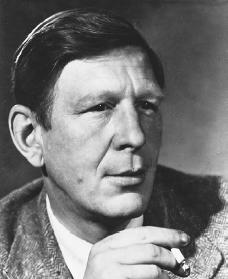
A daydream is a meal at which images are eaten. Some of us are gourmets, some gourmands, and a good many take their images precooked out of a can and swallow them down whole, absent-mindedly and with little relish.–W. H. Auden

Anglo-American poet Wystan Hugh Auden, who published under the name W. H. Auden, was born in England, and later became an American citizen. He is regarded by many as one of the greatest writers of the 20th century. The central themes of his poetry are love, politics and citizenship, religion and morals, and the relationship between unique human beings and the anonymous, impersonal world of nature.

Click here to read his poems.

Continue Reading…

Never miss a post
Name: 
Your email address:*
Please enter all required fields
Correct invalid entries

Simon Says: Daily Food Quote, October 7, 2011

Published by Friday, October 7, 2011 Permalink 0

by Simón de Swaan

Gluttony is a great fault; but we do not necessarily dislike a glutton. We only dislike the glutton when he becomes a gourmet — that is, we only dislike him when he not only wants the best for himself, but knows what is best for other people.–G.K. Chesterton (1874-1936)

C.K. Chesterton was a prolific English writer. In addition to writing poetry, plays, and philosophy, he also wrote literary and art criticism, biographies, fantasy fiction works and detective fiction. Chesterton has been called the “prince of paradox.”  He is well known for his reasoned apologetics, and even some of those who disagree with him have recognized the universal appeal of such works as Orthodoxy and The Everlasting Man.


Continue Reading…

Never miss a post
Name: 
Your email address:*
Please enter all required fields
Correct invalid entries

Simon Says: Daily Food Quote, October 3, 2011

Published by Monday, October 3, 2011 Permalink 0

by Simón de Swaan

No lyric poems live long or please many people which are written by drinkers of water.–Horace, 20 B.C.

Quintus Horatius Flaccus (8 December 65 BCE – 27 November 8 BCE), known in the English-speaking world as Horace, was the leading Roman lyric poet during the time of Augustus. Horace is generally considered to stand alongside Virgil and Ovid as one of the greatest poets of the Augustan Age.


Never miss a post
Name: 
Your email address:*
Please enter all required fields
Correct invalid entries

Simon Says: Daily Food Quote, September 23, 2011

Published by Friday, September 23, 2011 Permalink 0

by Simón de Swaan

Whatsoever was the father of a disease, an ill diet was the mother.–George Herbert, 1651

George Herbert was an English poet and orator, as well as an Anglican priest. Throughout his life, he wrote religious poems characterized by a precision of language and an ingenious use of imagery or conceits that was favored by the metaphysical school of poets. Some of Herbert‘s poems have endured as hymns, including “King of Glory, King of Peace” (Praise), “Let All the World in Every Corner Sing” (Antiphon) and “Teach me, my God and King” (The Elixir).


Continue Reading…

Never miss a post
Name: 
Your email address:*
Please enter all required fields
Correct invalid entries

Food Poetry: Artichoke, by Henry Taylor

Published by Friday, September 16, 2011 Permalink 0


Christina Daub, Poetry Editor

The pangolin of the vegetable world, the artichoke repels as much as it attracts. Is it armor or petals that surround its hidden heart? The slow-mo antidote to the seven-bite standup lunch, it ought to be the poster-it for the Slow Food movement.

Years ago I was told artichokes are one the foods one should never eat on a first date… the painstaking biting and sucking, the buttery dribbles, fingers and stain-potential all too risky, too exposing, too unladylike.

Even poet Henry Taylor admits to having “studied in private years ago/the way to eat these things…” Here’s his experience:

Artichoke

“If poetry did not exist, would you have had the wit to invent it?” –Howard Nemerov

He had studied in private years ago
the way to eat these things, and was prepared
when she set the clipped green globe before him.
He only wondered (as he always did
when he plucked from the base the first thick leaf,
dipped it into the sauce and caught her eye
as he deftly set the velvet curve against
the inside edges of his lower teeth
and drew the tender pulp towards his tongue
while she made some predictable remark
about the sensuality of this act
then sheared away the spines and ate the heart)
what mind, what hunger, first saw this as food.

___________________________

Henry Taylor ‘s collections of poetry include Crooked Run (2006), Understanding Fiction: Poems 1986-1996; The Flying Change (1985), for which he received the Pulitzer Prize; An Afternoon of Pocket Billiards (1975), and The Horse Show at Midnight (1966). Taylor has received the Witter Bynner Foundation Poetry Prize from the American Academy and Institute of Arts and Letters, a grant from the National Endowment for the Humanities, two fellowships from the National Endowment for the Arts, and is a member of the Fellowship of Southern Writers. He has also translated several works from Bulgarian, French, Hebrew, Italian, and Russian.

Never miss a post
Name: 
Your email address:*
Please enter all required fields
Correct invalid entries

Food Poetry: Brot, Linda Pastan

Published by Monday, July 4, 2011 Permalink 0

Click here to read in English.

Mir scheint, du
schreibst gern über
die fünf Gärphasen
der Hefe, nicht des Trauerns,”
meint mein Sohn,
womit er sagen will, dass
das Brot immer auf-
geht und in sich zusammensinkt,
gebrochen und gegessen wird
in meinen Gedichten.

Und obwohl er das nur so halb-
ernst meint, möcht ich
ihm sagen , “Brot geht in der Schüssel
auf wie Atem, der den Körper dehnt” oder
“wenn du den Teig knetest
mit vollkommener Sanftmut,
ist es wie leises Drücken der Haut
wenn du jemanden liebst.”
Baguette . . . Pitabrot . . . Pane Brot . . .
Challa . . . Naan: Brot ist
eine Universalsprache, zu übersetzen
auf der ausgehungerten Zunge.

Nun ist es Zeit, das
Päckchen Hefe aufzumachen
und mit Wasser anzurühren,
das Blasenwerfen zu betrachten,
sein wie man sagt blindes Testen
der Stärke, das Beseelen
des Lebens. Alles
ist bereit: Salz, Mehl, Öl.
Brotkrumen sind es, die
Kinder heimführen nach Haus.

(Übersetzt: Peter Beicken)

_____________________

after Levchev

First published in Ploughshares, now in Traveling Light, W.W. Norton, 2011.

This poem was contributed by our Poetry Editor, Christina Daub.

Short URL for this post: http://is.gd/q9Byhe


Never miss a post
Name: 
Your email address:*
Please enter all required fields
Correct invalid entries

Food Poetry: Bread, by Linda Pastan

Published by Friday, June 10, 2011 Permalink 0

after Levchev


“It seems to be the five stages
of yeast, not grief,
you like to write about,”
my son says,
meaning that bread
is always rising
and falling, being broken
and eaten, in my poems.

And though he is only half serious,
I want to say to him
“bread rising in the bowl
is like breath rising in the body;”
or “if you knead the dough
with perfect tenderness,
it is like gently kneading flesh
when you make love.”
Baguette . . . pita . . . pane . . .
Challah . . . naan: bread is
the universal language, translatable
on the famished tongue.

Now it is time to open
the package of yeast
and moisten it with water,
watching for its fizz,
its blind energy–proofing
it’s called, the animate proof
of life. Everything
is ready: salt, flour, oil.
Breadcrumbs are what lead
the children home.


Continue Reading…

Never miss a post
Name: 
Your email address:*
Please enter all required fields
Correct invalid entries

UA-21892701-1