What to Eat in France: Souper de Noël

Published by Tuesday, December 15, 2015 Permalink 0

What to Eat in France: Le Gros Souper de Noël, the Great Christmas Supper in Provence

by Jonell Galloway

In France, the main Christmas meal is eaten on Christmas Eve. Every region in France approaches Christmas Eve meals differently, but that of Provence, known as Le Gros Souper in French and the Gros Soupa in the Provençal dialect, is perhaps the best known.

The table is set with three white tablecloths, one on top of the other, representing the Holy Trinity. Three candles light the table, representing past, present and future. The past is in memory of loved ones who are deceased; the present to express one’s loyalty to friends and family, and the future to express hope for children yet to be born. Three bowls of germinated wheat, planted on December 4th, St. Barbara’s Day, and decorated with red and yellow ribbons, are used as table decoration. Once again, the number three is symbolic of the Holy Trinity.

St. Barbara, a Middle Eastern Christian saint, was the beautiful and much sought after daughter of Dioscore, who locked her in a tower to keep her suitors away. Much to her pagan father’s chagrin, she managed to get baptized, inciting him to go after her with a sword. She managed to escape and hide under a cliff, but a shepherd saw her and informed on her. As a result, God punished him by turning his herd of sheep into grasshoppers. She was sent to prison, then forced to give up Christianity and marry a pagan. Refusing to renounce her God, she was tortured and her father finally slit her throat, so the heavens promptly sent down lightning and killed Dioscore in revenge. This miracle is recreated symbolically today by germinating and planting grains of wheat, and sometimes chickpeas.

St. Barbara of Provence


Quand lou blad vèn bèn, tout vèn bèn ! or “when the wheat is doing well, everything is going well,” meaning that if it germinates, it will bring prosperity for the coming year. This tradition apparently dates back to the Romans. The direct connection between germination of the wheat and St. Barbara is not clear, nor how St. Barbara became a favorite saint in Provence.

Continue Reading…

Never miss a post
Name: 
Your email address:*
Please enter all required fields
Correct invalid entries

What to Eat in France: Anchoyade Languedocienne

Published by Friday, August 21, 2015 Permalink 0

What to Eat in France: Anchoyade Languedocienne or Anchovies from the Ancient Province of Languedoc

by Jonell Galloway

Quand se garnis uno ensalado,
Fau qu’aquéu que met la sau fugue un sage;
Aquéu que met lou vinaigre, un avare;
Aquéu que met l’òli, un proudigue.–Popular minstrel rhyme

“When dressing a salad, the person who adds the salt has to be careful; the person who adds the vinegar wise, and the person who adds the oil generous,” said the wandering minstrels in Langue d’Oc.

Anchoyade is the langue d’oc spelling. In French (and in the Provençal dialect), it is written anchoïade. In English, anchoiade.

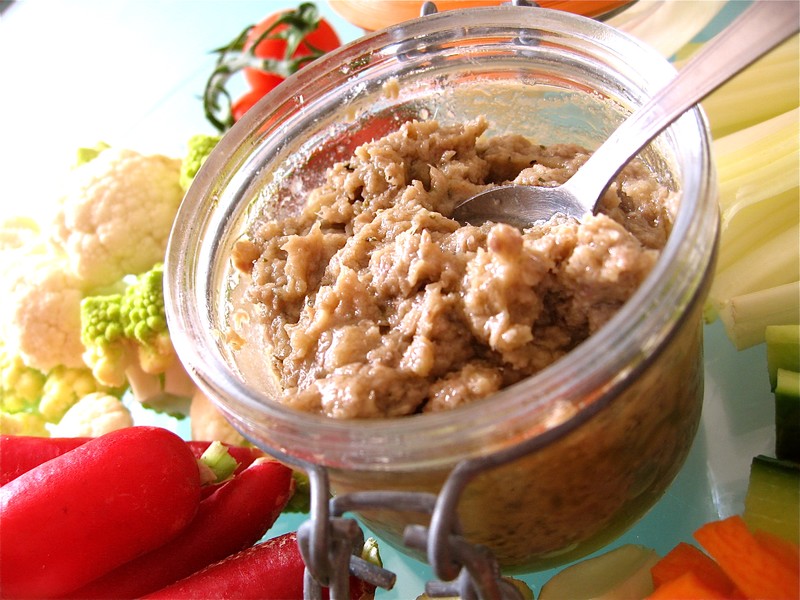
The former province of Languedoc bordered Provence, where anchoïde is king, but in Languedoc, anchovies are mashed into a paste. Anchoïade is to Provence what fondue is to the Savoy. When the anchovy mixture is pounded in a mortar, as it is in Provence, it is actually anchovy paste. Anchoyade Languedocienne differs in that the anchovies are fried and served whole.

Technically, anchoïade is considered a sauce in France, although it is eaten as we would eat dip, called bagna cauda, or banha cauda in Provençal, with fresh raw vegetables into which it is dipped, or as a spread on toast. It is also used to make Fougasse aux Anchois and on salads.

In the region, anchoïade is most often accompanied by a dry white Cassis wine.

This is a traditional recipe and is perfect for topping a salad. Today, it is almost always ground into a paste like in Provence before serving as a dip. If you wish to do this, see the instructions following the traditional recipe.

Continue Reading…

Never miss a post
Name: 
Your email address:*
Please enter all required fields
Correct invalid entries

What to Eat in France: Bourride à la Sétoise

Published by Thursday, August 13, 2015 Permalink 0

What to Eat in France: Bourride, or Provençal Fish Soup with Aioli in the Style of Sète

by Jonell Galloway

Bourride is the specialty of Sète, a town on the coast of the Languedoc in Provence. Sète is one of the largest fishing ports in the region. Native poet Paul Valéry called it l’île singulaire, the singular island, because it is nestled in between two salt water lakes and the sea.

Bourride is said to date back to the Phocaeans, the ancient inhabitants of Marseilles, then called Massilia.

In Provençal, it is called boulido, meaning “boiled.” It is not unlike bouillabaisse, a specialty of nearby Marseilles, the difference being that bourride is made with only white fish — monkfish tails in particular, and that it is accompanied by aioli instead of the traditional rouille served with bouillabaisse. Shellfish are never added.

My recipe is very traditional. There are many variants, but the aim of this series of articles “What to Eat in France” is to seek original or traditional recipes for traditional, regional dishes.

This dish is a sure pleaser for parties and is easy enough to cook ahead, doing everything but poaching the fish, which should be done before serving.

In the region, many locals drink rosé wine such as Coteaux-d’Aix-en-Provence with bourride, but one might just as easily pair it with a perfumed Languedoc white. There are a world of them to be discovered, but since they are not, for the most part. A.O.C., it’s difficult to recommend one in particular. It’s a matter of producer as much as place.

Continue Reading…

Never miss a post
Name: 
Your email address:*
Please enter all required fields
Correct invalid entries

Jonell Eats her Way through Provence: A Photo Essay

Published by Tuesday, June 18, 2013 Permalink 0

Jonell Eats her Way through Provence: A Photo Essay

by Jonell Galloway

Tourettes-sur-Loup in France is the world capital of violets, and yes, you can eat violets. Candied, as you’ll see on my dessert in the photos; syrup; as jam (the stacked tins); and they even make violet pasta.

Never miss a post
Name: 
Your email address:*
Please enter all required fields
Correct invalid entries

UA-21892701-1