Simon Says: Daily Food Quote, November 1, 2011

Published by Tuesday, November 1, 2011 Permalink 0

by Simón de Swaan

A woman should never be seen eating or drinking unless it be lobster salad and champagne, the only truly feminine and becoming viands.–Lord Byron, 1812

George Gordon Byron, 6th Baron Byron, later George Gordon Noel, 6th Baron Byron, FRS, commonly known simply as Lord Byron, was an English poet and a leading figure in the Romantic movement. Amongst Byron’s best-known works are the short poems “George Gordon Byron,” “She Walks in Beauty,” and “When We Two Parted,” in addition to the narrative poems So, we’ll go no more a roving and Childe Harold’s Pilgrimage. He is regarded as one of the greatest English poets.

Related articles

  • Simon Says: Daily Food Quote, August 4, 2011
  • Simon Says: Daily Food Quote, September 23, 2011
  • Simon Says: Daily Food Quote, October 14, 2011
  • Never miss a post
    Name: 
    Your email address:*
    Please enter all required fields
    Correct invalid entries

    Simon Says: Daily Food Quote, October 31, 2011

    Published by Monday, October 31, 2011 Permalink 0

    by Simón de Swaan

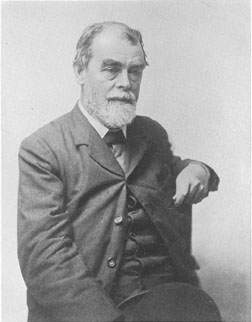
    Man is the only animal that can remain on friendly terms with the victims he intends to eat until he eats them.–Samuel Butler

    Samuel Butler was a Victorian author who published a variety of works. Two of his most famous pieces are the Utopian satire Erewhon and a semi-autobiographical novel published posthumously, The Way of All Flesh. Butler also made prose translations of The Iliad and The Odyssey which remain in use to this day.


    Never miss a post
    Name: 
    Your email address:*
    Please enter all required fields
    Correct invalid entries

    Simon Says: Daily Food Quote, October 28, 2011

    Published by Friday, October 28, 2011 Permalink 0

    by Simón de Swaan

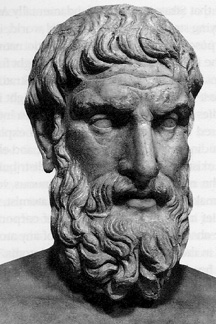
    We should look for someone to eat and drink with before looking for something to eat and drink, for dining alone is leading the life of a lion or wolf.–Epicurus, c. 300 BC

    Epicurus was an ancient Greek philosopher and the founder of the school of philosophy called Epicureanism. Only a few fragments and letters remain of Epicurus’s 300 written works. Much of what is known about Epicurean philosophy derives from later followers and commentators.

    Never miss a post
    Name: 
    Your email address:*
    Please enter all required fields
    Correct invalid entries

    Simon Says: Daily Food Quote, October 27, 2011

    Published by Thursday, October 27, 2011 Permalink 0

    by Simón de Swaan

    I cannot but bless the memory of Julius Caesar, for the great esteem he expressed for fat men and his aversion to lean ones.–David Hume, 1751

    David Hume was a Scottish philosopher, historian, economist, and essayist, known especially for his philosophical empiricism and skepticism. He is regarded as one of the most important figures in the history of Western philosophy and the Scottish Enlightenment, and last of the British Empiricists.

    Hume’s major philosophical works — A Treatise of Human Nature (1739-1740), Enquiries concerning Human Understanding (1748) and An Enquiry concerning the Principles of Morals (1751), as well as the posthumously published Dialogues concerning Natural Religion (1779) — remain widely and deeply influential.


    Never miss a post
    Name: 
    Your email address:*
    Please enter all required fields
    Correct invalid entries

    Simon Says: Daily Food Quote, October 26, 2011

    Published by Wednesday, October 26, 2011 Permalink 0

    by Simón de Swaan

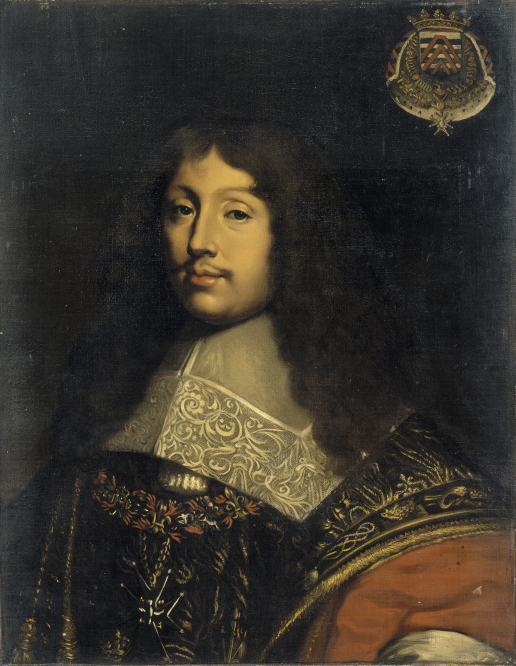
    To safeguard one’s health at the cost of too strict a diet is a tiresome illness indeed.–La Rochefoucauld, 1678

    François VI, Duc de La Rochefoucauld, Prince de Marcillac, was a noted French author of maxims and memoirs. His literary work consists of three parts: his Memoirs, the Maximes and his letters.

    His importance as a social and historical figure is perhaps overshadowed by his importance to literature. He is often referred to as the “master of eloquent melancholy,” because he was known for his dark views of life, and for leading what were perhaps the first salons in Paris.


    Never miss a post
    Name: 
    Your email address:*
    Please enter all required fields
    Correct invalid entries

    Simon Says: Daily Food Quote, October 24, 2011

    Published by Monday, October 24, 2011 Permalink 0

    by Simón de Swaan

    Bad men live that they may eat and drink, whereas good men eat and drink that they may live.–Socrates, c 430 BC

    Socrates was a classical Greek Athenian philosopher unlike any other, since he never wrote anything. He is credited as one of the founders of Western philosophy.

    He believed in teaching people how they ought to live and how to think for themselves, and is therefore compared by many to Jesus and Buddha, even though he had no dogma as such. He was convicted and executed for irreverence toward the Greek gods.


    Never miss a post
    Name: 
    Your email address:*
    Please enter all required fields
    Correct invalid entries

    Simon Says: Daily Food Quote, October 21, 2011

    Published by Friday, October 21, 2011 Permalink 0

    by Simón de Swaan

    Once a turnip said, “I taste very good with honey.” “Go you boaster,” replied the honey, “I taste good without you.“–Russian folktale


    Never miss a post
    Name: 
    Your email address:*
    Please enter all required fields
    Correct invalid entries

    Simon Says: Daily Food Quote, October 20, 2011

    Published by Thursday, October 20, 2011 Permalink 0

    by Simón de Swaan

    For, say they, when cruising in an empty ship, if you can get nothing better out of the world, get a good dinner out of it, at least.–Herman Melville, 1851

    Herman Melville, an American author, is best-known for his novels of the sea and his masterpiece Moby Dick (1851), a whaling adventure dedicated to Nathaniel Hawthorne and heralded as one of the greatest novels in the English language.

    Click here to read more about Moby Dick, which recounts the adventures of the narrator Ishmael as he sails on the whaling ship Pequod under the command of Captain Ahab, in search of the great white whale Moby Dick.


    • ‘Why Read Moby-Dick?’: A Passionate Defense Of The ‘American Bible’
    • The Origin of “Moby Dick”
    Never miss a post
    Name: 
    Your email address:*
    Please enter all required fields
    Correct invalid entries

    Simon Says: Daily Food Quote, October 19, 2011

    Published by Wednesday, October 19, 2011 Permalink 0

    by Simón de Swaan

    De gustibus non disputandum es. –Latin proverb

    There is no disputing taste.


    Never miss a post
    Name: 
    Your email address:*
    Please enter all required fields
    Correct invalid entries

    Simon Says: Daily Food Quote, September 18, 2011

    Published by Tuesday, October 18, 2011 Permalink 0

    by Simón de Swaan

    The onion and its satin wrappings is among the most beautiful of vegetables and is the only one that represents the essence of things. It can be said to have a soul.–Charles Dudley Warner, My Summer in a Garden (1871)

    Charles Dudley Warner was an American writer and editor. He edited the series American Men of Letters and published a collection of essays, My Summer in a Garden (1871).


    Click here to learn more about American Men of Letters on Answers and Encyclopedia.

    Continue Reading…

    Never miss a post
    Name: 
    Your email address:*
    Please enter all required fields
    Correct invalid entries

    UA-21892701-1