Culinary Chemistry: On the Technique of Brining

Published by Tuesday, November 13, 2012 Permalink 0

Culinary Chemistry: On the Technique of Brining

by Jenn Oliver

Hello and welcome to the first post of Culinary Chemistry with Jenn! I am Jenn, your resident scientist with a gluten-free husband who is curious about all things related to the how and why of cooking.  Today, we’re going to talk about brining, but each post will explore a different technique or phenomenon related to cooking/baking in the kitchen. Do you have questions or are curious about a particular aspect in the kitchen? Feel free to send me an email at jennoliver@theramblingepicure.com or on our online chat to the right of the screen, or join our Community and follow the Culinary Chemistry group and forum.

This past holiday season, families and friends gathered to share in their holiday traditions of a meal together — many of which surely included an oven-baked roast. Mine certainly did, as my husband and I celebrated our first Christmas abroad, a cozy romantic weekend together, marking our one-year anniversary since arriving to Switzerland, our current home. But just because the holidays are over doesn’t mean you have to swear off making roasts until next winter’s festivities roll around.
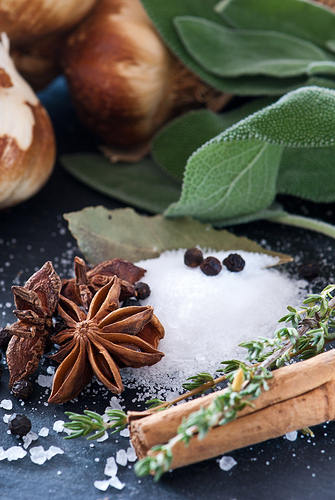
Spices for pork roast brine.


Continue Reading…

Never miss a post
Name: 
Your email address:*
Please enter all required fields
Correct invalid entries

Food Art: Vineyards in B&W 1, food photography by Rosa Mayland

Published by Tuesday, November 6, 2012 Permalink 0

This is the first in a series of B&W vineyard photographs by Rosa Mayland, author of our column Rosa’s Musings.


Never miss a post
Name: 
Your email address:*
Please enter all required fields
Correct invalid entries

Rosa’s Musings: Beet Salad with Cottage Cheese & Soft-boiled Egg

Published by Monday, November 5, 2012 Permalink 0

Rosa’s Musings: Beet Salad with Cottage Cheese & Soft-boiled Egg

by Rosa Mayland


Some people are not afraid of the cold and others regard it with utter contempt. Even though I can’t say I savor every season or mid-season of the year, I nonetheless definitely prefer the fresher season as I hate sweating excessively or getting sunburned like a shrimp on a barbie.

Sometimes I wonder if those predispositions are linked to my DNA or whether is it just a personal preference. What if our genes influenced our manner of conducting ourselves and our traits of character? Hmmm, that is quite a difficult question to answer, but I believe that if our health can be defined by our bloodline, then there are chances that our emotions, temperament and identity are also outlined by it.

You see, my father’s ancestors were Swiss mountaineers who might have had Danish or English origins (my family name is NOT Swiss at all). Then, on my my mother’s side they came from the rugged areas of Northern England where Viking settlers made themselves at home and also from European Russia, a place which is known for its dreadful cold.

Continue Reading…

Never miss a post
Name: 
Your email address:*
Please enter all required fields
Correct invalid entries

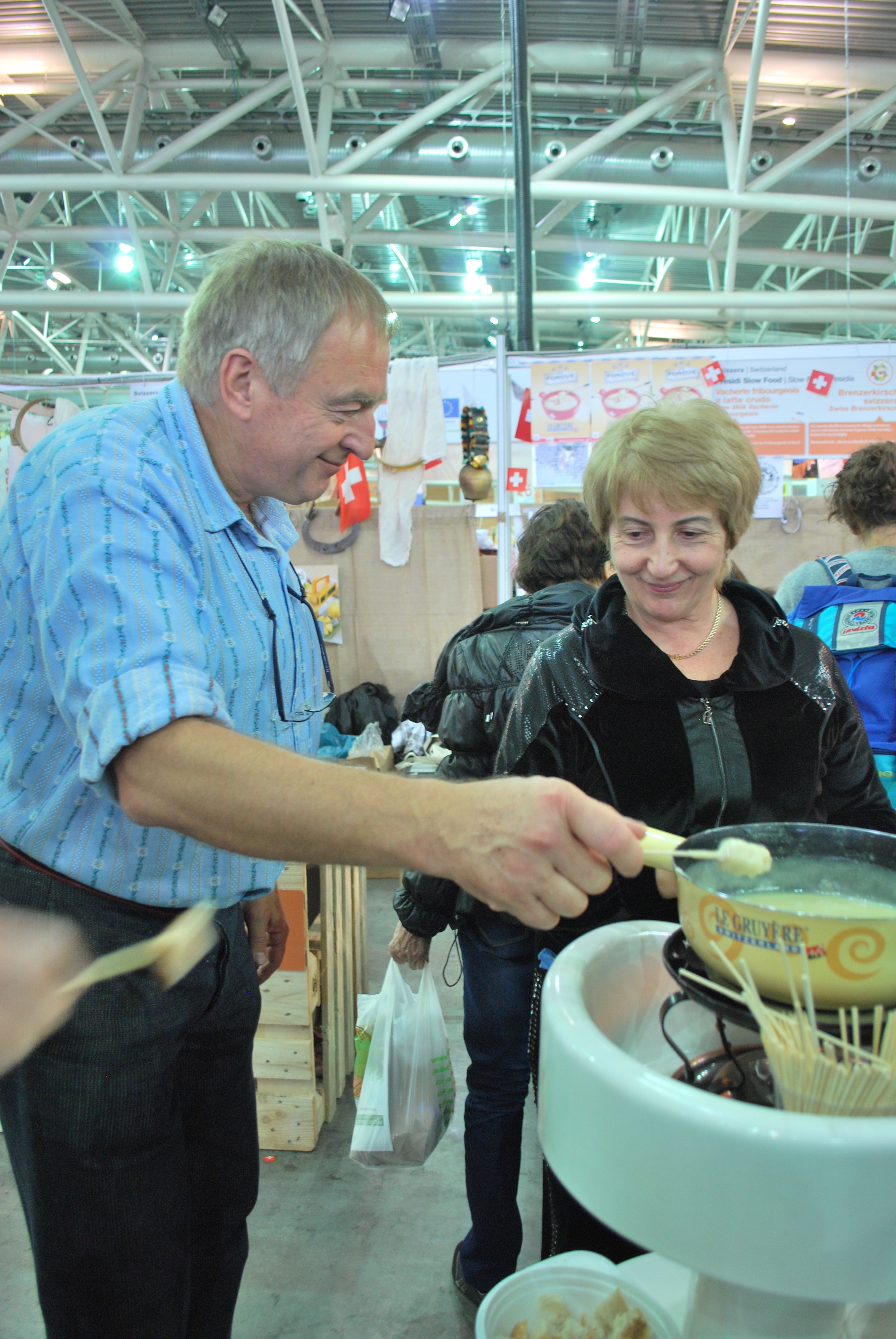
Switzerland: Raphael of Fribourg making Fribourg-style Swiss fondue using cheese he makes

Published by Friday, November 2, 2012 Permalink 0

Fribourg-style Swiss fondue is referred to as moitié-moitié. Unlike fondues from other regions, it is made with a hard, cooked cheese native to Fribourg, known as Vacherin Fribourgeois (not to be confused with Vacherin or Mont d’Or). The recipe calls for half Vacherin Fribourgeois and half Swiss Gruyère.

In this photo, Raphael is making fondue using the handmade cheeses he makes himself, at the Slow Food Switzerland stand at the Salone del Gusto in Turin, Italy last week. The visitors ran to his stand every time he put a new pot of fondue out. Obviously, it was very good!


Never miss a post
Name: 
Your email address:*
Please enter all required fields
Correct invalid entries

Food Art: A Swiss Food Experience, food photography by Jenn Oliver

Published by Friday, October 5, 2012 Permalink 0

Take a look at this lovely slide show!

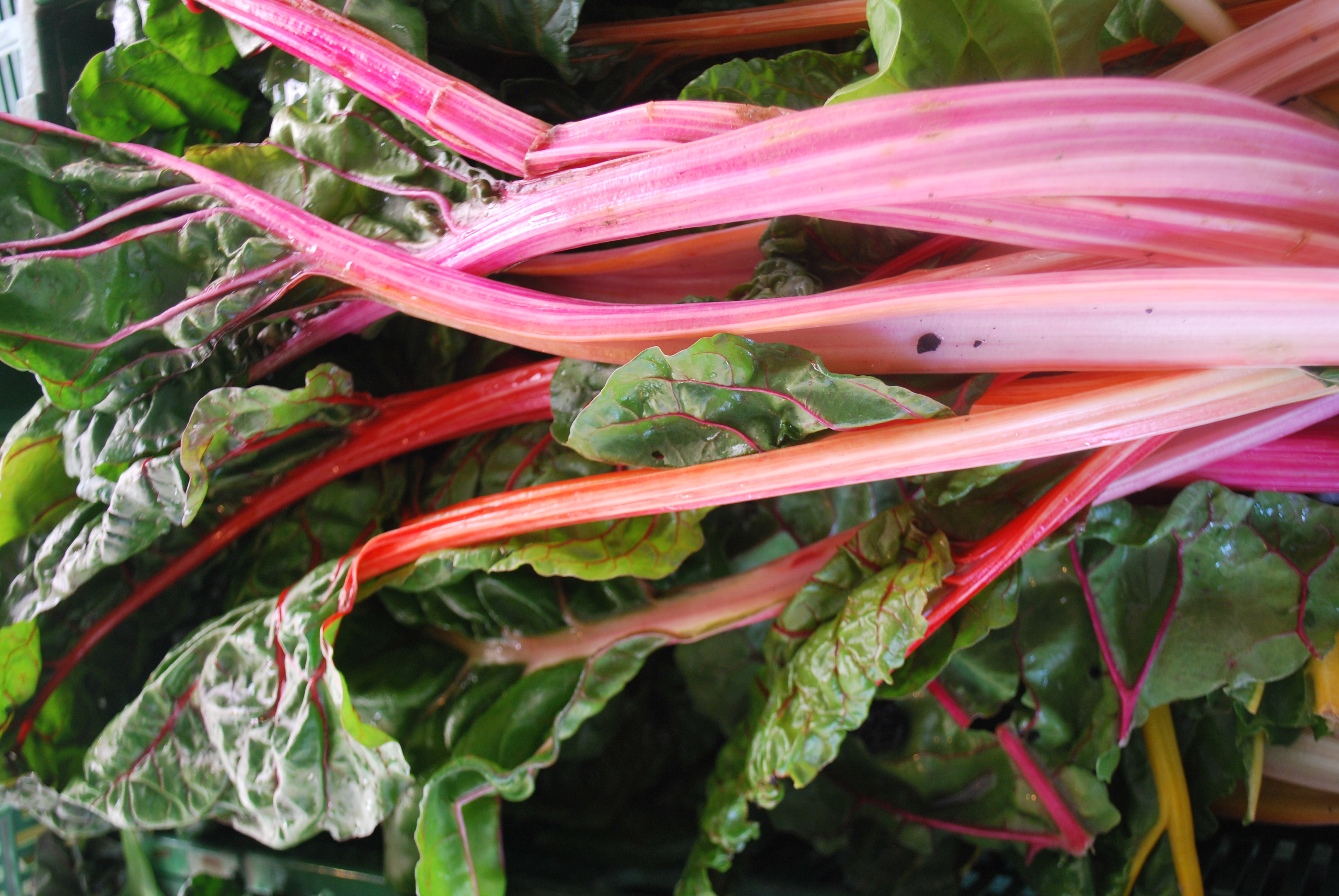
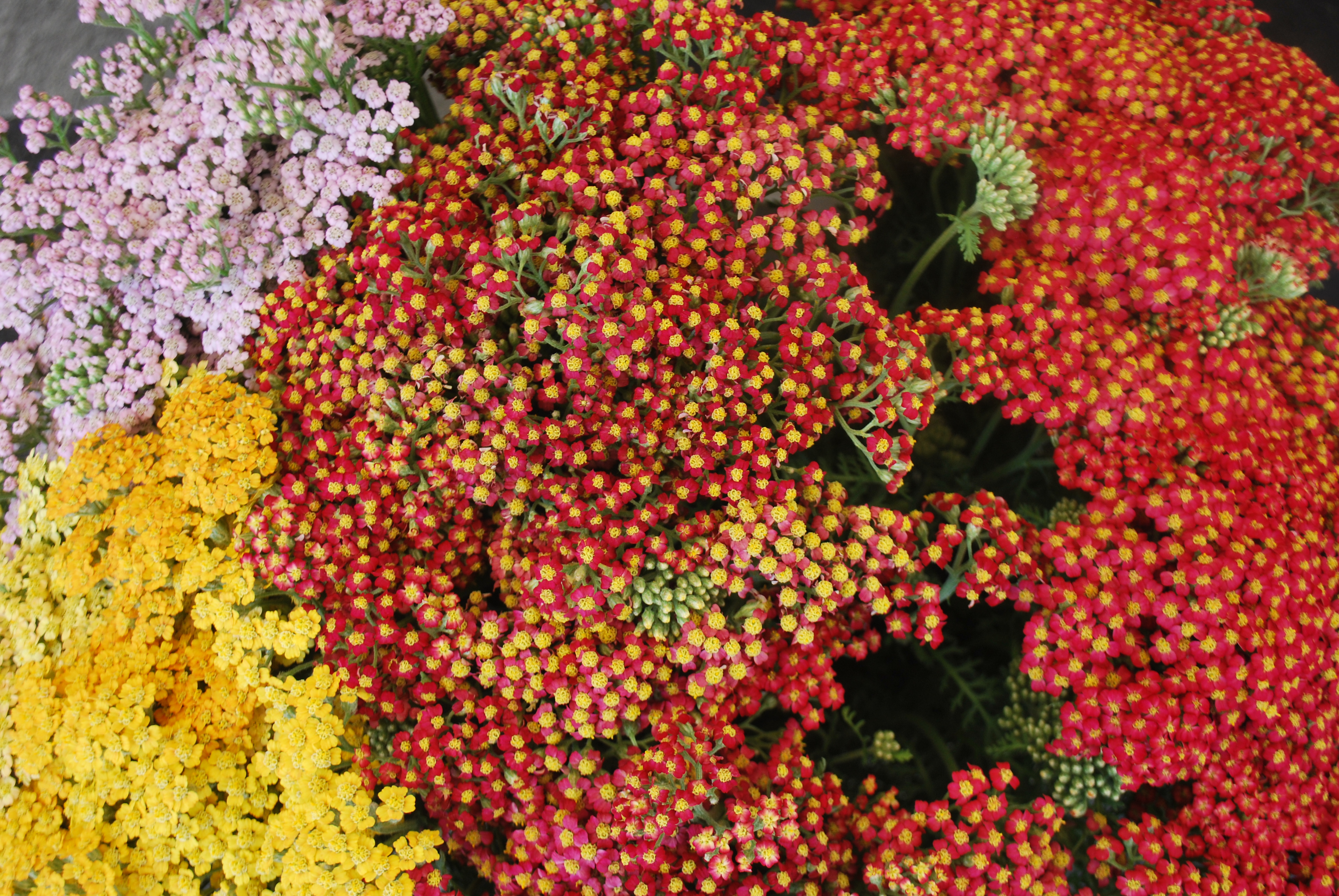
The culinary experiences of our Culinary Chemist Jenn Oliver as she travels around Switzerland: a photo exhibit slide show.

Never miss a post
Name: 
Your email address:*
Please enter all required fields
Correct invalid entries

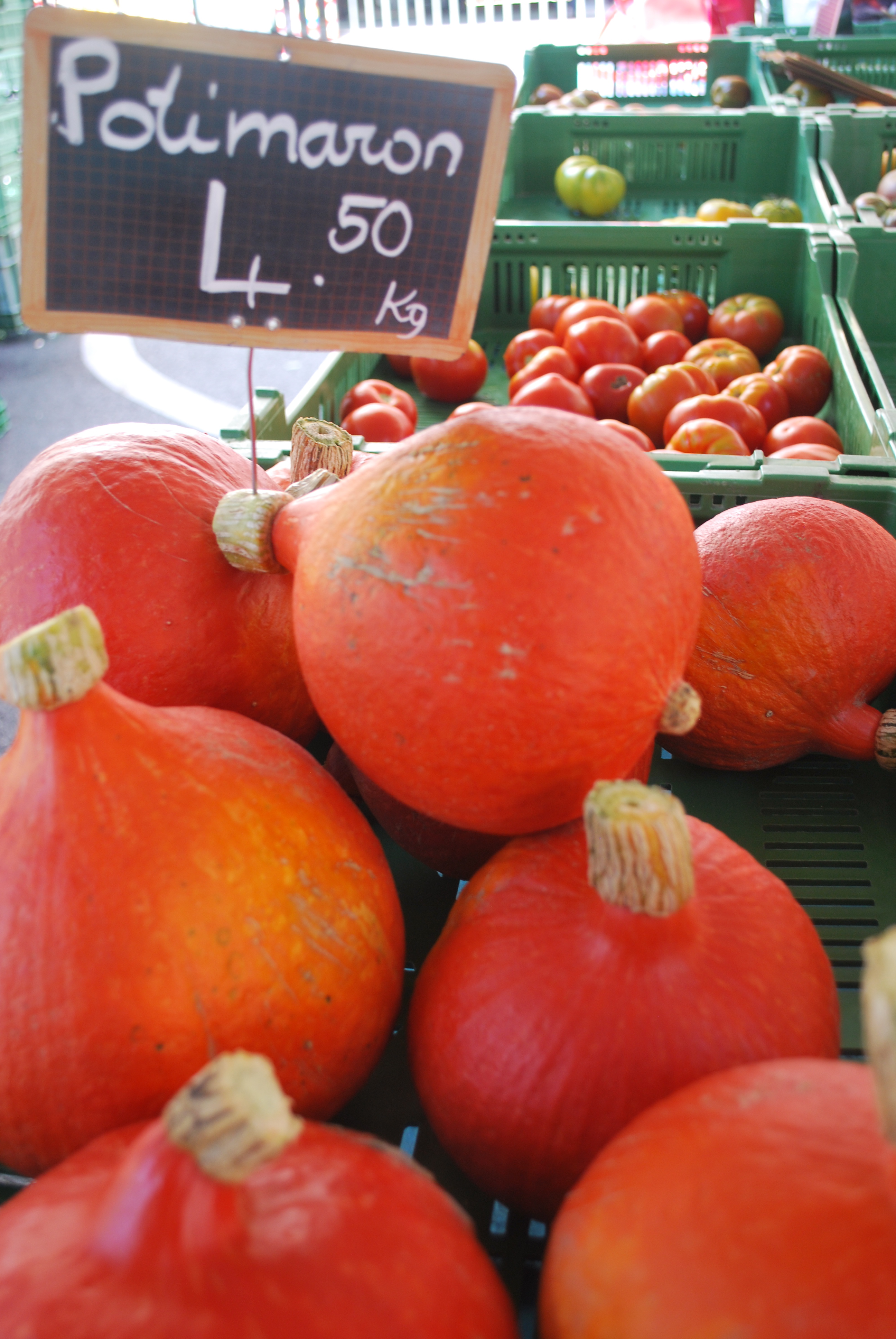
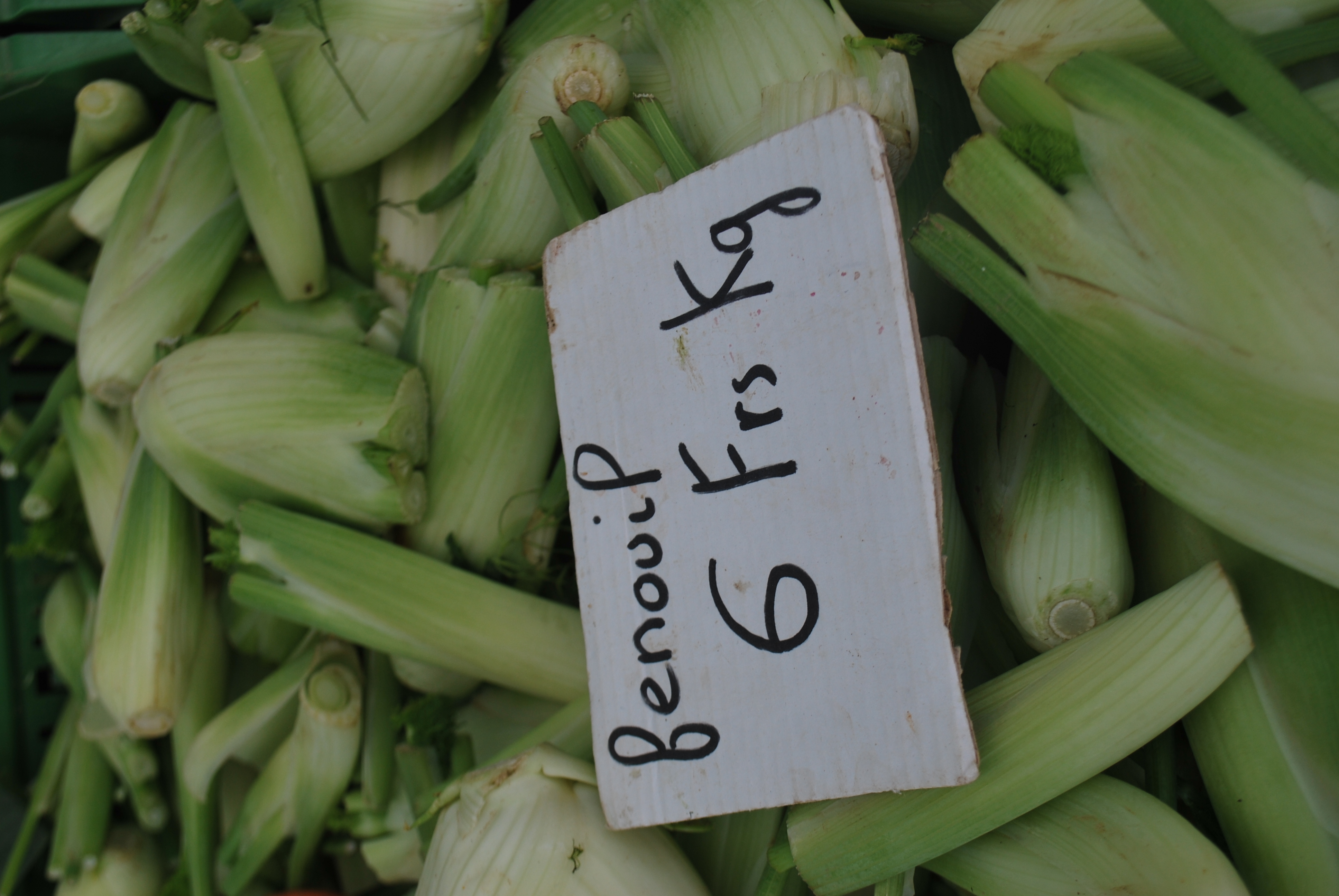
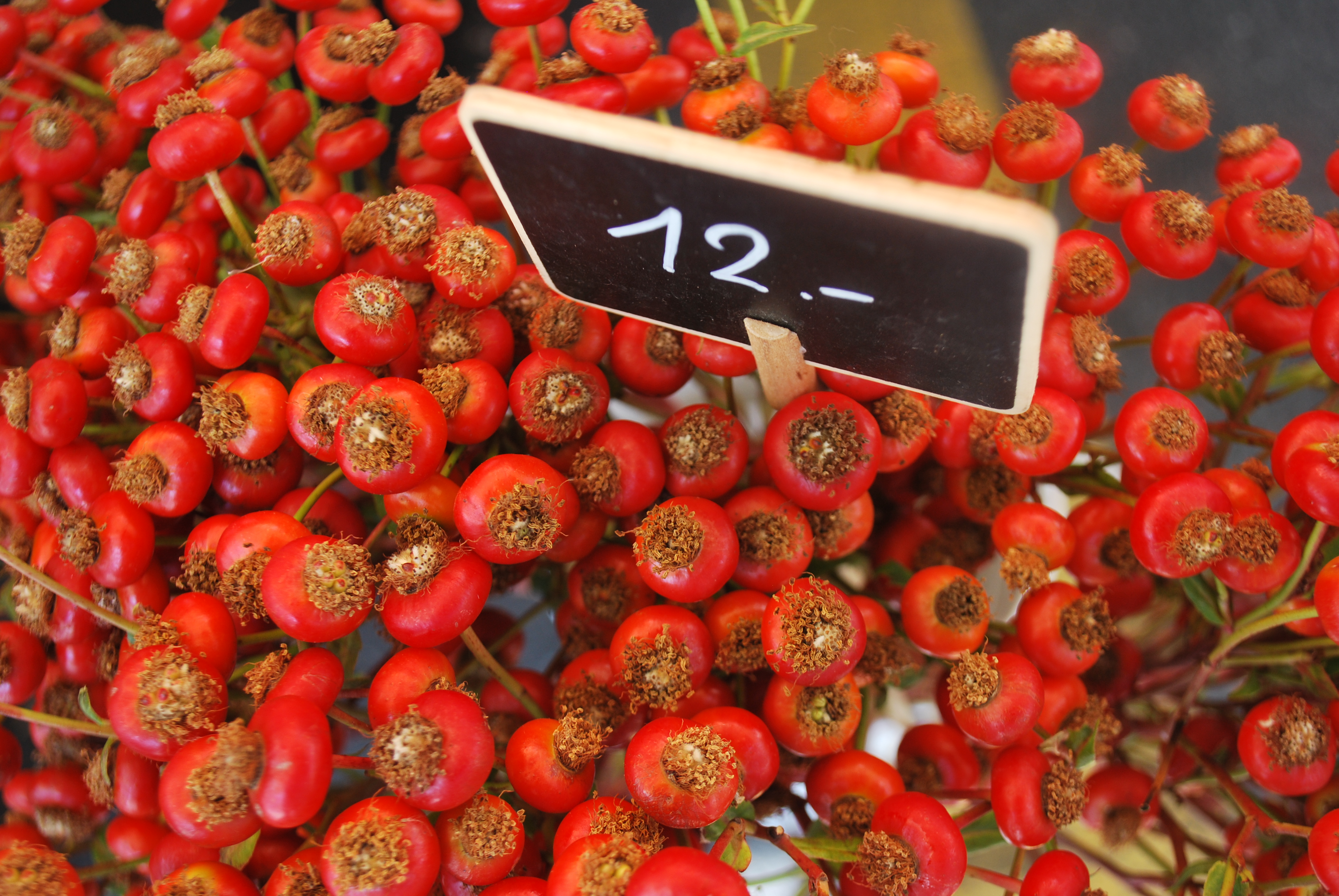
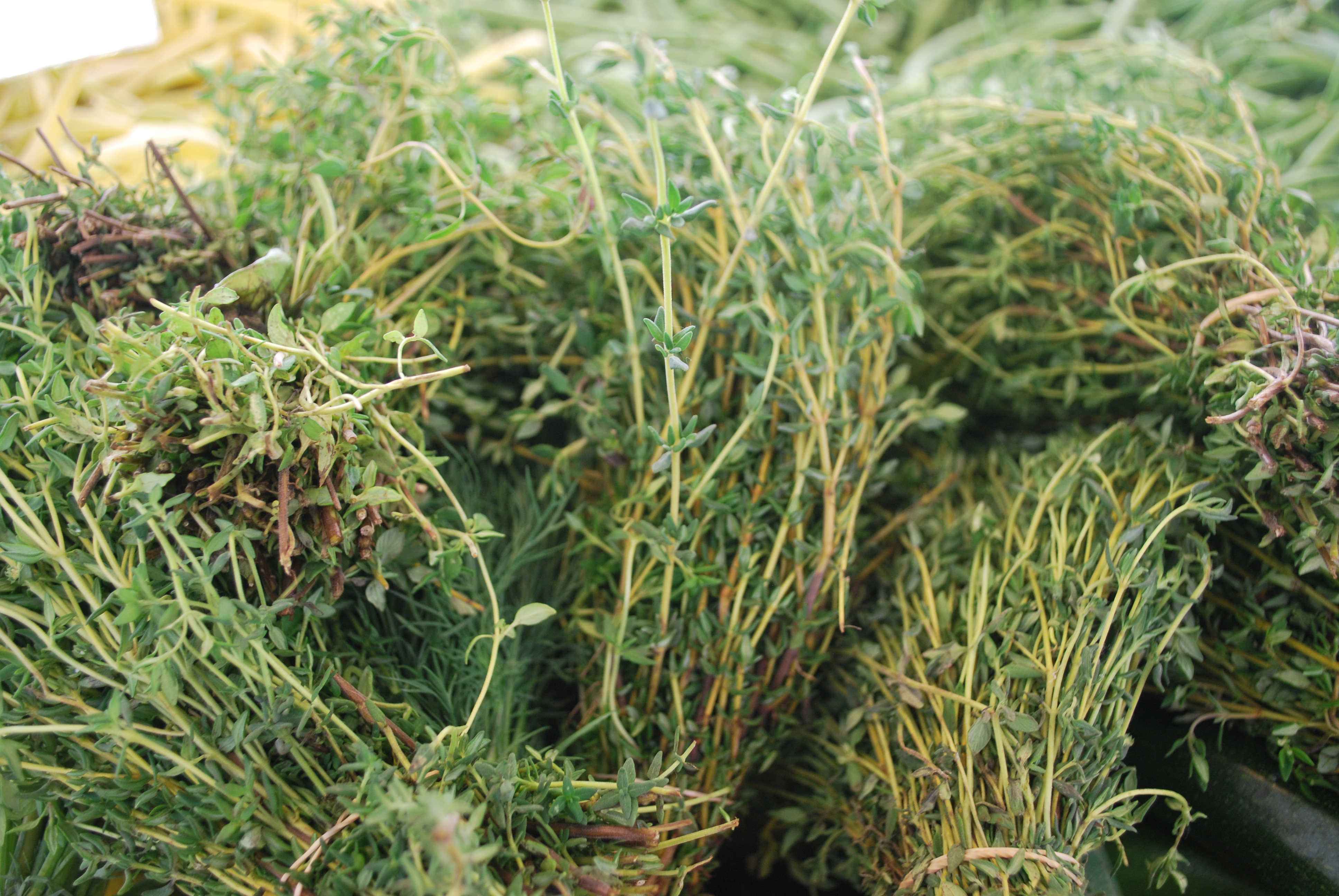
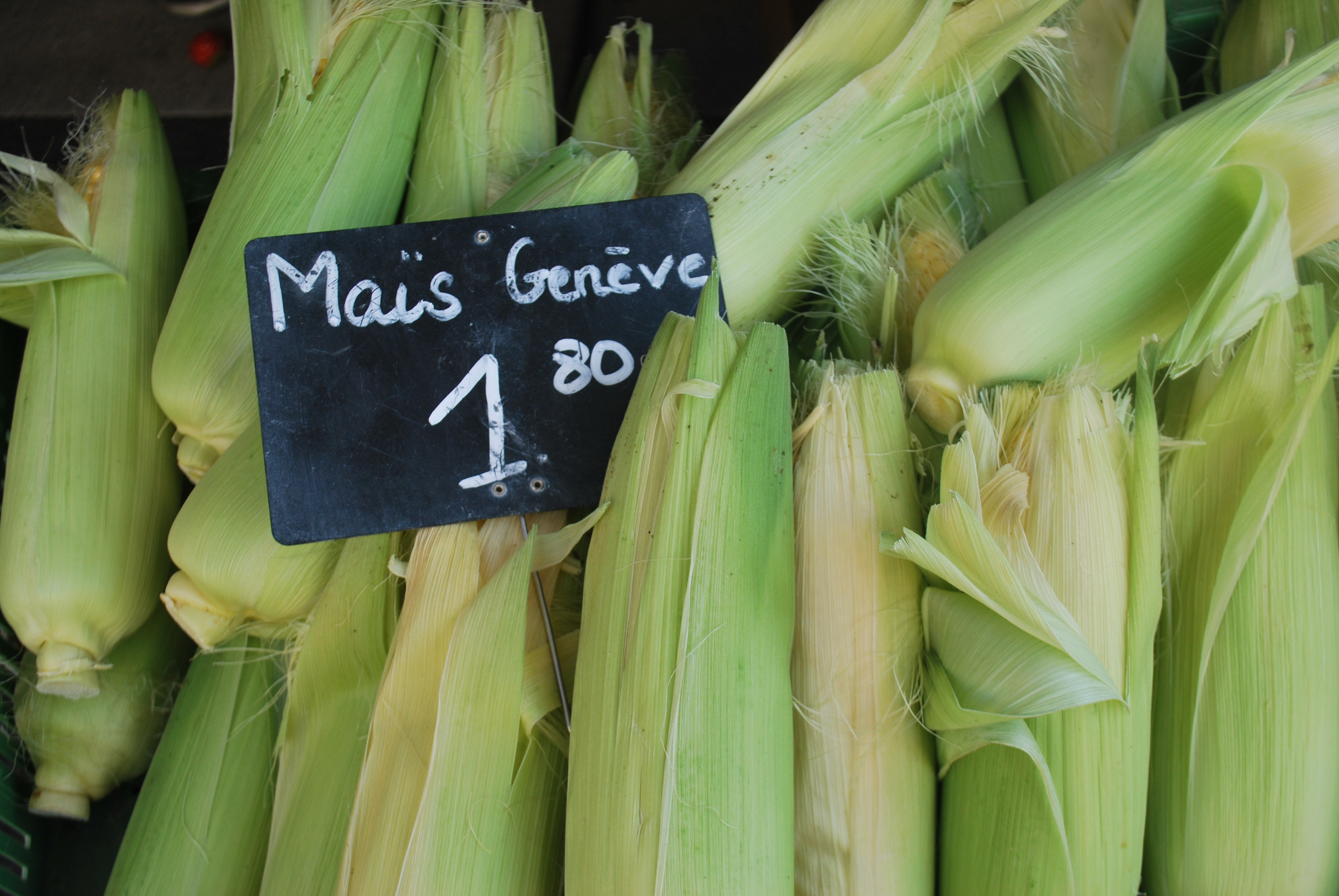
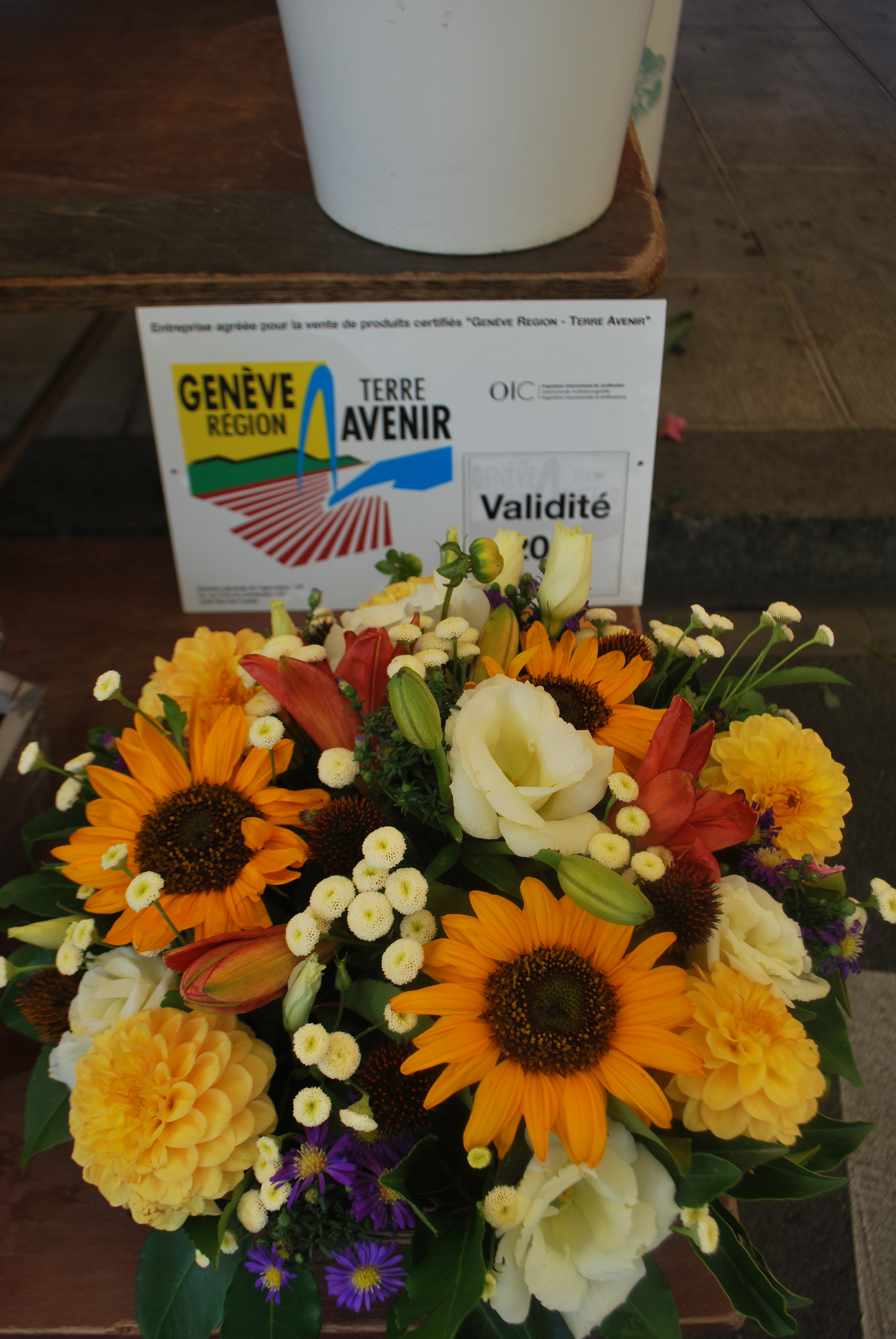
MarketDay: Swiss Farmers Market, Late August

Published by Tuesday, September 4, 2012 Permalink 0

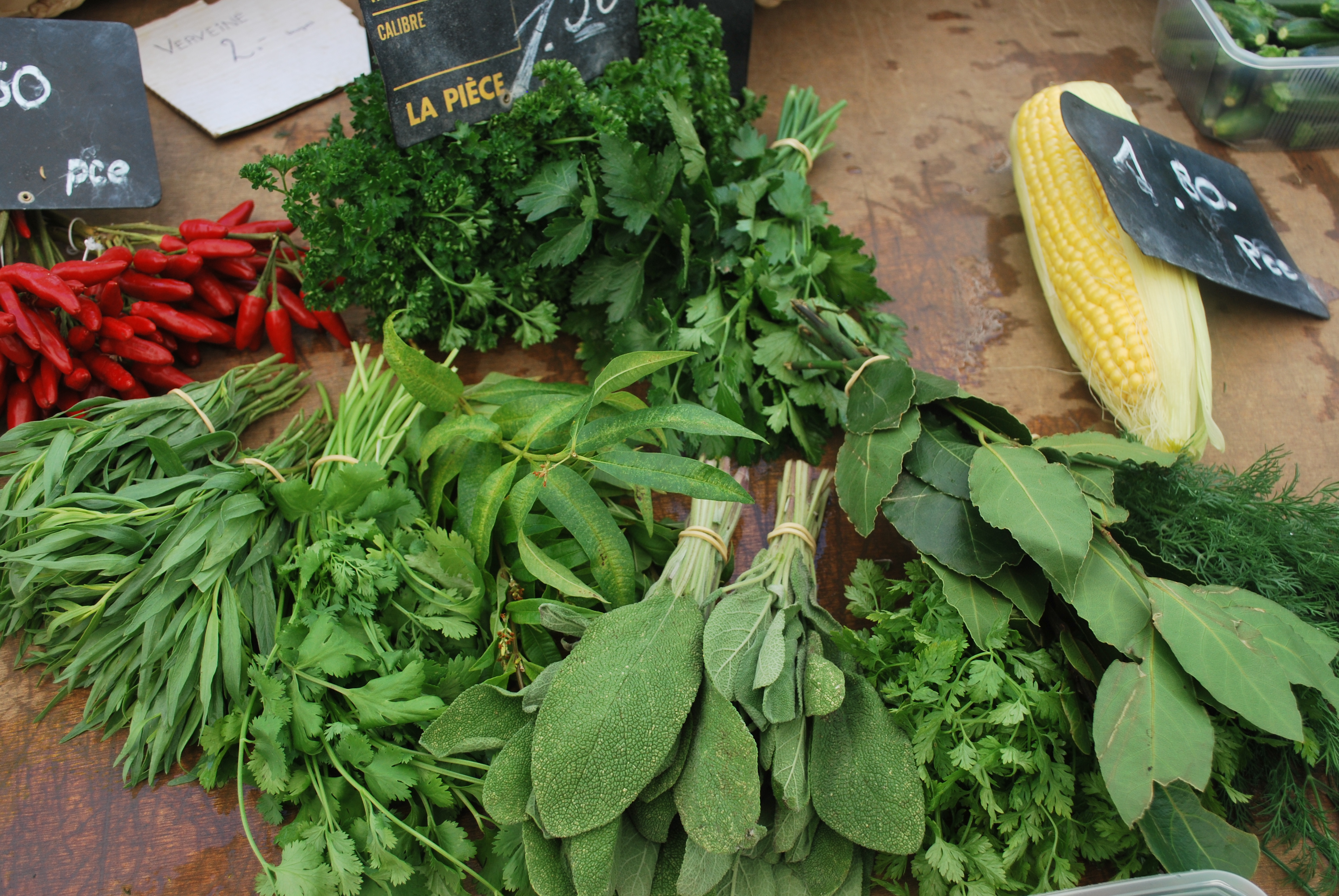
Take a walk through the late August farmers market in Switzerland with Jonell Galloway.

Never miss a post
Name: 
Your email address:*
Please enter all required fields
Correct invalid entries

Food Art: Vineyards in B&W 2, by Rosa Mayland

Published by Tuesday, August 28, 2012 Permalink 0

Rosa Mayland is part of The Rambling Epicure staff and author of the column “Rosa’s Musings.” This is the second in a series of her black and white photos of vineyards.

You can more of her work on her blog, Rosa’s Yummy Yums.


Never miss a post
Name: 
Your email address:*
Please enter all required fields
Correct invalid entries

Switzerland: Restaurants in Geneva open on Sunday night

Published by Tuesday, August 14, 2012 Permalink 0


//

Switzerland: Restaurants in Geneva open on Sunday night

Lai Thai

Lai Thai is in an elegant setting. The owner went to Swiss hotel school, so you are always greeted like a king or queen and the service is impeccable. A wide range of Northern Thai dishes you don’t ordinarily find in hole-in-the-wall type Thai restaurants, such as the special Thai rice and fish fritters with a delicious dipping sauce, as well as great massamans. Set menus go for CHF 55, 65 and 78 and the servings are generous. Located in what was formerly a Geneva institution, the Café Gothard.

Rue du Gothard 11

1225 Chêne-Bourg

Tel. +41 (0)22 348 48 17

Les 3s

Traditional Italian cuisine in a chic contemporary decor, located in Plainpalais near the Musée Patek Philippe. The bar serves tapas with the cocktails and is a hangout for young people.

Avenue du Mail 15bis

1205 GenevaTel. +41 (0)22 328 07 01Site.

Continue Reading…

Never miss a post
Name: 
Your email address:*
Please enter all required fields
Correct invalid entries

Geneva: Rock ‘n Roll Spanish Wine Tasting

Published by Thursday, August 9, 2012 Permalink 0

Wine Defender Geneva is sponsoring a wine tasting on August 9, 2012, from 7 p.m. to 10 p.m. at the Cave Do Bem, located at 14, boulevard James Fazy. The tasting will feature Spanish wines with tasty tapas and rock music provided by Bye Bye Chicken Head DJ, preceded by a tribute to Chavela Vargas. The cost of admission is 10 CHF.

Cave Do Bem is located just 2 minutes from the Cornavin train station. It is advisable to reserve ahead of time. Tel. 41 (0)76 273 88 27.


Never miss a post
Name: 
Your email address:*
Please enter all required fields
Correct invalid entries

Part 5: Kimchi vs. Sauerkraut – Fermenting Vegetables

Published by Wednesday, August 8, 2012 Permalink 3
cafemama / Foter / CC BY-NC-SA

Part 5 on Fermentation: Kimchi vs. Sauerkraut – Fermenting Vegetables

by Diana Zahuranec

Once again, Harold McGee’s The Science and Lore of the Kitchen comes to the rescue.

In fermented vegetables, remember that the two components that determine aroma and flavor are the salt concentration and temperature of fermentation. Those are the two main differences between kimchi and sauerkraut.

Bowl of kraut, by Diana Zahuranec for The Rambling Epicure, editor Jonell Galloway.

Bowl of kraut.


Sauerkraut, besides being cut more finely, has no other ingredients besides cabbage and brine. It ferments at 64-76 °F/18-24°C for 1 to 6 weeks. Its final salt content is 1-2%, and its final acidity level is 1-1.5%. That higher temperature for sauerkraut results in more lactic acid bacteria, giving it a tangier flavor.

Kimchi is cut into larger chunks and includes plant leaves and stems, too; and hot Korean chili pepper, garlic, and fish sauce are added for flavor. It’s fermented at a lower temperature than sauerkraut at 41-57°F/5-14°C for 1-3 weeks, with a higher salt content in the end (3%) and lower acidity (0.4-0.8%).

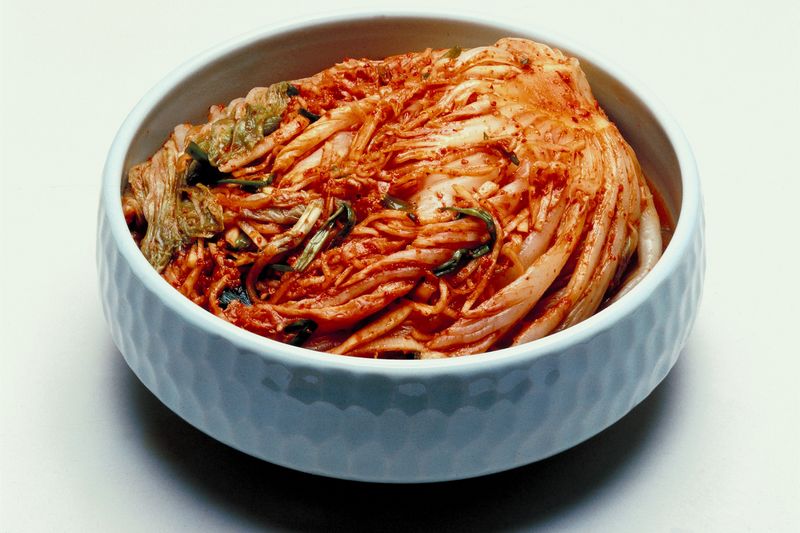
Bowl of kimchi, Part 5 on Fermentation: Kimchi vs. Sauerkraut - Fermenting Vegetables, by Diana Zahuranec for The Rambling Epicure, editor, Jonell Galloway.

Bowl of kimchi.


Never miss a post
Name:

Your email address:*

Please enter all required fields
Correct invalid entries

Never miss a post
Name: 
Your email address:*
Please enter all required fields
Correct invalid entries

UA-21892701-1