Venetian Hours
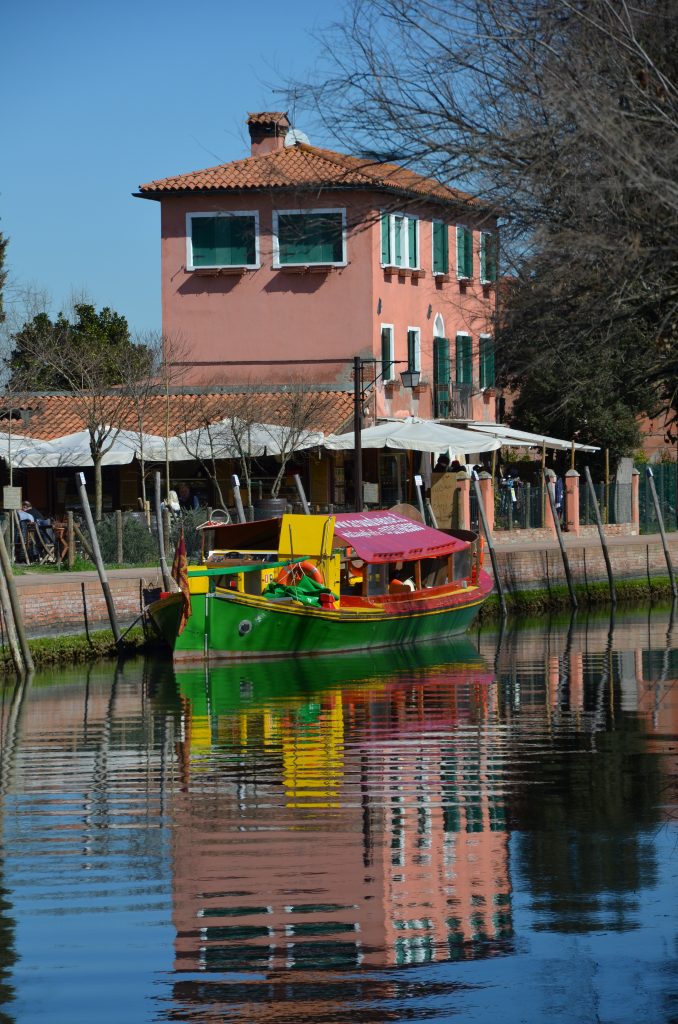
A sunny day in Torcello, the birthplace of Venice, the island to which the Veneti fled from the barbarians.

|
|

A Literary Culinary Journal
A sunny day in Torcello, the birthplace of Venice, the island to which the Veneti fled from the barbarians.
|
|

In summertime, the living is easy. Grandparents walk hand in hand, bare-armed, as little ones skip down the street in bright plaid shorts and thongs and sing out of tune. Three generations of strong women sit on café terraces, and passersby don’t have to ask if they are related. Lovers love each other more than ever, their blood heated by the sun. Even the flowers overflow onto the sidewalk, expressing their joy to be alive.
|
|

If you live in Italy, you have to have a nonna. Having just lost my “adopted” Italian grandmother, Nonna Margherita, in Switzerland, the time was right, and it happened in the most unlikely place: Bellaria-Igea, a seaside town in Romagna, known as the Italian region of land-and-sea because of its plentiful bounty of both fish and meat. As a result, the cuisine is varied and copious, playing on unending themes of the two. The hillsides beyond the shores are verdant and rolling, producing excellent wine, meat and cheese, while traditionally, the inhabitants by the seaside are fishermen.

Originally, Bellaria-Igea was a village of solely fishermen and their families. Their wives supplemented the family income by renting out rooms in their seaside cottages. While the men were fishing, the wives tended to the guests by cooking, cleaning and generally making them feel at home. Over the years, they added extra rooms and their homes became locande, or “inns,” and eventually pensioni, or “small hotels,” and this became a seaside resort. This is the story of the family of my new nonna, Nonna Violante.
|
|
I’m Jonell Galloway. I grew up on Wendell Berry and food straight from a backyard Kentucky garden.
The library and my grandparents’ garden and table were my favorite hangouts as a child, and the rest of my life has evolved around them. My house is like an overflowing library, and the “fruits” of my kitchen delight the palates and noses of our family, neighbors and friends. Somehow, I managed to live in France, Switzerland and Italy and explore the wide range of food and wine in those countries.
I had a vision of promoting the loves of my life, food and writing, so I founded the non-profit e-zine/website The Rambling Epicure in 2009.
My viewpoints about food and writing are my own and are only influenced by my reading, travels and first-hand knowledge. I believe in real food grown in a caring, loving environment without industrial processing. I don’t promote anything – no restaurants, no writers, no brand names – that I don’t truly believe in.
The people I frequent often have the same philosophy but that is not exclusive. Many are chefs, writers and artists who uphold similar ideals and seek similar goals; others are fellow travelers in life.
If you’d like to become part of my world and share my personal food and travel adventures on social media, you can follow me here:
Food writing and word mastering have always been my line of work. The Rambling Epicure promotes the best food writing by the best chefs and writers in the field. We also have two Facebook groups The Rambling Epicure, Mastering the Art of Food Writing and Culinary Travel by Jonell Galloway, The Rambling Epicure, where we have very hearty Facebook discussions about food, travel, writing, and reflections on writing. Our community is inhabited by food-centric people from many walks of life.
|
|
 Paris to the Pyrenees: A Review of David Downie’s Book

In Paris to the Pyrenees, David Downie takes us right along with him on the Way of St. James, without our ever leaving our armchairs. As stated in the subtitle, “A Skeptic Pilgrim Walks the Ways of St James,” we’re not talking about a conventional pilgrim, so we don’t expect his transformations to be like those of traditional Christians. But then, the Way of St. James, like so many pilgrim routes in the world, becomes a spiritual journey spreading well beyond the confines of Christianity.
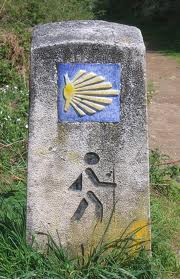
Downie makes it a personal journey, full of the classical culture and history he knows so well, and we have the pleasure of experiencing it along with him. His journey through classicism and French history becomes ours, as we learn about the Druids, the Galls, the Romans, former French President François Mitterand, and much more; as he carries around a stone he was convinced had magical power because it looked like a scallop shell, until it becomes too heavy to carry; as we wolf down hearty French meals and sup coarse local wine after a long day of walking, before we fall like a stone into bed.
And though we might not receive penance, we end the journey all the richer in knowledge, having read a good tale, too. The book is a latter-day Canterbury Tales, with a varied lot of pilgrims, locals, and farmers all along the way. Alison Harris’ photos are in perfect harmony with Downie’s narrative. You’ll want to wear a scallop shell around your neck after reading this book.
Other sources of information about the book: NPR, 3 Quarks Daily, Boston Globe, Bonjour Paris
|
|
 Meet Jonell Galloway, a freelance writer and editor specialized in French cuisine.